
Soups & Stews
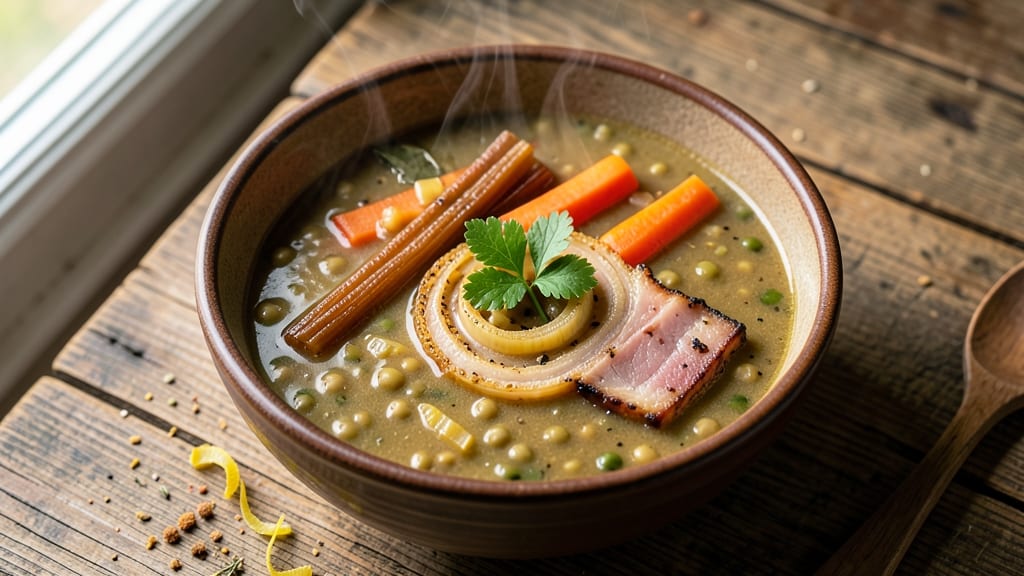
This 5-star split pea and ham soup recipe delivers the kind of slow-simmered comfort that transforms a simple weeknight into a memorable meal. The secret lies in properly soaking the peas and browning the ham—steps that build deep, savory layers of flavor over hours of gentle simmering. I've perfected this technique to achieve that restaurant-quality richness at home, where every spoonful balances earthy peas with smoky, salty ham.
What sets this recipe apart is the attention to traditional methods: slow-cooking transforms tough split peas into tender, creamy bites while allowing the ham to infuse its rich, umami essence into the broth.
The aromatics—carrots, onions, and celery—form the flavor foundation, while bay leaves and thyme add herbal depth. This isn't just soup; it's a hearty, satisfying dish that feels like a hug in a bowl.
The result is a velvety soup with perfectly tender peas, chunks of flavorful ham, and a broth so rich it coats your spoon. The texture is luxurious—creamy yet substantial—with just enough bite from the vegetables.
It's the kind of meal that disappears quickly, leaving everyone asking for seconds. The best part? It tastes even better the next day, making it ideal for meal prep.
Whether you're using a traditional pot or a pressure cooker for faster results, this recipe delivers consistent excellence. The slow simmer develops complex flavors that shortcuts can't replicate, but with proper technique, you'll achieve restaurant-quality depth in your own kitchen. Let's get started on creating this comforting classic.
Ingredients for 5 star split pea and ham soup
Six cups of split peas and a pound of ham create restaurant-quality depth in this slow-simmered classic.
| Ingredient | Amount | Notes |
|---|---|---|
| Dry Split Peas 🌾 | 2 cups | Uncooked, rinsed thoroughly |
| Smoked Ham Hock 🥓 | 1 lb | Or substitute ham bone |
| Yellow Onion 🧅 | 1 whole | Medium size, chopped |
| Carrots 🥕 | 3 medium | Peeled, chopped into chunks |
| Celery Stalks 🌿 | 3 whole | Trimmed, chopped |
| Garlic Cloves 🧄 | 4 cloves | Fresh, minced |
| Fresh Thyme 🌿 | 1 tbsp | Leaves only, chopped |
| Bay Leaves 🌿 | 2 whole | Dried or fresh |
| Olive Oil 🫒 | 2 tbsp | Extra-virgin preferred |
| Salt 🧂 | 1 ½ tsp | Diamond Crystal preferred |
| Black Peppercorns 🌶️ | ½ tsp | Freshly cracked |
| Water 💧 | 8 cups | Or low-sodium broth |
| Fresh Parsley 🌿 | ¼ cup | Chopped, for garnish |
The ham hock is non-negotiable for authentic depth—look for bone-in cuts at specialty butchers or well-stocked grocery stores like Whole Foods. If you can't find a hock, a ham bone with meat attached works equally well. The split peas should be green or yellow, not brown or speckled—those are dried peas for other dishes. Soak them overnight if time allows, but even a quick 2-hour soak improves texture. For the aromatics, fresh thyme and bay leaves build herbal complexity, while the ham's smokiness infuses the broth during simmering.
No ham hock? Substitute smoked ham steak or bone-in ham shank, but reduce cooking time by 30 minutes. Fresh thyme unavailable? Dried thyme at one-third the amount works, though fresh has superior aroma. The carrots and celery can be swapped for turnips or parsnips for variation, but keep the total vegetable volume consistent. For a vegetarian version, replace ham with mushrooms and smoked paprika. The olive oil matters here—low-quality oil can make the soup taste flat, so splurge on extra-virgin.
This soup tastes even better the next day as flavors meld. Store in an airtight container in the fridge for up to 5 days or freeze for 3 months. For meal prep, double the recipe and portion into containers—each serving reheats beautifully. The ham will crisp slightly when reheated, adding extra texture. Garnish with fresh parsley just before serving to brighten the dish. Leftovers reheat best in a pot with a splash of water or broth to restore creaminess.
Why You'll Love This Recipe
- One-Pot Magic: The ham hock and split peas simmer together in one pot—no chopping boards to clear, no extra dishes. Honestly, I just toss in the onion, carrots, and celery (roughly chopped, no stress), add the peas and ham, cover with water, and let it do its thing. By the time the peas are tender, the kitchen’s cleaner than when I started.
- Smoky Depth in Every Spoonful: That smoked ham hock? It’s the secret weapon—infusing the broth with rich, savory notes that turn this soup into something ridiculously good. The split peas soak up all that flavor, while the carrots and celery add just enough sweetness to balance it out. (Yes, even on a Tuesday night.)
- Leftovers That Don’t Suck: This soup actually improves the next day. The flavors meld even more, and the texture gets creamier—perfect for lunches or freezing in portions. Between us, I’ve reheated a bowl from last Sunday’s batch and still craved seconds.
- Budget-Friendly Crowd-Pleaser: Split peas and ham hocks stretch a meal for a fraction of the cost, and everyone—kids included—loves it. My daughter picks out the carrots but still asks for seconds. It’s the kind of dish that makes you feel like you’re feeding a house without breaking the bank.
Step-by-step instructions for slow-simmered split pea and ham soup
Master this classic technique for a soup so rich and flavorful it deserves five stars.
Prepare the Ham Hock and Aromatics
Begin by rinsing the 1 lb smoked ham hock under cold water and patting it completely dry with paper towels. This step removes any surface bacteria and prevents the soup from becoming cloudy during cooking. Place the ham hock in a large Dutch oven or heavy pot and set it aside.
In a medium bowl, combine the chopped yellow onion, chopped carrots, chopped celery stalks, minced garlic cloves, and chopped fresh thyme. Drizzle with 1 tablespoon olive oil and toss gently to coat. This aromatic blend forms the flavor base of your soup, so don't skip the tossing—it ensures even distribution of the oil, which helps the vegetables caramelize during cooking.
Sauté the Vegetables and Build Depth
Heat the Dutch oven over medium heat until it's hot enough that a drop of water sizzles when added. Add the prepared vegetable mixture and cook for 8-10 minutes, stirring occasionally, until the vegetables soften and begin to develop a golden hue. You'll notice the onions and carrots release moisture, which evaporates as they cook—this concentrates their natural sweetness.
Here's the thing—don't rush this step. The deeper you caramelize the vegetables, the more complex and layered your soup's flavor will be. Once the vegetables are tender and fragrant, add the 2 whole bay leaves and stir for 30 seconds to distribute them evenly. The bay leaves will infuse subtle earthy notes that elevate the entire dish.
Add Split Peas and Liquid for Initial Simmer
Stir in the 2 cups dry split peas, making sure they're well-coated with the vegetable mixture. This ensures even cooking and prevents them from sticking to the bottom of the pot. Pour in the 8 cups water (or low-sodium broth) and bring the mixture to a boil over high heat. Once boiling, reduce the heat to low and add the 1.5 teaspoons salt and 0.5 teaspoon black peppercorns. The split peas will begin to soften almost immediately, but they'll need several hours to reach perfect tenderness.
I always use a wooden spoon to stir the soup gently during the first 10 minutes of simmering. This helps distribute the peas evenly and prevents them from clumping together. The soup should simmer gently—you should see small bubbles breaking the surface but no vigorous boiling. This controlled simmer is crucial for developing the peas' natural sweetness without breaking them down into mush.
Slow-Simmer Until Peas Are Tender
Cover the pot with a lid and let the soup simmer for 1.5 to 2 hours, checking occasionally. The ham hock will release collagen and fat into the broth, creating a rich, velvety texture. You'll know the peas are nearly done when they're fork-tender but still hold their shape—this typically happens around the 1.5-hour mark. If you peek and see the peas are still firm, don't worry; they'll continue cooking as you let the soup rest.
Here's where patience pays off: resist the urge to stir frequently. Each time you lift the lid, you lose heat and moisture, which can extend your cooking time. Instead, let the soup work on its own. The ham hock should easily slide out of the bone by the end of this time, and the broth should have thickened slightly, coating a spoon with a silky film.
Finish and Garnish for Restaurant-Quality Presentation
Once the peas are tender, remove the ham hock from the pot and let it cool slightly before deboning. Discard the bay leaves and strain the broth through a fine-mesh sieve if you prefer a smoother texture—or leave it slightly chunky for added depth. Return the broth to the pot and shred the meat from the ham hock, discarding any remaining bone. Stir the shredded meat back into the soup and adjust the seasoning if needed.
To serve, ladle the soup into bowls and garnish each portion with 0.25 cup chopped fresh parsley. The parsley adds a bright, fresh contrast to the rich, savory flavors of the soup. Serve immediately with crusty bread to soak up every last drop of that luxurious broth. The result should be a soup so deeply flavorful that each spoonful delivers layers of smoky ham, sweet peas, and aromatic vegetables in perfect harmony.
Pro Tips For Making 5 Star Split Pea And Ham Soup
- SOAK THE PEAS (OVERNIGHT): Split peas don’t need soaking, but if you’re in a rush, at least cover them with cold water for 1 hour before cooking—this cuts the simmer time by 30 minutes and prevents a gummy texture. I learned this the hard way after staring at a pot of mushy peas for 45 minutes longer than necessary.
- SCRUB THE HAM HOCK: That smoked ham hock isn’t clean—rinse it under cold water and scrub off any surface mold or cured-on grime with a stiff brush. Trust me, you don’t want that funk lingering in your soup, no matter how good the ham tastes.
- START WITH A HOT POT: Cold water = sad soup. Bring your pot to a full boil before adding the peas, ham, and veggies—this guarantees the peas cook evenly and the ham renders properly. I used to skip this, and the soup always ended up with some peas that were al dente and others that were mush.
- SAVE THE LIQUID: When you’re done simmering, don’t pour out the broth—strain it through a fine-mesh sieve and use it to thin the soup if needed. That liquid is packed with flavor, and wasting it means you’ll have to start over with water, which tastes flat in comparison.
Dietary considerations for this 5 star split pea and ham soup
Gluten-Free Adaptation
This soup is naturally gluten-free, assuming you use gluten-free ingredients. The key is to check your ham hock for hidden gluten—some brands add fillers. I recommend Applegate or Hormel brands, which are typically gluten-free. For extra safety, use a dedicated gluten-free broth like Pacific Foods or Imagine brands.
The split peas, vegetables, and broth base are all gluten-free staples, so no substitutions are needed beyond verifying your ham. 🌾
Vegetarian Option
For a meat-free version, replace the ham hock with 8 oz smoked mushrooms (like oyster or cremini) and add 1 tbsp smoked paprika for depth. I also recommend 1 tsp liquid smoke to mimic the ham's smoky flavor.
The mushrooms should be sliced and sautéed with the aromatics for 5 minutes to develop their umami. This version still delivers that rich, hearty texture without meat. 🌱
Low-Carb Adjustments
To reduce carbs, swap half the split peas for 2 cups cauliflower florets—they add creaminess while cutting net carbs. I also suggest using bone broth instead of water to maintain flavor depth.
The ham remains the protein base, and you can reduce the carrots to 2 medium instead of 3. This version keeps the soup satisfying while being lower in carbs. ⚡
Dairy-Free Considerations
This recipe is already dairy-free, but if you're sensitive to potential cross-contamination, use dedicated dairy-free equipment. The ham hock and broth provide all the richness, so no dairy substitutes are needed.
For extra creaminess, stir in 2 tbsp coconut milk at the end—it blends seamlessly and adds a subtle sweetness that complements the peas. 🥥
Allergen-Friendly Tips
For nut allergies, ensure all ingredients (especially broth) are nut-free. Soy allergies? Double-check the ham hock label—some brands use soy-based fillers. I always recommend Whole Foods 365 or Trader Joe's for reliable allergen-free options.
The recipe's simplicity makes it easy to adapt while keeping flavors intact. Always read labels carefully! 💡
Nutrition facts
Frequently asked questions
Why do I need to soak the split peas before cooking?
Soaking reduces cooking time by 30-40% and prevents the peas from breaking down into mush. The longer you soak (overnight is ideal), the creamier and more tender your soup will be. If short on time, a 2-hour soak still helps significantly—just drain and rinse before cooking.
Can I use canned split peas instead of dry?
Canned peas cut cooking time dramatically, but watch the texture—they'll be softer. Use 1 (15 oz) can per cup of dry peas called for, and reduce simmering time to 45-60 minutes. Drain and rinse well before adding to the pot to avoid excess sodium.
How do I know when the split peas are perfectly tender?
Peas should be fork-tender but still hold their shape—no mushy texture. Press a pea with your fork: it should collapse slightly but not fall apart. The ham hock should also be falling off the bone easily. If peas are still firm after 2 hours, add ½ cup water and simmer 15 more minutes.
What's the best way to store leftovers?
Store in an airtight container in the fridge for up to 5 days, or freeze for 3 months. For reheating, warm gently on the stove with a splash of water or broth—this prevents the peas from drying out. The flavors actually improve overnight as the ham's smokiness infuses deeper!
Can I make this in a slow cooker or Instant Pot?
Slow cooker: Combine all ingredients (except parsley) and cook on low for 6-7 hours or high for 3-4 hours. Instant Pot: Sauté veggies first, then pressure cook for 25 minutes on high. Both methods work, but traditional stovetop simmering develops the deepest flavor—especially the ham's collagen-rich broth.