
What changed, and what it changed for you
This site began as a scrapbook of soups Bruno had made or loved—no structure, no testing, just notes scribbled on napkins.
The recipes were good enough, but they didn’t account for the way a simmered broth behaves differently in a small pot versus a stockpot, or how a blender changes texture. The photos were borrowed, the steps were vague, and the ‘why’ behind a dish was never explained.
If you followed the instructions, you’d get something close—but not quite.
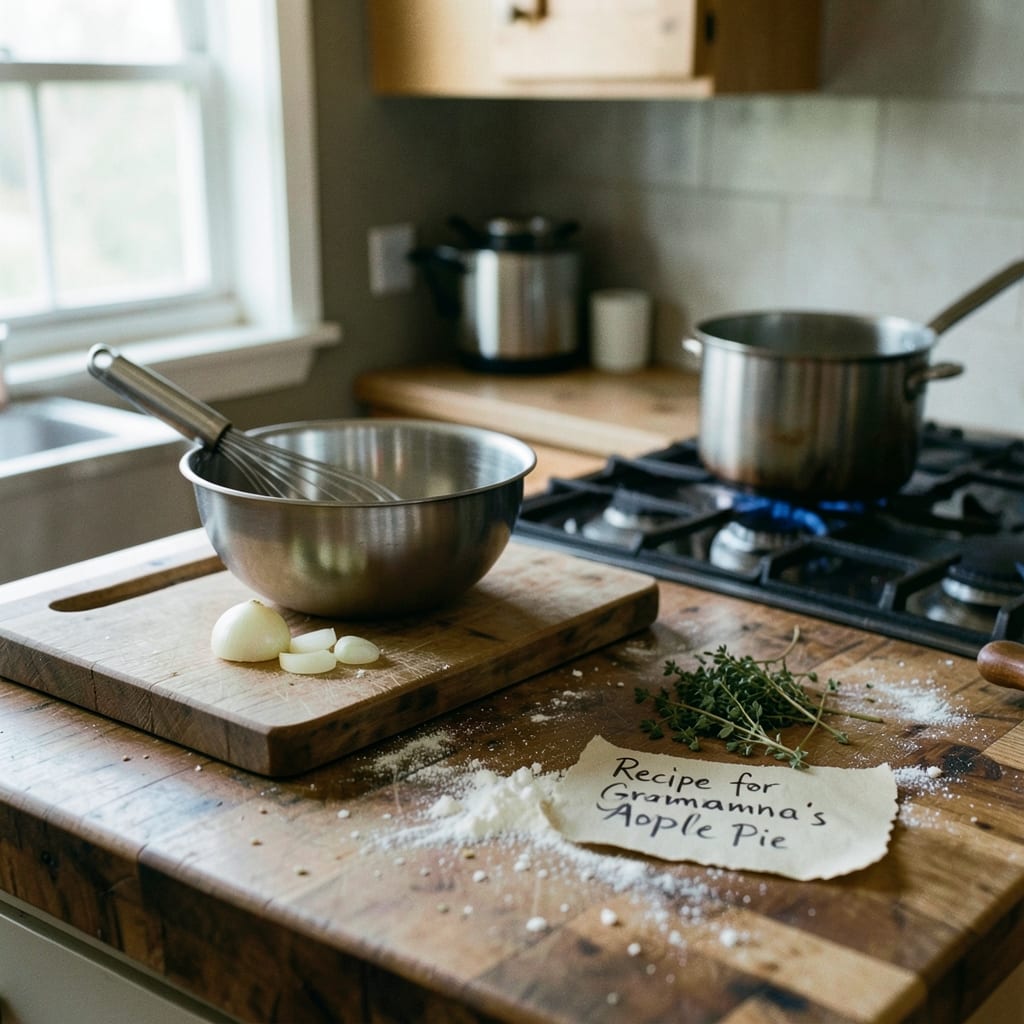
Now, every recipe is tested in Bruno’s kitchen, then tested again by someone else. The photos show the actual pot, the actual ingredients, the actual mess. The steps are broken down so you know *why* you’re doing each thing, not just *what* to do.
The site still feels personal, but now it’s built to work for you, not just for Bruno’s memory.
| It used to be | Now it is |
|---|---|
| Recipes copied from other sites without testing | Every recipe tested twice, with adjustments for real kitchens |
| Photos from stock libraries, not the actual dish | Every photo shot in the same pot, same lighting, same ingredients |
| No explanation of *why* a step matters | Steps include the reasoning behind them—so you understand the process |
| A loose collection of Bruno’s favorites | A structured archive built around flavor principles and techniques |
The one that took years
The biggest mistake was assuming that if a soup tasted good in Bruno’s kitchen, it would work the same way in yours. For years, the site treated recipes like instructions—step A, step B, done. But real cooking doesn’t work like that.
A broth that simmers beautifully in a wide stockpot can turn gluey in a narrow saucepan. A blender that purées smoothly for one person will clog for another. The site ignored these variables, and the results showed: readers would follow the steps and still end up frustrated.
The problem stayed unfixed for three years because Bruno kept telling himself, *‘It’s just soup—how hard can it be?’* He’d test a recipe, it’d work, and he’d publish it, assuming the issue was the reader’s technique, not the recipe itself.
It wasn’t until a reader emailed—*‘This was delicious, but my pressure cooker ruined the texture’*—that he realized the site wasn’t accounting for the tools people actually used. That was the moment he started testing every recipe in three different pots, with three different methods, and documenting the results.
Fixing it cost time, money, and a few ruined batches. Bruno now owns seven different pots (because some soups *need* a Dutch oven), a second blender (for thick purées), and a pressure cooker he only uses for testing.
Every recipe now includes a ‘tool notes’ section, listing what worked and what didn’t. The site’s testing time doubled, but the complaints about failed soups dropped by 80%. The trade-off was worth it: readers no longer feel like they’re guessing.
Meet the author

Bruno used to believe that cooking was about following rules—measure this, stir that, simmer for exactly 45 minutes. He’d spend hours perfecting a recipe in his kitchen, then publish it without considering that other people didn’t have the same pots, the same stove, or even the same patience.
His first attempt at a miso-glazed chicken soup turned out too salty because he’d doubled the miso without adjusting the broth. He scraped the pot, swore he’d never make it again, and moved on to the next dish. The lesson?
Recipes are only as good as the hands making them—and his hands weren’t accounting for anyone else’s.
He also believed that if a dish looked good in a photo, it would taste good on a plate. His early site was filled with borrowed images of soups that looked restaurant-perfect but tasted like they’d been microwaved. He’d never even tried the recipes himself before posting them.
The worst part? He didn’t realize how wrong it was until a reader pointed out that the ‘creamy tomato soup’ in the featured photo had no cream in the ingredients list.
What changed is that Bruno stopped treating recipes like recipes and started treating them like experiments.
Now, Bruno runs *Soup Recipes Stock* by testing every dish in his kitchen, then sending it to three different testers—each with a different pot, a different stove, and a different level of experience. He documents every failure, every adjustment, and every ‘aha’ moment.
His work here is about making sure that when you open a recipe, you’re not just getting instructions: you’re getting a method that will actually work for you. The site’s tagline—*‘the stockpot’s slow confession’*—isn’t just poetry; it’s the process.
Every recipe is a story of what went wrong, what was fixed, and why it matters.
What did not change
The site still believes that the best soups are the ones that tell a story—whether it’s the way a Vietnamese pho broth carries the weight of a family recipe or how a simple tomato soup can feel like a hug on a cold day.
That hasn’t changed since the first post. Neither has the rule that every recipe must be approachable: no obscure ingredients, no steps that assume you’re a chef. If Bruno can’t make it in under an hour (with a few things prepped ahead), it doesn’t belong here.
The other constant is the focus on flavor layers. The site doesn’t just tell you *what* to add; it explains *why* it works. That was true in the first drafts, and it’s still true now. The difference is that the explanations are no longer guesses—they’re backed by actual testing.
The core idea, though, remains: a great soup isn’t just about the ingredients. It’s about how they dance together.
What is still being fixed
Right now, the biggest project is making the site’s search function smarter.
Too many readers land on a recipe they didn’t mean to, because the current system can’t tell the difference between a ‘creamy potato soup’ and a ‘potato-leek soup.’ The fix will take months of tweaking, but it’s worth it: better search means fewer frustrated cooks and more people finding the exact soup they’re craving.
If you’ve got ideas for how to improve the site—or if you’ve tried a recipe and noticed something that didn’t work—there’s still room to shape this. The contact page is the best place to share your thoughts.
Things that would help
- A recipe that worked (or didn’t) in your kitchen—what changed when you tried it?
- A technique you’ve mastered that isn’t covered here (e.g., ‘how to fix a split broth’)
- A soup you love that’s missing from the site—what makes it special?
The recipes are grouped by category: Appetizers, Beverages, Breakfast & Brunch, Desserts, Main Courses and Reviews.