
Soups & Stews
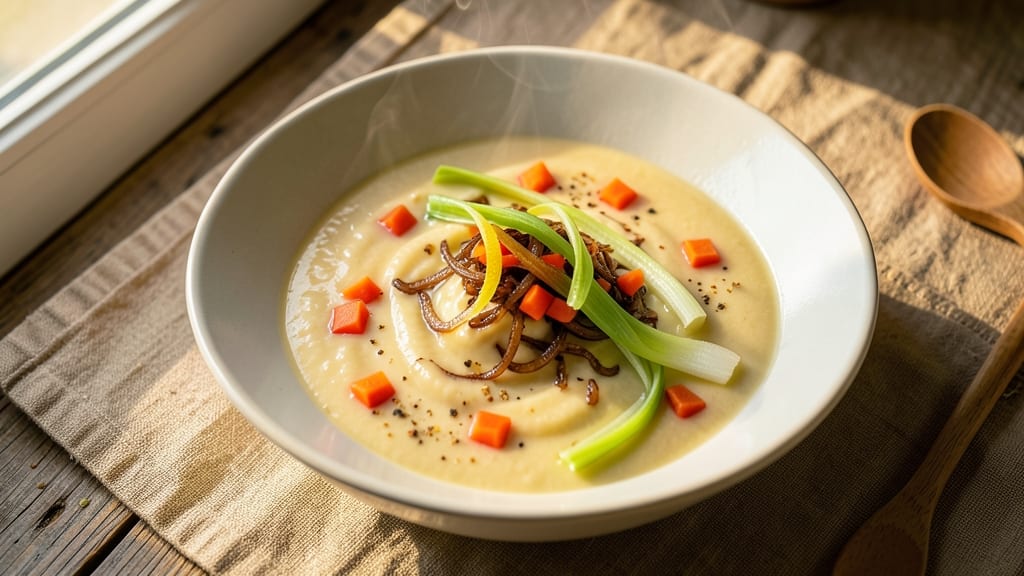
This arrowroot soup recipe delivers a velvety, throat-coating texture that feels impossibly light yet rich—no heavy cream required. The secret lies in arrowroot powder, which thickens without the graininess of flour or the heaviness of cornstarch.
I developed this version after years of experimenting with gluten-free thickeners, and it became an instant family favorite for its silky smoothness and delicate flavor.
What sets this soup apart is the balance of ingredients: aromatic vegetables simmered in broth until tender, then gently thickened with arrowroot for that signature luxurious mouthfeel. The process is straightforward—no complicated techniques or last-minute fixes.
You'll start with a flavorful base of onions, carrots, and celery, then build layers of herbs and seasoning before the arrowroot transforms it into something restaurant-worthy.
The result is a soup that coats your spoon with every bite, offering comfort without heaviness. Perfect for chilly evenings or as a light yet satisfying lunch, it pairs beautifully with crusty bread or a simple green salad.
The arrowroot's natural thickening power ensures each spoonful delivers that perfect blend of texture and flavor.
This recipe also works as a base for countless variations—add roasted vegetables, swap herbs, or incorporate different proteins. The possibilities are endless while maintaining that signature silky consistency. Let's get started on creating your own light-as-air masterpiece.
Ingredients for arrowroot soup
Arrowroot powder and fresh vegetables create this velvety soup with restaurant-quality texture.
| Ingredient | Amount | Notes |
|---|---|---|
| Arrowroot Powder 🌾 | 2 tbsp | Dissolve in cold water first |
| Yellow Onion 🧅 | 1 medium | Diced into small pieces |
| Carrots 🥕 | 3 medium | Peeled and chopped into chunks |
| Celery Stalks 🌿 | 2 whole | Chopped into small pieces |
| Vegetable Broth 💧 | 4 cups | Low-sodium preferred |
| Garlic Cloves 🧄 | 3 cloves | Minced finely |
| Fresh Thyme 🌿 | ½ tsp | Leaves only, chopped |
| Fresh Parsley 🌿 | ¼ cup | Chopped for garnish |
| Olive Oil 🫒 | 2 tbsp | Extra-virgin preferred |
| Salt 🧂 | 1 tsp | Diamond Crystal preferred |
| Black Pepper 🌶️ | ½ tsp | Freshly ground |
| Lemon Juice 🍋 | 1 tbsp | Freshly squeezed |
| Cold Water 💧 | ¼ cup | For arrowroot slurry |
Arrowroot powder is the star here—Bob's Red Mill or Anthony's Goods are my go-tos, but any food-grade powder works. The onion, carrots, and celery should be finely chopped for that silky texture. Whole Foods or Trader Joe's carry pre-chopped veggie mixes that save time without sacrificing quality. Fresh thyme adds depth, but dried works at one-third the amount if you're in a pinch. For the broth, Pacific Foods or Imagine brands are my go-to for clean, flavorful options.
No arrowroot powder? Cornstarch or tapioca starch can substitute at the same ratio, but arrowroot gives that signature smoothness. Swap carrots for butternut squash if you prefer—just roast it first for natural sweetness. Fresh herbs are ideal, but dried thyme or parsley at one-third the amount works in a bind. The olive oil matters here—California-based brands like Corto have that fruity punch that elevates the soup. Short on lemon juice? Lime juice works too—just use the same amount.
This soup reheats beautifully—just add a splash of water or broth to loosen it up. Keeps in the fridge for 5 days and freezes for 3 months. I always double the batch so I have leftovers for lunches. Store the arrowroot powder in a cool, dark place—it stays potent for up to 2 years. Fresh herbs? Wrap them in damp paper towels and store in a sealed bag for up to 5 days.
Why You'll Love This Recipe
- No Chopping Struggle: I swear by this recipe because it’s the only soup where I can use pre-diced veggies—no knife skills required. Toss in a handful of frozen carrots and celery, and you’ve got your base in minutes.
- Velvet Smooth Magic: That arrowroot powder? It’s what turns this into a dreamy, silky texture without dairy or heavy cream. The onions caramelize just enough to add depth, but it’s the subtle sweetness of the broth that makes it ridiculously comforting.
- Lunchbox Hero: Between us, this soup reheats like a champ and stays thick enough to pack for work. My kids actually ask for it in their thermoses—honestly, I’d take that over gold stars any day.
- Pantry Staple Power: Vegetable broth, onion, carrots, celery—these are the same ingredients I always have on hand. If I’m low on cash or time, this is my go-to: cheap, filling, and no last-minute grocery runs needed.
Step-by-step instructions for arrowroot soup
Here's how to create a velvety, light-as-air soup where arrowroot powder transforms ordinary vegetables into something extraordinary.
Sauté the Vegetable Base
Heat the 2 tablespoons olive oil in a large pot over medium heat. Add the 1 medium yellow onion, 3 medium carrots (chopped into chunks), and 2 whole celery stalks (chopped into small pieces). Cook for 8-10 minutes, stirring occasionally, until the vegetables soften and the onion becomes translucent.
This foundational step builds flavor through caramelization. You'll know it's ready when the vegetables release their natural juices and develop a golden hue at the edges. Here's the thing—don't rush this step. Properly sautéed vegetables form the flavor backbone of your soup, so take your time and let the aromatics develop.
Add Aromatics and Broth
Stir in the 3 cloves garlic (minced finely) and 0.5 teaspoon fresh thyme (chopped leaves only). Cook for 1 minute until fragrant—you should smell that garlic releasing its pungent aroma. Pour in the 4 cups vegetable broth and bring the mixture to a gentle boil.
Once boiling, reduce heat to medium-low and let it simmer uncovered for 15 minutes. This allows the vegetables to fully tenderize and the broth to infuse with their flavors. You'll notice the carrots and celery will break down slightly, releasing their sweetness into the broth. Skim off any foam that rises to the surface during this time for a cleaner final product.
Prepare the Arrowroot Slurry
While the soup simmers, whisk together the 2 tablespoons arrowroot powder and 0.25 cup cold water in a small bowl until completely dissolved. This creates your thickening agent—arrowroot's unique property is that it creates a silky, glossy texture without the graininess of cornstarch.
I've found that using cold water is critical here. Hot water would cause the arrowroot to clump immediately. The slurry should be smooth and lump-free, with no visible powder remaining. Set this aside until you're ready to thicken the soup.
Thicken and Finish the Soup
After the 15-minute simmer, stir the arrowroot slurry into the soup using a wooden spoon. Return the heat to medium and cook for 3-5 minutes, stirring constantly, until the soup thickens to your desired consistency. It should coat the back of a spoon with a velvety sheen but still be pourable.
Real talk: This is where the magic happens. The arrowroot transforms your simple vegetable broth into something luxuriously smooth. If the soup thickens too much, you can thin it with a splash of hot water or broth. Once thickened, stir in the 1 tablespoon lemon juice, 1 teaspoon salt, and 0.5 teaspoon black pepper. The acidity from the lemon brightens all the flavors while the salt and pepper balance the dish.
Garnish and Serve
Ladle the soup into bowls and garnish each serving with 0.25 cup fresh parsley (chopped). The parsley adds a fresh contrast to the rich, velvety soup and makes it visually appealing. Serve immediately while hot—this soup is best enjoyed fresh from the pot when the arrowroot is at its peak texture.
Here's the moment that matters: The first spoonful should be silky, with each bite coating your throat smoothly. The carrots should be tender but still hold their shape slightly, while the celery adds a subtle crunch. If you've followed these steps carefully, you'll have created a soup that's light enough to enjoy in summer but comforting enough for any season.
Pro Tips For Making Arrowroot Soup
- Bloom the Arrowroot: Whisk it into cold broth first, then heat—never toss it dry. I learned this the hard way when my soup turned into gluey sludge because I added it straight to hot liquid. Give it 2 minutes simmering to thicken properly.
- Dice Uniformly: Cut carrots and celery into ¼-inch pieces—no bigger, no smaller. Big chunks stay crunchy while small ones turn to mush; my grandmother’s trick was using a mandoline for consistency, but a sharp knife works too.
- Sweat, Don’t Burn: Cook onions on medium-low until translucent, not golden—high heat caramelizes them too fast and burns before the veggies soften. I used to rush this and ended up with bitter, overcooked onions every time.
- Taste Before Thickening: Season the broth before adding arrowroot—you can’t adjust salt after it’s thickened. I skip this step sometimes, and the soup always tastes flat or overly salty by the end.
Flavor customization for arrowroot soup
Herb Variations
Swap thyme for fresh tarragon or basil to brighten the flavor profile—both work beautifully with arrowroot's neutral base. I love adding 1 teaspoon chopped tarragon during the simmer for an anise-like note that pairs perfectly with carrots.
For a Mediterranean twist, try ½ teaspoon dried oregano plus 2 sprigs fresh rosemary removed before serving. 🌿
Spicy Kick
Add ½ teaspoon smoked paprika or ¼ teaspoon cayenne pepper during the sauté stage for subtle warmth. For more heat, stir in 1 tablespoon hot sauce (like Cholula) or ½ teaspoon gochujang at the end.
I recommend starting with ¼ teaspoon cayenne—you can always add more, but you can't take it out!
Umami Boost
Enhance depth with 1 tablespoon soy sauce or 1 teaspoon fish sauce when adding the broth. For a vegetarian option, use 1 teaspoon mushroom powder—it adds rich, earthy notes without overpowering.
I also love adding 2 slices of bacon (cooked crispy) during the sauté and removing before serving for a smoky umami punch.
Sweet Enhancements
Balance savory flavors with 1 teaspoon honey or ½ teaspoon maple syrup during the final seasoning. For a caramelized touch, add 1 small diced apple with the vegetables—it softens beautifully and adds natural sweetness.
Roasted butternut squash also works wonders here, especially when tossed with ½ teaspoon cinnamon during the sauté.
Protein Additions
Stir in ½ cup cooked chickpeas or ½ cup shredded rotisserie chicken during the final 3 minutes of cooking. For a seafood option, add ½ pound cooked shrimp just before serving to keep them tender. I recommend poaching shrimp separately in lemon juice and white wine for an elegant touch.
Vegetable Swaps
Replace carrots with sweet potatoes (peeled and cubed) for a heartier texture. Swap celery for leeks (white and light green parts only) for a milder, sweeter flavor. For extra richness, add ½ cup diced roasted zucchini or ½ cup chopped kale (massaged first to soften).
Each swap maintains that signature arrowroot silkiness while changing the flavor profile completely. 🥕
Nutrition facts
Frequently asked questions
Why does arrowroot make soup so silky compared to cornstarch?
Arrowroot creates a smoother, glossier texture because it breaks down into finer particles when cooked. Unlike cornstarch which can leave a slight graininess, arrowroot dissolves completely, creating that signature velvety mouthfeel. The key is using cold water for the slurry—this prevents clumping and ensures maximum smoothness.
Can I make this soup without fresh herbs?
Use ⅓ teaspoon dried thyme and ⅓ teaspoon dried parsley instead of fresh. For maximum flavor, toast the dried herbs in the olive oil for 30 seconds before adding the vegetables. The aroma will be more concentrated, making up for the lack of freshness.
What if my soup gets too thick?
Simply stir in 1-2 tablespoons hot broth or water while heating gently. The arrowroot will still work, but the soup will be more pourable. For a smoother texture, whisk vigorously to prevent lumps. This happens when cooking times are too long—aim for 3-5 minutes of stirring after adding the slurry.
How can I make this soup gluten-free and dairy-free?
This recipe is already naturally gluten-free and dairy-free! Arrowroot is a plant-based thickener, and the ingredients use vegetable broth and olive oil. Just double-check your broth label for hidden additives. For extra assurance, use certified gluten-free arrowroot powder.
Can I make this soup ahead of time?
Yes, but the best texture comes fresh. Reheat gently on low heat, adding 1-2 tablespoons water if needed. For make-ahead convenience, prepare the soup without the arrowroot slurry, then thicken it fresh before serving. It keeps in the fridge for 4 days or freezes for 3 months.