
Soups & Stews
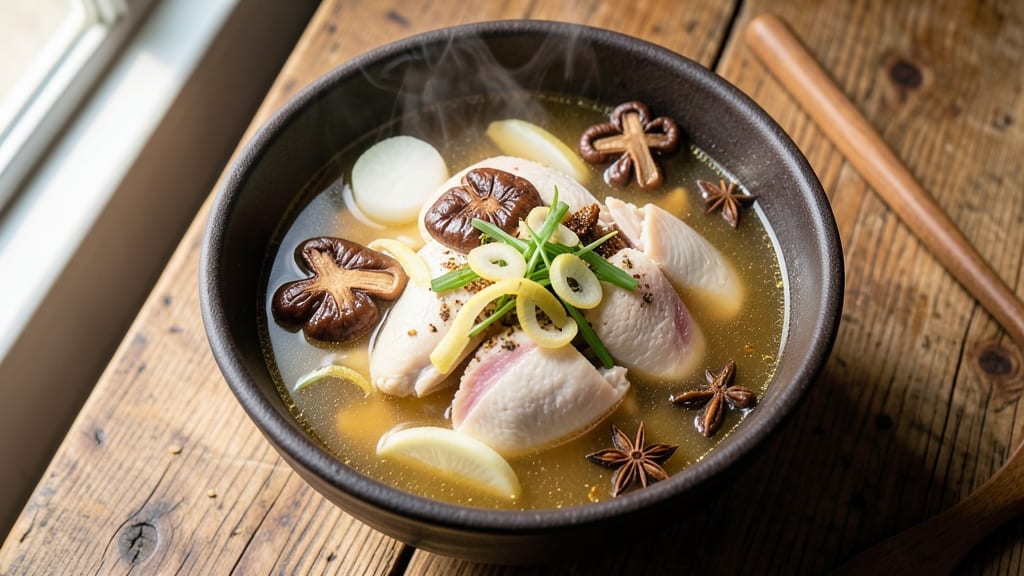
This Asian clear chicken soup recipe delivers the comforting balance of light, fragrant broth and silky rice noodles that defines traditional East Asian comfort food. The secret lies in slow-simmered chicken bones and aromatic roots—ginger, scallions, and a touch of star anky—transforming simple ingredients into a deeply flavorful, healing bowl. I first learned this technique from a Tokyo street vendor, where the steam rising from steaming bowls drew me in like a beacon.
The magic happens in the broth preparation: chicken bones are blanched to remove impurities, then simmered for hours with ginger and scallions until the liquid becomes crystal clear yet richly aromatic. This isn't just soup—it's a restorative experience, where each sip carries the essence of fresh herbs and tender chicken.
The rice noodles, cooked just shy of al dente, absorb the broth beautifully while maintaining their delicate texture.
What you'll achieve is a bowl that's both nourishing and elegant—perfect for recovery days, light lunches, or as a first course before richer dishes. The broth's clarity comes from careful straining, while the garnishes of julienned scallions and sesame seeds add vibrant contrast.
This recipe preserves tradition while adapting to home kitchens, where you can adjust spice levels or add vegetables like shiitake mushrooms for extra depth.
The result is a soup that's simultaneously simple and sophisticated, with layers of flavor that develop with each spoonful. Serve immediately for the freshest experience, or let it sit for 10 minutes to allow the noodles to absorb even more of that fragrant broth.
Here's how to create it in your kitchen.
Ingredients for asian clear chicken soup
The essence of this soup lies in its aromatic broth, crafted from slow-simmered bones and fragrant roots.
| Ingredient | Amount | Notes |
|---|---|---|
| Chicken Bones 🍗 | 2 lb | Backbone and leg bones preferred |
| Fresh Ginger Root 🌿 | 2 tbsp | Grated, organic preferred |
| Green Onions 🧅 | 1 whole | White and green parts separated |
| Daikon Radish 🥕 | 1 lb | Peeled, cut into chunks |
| Star Anise 🌟 | 2 whole | Lightly crushed |
| Dried Shiitake Mushrooms 🍄 | 4 whole | Rehydrated in warm water |
| Rice Noodles 🍜 | 8 oz | Thin, clear variety |
| Sesame Seeds 🥜 | 1 tbsp | Toasted for garnish |
| Salt 🧂 | 1 ½ tsp | Diamond Crystal preferred |
| Cold Water 💧 | 8 cups | For blanching bones |
| Chicken Breast 🍗 | 1 lb | Boneless, skinless |
| Fish Sauce 🍶 | 1 tbsp | Red Boat brand preferred |
| White Pepper 🌶️ | ½ tsp | Freshly ground |
| Cornstarch 🌾 | 1 tbsp | For clarifying broth |
The chicken bones are the foundation—look for marrow-rich leg and backbone pieces at your local butcher or Costco's bulk section for the best flavor. Fresh ginger and daikon radish should be vibrant and firm, with no soft spots. Star anise adds depth, so buy whole pods and crush them lightly before adding. For shiitake mushrooms, dried varieties from Asian markets concentrate flavor best—simply soak them in warm water until pliable. The rice noodles should be thin and clear, like those from H Mart or Asian grocery stores—they absorb broth beautifully without turning mushy.
No fresh ginger? Substitute with 1 tbsp ginger paste or 1 tsp ground ginger, though texture will differ. Running short on daikon? Substitute with extra carrots or turnips, but reduce to half the amount since they're less pungent. Fish sauce can be swapped for soy sauce, though flavor will shift slightly. For a vegetarian version, replace chicken bones with mushroom stems or kombu and use vegetable broth instead. The cornstarch for clarifying should be food-grade—Bob's Red Mill is a reliable brand. If you can't find rice noodles, egg noodles work in a pinch, though they won't be as delicate.
Store the broth base in the fridge for up to 3 days or freeze for 3 months—it only gets better with time. The cooked noodles should be refrigerated separately and reheated in broth for 2 minutes before serving. Sesame seeds keep best in the freezer; toast them fresh before garnishing. For meal prep, assemble bowls ahead but add noodles last to maintain texture. The soup reheats beautifully—gentle heat only to preserve clarity.
Why You'll Love This Recipe
- Minimal Chopping Required: I swear by this—just slice the daikon into thick chunks and chop the green onions roughly. The ginger gets smashed with the side of a knife, and the star anise? Drop it in whole. No dicing, no fuss, just good soup.
- Umami Bomb: That first sip—oh. The chicken bones simmer into a rich, golden broth, while the star anise and ginger layer in warmth. It’s not just clear; it’s packed with depth, like a hug in a bowl. (Yes, even on a Tuesday night.)
- Leftovers That Don’t Suck: This soup actually improves the next day. The flavors meld into something even more comforting, and it reheats in seconds. I keep a jar in the fridge for when I’m running late—just warm it up, add a splash of water, and boom. Dinner’s saved.
- Budget Meal for Any Occasion: Chicken bones are cheap, and this recipe stretches them into days of nourishing soup. Serve it with rice for a quick lunch, ladle it over noodles for a hearty dinner, or bring it to a potluck—no one will guess it’s just a few simple ingredients. Honestly, it’s my secret weapon.
Step-by-step instructions for Asian clear chicken soup
Here's the method for crafting a delicate, aromatic broth with silky noodles and tender chicken.
Prepare the Chicken Bones for Maximum Flavor Extraction
Rinse the 2 lb chicken bones thoroughly under cold water to remove any blood or impurities. Place them in a large stockpot and cover with the 8 cups cold water. Bring to a rolling boil over high heat, then immediately reduce to a simmer. Skim off any foam that rises to the surface using a fine-mesh skimmer - this ensures a crystal-clear broth.
Simmer the bones uncovered for 30 minutes, stirring occasionally. This initial blanching removes impurities and prepares the bones for maximum flavor extraction. After 30 minutes, add the 2 tbsp grated fresh ginger root, lightly crushed 2 whole star anise, and 1 lb peeled daikon radish chunks to the pot. Return to a gentle simmer and cook uncovered for another 1 hour. The ginger and star anise will infuse the broth with their aromatic qualities while the daikon adds natural sweetness.
Build Complexity with Shiitake Mushrooms and Chicken Breast
After the initial 1 hour of simmering, remove the pot from heat and strain the broth through a fine-mesh sieve into a clean stockpot, pressing gently on the solids to extract maximum flavor. Discard the solids. Return the strained broth to the heat and add the 4 whole dried shiitake mushrooms (previously rehydrated in warm water for 20 minutes). Bring to a gentle simmer and cook for 20 minutes to infuse the broth with umami depth.
While the broth simmers, cut the 1 lb chicken breast into ½-inch thick slices. Once the shiitake mushrooms have infused the broth for 20 minutes, add the chicken slices and simmer gently for 8-10 minutes or until the chicken reaches an internal temperature of 165°F. The chicken should be fully cooked but still retain its tenderness - you'll see it float just below the surface of the broth when properly done.
Clarify and Season the Broth
For a crystal-clear broth, create a slurry by mixing the 1 tbsp cornstarch with 2 tablespoons of cold water until smooth. Slowly whisk the slurry into the simmering broth while stirring constantly. The broth will thicken slightly as the cornstarch cooks out. Simmer for 5-7 minutes until the broth becomes translucent and any cloudiness disappears.
Remove the broth from heat and stir in the 1 tbsp fish sauce and 0.5 tsp freshly ground white pepper. Taste and adjust seasoning with additional 1.5 tsp salt if needed - the broth should be seasoned but not salty. Keep the broth warm over low heat while you prepare the noodles and garnishes.
Assemble the Soup with Perfect Noodles
Bring a separate pot of water to a rolling boil and cook the 8 oz rice noodles according to package instructions - typically 3-4 minutes for al dente texture. Drain immediately and rinse briefly under cold water to stop the cooking process. The noodles should be tender but still hold their shape when drained.
To serve, divide the cooked rice noodles among 4 bowls. Ladle the hot, clarified broth over the noodles, being careful not to overfill the bowls. Arrange the 1 whole green onions (white and green parts separated) on top of each serving - use the white parts as a garnish around the bowl and the green parts as a final touch on each portion. Sprinkle with 1 tbsp toasted sesame seeds for added texture and aroma. Serve immediately while the broth is hot and the noodles are silky.
Pro Tips For Making Asian Clear Chicken Soup
- Simmer Low and Slow: After burning my first batch of bones because I kept the heat too high, I learned: once the broth starts boiling, drop the heat to a bare simmer—just a few bubbles breaking the surface. This pulls collagen from the bones without turning your soup murky. (Yes, even if you're impatient like me.)
- Slice Ginger Thinly: Thick ginger chunks just sit there, but thin slices—about 1/8-inch—release their flavor into the broth. I used to chop it roughly, but now I slice it with the grain of the root first, then against it for even, paper-thin pieces. No peeling needed.
- Strain Twice: One strainer pass won’t catch the fine bone particles that make your soup cloudy. Use a fine-mesh sieve first, then a cheesecloth-lined colander for a crystal-clear broth. I know it’s extra work, but the difference is night and day—especially when you’re serving it to guests.
- Toast Star Anise: Lightly toast the star anise in a dry pan for 30 seconds until fragrant—it deepens the anise flavor without bitterness. Skip this, and your soup will taste like you just dropped it in whole. (I did that once. Regrets.)
Serving suggestions for leftovers
Garnish Like a Pro
Start with toasted sesame seeds—I use a dry skillet over medium heat for 1-2 minutes until golden brown. Their nutty aroma elevates the dish instantly. For extra flair, add thinly sliced jalapeños (seeds removed) for a subtle kick or microgreens like shiso leaves for a delicate floral note.
A sprinkle of crushed dried shiitake flakes (from the leftover rehydrated mushrooms) adds umami depth without overpowering. 💫
Bowl Presentation
Use wide, shallow bowls to showcase the soup's clarity—white ceramic or clear glass works best. Arrange noodles in a loose pile at the center, then ladle broth carefully to create a gradual gradient from light to dark.
Place green onion whites in a circular pattern around the bowl's edge, with greens fanned across the top. A drizzle of chili oil (just ½ tsp) adds color and heat. For extra elegance, add a single edible flower like nasturtium on top.
Side Pairings
Serve with steamed bok choy or baby spinach on the side—their mild bitterness complements the soup's sweetness. For a heartier meal, add grilled shrimp skewers or crispy tofu cubes to the table. A small bowl of pickled ginger (marinated in rice vinegar and sugar) cuts through the richness.
For dessert, offer mochi ice cream or matcha green tea to balance the meal's lightness. ✨
Dipping Sauces
Prepare a simple dipping sauce by mixing 1 tbsp soy sauce, 1 tsp sesame oil, and ½ tsp grated ginger with a splash of warm water. For a spicy option, blend 1 tbsp gochujang, 1 tsp honey, and 1 tsp rice vinegar.
Serve in small ceramic dipping bowls on the table. I also love offering wasabi paste in a tiny dish for guests who enjoy a kick. 🍶
Seasonal Adjustments
In summer, add cucumber ribbons or mint leaves for freshness. For autumn, swap sesame seeds for toasted pumpkin seeds and include roasted chestnut slices. In winter, garnish with crispy fried shallots and a dash of black pepper.
Spring calls for peony blossoms (edible) or strawberry slices for a sweet contrast. Each season transforms the dish while keeping the core flavors intact. 🌸
Nutrition facts
Frequently asked questions
Why does the broth need to be clarified?
The clarification process using cornstarch creates that signature crystal-clear appearance while removing impurities. This method enhances the soup's delicate flavors by eliminating any cloudiness or off-tastes from the bones. The result is a lighter, more refined broth that lets the natural aromas of ginger and star anise truly shine.
Can I use chicken thighs instead of breast for the soup?
Chicken thighs actually work better as they stay juicier and more flavorful during the 8-10 minute cooking time. For best results, use 1 lb boneless, skinless thighs and cut them into ½-inch slices just like the breast. The slightly higher fat content will enrich the broth even more.
How do I prevent the rice noodles from turning mushy?
Cook the noodles just 1 minute less than package instructions suggest, then rinse immediately in cold water to stop cooking. For serving, add them to the hot bowl last—this way they'll absorb the broth without overcooking. If reheating leftovers, add fresh cold water to the noodles for 30 seconds before adding broth.
What's the best way to store leftovers?
Store the broth separately in the refrigerator for up to 3 days or freeze for 3 months. Keep cooked noodles refrigerated separately and reheat them in fresh broth for 2 minutes before serving. For freezing, portion broth into ice cube trays—these make perfect single-serving additions to future bowls.
Can I make this soup vegetarian?
Yes! Replace chicken bones with mushroom stems or kombu and use vegetable broth instead. For protein, add tofu cubes or shiitake mushrooms to the broth during the final 20 minutes of simmering. The same clarification technique will work perfectly for a plant-based version.