
Soups & Stews
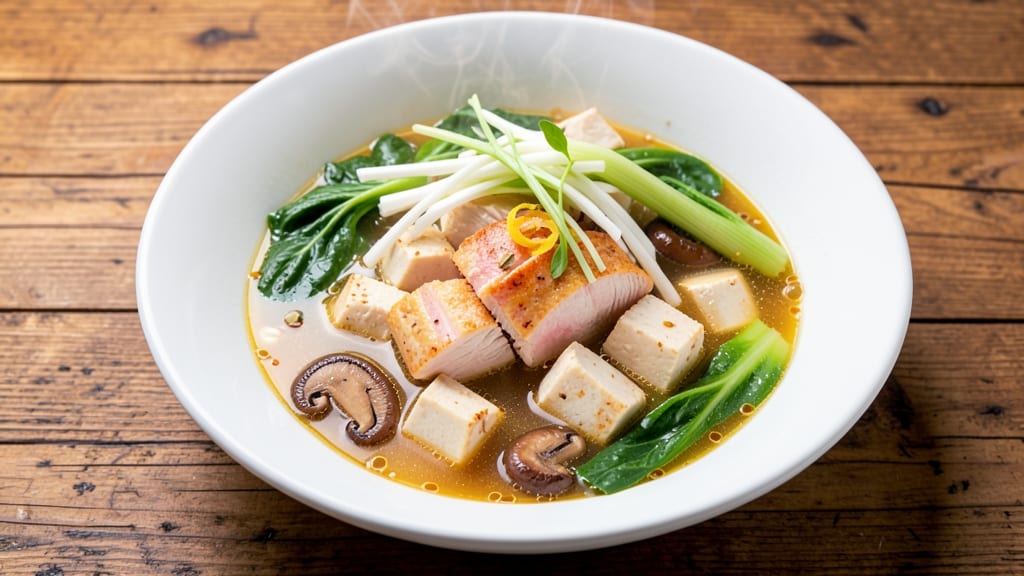
This Asian ginger broth soup transforms humble ingredients into a fragrant, warming bowl that balances zesty ginger with silky rice noodles and tender proteins. The secret lies in slow-simmered aromatics—fresh ginger, garlic, and scallions—that infuse the broth with layers of warmth and brightness.
Unlike quick instant soups, this version builds depth through proper technique, delivering restaurant-quality flavor at home.
The broth starts with a foolproof ginger base: thinly sliced (not grated) to prevent bitterness, simmered just until fragrant but never mushy. Add chicken or tofu, along with mushrooms and bok choy, for a protein-rich, umami-packed foundation.
The rice noodles cook directly in the broth, absorbing its essence for perfectly tender strands every time.
What makes this soup truly special is its versatility—adjust the ginger quantity for mild or fiery heat, swap proteins for vegetarian options, or add a splash of lime for brightness.
It’s the kind of dish that feels both comforting and sophisticated, perfect for chilly evenings or as a light yet satisfying meal.
Pair with steamed dumplings or a side of pickled vegetables to round out the experience. The broth’s depth and the noodles’ silky texture create a harmonious balance that’s impossible to resist. Ready in under 30 minutes, this recipe proves homemade Asian soups can be both simple and extraordinary.
Ingredients for asian ginger broth soup
Foolproof aromatics and tender proteins create this restaurant-quality Asian ginger broth soup.
| Ingredient | Amount | Notes |
|---|---|---|
| Fresh Ginger Root 🧄 | 2 tbsp | Thinly sliced, not grated |
| Garlic Cloves 🧄 | 4 cloves | Minced for aromatic base |
| Green Onions 🧅 | 3 whole | White and green parts separated |
| Chicken Breast 🍗 | 1 lb | Boneless, skinless, cubed |
| Firm Tofu 🥬 | 1 lb | Pressed, cubed, extra-firm preferred |
| Shiitake Mushrooms 🍄 | 8 whole | Stems removed, whole caps |
| Bok Choy 🥬 | 2 whole | Baby or regular, halved |
| Rice Noodles 🍜 | 8 oz | Thin or medium width, uncooked |
| Chicken Broth 💧 | 4 cups | Low-sodium preferred |
| Sesame Oil 🫒 | 1 tbsp | Toasted for aroma |
| Soy Sauce 🍶 | 2 tbsp | Light or dark variety |
| Lime Juice 🍋 | 1 tbsp | Freshly squeezed |
| Salt 🧂 | 1 tsp | Diamond Crystal kosher salt |
| White Pepper 🌶️ | ¼ tsp | Freshly ground preferred |
| Vegetable Oil 🫒 | 1 tbsp | For tofu searing |
The ginger is non-negotiable—look for fresh, plump roots with tight skin and no soft spots. Whole Foods or Asian markets carry the best quality, often with vibrant, aromatic varieties. For the tofu, extra-firm is essential—it holds shape better during searing. Press it for at least 20 minutes before cubing to remove excess water. Shiitake mushrooms should have deep umami flavor, not bitter or woody notes. If using dried shiitake, rehydrate them first for maximum depth. The rice noodles? Thai Kitchen brand is widely available and delivers consistent texture every time.
No fresh ginger? Powdered works at half the amount, but the flavor profile shifts dramatically. Substituting chicken with tofu? Marinate the tofu in soy sauce and sesame oil for 15 minutes before cooking to mimic the savory depth. Swapping shiitake for cremini mushrooms? Use the same quantity, but add an extra splash of soy sauce to compensate for milder umami. The broth can be homemade or store-bought—Kitchen Basics or Swanson low-sodium are reliable choices. For extra brightness, add a splash of rice vinegar instead of lime if you're avoiding citrus.
This soup reheats beautifully—best served within 2 days for peak freshness, though the broth flavor actually deepens slightly overnight. Store in airtight containers with a tight lid to preserve aroma. The noodles soften further when reheated, so add a splash of broth when warming. Freezes well for up to 3 months if portioned in single-serving containers. For meal prep, cook the broth and proteins ahead, then assemble with freshly cooked noodles to maintain that signature silky texture.
Why You'll Love This Recipe
- No-Chop Nightmare: I swear, the only prep is peeling ginger and mincing garlic—no dicing, no julienning. That fresh ginger scent alone makes the whole kitchen smell like a spa, and honestly? The tofu and chicken do all the work after that.
- Ginger-Garlic Magic: Between us, that first sip of broth—warm, spicy, with the garlic mellowing into something sweet—is dangerously good. The green onions add this bright finish that makes you want to slurp it straight from the bowl.
- Meal Prep MVP: Make a double batch on Sunday, and you’ve got lunch for the week. The broth stays rich overnight, and the tofu and chicken reheat like a dream. My college-aged son lives for it—no fuss, just flavor.
- Budget-Friendly Powerhouse: Chicken breast and firm tofu stretch this soup into four servings without breaking the bank. I’ve fed my whole family for under $10, and the leftovers taste just as good cold in a bento box the next day.
Step-by-step instructions for Asian ginger broth soup
Here's how to craft a vibrant, aromatic ginger broth that balances heat, umami, and delicate textures.
Prepare the Protein and Vegetable Components
Cut the 1 lb chicken breast into ½-inch cubes and set aside. Press the 1 lb firm tofu between paper towels for 15 minutes to remove excess moisture, then cube it. Remove stems from the 8 whole shiitake mushrooms and halve the 2 whole bok choy. Separate the 3 whole green onions into white and green parts.
This prep ensures even cooking and proper texture contrast. The chicken will cook quickly in the broth, while the tofu and mushrooms absorb the ginger-infused flavors. Keep all components separate until ready to add to the broth.
Build the Ginger-Garlic Aromatic Base
Heat the 1 tablespoon vegetable oil in a large pot over medium-high heat. Add the 2 tablespoons fresh ginger root and 4 cloves minced garlic, cooking for 1-2 minutes until the ginger turns translucent and the garlic becomes fragrant. Add the white parts of the green onions and cook for another 30 seconds until softened.
This step develops the soup's signature zesty foundation. The ginger should release its essential oils without burning, creating that signature aromatic punch. If the mixture darkens too quickly, reduce heat slightly to prevent bitterness.
Sear the Chicken and Tofu for Depth
Increase heat to medium-high and add the 1 lb cubed chicken breast in a single layer. Cook for 3-4 minutes until lightly browned on all sides, then remove and set aside. In the same pot, add the 1 tablespoon vegetable oil (if needed) and sear the 1 lb cubed tofu for 4-5 minutes until golden brown. Remove tofu and set aside with the chicken.
Searing develops a Maillard crust that adds complexity to the broth. The chicken will finish cooking in the broth, while the tofu gains texture. Don't overcrowd the pan—cook in batches if needed to maintain even browning.
Simmer the Broth with Vegetables
Pour in the 4 cups chicken broth and bring to a boil. Add the 2 tablespoons soy sauce, 1 teaspoon salt, and ¼ teaspoon white pepper, stirring to combine. Add the 8 whole shiitake mushrooms and 2 halved bok choy, simmering for 5-6 minutes until the mushrooms soften and bok choy wilts slightly. Return the chicken and tofu to the pot.
The broth should now carry all the aromatic layers. The mushrooms will release their earthy notes while the bok choy adds subtle sweetness. Taste and adjust seasoning—this is when you can fine-tune the balance between savory and spicy.
Finish with Noodles and Fresh Elements
Cook the 8 oz rice noodles according to package instructions (typically 4-5 minutes in boiling water), then drain and rinse briefly with cold water to stop cooking. Add the noodles to the soup along with the 1 tablespoon sesame oil and 1 tablespoon lime juice, tossing gently to coat. Stir in the green parts of the green onions and let sit for 1 minute off heat.
This final step integrates all components while preserving texture. The lime juice brightens the broth, while sesame oil adds nutty depth. The noodles should be tender but still hold their shape—if they're too soft, reduce cooking time slightly next time.
Pro Tips For Making Asian Ginger Broth Soup
- PEEL GINGER IN THIN STRIPS: Fresh ginger loses its potency fast when grated into pulp—it turns bitter and muddies the broth. Instead, peel off the skin in long, paper-thin strips (like unrolling a burrito) and slice them into ¼-inch rounds. They infuse flavor without overpowering, and you can fish them out later if you’re picky about texture.
- SMASH TOFU BEFORE BOILING: Firm tofu holds its shape, but that’s not always what you want in soup. Give each block a few sharp smashes with a chef’s knife or the flat of your palm before adding it to the simmering broth. This creates soft, edible pockets that soak up the ginger-garlic broth instead of floating like rubber.
- SIMMER GARLIC LOW AND LONG: Garlic burns faster than you’d think, especially in hot broth. After the initial sear, drop the heat to a bare simmer and let the cloves cook uncovered for 10–15 minutes. This caramelizes them just enough to deepen the flavor without turning the soup acrid—no need to peel them afterward, either.
- USE COLD CHICKEN BREAST: Tossing raw chicken straight into boiling broth guarantees tough, stringy meat. Instead, parboil the chicken in cold water for 8–10 minutes, then transfer it to the ginger broth to finish cooking. The cold start keeps it juicy, and the second simmer in the aromatic broth infuses it with flavor without overcooking.
Troubleshooting this recipe
Broth Too Weak?
If your broth lacks depth, simmer the ginger and aromatics longer—5-7 minutes instead of 2—to extract more flavor. For an extra boost, add 1 tsp fish sauce or ½ tsp miso paste when combining with broth.
I’ve found that using homemade chicken broth (simmered with ginger and garlic) creates a richer base than store-bought. 💫
Noodles Mushy?
Overcooked noodles ruin the texture. Always cook them 1 minute less than package instructions, then finish in the hot broth. For extra control, rinse them briefly with cold water after cooking to stop the process. I prefer Thai Kitchen rice noodles because they hold up better than some brands. 🍜
Ginger Too Bitter?
Bitterness means the ginger was overcooked. Thinly slice it (not grate) and cook it at medium-low heat for just 1-2 minutes until translucent. For milder flavor, reduce to 1 tbsp ginger and add ½ tsp honey> to balance the heat. 🧄
Protein Undercooked?
Chicken should reach 165°F internal temp—use a meat thermometer for accuracy. If tofu feels rubbery, press it longer before cooking or marinate it in 1 tbsp soy sauce + 1 tsp cornstarch for 15 minutes.
I’ve had the best results with extra-firm tofu> pressed for 20+ minutes. 🍗
Broth Too Salty?
Dilute with ½ cup water or broth> and adjust seasoning with a splash of lime juice> or rice vinegar>. Avoid adding more broth—it’ll dilute the ginger’s aroma. Taste as you go! 💡
Mushrooms Too Tough?
Slice shiitake caps ¼-inch thick> and cook them for 3-4 minutes> before adding to the broth. For extra tenderness, add a pinch of baking soda> (¼ tsp) to the simmering water—it breaks down fibers. I love fresh shiitake> from Asian markets for their meaty texture. 🍄
Nutrition facts
Frequently asked questions
Can I make this ginger broth soup vegetarian?
Replace the chicken with 1 lb extra-firm tofu (pressed and cubed) and use vegetable broth instead of chicken broth. For extra umami, add 1 tbsp soy sauce to the tofu before cooking. The mushrooms and bok choy will still provide plenty of hearty texture.
How spicy should the ginger be?
The recipe uses 2 tbsp fresh ginger for a bright, aromatic kick—not fiery. For milder heat, reduce to 1 tbsp and add ½ tsp honey to balance. If you love spice, increase to 3 tbsp and add a pinch of red pepper flakes. Thinly slicing (not grating) prevents bitterness.
Can I use dried shiitake mushrooms instead?
Yes! Rehydrate 8 dried shiitake caps in 1 cup hot water for 20 minutes, then use the mushrooms and soaking liquid in the soup. This adds even more umami depth. For texture, slice them ¼-inch thick before simmering.
What’s the best way to store leftovers?
Store in airtight containers for up to 3 days in the fridge. Reheat gently on low heat, adding a splash of broth to prevent drying. For freezing, portion into single servings and freeze for up to 3 months. The noodles will soften further when reheated, so add them fresh when serving.
Can I add other proteins or veggies?
Try shrimp (½ lb, cooked separately), pork tenderloin, or firm white fish like cod. For veggies, add baby spinach (last 2 minutes) or water chestnuts for crunch. Just adjust cooking times—delicate ingredients go in last.