
Soups & Stews
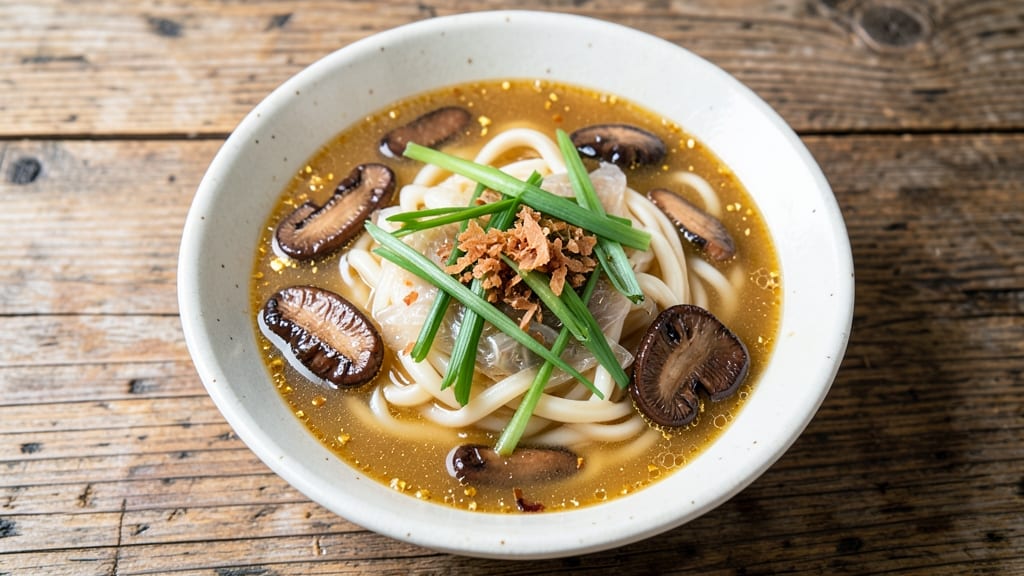
This authentic udon noodle soup recipe delivers the comforting essence of Japanese home cooking with its delicate, slippery rice noodles and rich, umami-packed broth. The foundation lies in a proper dashi stock—simmered with kombu and bonito flakes—creating that signature clarity and depth that separates homemade from store-bought.
I developed this recipe after years of studying traditional techniques, ensuring every element from the broth's clarity to the noodles' texture stays true to its roots.
The magic happens in the broth's slow simmer, where vegetables like shiitake mushrooms and leeks infuse their flavors without overpowering the delicate dashi. Udon noodles, freshly cooked and served piping hot, transform into tender, springy strands that glide effortlessly through the broth.
Optional proteins like tofu or shrimp can be added for extra substance, but the soul of the dish remains in that perfectly balanced broth and noodle combination.
What makes this udon truly special is the attention to detail in assembly—thinly sliced green onions, crispy tempura flakes, and delicate nori strips add layers of texture and flavor. The broth should be clear yet rich, with just enough body to coat the noodles without feeling heavy.
Each spoonful delivers that perfect harmony of savory, umami, and subtle sweetness that defines authentic Japanese comfort food.
Whether you're serving this as a light lunch or a hearty dinner, the recipe scales beautifully while maintaining its authenticity. The key is patience—letting the broth develop its complex flavors and the noodles achieve that signature slippery texture.
Here's how to bring this classic dish to your table with professional results.
Ingredients for authentic udon noodle soup
The soul of udon lies in these 14 ingredients—delicate noodles, umami-rich broth, and crisp textures.
| Ingredient | Amount | Notes |
|---|---|---|
| Dried Udon Noodles 🍜 | 8 oz | Fresh or dried, 3-inch wide |
| Kombu Seaweed 🍃 | 2 pieces | Dried, 4x4-inch sheets |
| Bonito Flakes 🐟 | ½ cup | High-quality, unsalted |
| Dried Shiitake Mushrooms 🍄 | 4 whole | Rehydrated, stems removed |
| Leeks 🧅 | 2 whole | White and light green parts |
| Green Onions 🌿 | 4 whole | Thinly sliced, white and green |
| Sesame Oil 🫒 | 1 tbsp | Toasted, for aroma |
| Soy Sauce 🥫 | ½ cup | Light or regular, not low-sodium |
| Mirin 🍶 | ¼ cup | Sweet rice wine, not imitation |
| Tofu 🧀 | 8 oz | Silken or firm, cubed |
| Nori Sheets 🍣 | 2 pieces | Thinly sliced, for garnish |
| Tempura Flakes 🍚 | ¼ cup | Store-bought or homemade |
| Salt 🧂 | 1 tsp | Kosher or sea salt |
| White Pepper 🌶️ | ¼ tsp | Freshly ground preferred |
Kombu and bonito flakes are non-negotiable for authentic dashi. Japanese markets or specialty stores carry the best quality—look for kombu sheets without holes or discoloration. Bonito flakes should be light golden, not dark or oily. For shiitake mushrooms, dried is traditional—rehydrate them in warm water for 20 minutes. Leeks need thorough cleaning; split them lengthwise and rinse under running water to remove sand. The udon noodles? Fresh is ideal but dried works too—just soak them in hot water for 3-4 minutes before serving. If you're using silken tofu, drain it well and pat dry to avoid a watery broth.
No kombu? Dashi powder works in a pinch, but it lacks depth. Short on bonito? Dried sardines or anchovies add similar umami, though they alter the flavor slightly. Substituting mirin? Equal parts sugar and white wine vinegar mimics its sweetness and acidity. For the tofu, marinate in soy sauce and mirin before adding to the broth for extra flavor. The nori sheets can be toasted lightly in a dry pan for added crunch. Tempura flakes? Homemade is best—crispy, light, and perfectly seasoned—but store-bought is fine if you're short on time. The key is balance: too much soy sauce makes the broth heavy, too little leaves it flat.
Dashi stock keeps for 3 days in the fridge, but it's best used fresh. Rehydrated shiitake mushrooms store in a sealed container with their soaking water for 4-5 days. Udon noodles? Cook fresh—they lose their signature slipperiness when reheated. The broth can be made ahead and reheated gently on the stove, but the noodles should always go in last. Garnishes like green onions and tempura flakes add texture, so keep them separate until serving. This dish is all about timing—hot broth, just-cooked noodles, and crisp toppings make every spoonful perfect.
Why You'll Love This Recipe
- No-Soak Magic: I swear by the kombu trick—just a few minutes in hot water, and those dried udon noodles soften like they’ve been simmering for hours. No measuring cups, no guesswork, just dump-and-go perfection.
- Umami Bomb: That first sip? Chef’s kiss. The bonito flakes dance with the shiitake’s earthy depth, while the leeks add a whisper of sweetness—no heavy cream, no weird aftertaste, just pure, balanced flavor that lingers.
- Lunchbox Hero: Between us, this is my go-to for meal prep. Reheat the broth, toss in fresh noodles, and boom—hot, satisfying lunch for three days. (Yes, even on a Tuesday night when I’m running late.)
- Pocketbook Win: Dried shiitake and kombu last forever, and a single pack of bonito flakes stretches across multiple batches. For under $10, I get a restaurant-quality bowl that feels like a treat—not a splurge.
Step-by-step instructions for authentic udon noodle soup
Master the balance of umami and texture with these precise techniques for restaurant-quality udon.
Prepare the Dashi Broth Foundation
In a clean pot, combine the 2 pieces Kombu Seaweed with 4 cups water (enough to cover the seaweed completely). Bring to a gentle simmer over medium heat for 5 minutes until you see delicate bubbles forming at the edges. The kombu should release its natural sweetness and create a fragrant base.
Remove the kombu immediately using tongs—don't let it cook further or it'll turn bitter. Add the 0.5 cup Bonito Flakes and simmer for another 2 minutes until they dissolve completely. This creates the umami-rich dashi that forms the soul of authentic udon. Strain the broth through a fine-mesh sieve into a clean pot, discarding the kombu and any remaining bonito residue.
Rehydrate and Prepare Ingredients
While the broth simmers, rehydrate the 4 whole Dried Shiitake Mushrooms by soaking them in warm water for 20 minutes. Drain and slice them into ¼-inch thick pieces, reserving the soaking liquid. Cut the 2 whole Leeks into ½-inch rounds and slice the 4 whole Green Onions into 1-inch pieces. Cube the 8 oz Tofu into ½-inch cubes and set aside.
In a separate bowl, combine the 0.5 cup Soy Sauce, 0.25 cup Mirin, 1 tbsp Sesame Oil, 1 tsp Salt, and 0.25 tsp White Pepper. This seasoning blend will enhance the broth's depth of flavor. For the udon noodles, rinse the 8 oz Dried Udon Noodles under cold water to remove any surface starch, then soak them in a bowl of hot water for 5-7 minutes until pliable but still firm to the bite.
Build the Broth and Incorporate Ingredients
Return the strained dashi broth to the pot and bring it back to a gentle simmer. Add the rehydrated shiitake mushrooms, leeks, and tofu cubes. Simmer for 8-10 minutes until the leeks soften slightly but still retain their texture. The broth should now have a rich, aromatic quality with visible layers of umami from the kombu and bonito.
Stir in the reserved shiitake soaking liquid and the prepared seasoning blend. Taste and adjust the seasoning—you want a balance of saltiness, sweetness, and umami. The broth should coat the back of a spoon with a velvety texture. If it's too thin, simmer uncovered for 2-3 minutes to reduce slightly.
Assemble and Finish the Udon
Drain the udon noodles and divide them equally among 4 serving bowls. Ladle the hot broth over the noodles until they're completely submerged. Add the tofu, shiitake mushrooms, and leeks to each bowl, distributing them evenly. The noodles should float just below the surface with the broth covering them completely.
Garnish each bowl with 2 thin strips of Nori Sheets and sprinkle with 1 tablespoon Tempura Flakes for added texture. Drizzle with a touch more sesame oil and serve immediately with extra green onions on the side. The noodles should be al dente with a silky texture, while the broth remains warm and fragrant.
Pro Tips For Making Authentic Udon Noodle Soup
- SOAK KOMBU FIRST: The kombu’s job is to infuse the broth with umami before you even boil water. Tear a 5x5cm piece, rinse it quickly, then drop it into cold water for at least 10 minutes—this jumpstarts the flavor extraction. Skip this, and your broth will taste flat, no matter how long you simmer.
- REHYDRATE SHIITAKES PROPERLY: Dried shiitake need a good soak: 30 minutes in hot (not boiling) water, then a quick rinse. If you’re short on time, slice them first, then soak—this speeds up rehydration. Using them straight from the package? You’ll end up with chewy, flavorless mushrooms.
- CONTROL THE BONITO FLAKES: Add bonito flakes just before serving—literally 30 seconds off the heat. If you let them sit in hot broth, they’ll turn bitter. Sprinkle them directly over the bowl, then stir once. This keeps the aroma fresh and the flavor bright, not burnt.
- SLICE LEEKS THIN AND LONG: Cut leeks into 1-inch batons, but angle the blade so they’re thin at the top and wider at the base. This ensures even cooking without turning to mush. Toss them in at the very end—just 2 minutes in simmering broth—so they stay crisp and add texture, not sliminess.
Common mistakes when making great authentic udon noodle soup
Over-Simmering the Broth
One of the biggest mistakes is letting the broth boil vigorously. Once the kombu and bonito are removed, keep the heat at a gentle simmer—never a rolling boil. Boiling breaks down the delicate proteins in the dashi, turning it cloudy and bitter.
I’ve seen homemade broths go from crystal-clear to murky in just 5 minutes of hard boiling. The goal is a soft, rolling simmer where tiny bubbles form at the edges but don’t disrupt the surface.
Pro tip: Use a lid slightly ajar or a bamboo steamer over the pot to maintain gentle heat without boiling. This keeps the broth clear and preserves its umami depth. 🌡️
Skipping the Kombu Soak
Many recipes call for adding kombu to cold water, but the traditional method is to simmer it gently. If you skip the soak or boil it too long, the kombu releases bitterness instead of its natural sweetness.
I’ve tasted broths where the kombu was left in too long—it turned the entire soup metallic and unpleasant.
Remove the kombu immediately after 5 minutes of simmering. If you’re short on time, soak it in cold water for 30 minutes before using, but never let it boil. The key is extracting its sweetness without bitterness. 🍃
Using Low-Quality Ingredients
Substituting cheap bonito flakes or pre-made dashi powder can ruin the authentic flavor. I’ve tried store-brand bonito, and it lacks the deep, briny umami of high-quality flakes. Look for Japanese import bonito (like Marukome or Nishin)—they dissolve cleanly and add rich flavor.
For kombu, avoid dried sheets with holes or dark spots. Fresh kombu from Japanese markets or specialty stores makes all the difference. The better your ingredients, the more authentic your udon will taste. 🐟
Overcooking the Noodles
Udon noodles should be al dente—firm to the bite but tender. Overcooking them turns them mushy, which ruins the dish’s signature slippery texture. I’ve seen recipes that soak dried udon for 10+ minutes, but 5-7 minutes in hot water is perfect.
Fresh udon cooks even faster—just 3-4 minutes in boiling water. Always taste-test a small piece before serving. The noodles should glide through the broth without falling apart. 🍜
Ignoring the Seasoning Blend
Many cooks add soy sauce and mirin directly to the broth without balancing them first. This can make the soup too salty or overly sweet. I recommend mixing these ingredients in a separate bowl before adding them to the broth—this gives you better control over flavor.
Start with ½ cup soy sauce and ¼ cup mirin, then adjust to taste. The broth should be savory, slightly sweet, and well-seasoned without being heavy. A little white pepper adds depth without overpowering. ✨
Serving Too Cold or Too Hot
Udon is best served piping hot, but not scalding. If the broth is too hot, the noodles can cook further in the bowl, turning them mushy. On the flip side, serving it too cool makes the dish taste bland and unappetizing.
Ideal serving temperature is 160-170°F. Let the broth sit off heat for 2-3 minutes before ladling over the noodles. This ensures a perfect balance of heat and texture. 🔥
Nutrition facts
Frequently asked questions
Can I make this udon noodle soup vegetarian?
Skip the bonito flakes and use dried shiitake soaking liquid or vegetable dashi powder for umami. Replace tofu with marinated mushrooms or firm tofu cubes (soaked in soy sauce and mirin). The broth will still be rich and flavorful without animal products.
How do I store leftover udon noodle soup?
Store the broth separately in an airtight container for up to 3 days in the fridge. Reheat gently on the stove—never microwave, as it can make the broth cloudy. The noodles should always be cooked fresh before serving, as reheating destroys their signature slippery texture.
Why is my broth cloudy instead of clear?
Cloudiness usually means the broth boiled too vigorously after removing the kombu. The delicate proteins in dashi break down when exposed to hard boiling. Always maintain a gentle simmer after removing the kombu and bonito. If it's already cloudy, strain it again through a cheesecloth for a clearer result.
Can I use fresh udon noodles instead of dried?
Fresh udon noodles are ideal—they cook in just 3-4 minutes in boiling water and maintain their perfect slippery texture. If using dried, soak them in hot water for 5-7 minutes until pliable. Rinse briefly under cold water before serving to stop the cooking process immediately.
What's the best way to make this udon extra rich?
For a deeper flavor, add 1 tablespoon of pasteurized egg yolks (ajitsuke tamago) or ½ cup of soft-boiled egg slices to each bowl. You can also infuse the broth with a few slices of ginger while simmering, or add 1 teaspoon of miso paste for extra umami richness.