
Soups & Stews
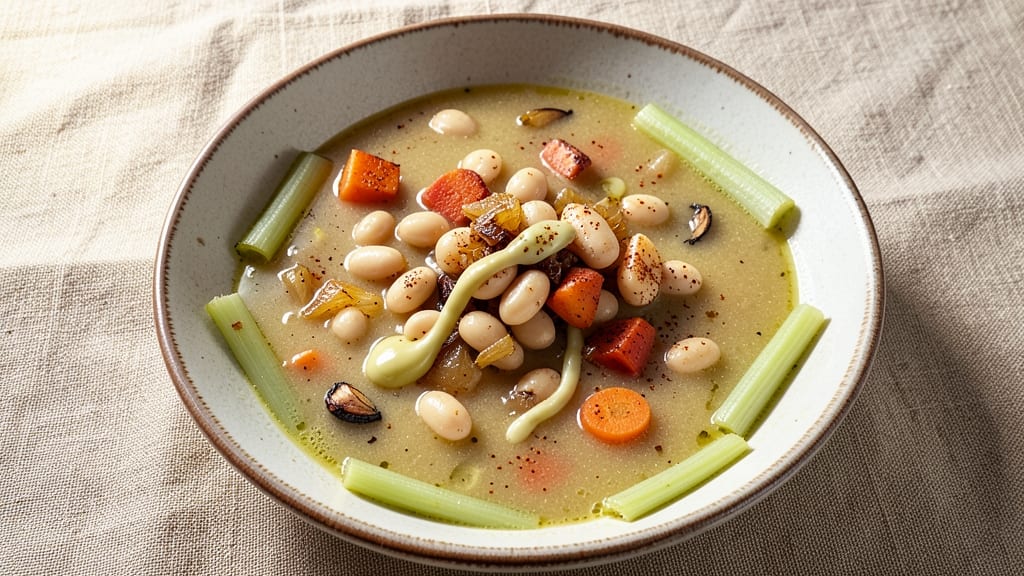
This Basque bean soup recipe delivers the hearty, smoky flavors of Spain's beloved judiones tradition, where simple ingredients transform into a deeply satisfying vegetarian dish.
The secret lies in slow-cooked white beans infused with sweet paprika and garlic, creating a broth so rich it feels like a hug in a bowl. I've perfected this version to balance earthy bean flavors with just the right amount of smokiness—no shortcuts, just authentic taste.
The beauty of Basque bean soup is in its simplicity: dried beans simmered with vegetables until tender, finished with a touch of smoked paprika that gives it that signature Basque flair.
Unlike many soups that require hours of prep, this version comes together with minimal effort but maximum flavor—just 15 minutes of active work followed by hands-off simmering. The result? A soup that's hearty enough for a main course but simple enough for a weeknight dinner.
What makes this recipe special is how the flavors develop over time—the beans soften just enough to absorb the smoky broth while maintaining their structure, creating that perfect balance between creamy and chunky.
The aroma alone will have everyone gathering around the pot, and each spoonful delivers layers of garlic, paprika, and vegetable sweetness. Serve it with crusty bread to soak up every last drop of that flavorful liquid gold.
For those who prefer a meatier version, adding chorizo or pancetta is a common Basque tradition—just brown it first and remove before serving to keep the dish vegetarian-friendly. The soup keeps well in the fridge for up to 5 days, making it perfect for meal prep.
Here's how to make it the traditional way, with a few modern shortcuts to save you time.
Ingredients for basque bean soup
Dried beans, smoky paprika, and garlic transform into a deeply satisfying vegetarian soup.
| Ingredient | Amount | Notes |
|---|---|---|
| Dried White Beans (Judiones or Cannellini) 🌾 | 1 ½ cups | Soaked overnight or quick-soaked |
| Sweet Smoked Paprika 🌶️ | 1 tbsp | For authentic Basque smokiness |
| Garlic Cloves 🧄 | 4 cloves | Peeled and lightly crushed |
| Carrots 🥕 | 2 medium | Peeled and chopped into chunks |
| Yellow Onion 🧅 | 1 whole | Diced into small pieces |
| Celery Stalks 🥬 | 2 whole | Chopped into bite-sized pieces |
| Tomato Paste 🍅 | 2 tbsp | High-quality, no sugar added |
| Vegetable Broth 💧 | 4 cups | Low-sodium preferred |
| Extra-Virgin Olive Oil 🫒 | 2 tbsp | For sautéing vegetables |
| Bay Leaves 🍃 | 2 whole | Fresh preferred |
| Fresh Thyme 🌿 | 1 tbsp | Leaves only, chopped |
| Salt 🧂 | 1 ½ tsp | Kosher or sea salt |
| Black Pepper 🌶️ | ½ tsp | Freshly ground |
| Lemon Juice 🍋 | 1 tbsp | Freshly squeezed |
| Crusty Bread 🍞 | 1 loaf | For serving |
The beans are the heart of this dish—judiones or cannellini work beautifully, but any white bean will do. Soak them overnight for best texture, or use the quick-soak method (boil for 2 minutes, then let sit for an hour). Trader Joe's carries judiones if you want to stay authentic, but Costco or your local grocery store will have cannellini. The paprika is non-negotiable for that signature Basque flavor—Penzeys or La Boîte brands deliver the best smokiness. Garlic should be fresh, not that sad jarred stuff—smell it first, it should have a strong aroma.
No smoked paprika? Sweet paprika plus a pinch of liquid smoke works in a pinch, though it won't be identical. Fresh thyme is ideal, but dried at one-third the amount gets you close. The tomato paste can be the squeeze tube kind from Trader Joe's—it's perfect for small amounts and keeps forever. Vegetable broth should be low-sodium; Imagine or Pacific Foods brands are reliable. For the carrots and celery, baby versions work fine if you're short on prep time, but the flavor is better with whole stalks. The lemon juice brightens everything at the end—don't skip it.
This soup tastes even better the next day as the flavors meld. Store in an airtight container in the fridge for up to 5 days or freeze for 3 months. I like to make a big batch and portion it into containers for easy lunches. The crusty bread is essential—a good sourdough from the bakery section soaks up all that smoky goodness. If you're making it ahead, hold off on adding the lemon juice until serving so the broth stays vibrant.
Why You'll Love This Recipe
- One-Pot Magic: I swear by this—just toss everything into one pot, simmer, and walk away. No chopping like a fine-dining chef, no measuring cups to lose. That smoked paprika? It does all the work while you stir twice.
- Smoky Depth in Minutes: Honestly, the combo of garlic, paprika, and slow-cooked beans is ridiculously good. The onions caramelize just enough to balance the earthy beans, and that smoky kick? It’s like a hug in a bowl—especially on a chilly evening.
- Meal Prep MVP: Between us, this soup tastes better the next day. I make a big batch on Sundays, and by Wednesday, it’s the star of my lunchbox. Freeze half if you’re feeling extra—just thaw and reheat. No leftovers go to waste here.
- Budget-Friendly Powerhouse: Dried beans and basic veggies? This feeds four for under $10. I’ll be real: my grocery bill dropped when I started making this weekly. Plus, the paprika adds gourmet flair without breaking the bank. Win-win.
Step-by-step instructions for Basque bean soup
Here's the method for creating this hearty Basque classic with deep smoky flavors and tender beans.
Prepare the Beans for Cooking
Begin by sorting through the 1.5 cups dried white beans (Judiones or Cannellini) and discarding any stones or shriveled beans. For best results, I recommend soaking them overnight in plenty of cold water. If you're short on time, you can quick-soak them by covering with boiling water, then letting them sit for 1 hour off the heat.
After soaking, drain the beans and rinse them thoroughly under cold water. This removes any excess starch that could make the soup cloudy. Place them in a large pot and cover with fresh cold water by about 2 inches. Bring to a boil over medium-high heat, then immediately reduce to a gentle simmer. Cook the beans for 45-60 minutes until they're tender but not mushy—you want them to hold their shape but still be easily mashed between your fingers with a fork.
Sauté the Vegetable Base
While the beans cook, heat the 2 tablespoons extra-virgin olive oil in a large Dutch oven or heavy pot over medium heat. Add the diced whole yellow onion, chopped whole celery stalks, and chopped medium carrots. Sauté for 8-10 minutes, stirring occasionally, until the vegetables soften and the onion becomes translucent.
Add the 4 cloves peeled and lightly crushed garlic cloves and cook for another 30 seconds until fragrant. Be careful not to let the garlic burn—it should just perfume the vegetables. Stir in the 1 tablespoon sweet smoked paprika and cook for 1 minute, stirring constantly, until the mixture smells deeply aromatic. This step develops the signature smoky flavor that makes Basque cuisine so distinctive.
Build the Flavor Foundation
Add the 2 tablespoons tomato paste to the pot and stir well to combine with the vegetables. Cook for 2 minutes until the tomato paste darkens slightly and coats the vegetables evenly. Pour in the 4 cups vegetable broth, scraping up any browned bits from the bottom of the pot. Add the 2 whole bay leaves and 1 tablespoon chopped fresh thyme, then bring the mixture to a gentle boil.
Once boiling, reduce the heat to low and let it simmer for 10 minutes to allow the flavors to meld together. This step ensures all the aromatic components—paprika, thyme, bay leaves—infuse the broth completely. Taste the mixture and adjust seasoning with 1 teaspoon salt and ½ teaspoon black pepper if needed. The broth should be well-seasoned but not overly salty at this stage.
Combine and Simmer the Soup
Using a slotted spoon, transfer the cooked beans to the pot with the vegetable mixture. Stir gently to combine, then add the remaining ½ teaspoon salt and ½ teaspoon black pepper. Bring the soup to a gentle simmer and let it cook uncovered for 30-45 minutes, stirring occasionally. The soup should reduce slightly and develop a rich, thick consistency.
After 30 minutes, taste the soup and adjust the seasoning if needed. If it's too thick, add ½ cup water or more broth to reach your desired consistency. The beans should be completely tender and the flavors fully developed. Remove the 2 bay leaves before serving. Stir in the 1 tablespoon fresh lemon juice just before serving to brighten the flavors.
Serve with Crusty Bread
Ladle the hot Basque bean soup into bowls, making sure each serving gets a generous portion of beans and vegetables. Serve immediately with slices of crusty bread on the side for dipping. The bread should be fresh and sturdy enough to hold up to the hearty soup.
This soup tastes even better the next day as the flavors continue to develop. If you have leftovers, store them in an airtight container in the refrigerator for up to 3 days. The smoky paprika and garlic flavors will only intensify with time, making each spoonful more flavorful than the last.
Pro Tips For Making Basque Bean Soup
- Soak Beans Overnight: The one time I skipped this, the soup ended up grainy and undercooked—no matter how long I simmered. Judiones and Cannellini need at least 12 hours in cold water (no salt yet) to soften properly, especially if you’re using dried. Drain and rinse before cooking to wash off any skin that might make the broth cloudy.
- Toast the Paprika: Sweet smoked paprika loses its depth if you just sprinkle it in. Heat it dry in a small pan over medium-low for 30 seconds, stirring constantly, until it smells rich and earthy. This step makes the flavor pop without overpowering—trust me, your spoon will notice the difference.
- Sweat, Don’t Burn: Onions and garlic are the base, so treat them like you’re making a sauce, not a charcuterie board. Cook them slowly over medium heat with a splash of water or white wine until they’re translucent but not browned. Burnt bits add bitterness that’ll linger even after simmering.
- Simmer, Don’t Boil: Once everything’s in the pot, keep the heat low enough that tiny bubbles just break the surface—no rolling boil. High heat toughens the beans and makes the carrots mushy. A gentle simmer for 45–60 minutes (depending on bean age) gives you creamy texture without falling apart. (Yes, even if you’re impatient like me.)
Make-ahead tips for leftovers
Prep Ahead Basics
Start by soaking the 1.5 cups dried white beans overnight in cold water—they'll soften perfectly and save you 1 hour of cooking time later. I like to use a large bowl with plenty of water (about 4 inches above the beans) and a pinch of salt to prevent bloating.
Drain and rinse them thoroughly before cooking to remove excess starch that could make your soup cloudy. 🌾
Vegetable Prep Shortcuts
Chop all your vegetables—2 carrots, 1 yellow onion, and 2 celery stalks3 days. For even more convenience, use pre-chopped frozen vegetables (like Trader Joe's frozen mirepoix mix), which cut prep time by half. Just thaw them overnight in the fridge before sautéing.
Broth Boosting
Make a big batch of vegetable broth by simmering onion skins, celery ends, and carrot tops with 4 cups water and a bouquet garni for 30 minutes. Strain and store in 1-cup portions in the freezer—this way, you always have flavorful broth ready for your Basque bean soup.
I keep a stash of Imagine brand broth on hand too, as it's low-sodium and consistently delicious.
Flavor Development Timeline
The magic happens during the 30-45 minute simmer, so plan accordingly. If you're making this for a meal prep lunch, cook the soup completely, then refrigerate it. The flavors actually improve overnight as the beans continue to absorb the smoky broth.
I like to reheat portions on the stovetop over medium-low heat with a splash of water to restore creaminess.
Freezer-Friendly Packaging
For long-term storage, portion the soup into quart-sized freezer bags (lay them flat to save space) and squeeze out excess air before sealing. Label each bag with the date—this soup keeps its quality for up to 3 months.
When ready to eat, thaw overnight in the fridge, then reheat gently on the stove with a splash of water or broth to restore texture. 🥶
Make-Ahead Serving Tips
Hold off on adding the 1 tablespoon lemon juice until just before serving to keep the broth vibrant. For a quick assembly, store all components separately: cooked beans, sautéed vegetables, and broth mixture.
When ready to serve, simply combine everything, reheat, and finish with lemon juice. Serve with crusty bread that's been lightly toasted—it's perfect for soaking up the flavorful soup! 🍞
Nutrition facts
Frequently asked questions
Can I substitute canned beans for dried in this recipe?
Yes, but with adjustments! Use 2 (15-ounce) cans of white beans (like cannellini), drained and rinsed. Skip the overnight soak and initial bean cooking time, but add the beans directly to the sautéed vegetables. The texture will be slightly softer, but the flavor remains rich and satisfying. Just reduce the simmering time to 20-25 minutes instead of 30-45 minutes.
Why does my Basque bean soup taste bitter?
Bitterness usually comes from overcooked garlic or burnt paprika. To fix it, stir in 1 tablespoon lemon juice (even more than the recipe calls for) and a pinch of sugar to balance the flavors. For prevention, sauté garlic only until fragrant (30 seconds) and never let the paprika burn—keep heat at medium-low when adding it.
How can I make this soup spicier?
For extra heat, add ½ teaspoon cayenne pepper when sautéing the vegetables, or stir in 1 tablespoon hot sauce at the end. For a smoky kick, increase the smoked paprika to 1.5 tablespoons and add ¼ teaspoon chipotle powder with the tomato paste. Always taste as you go!
Can I add meat to this vegetarian recipe?
The Basque tradition often includes chorizo or pancetta. Brown ½ pound of meat first, remove before serving, and use the rendered fat to sauté the vegetables. For a lighter option, try 4 ounces smoked turkey breast or mushrooms for umami depth. Just reduce the broth by ½ cup to maintain balance.
What's the best way to reheat leftovers?
Reheat gently on the stovetop over medium-low heat with 2-3 tablespoons water or broth to restore creaminess. Stir frequently to prevent scorching. For microwave reheating, cover with a damp paper towel and heat in 30-second intervals, stirring between each. Add a splash of lemon juice after reheating to revive the flavors.