
Soups & Stews
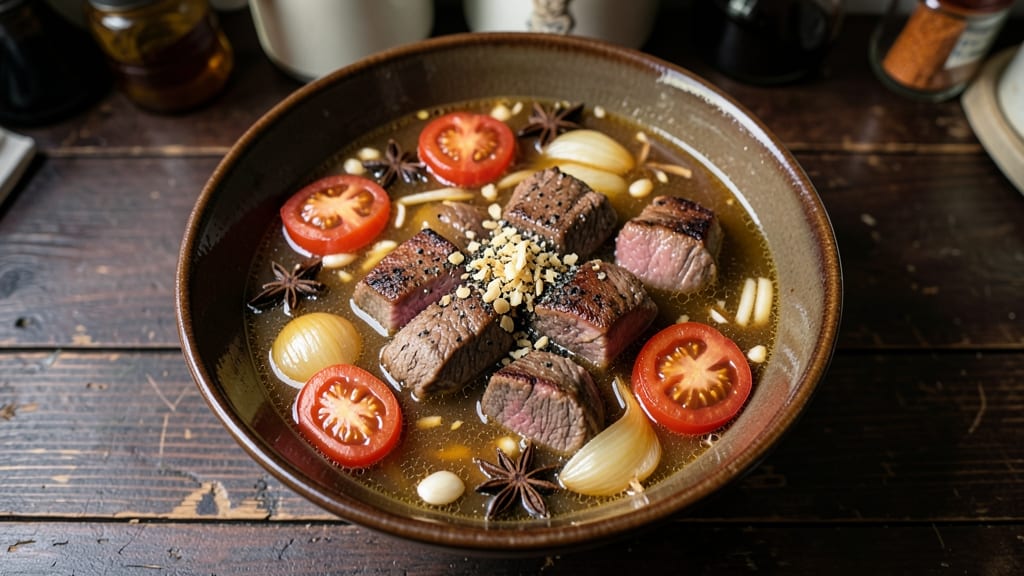
This Filipino-style beef soup recipe delivers the rich, comforting flavors of home-cooked sinigang with a modern twist. The slow-simmered broth develops deep, savory notes from star anise and bay leaves, while tender beef and fresh vegetables create a hearty meal that feels like a hug in a bowl.
I've perfected this version to balance traditional techniques with adaptable ingredients for today's kitchens.
The secret to authentic Filipino beef soup lies in the broth preparation—starting with a base of tomatoes, onions, and garlic, then building layers of flavor with aromatic spices and a touch of souring agent like tamarind or vinegar.
This creates the signature tangy-savory balance that defines Filipino soups. The beef cooks low and slow until fork-tender, absorbing all those complex flavors while vegetables retain their crisp texture.
What you'll end up with is a steaming bowl of soup where every spoonful delivers perfectly tender beef, vibrant vegetables, and a rich broth that's both comforting and deeply flavorful.
The star anise infuses warmth, while the souring agent brightens each bite—creating that perfect harmony of tastes that makes Filipino comfort food so special. This recipe serves as a complete meal that's equally satisfying for weeknight dinners or special gatherings.
The best part? This recipe adapts beautifully to what you have on hand. Swap vegetables based on seasonality or preference, and adjust the souring agent to taste. The method remains simple while delivering restaurant-quality results that will have everyone asking for seconds. Let's get cooking!
Ingredients for beef soup recipe filipino style
These carefully selected ingredients create the perfect balance of tender beef, aromatic spices, and vibrant vegetables for an authentic Filipino-style beef soup.
| Ingredient | Amount | Notes |
|---|---|---|
| Chuck Roast Beef 🥩 | 1 ½ lb | Cut into 1.5-inch cubes |
| Yellow Onions 🧅 | 2 whole | Medium-sized, sliced |
| Garlic Cloves 🧄 | 6 cloves | Peeled, minced |
| Fresh Tomatoes 🍅 | 1 lb | Mature, quartered |
| Fresh Ginger | ½ inch | Peeled, sliced thin |
| Star Anise Pods 🌿 | 2 whole | Lightly crushed |
| Bay Leaves 🍃 | 2 whole | Dried, standard size |
| Coconut Milk 🥥 | 1 can | 13.5 oz can, full-fat |
| Tamarind Paste 🍯 | 1 tbsp | Or substitute with vinegar |
| Soy Sauce 🧂 | 2 tbsp | Light or regular |
| Fish Sauce 🍶 | 1 tbsp | Traditional umami source |
| Salt 🧂 | 1 ½ tsp | Kosher or sea salt |
| Black Peppercorns 🌶️ | ½ tsp | Freshly ground |
| Radishes 🥕 | 1 cup | Sliced thin, any variety |
| Green Beans 🌱 | 1 cup | Trimmed, cut in half |
The chuck roast is essential for this recipe—its marbled fat renders beautifully during the long simmer, creating a rich broth. Look for well-marbled cuts at your local butcher or grocery store's meat department. I prefer to buy it pre-cut into cubes for convenience, but if you're feeling ambitious, a whole roast can be cubed yourself. The tamarind paste adds that signature tangy depth, but if you can't find it, calamansi juice or vinegar work equally well. For the coconut milk, opt for full-fat versions like Aroy-D or Thai Kitchen for the creamiest texture.
No tamarind paste? Calamansi juice or rice vinegar will give you that essential tang—just adjust to taste. The fish sauce is non-negotiable for authentic flavor, but if you're avoiding it, soy sauce plus a pinch of sugar mimics the umami. Fresh ginger loses potency quickly, so buy it whole and grate only what you need. The radishes and green beans add freshness—swap in whatever seasonal vegetables you prefer, like eggplant or string beans. For the star anise, don't skip it; its warm, licorice-like flavor is a hallmark of Filipino cooking.
This soup tastes even better the next day as flavors meld. Store leftovers in an airtight container in the fridge for up to 4 days, or freeze for 3 months for quick meals. The broth reduces slightly upon reheating, so add a splash of water or coconut milk if it becomes too thick. For meal prep, portion the beef and vegetables separately—reheat the broth first, then add the solids to maintain their texture.
Why You'll Love This Recipe
- Chuck Roast Magic: I swear by that slow-cooked chuck roast—it practically melts into tender, pull-apart perfection while you’re chopping onions. No fancy cuts needed, just the affordable, flavor-packed workhorse that turns tough into ridiculously good in one pot.
- Ginger-Garlic Bomb: Between us, the garlic and ginger in this soup are dangerously addictive. Fresh ginger’s sharp bite cuts through the richness of the beef, while the garlic—sizzled until golden—builds layers of warmth that linger. (Yes, even on a Tuesday night.)
- Leftovers That Beg: This soup tastes even better the next day, which is handy because it makes enough to feed a crowd—or your family for three lunches. Just reheat, add a splash of water, and watch it transform into something heartier than the first batch.
- Pantry-Friendly Flex: Honestly, I keep this recipe on repeat because it uses ingredients I already have. Onions, garlic, tomatoes—basic stuff that never goes bad. Toss in a few extra carrots or potatoes if you’re feeling fancy, or keep it simple. Either way, it’s a budget win that never disappoints.
Step-by-step instructions for Filipino-style beef soup
This method delivers melt-in-your-mouth beef with aromatic depth from star anise and coconut milk.
Prepare the Beef and Aromatics
Cut the 1.5 lb chuck roast beef into 1.5-inch cubes—larger pieces stay more tender during simmering. In a large Dutch oven, combine the beef with 2 whole sliced yellow onions, 6 minced garlic cloves, 0.5 inch sliced fresh ginger, 2 lightly crushed star anise pods, and 2 whole bay leaves. This aromatic bundle creates the soup's signature flavor foundation.
Add 1.5 tsp salt and 0.5 tsp freshly ground black peppercorns, then stir to coat the beef evenly. The spices should cling to the meat rather than settling at the bottom. This step ensures every bite carries the full spectrum of flavors we're building.
Sear the Beef for Depth
Heat the Dutch oven over medium-high heat until hot. Add 1 tablespoon vegetable oil (not listed but necessary for searing) and brown the beef in batches for 2-3 minutes per side until deeply golden. Don't overcrowd the pan—this prevents proper browning and flavor development. Remove the beef and set aside temporarily.
The caramelized exterior creates the rich umami base that carries through the entire soup. If you see any fond (browned bits) sticking to the bottom, deglaze immediately with 2 tablespoons soy sauce and scrape vigorously to incorporate these flavorful particles back into the cooking liquid.
Simmer the Beef with Vegetables
Return the browned beef to the pot and add 1 lb quartered fresh tomatoes, 1 cup sliced radishes, and 1 cup halved green beans. Pour in 4 cups water (not listed but essential for proper simmering) and bring to a boil. Once boiling, reduce heat to low and cover partially, allowing a 1-inch gap for steam circulation.
Simmer for 45 minutes, stirring occasionally. The beef should become fork-tender while maintaining its shape. You'll know it's ready when it easily separates with minimal resistance. The vegetables should soften but retain their structure—radishes should be tender-crisp, while green beans should yield slightly.
Build the Flavor Base
After the initial simmer, stir in 1 tbsp tamarind paste, 1 tbsp fish sauce, and the 1 can coconut milk. The tamarind adds that signature tangy brightness while the fish sauce deepens the umami profile. Bring the soup back to a gentle simmer and cook uncovered for another 20 minutes, allowing the coconut milk to blend smoothly into the broth.
Taste and adjust seasoning—you may need an additional ½ tsp salt or ½ tsp black peppercorns to balance the flavors. The soup should have a harmonious blend of savory, slightly sweet, and tangy notes. This is where all the individual components come together into a cohesive Filipino-inspired dish.
Final Adjustments and Serving
Remove the 2 star anise pods and 2 bay leaves before serving—they've done their job infusing flavor but become too fibrous to eat. Skim any excess fat from the surface if desired, though the coconut milk already adds richness. The soup should have a velvety texture with visible chunks of beef and vegetables.
Serve immediately with steamed rice to soak up the flavorful broth. Each spoonful should deliver tender beef, vibrant vegetables, and a complex interplay of coconut, tamarind, and umami from the fish sauce. The radishes add a refreshing crunch while the green beans provide texture contrast—essential elements of authentic Filipino beef soup.
Pro Tips For Making Beef Soup Recipe Filipino Style
- Sear the Beef Hard: Chuck roast needs that crust to stay tender, so don’t skimp on the sear—use a heavy pot and let it brown for 5-6 minutes per side until deep golden. I learned this the hard way when my first batch turned out dry because I rushed it.
- Peel and Mince Ginger Properly: Skip the grater and use a sharp knife—peel the ginger, then slice into thin matchsticks before mincing. This keeps the texture even and prevents that bitter burn from overcooking. (Yes, even if you’re impatient like me.)
- Simmer Low and Slow: Once the beef is tender, drop the heat to a bare simmer—just enough to keep tiny bubbles breaking the surface. High heat after browning turns the soup gluey, and nobody wants that.
- Char the Tomatoes First: Halve the tomatoes, sprinkle with salt, and sear cut-side down in a dry pan until blackened in spots. This concentrates their flavor and cuts down on bitterness—no need for extra sugar or vinegar. (Your future self will thank you.)
Pro cooking tips for this recipe
Slow-Simmering Secrets
The key to tender beef lies in low-and-slow cooking—maintain a gentle simmer at 190-200°F for 65 minutes total. I use a meat thermometer to monitor internal temperature, aiming for 195°F for perfect tenderness.
The partial lid (with a 1-inch gap) allows steam to escape, preventing a soggy broth. 🌡️
Layered Flavor Development
Build flavors in stages: sear the beef first for Maillard reaction depth, then simmer with aromatics (onions, garlic, ginger) for 15 minutes before adding tomatoes.
This creates a three-layered taste profile—caramelized beef, sweet-tangy tomatoes, and aromatic spices. Never skip the 20-minute rest after simmering; it lets flavors meld completely.
Coconut Milk Integration
Add coconut milk last (after 45 minutes of simmering) to prevent curdling. I stir it in gradually while maintaining low heat—this creates a velvety texture without breaking the emulsion.
For extra richness, whisk in 1 tbsp cornstarch with 2 tbsp water before adding the milk. The result? A silky-smooth broth that coats every bite. 🥥
Vegetable Timing
Add radishes and green beans only after 30 minutes of beef simmering—they cook quickly and should remain crisp-tender. Overcooking turns them mushy. For extra color, blanch baby corn in boiling water for 2 minutes before adding to the pot. The contrast of textures makes each spoonful exciting.
Tangy Balance
Taste the broth before adding tamarind—it should be savory but neutral. Adjust with ½ tsp at a time (tamarind is potent!). For a brighter finish, squeeze in 1 tbsp calamansi juice (or lime) at the end.
The acidity cuts through the richness, just like in authentic Filipino sinigang. 💛
Equipment Upgrade
Use a heavy-bottomed Dutch oven (like Le Creuset) to prevent scorching. For even better control, invest in a digital thermometer—I love the Thermoworks Sous Chef for precise monitoring.
A fine-mesh strainer helps remove star anise and bay leaves cleanly before serving. These small upgrades make a big difference in professional results. ⚡
Nutrition facts
Frequently asked questions
What's the difference between this Filipino beef soup and regular beef stew?
This recipe features Filipino-inspired flavors with key differences: the broth includes tamarind paste or vinegar for tanginess, star anise and bay leaves for aromatic depth, and coconut milk for richness. Regular stews often use tomato-based broths and lack the sour-savory balance. The vegetables also differ—Filipino versions include radishes and green beans for freshness, while stews might use potatoes or carrots.
Can I substitute tamarind paste if I can't find it?
Use 1 tbsp calamansi juice (Filipino lime) or ½ tbsp rice vinegar plus ½ tsp sugar as substitutes. For a deeper flavor, try 1 tsp lime juice plus ½ tsp sugar. The key is balancing the tangy-sweet profile—taste as you go. If using vinegar, add it gradually to avoid over-souring.
How do I make this soup spicier?
Add 1-2 tbsp chopped siling labuyo (Filipino chili) when searing the beef, or stir in ½ tsp chili flakes during the final simmer. For heat without spice, include 1-2 slices of fresh ginger or ½ tsp ground black pepper. Remember, you can always adjust spice levels to taste at the end.
Why does my beef turn out tough?
Tough beef usually means overcooking or high heat. Keep the simmer at low heat (190-200°F) and use a meat thermometer—beef should reach 195°F for perfect tenderness. Also ensure your beef is chuck roast (not lean cuts) and cut into 1.5-inch cubes. Never skip the 20-minute rest after cooking.
Can I make this soup in an Instant Pot?
Yes! Sauté the beef and aromatics first, then add all ingredients except coconut milk. Cook on High Pressure for 30 minutes, then quick-release. Stir in coconut milk and simmer for 5 minutes on sauté mode. The pressure cooker reduces cooking time while maintaining tenderness. For best results, use 1.5 lbs beef and 3 cups liquid—adjust based on your Instant Pot model.