
Soups & Stews
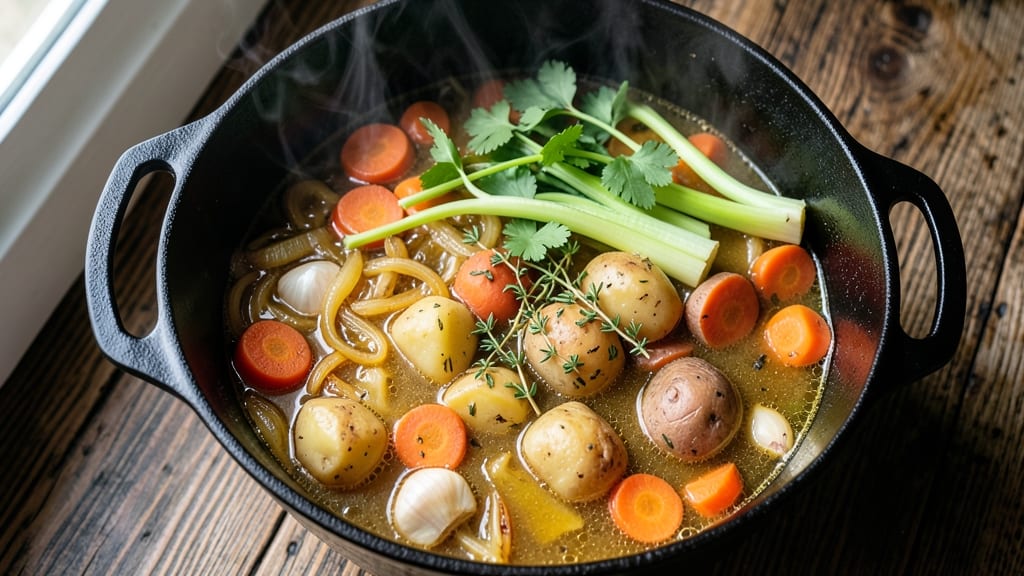
A 5-gallon vegetable soup transforms a simple pantry haul into a hearty, nourishing meal that feeds a crowd without breaking the bank. This recipe leverages the power of slow simmering to develop deep, layered flavors from humble ingredients—think carrots, celery, onions, and potatoes—all working together in one massive pot.
The beauty of this approach is its flexibility: scale it down for a family of four or double it for gatherings, and you’ll always have leftovers to savor.
What sets this soup apart is its foolproof technique—no fancy ingredients, just a well-stocked pantry and a few hours on the stove. The secret lies in sautéing aromatic vegetables until they’re fragrant before adding liquid, which builds a rich, savory base.
A splash of vegetable broth and a pinch of salt elevate the flavors, while optional additions like beans, grains, or fresh herbs let you customize it to your taste. By the time you’re ladling out steaming bowls, you’ll have a soup that’s comforting, satisfying, and packed with nutrients.
The vegetables soften into tender perfection, the broth thickens just enough to coat every spoonful, and the aroma alone will have everyone gathering around the table. This is the kind of meal that turns a busy weeknight into a cozy, shared experience.
Perfect for meal prep, potlucks, or simply feeding a hungry household, this soup keeps well in the fridge for days—making it a true pantry hero. Let’s get started on creating a batch that’s as rewarding to make as it is to eat.
Ingredients for 5 gallon vegetable soup
Pantry staples and fresh veggies—this is crowd-feeding made easy.
| Ingredient | Amount | Notes |
|---|---|---|
| Yellow Onions 🧅 | 3 whole | Diced, medium size preferred |
| Carrots 🥕 | 6 lb | Whole, peeled and chopped |
| Celery Stalks 🧄 | 4 bunch | Chopped, leafy parts trimmed |
| Russet Potatoes 🥔 | 5 lb | Peeled and cubed, 1-inch pieces |
| Garlic Cloves 🧄 | 12 cloves | Minced, fresh preferred |
| Vegetable Broth 💧 | 6 cups | Low-sodium preferred |
| Canned Diced Tomatoes 🍅 | 5 cans | 15 oz each, fire-roasted if available |
| Canned White Beans 🥫 | 4 cans | 15 oz each, drained and rinsed |
| Tomato Paste 🍅 | ½ cup | Smooth, no sugar added |
| Olive Oil 🫒 | ½ cup | Extra-virgin for richness |
| Salt 🧂 | 2 tbsp | Kosher or sea salt |
| Black Pepper 🌶️ | 1 tbsp | Freshly ground preferred |
| Dried Thyme 🌿 | 1 tbsp | Or 3 tbsp fresh thyme |
| Bay Leaves 🌿 | 4 whole | Remove before serving |
| Fresh Parsley 🌿 | ½ cup | Chopped, for garnish |
The onions, carrots, and celery form the holy trinity of soup flavor. Buy them fresh—wilted veggies won’t cut it. Trader Joe’s has great pre-chopped bundles that save time, but whole carrots and onions last longer. Potatoes? Russets hold up best—avoid red potatoes, they’ll turn mushy. Garlic is non-negotiable here; fresh cloves give way more punch than powder. If you’re prepping ahead, chop everything and store in airtight containers for up to 3 days—it’ll make assembly a breeze later.
No fire-roasted tomatoes? Regular diced works fine. White beans can be swapped for chickpeas or lentils if you’ve got them. The tomato paste is your flavor booster—don’t skip it. For extra richness, stir in a splash of vegan Worcestershire sauce (like Annie’s). Need to make this gluten-free? Check your broth label—some brands sneak in wheat. And if you’re short on thyme, oregano at half the amount does the trick. The bay leaves add depth, but if you forget them, just add an extra pinch of salt.
This soup tastes even better the next day—make a double batch if you can. Keeps for 5 days in the fridge or 3 months frozen. For freezing, portion into quart-sized containers so you can thaw just what you need. Reheat gently on the stove with a splash of water or broth to restore thickness. The parsley at the end is optional but adds a bright finish—store-bought works, but fresh is prettier. Leftovers? Perfect for lunchboxes or potlucks—just reheat and serve.
Why You'll Love This Recipe
- One-Pot Magic: I swear by this recipe—just toss chopped onions, carrots, celery, potatoes, and garlic into a pot with broth, and let it simmer. No fancy techniques, no stress, just done.
- Garlic-Potato Bliss: That crispy, buttery edge on the potatoes? The way the garlic melts into the broth? It’s the kind of flavor that makes you pause mid-spoonful—like, how is this so good? Honestly, the potatoes steal the show.
- Meal Prep MVP: Make a whole 5-gallon batch on Sunday, and you’ve got lunch covered for the week. The flavors only get better as it sits—my freezer’s full of these jars, and I never regret it.
- Budget-Friendly Feast: Carrots, potatoes, onions—these are the ingredients that don’t break the bank. A single batch feeds a crowd, and the leftovers? Even better reheated the next day. (Yes, even on a Tuesday night.)
Step-by-step instructions for 5 gallon vegetable soup
Here's how to turn pantry staples into a soul-warming pot of soup that feeds a crowd.
Sauté the Vegetable Base
Heat the 0.5 cup olive oil in a large stockpot or Dutch oven over medium heat. Add the 3 whole yellow onions, 6 lb carrots, and 4 bunch celery stalks, stirring occasionally for 8-10 minutes until the vegetables soften and the onions turn translucent. You'll smell that sweet, caramelized aroma—this is where all the flavor starts.
Real talk: Don't walk away. If the vegetables start to brown too quickly, reduce the heat slightly. You want them tender, not crispy. Once they're softened, add the 12 cloves minced garlic and cook for another 30 seconds until fragrant. This quick step prevents the garlic from burning, which would make the whole soup bitter.
Build the Flavor Foundation
Stir in the 0.5 cup tomato paste and cook for 2 minutes, letting it deepen in color. This step develops the soup's rich, umami base. Next, add the 2 tbsp salt, 1 tbsp black pepper, 1 tbsp dried thyme, and 4 whole bay leaves, mixing well to distribute the spices evenly throughout the vegetables.
Here's the thing—don't skip the tomato paste. It thickens the soup and adds a depth of flavor that separates this from basic vegetable broth. If you're using fire-roasted tomatoes, you'll get an extra layer of smoky sweetness that pairs perfectly with the earthy vegetables.
Add Liquids and Hearty Ingredients
Pour in the 6 cups vegetable broth and 5 cans diced tomatoes (with their juices), stirring to combine. Add the 5 lb cubed russet potatoes and 4 cans drained white beans, bringing everything to a gentle boil. Once boiling, reduce the heat to medium-low and let it simmer uncovered for 30 minutes, stirring occasionally.
This simmering time ensures the potatoes soften completely while keeping the beans intact. If the soup starts to look too thick, add a splash of water—you want it to coat a spoon but still be ladle-friendly. The potatoes should be fork-tender by the end of this step, with just a slight resistance when pierced.
Finish and Season
After 30 minutes, taste the soup and adjust the seasoning. You might need more salt or pepper—don't be shy, this is a hearty soup meant to be flavorful. Remove the 4 whole bay leaves before serving, as they can be tough to chew. Stir in the 0.5 cup chopped fresh parsley just before serving to add a bright, fresh finish that cuts through the richness.
Let the soup sit off the heat for 5-10 minutes before serving. This resting period allows the flavors to meld together perfectly. The soup should be thick enough to coat the back of a spoon but still easy to ladle. Serve with crusty bread or over rice for the ultimate comfort meal.
Pro Tips For Making 5 Gallon Vegetable Soup
- CHAR THE ONIONS FIRST: I learned this the hard way—rushing to toss everything in the pot means your onions and garlic will just sit there, barely sweating. Get them golden brown (about 8-10 minutes) before adding liquids; this builds flavor that shortcuts can’t replicate. (Yes, even if you’re impatient like me.)
- CUT POTATOES UNIFORM: Russet potatoes break down at different rates, and you’ll end up with some mushy lumps and others still rock-hard. Cut them into 1.5-inch chunks—big enough to hold shape but small enough to cook through in the same time as the carrots. No one wants to fish out half-cooked spuds.
- SALT THE WATER LIKE THE OCEAN: Skip the "lightly salted" nonsense—this is a 5-gallon batch, not a delicate sauce. Aim for 1.5–2 tablespoons of salt per gallon of water (or more if you’re using unsalted broth). The potatoes and carrots need that flavor infusion, and you’ll taste the difference when you’re halfway through.
- ADD GARLIC LATE: Tossing garlic in with the onions? It’ll burn before the soup even simmers. Wait until the veggies have softened (about 15 minutes in), then add the minced cloves with the potatoes. They’ll infuse without turning bitter—trust me, I’ve made that mistake enough times.
Dietary considerations for this 5 gallon vegetable soup
Vegan-Friendly Base
This recipe is naturally vegan—no animal products needed! The olive oil and vegetable broth provide richness, while the white beans and tomatoes deliver plant-based protein and fiber. For extra depth, stir in 1 tbsp nutritional yeast when serving—it adds a cheesy, umami flavor without dairy. 🌱
Gluten-Free Adaptations
Check your vegetable broth label—some brands contain hidden gluten from thickeners. Imagine brand or Pacific Foods make excellent gluten-free options. Also, ensure your tomato paste is gluten-free (like Muir Glen). If using store-bought beans, verify they’re processed in gluten-free facilities.
Low-Sodium Options
This soup is already low-sodium thanks to low-sodium vegetable broth and careful seasoning. For even lighter flavor, reduce the 2 tbsp salt to 1 tbsp and boost umami with 1 tsp soy sauce or 1 tsp miso paste (ensure gluten-free if needed).
Taste as you go—you can always add more salt later!
Allergen-Free Swaps
Need to avoid soy? Skip the soy sauce and use 1 tsp coconut aminos instead. For nut-free kitchens, ensure your olive oil is refined (unrefined may contain traces). If someone has a parsley allergy, garnish with cilantro or basil instead. Always double-check labels—hidden allergens sneak into pantry staples!
Protein Boosts
Add 1 cup cooked quinoa or 1 cup lentils for extra protein. For a nutty crunch, stir in ½ cup toasted pumpkin seeds at the end.
If using canned chickpeas, rinse them well to remove excess sodium. These additions keep the soup hearty and satisfying while balancing flavors perfectly. 💪
Nutrition facts
Frequently asked questions
Can I make this soup in a smaller pot?
This recipe scales perfectly. For a family of 4, reduce all ingredients by 1/4 (use a 6-quart stockpot) and simmer for 20-25 minutes instead of 30. The cooking time and technique stay the same—just adjust the pot size. Pro tip: Use a Dutch oven for even heat distribution.
What if I don't have fresh herbs like parsley or thyme?
No problem! Swap 1 tbsp dried thyme for 3 tbsp fresh (or 1 tbsp dried oregano), and omit parsley if needed. For extra flavor, add 1 tsp smoked paprika or ½ tsp red pepper flakes. The soup will still taste delicious—these are just flavor enhancers, not requirements!
How do I fix soup that's too thin or too thick?
For thin soup, simmer uncovered for 10-15 extra minutes to reduce the liquid. For thick soup, stir in 1 tbsp cornstarch mixed with 2 tbsp cold water and simmer for 2-3 minutes until thickened. Never add flour directly—it can make the soup grainy. A splash of water or broth also helps adjust consistency mid-cook.
Can I prep ingredients ahead of time?
Yes! Chop all vegetables and store in airtight containers for up to 3 days in the fridge. Pre-mix the spices with the tomato paste for a flavor packet—just add it all at once when cooking. The beans and broth can wait until you're ready to cook. This makes assembly on busy days a breeze!
Why does my soup taste bland after reheating?
Reheating often dulls flavors because the heat escapes. Fix this by adding a splash of lemon juice or apple cider vinegar (1 tbsp) and a pinch of salt. For extra depth, stir in 1 tsp soy sauce or ½ tsp smoked salt. Always reheat gently on low heat—high heat can make the soup taste flat.