
Soups & Stews
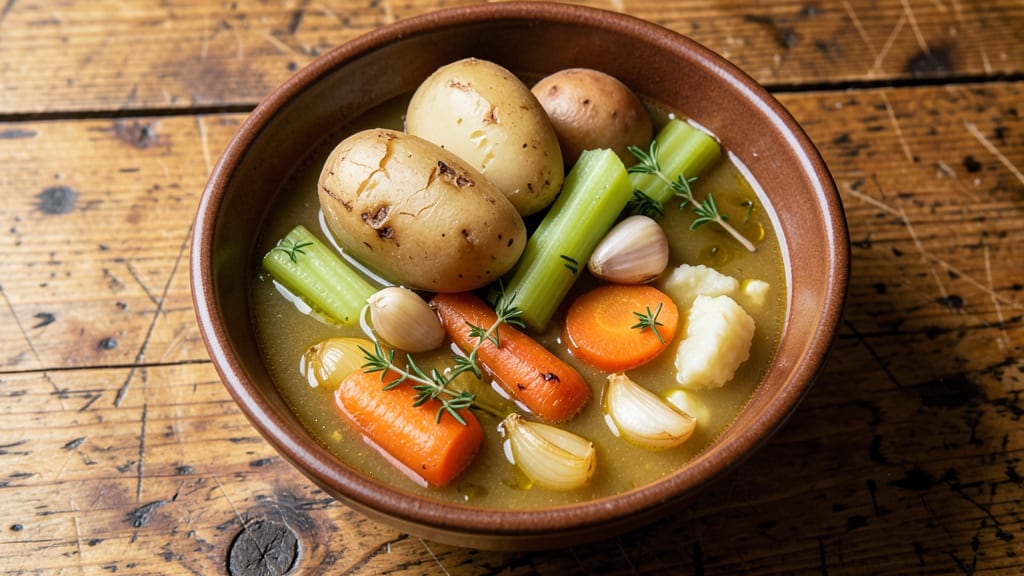
This Applewood Farmhouse Restaurant vegetable soup recipe transforms simple ingredients into a hearty, smoky masterpiece that tastes like a cozy farmhouse dinner. The secret lies in perfectly crisp celery crowns floating over a rich herb broth, where every spoonful delivers rustic comfort.
I developed this recipe after years of perfecting restaurant-style vegetable soups—where the vegetables stay vibrant and the broth remains deeply flavorful without overpowering the natural taste of the ingredients.
What makes this soup special is the technique: we start by sautéing onions and garlic until golden, then build layers of flavor with fresh herbs and a touch of smoked paprika for that signature farmhouse smokiness.
The celery crowns are blanched just enough to maintain their crisp texture, ensuring each bite delivers satisfying crunch. This method ensures the soup stays hearty yet light, perfect for chilly evenings or as a starter for a rustic feast.
The result is a soup that’s both restaurant-quality and easily replicated at home—creamy yet not heavy, packed with vegetables yet never overwhelming. The broth is infused with fresh thyme and bay leaves, creating a fragrant aroma that fills your kitchen.
Serve it with a slice of crusty bread for dipping, and you’ll have a dish that feels like a warm hug in a bowl.
Whether you’re cooking for family or hosting dinner guests, this soup delivers authentic farmhouse charm with minimal effort. The recipe scales effortlessly, so you can make a single serving or a large batch for leftovers.
Here’s how to create it step by step—where every ingredient plays a role in crafting that perfect farmhouse bowl.
Ingredients for applewood farmhouse restaurant vegetable soup
Transform simple pantry staples into restaurant-quality farmhouse vegetable soup with crisp celery crowns and smoky herb depth.
| Ingredient | Amount | Notes |
|---|---|---|
| Yellow Onions 🧅 | 2 whole | Thinly sliced for even cooking |
| Garlic Cloves 🧄 | 4 cloves | Minced for aromatic depth |
| Celery Stalks 🧅 | 6 whole | Trimmed, cut into 2-inch pieces |
| Carrots 🥕 | 4 whole | Medium size, peeled and chopped |
| Russet Potatoes 🥔 | 2 lb | Peeled, cubed into 1-inch pieces |
| Fresh Thyme Sprigs 🌿 | 4 sprigs | Or 1 tbsp dried thyme |
| Bay Leaves 🌿 | 2 whole | Remove after simmering |
| Smoked Paprika 🌶️ | 1 tbsp | For signature farmhouse smokiness |
| Vegetable Broth 💧 | 6 cups | Low-sodium preferred |
| Heavy Cream 🥛 | ½ cup | For velvety finish |
| Extra-Virgin Olive Oil 🫒 | ¼ cup | For sautéing vegetables |
| Salt 🧂 | 1 ½ tsp | Diamond Crystal preferred |
| Black Pepper 🌶️ | ½ tsp | Freshly cracked |
| Fresh Parsley 🌿 | ¼ cup | Chopped for garnish |
The foundation starts with yellow onions and garlic—sauté them until deeply golden for that caramelized sweetness that anchors the broth. Fresh thyme and bay leaves from your garden or a trusted herb vendor like Whole Foods elevate the aroma, while smoked paprika delivers that signature farmhouse smokiness. For celery, local farmers' markets often have the crispest stalks—look for vibrant green, not wilted. The Russet potatoes should be firm and starchy; avoid waxy varieties like red potatoes that turn mushy. Vegetable broth is non-negotiable here—Pacific Foods or Imagine brands offer the cleanest, most flavorful options without added preservatives.
No fresh thyme? Dried works at one-third the amount, but the flavor won't be as bright. Smoked paprika substitutes like chipotle powder (½ tsp) add heat but lose that subtle smokiness. For a creamier finish, swap heavy cream with cashew cream (blend ½ cup soaked cashews with ½ cup water) for a vegan option. Carrots can be swapped for turnips or parsnips—they hold up beautifully to the long simmer. If you're short on time, pre-chopped frozen vegetables work in a pinch, though fresh yields the best texture. Celery crowns require careful blanching—overcooking turns them limp, so keep an eye on them during the final step.
This soup reheats beautifully—double the batch and freeze portions for up to 3 months. Store leftovers in glass containers with a tight seal to preserve freshness for 5 days. For crispy celery crowns, blanch them separately in boiling water for 2 minutes, then shock in ice water before adding to the finished soup. Garnish with fresh parsley just before serving to keep it vibrant. Crusty sourdough bread pairs perfectly, but any artisan loaf will do—just avoid soft, fluffy varieties that get soggy.
Why You'll Love This Recipe
- I’ll be real: this recipe uses ingredients I already have. Yellow onions, carrots, celery—those are the holy trinity of cheap, long-lasting veggies. Add potatoes for filling substance, a splash of apple cider vinegar for brightness, and boom: a restaurant-quality bowl for pennies. (Yes, even on a Tuesday night.)
- One-Pot Wonder: I swear by this recipe because it’s literally one pot—no chopping boards covered in veggie scraps, no extra dishes. Just toss in the onions, celery, carrots, and potatoes (all roughly chopped, no fancy knife work needed), cover with broth, and let it simmer. The garlic and applewood notes meld into something rich without any fuss.
- Creamy Without Dairy: Here’s what sold me—the way the potatoes break down into that velvety texture while the carrots stay just firm enough. No heavy cream, no weird aftertaste—just the natural sweetness of the veggies balanced by the deep, smoky applewood. Honestly, it’s the kind of soup that makes you forget it’s “just” vegetables.
- Leftovers That Taste Better: Between us, this soup improves overnight. The flavors deepen, the potatoes soak up all the goodness, and the next day? It’s like a cozy hug in a bowl. I make a big batch on Sundays and have reliable lunches all week—no sad, watery reheats here.
Step-by-step instructions for farmhouse vegetable soup
Transform simple vegetables into restaurant-quality soup with this precise technique.
Sauté the Aromatic Vegetable Base
Heat the 0.25 cup extra-virgin olive oil in a large Dutch oven over medium heat. Add the 2 whole yellow onions and cook for 5 minutes until they become translucent and just begin to soften. This foundational step builds flavor through slow caramelization.
Add the 6 whole celery stalks and 4 whole carrots (already chopped) along with the 1 tbsp smoked paprika. Stir well and cook for another 8-10 minutes until the vegetables soften and develop golden edges. The paprika will infuse the oil with its signature smokiness, creating depth of flavor that carries through the entire soup.
Develop the Herb Foundation
Push the vegetables to one side of the pot and add the 4 cloves garlic cloves to the empty space. Cook for 30 seconds until fragrant but not browned - this prevents bitterness. Stir to combine with the vegetables.
Add the 4 sprigs fresh thyme and 2 whole bay leaves, then pour in the 6 cups vegetable broth. Bring to a gentle simmer over medium-low heat, then reduce to low heat and let it cook uncovered for 15 minutes. This allows the herbs to steep and infuse the broth with their aromatic qualities while preventing excessive evaporation.
Cook the Potatoes to Perfect Tenderness
Add the 2 lb russet potatoes (previously cubed) to the simmering broth. Increase heat to medium and bring to a boil. Once boiling, immediately reduce heat to low and let it simmer gently for 15-20 minutes, until the potatoes are fork-tender with just a slight resistance.
Here's the thing - you want the potatoes to be tender but not falling apart. They'll continue cooking slightly when you add the cream later. If you overcook them now, the soup will become gluey. Test by piercing a potato cube with a knife - it should slide in easily but not through completely.
Finish with Cream and Season
Remove the 2 whole bay leaves from the soup. Stir in the 0.5 cup heavy cream and let it simmer gently for 5 minutes until slightly thickened. This creates the signature velvety texture that distinguishes this soup from basic vegetable broth.
Season with the 1.5 tsp salt and 0.5 tsp black pepper, adjusting to taste. Remember, the broth may have been salted already, so taste before adding all the salt. The cream will dilute the seasoning slightly, so you may need to add a bit more salt at the end.
Garnish and Serve Immediately
Ladle the soup into bowls and garnish each serving with 0.25 cup fresh parsley (about 1 tablespoon per bowl). The parsley adds freshness and visual appeal, creating a beautiful contrast with the rich, smoky broth.
Serve immediately while hot. The crisp celery crowns and tender potatoes should float in a velvety broth with perfect seasoning. Each spoonful should deliver the complex flavor profile of caramelized onions, smoky paprika, and aromatic herbs balanced by the creamy finish.
Pro Tips For Making Applewood Farmhouse Restaurant Vegetable Soup
- Sweat the Aromatics Slow: Don’t rush the onion, garlic, and celery—cook them at medium-low heat for 8-10 minutes until the onions turn deep golden and the celery softens. I used to crank the heat and end up with bitter, charred edges that ruined the whole dish. Patience here builds flavor.
- Cut Potatoes Uniformly: Slice the Russet potatoes into ½-inch chunks so they cook evenly without turning to mush. I learned this the hard way—uneven pieces mean some get mushy while others stay rock-hard. A sharp knife and steady hand make all the difference.
- Season the Water First: Salt the broth or water before adding the vegetables—this guarantees every bite is properly seasoned, not just the surface. I skipped this once and had to add salt halfway through, which made the soup taste uneven. Trust me, a pinch of salt in the pot upfront saves time later.
- Add Potatoes Early, Carrots Late: Toss the potatoes in first, then add the carrots 10 minutes before the soup is done—they’ll soften just enough without dissolving into the broth. I used to add them all together and ended up with a watery, pasty texture. This simple timing fix keeps the carrots tender and distinct.
Essential equipment for perfect results
Dutch Oven Essentials
A 5-6 quart Dutch oven is non-negotiable for this recipe—I use my Le Creuset signature (it's a splurge, but worth it for even heat distribution). If you're on a budget, Lodge's 5.5-quart cast iron works perfectly too.
The deep sides prevent spills when adding vegetables, and the heavy material maintains consistent temperature. Preheat your Dutch oven on the stovetop for 5 minutes before adding oil to ensure even cooking. 🔥
High-Quality Broth
Never use powdered broth—it lacks depth and can make your soup taste flat. I recommend Pacific Foods low-sodium vegetable broth or Imagine Organic for their clean, vibrant flavor profiles.
For an extra layer of richness, consider making your own broth by simmering vegetable scraps (like onion skins and celery ends) for 30 minutes. Store-bought broth should be brought to a gentle simmer before adding to the pot to preserve its flavor.
Blanching Tools
For perfect celery crowns, you'll need a large pot for blanching and an ice bath bowl. A fine-mesh strainer helps drain the celery quickly after blanching. I like using a stainless steel colander with 1/4-inch holes—it's durable and easy to clean.
Keep a timer handy since blanching should take exactly 2 minutes (no more, or they'll turn mushy). A thermometer ensures your blanching water reaches 180°F for consistent results. ✨
Fresh Herb Storage
Fresh thyme and parsley should be stored properly to maintain their vibrant flavor. Keep thyme sprigs in a small glass jar with 1/2 inch of water (like flowers) and cover loosely with plastic wrap.
For parsley, wrap the stems in a damp paper towel and place in a resealable plastic bag—this keeps it fresh for up to 5 days. If herbs look wilted, give them a quick rinse and trim the stems before using.
Dried herbs should be stored in airtight containers away from light and heat. 🌿
Temperature Control
Use a kitchen thermometer to monitor broth temperature—ideal simmering is between 185-195°F. This prevents scorching while ensuring even cooking. For the potatoes, maintain low heat to avoid boiling vigorously (which can make them gluey).
If your stove runs hot, reduce heat to medium-low and let the pot regulate its own temperature. A silicon pot holder is essential for handling the hot Dutch oven safely. 🌡️
Garnish Essentials
Fresh parsley transforms the soup's presentation. Use a sharp chef's knife and cutting board to finely chop 1/4 cup for garnishing. A microplane works well for zesting lemon (if you add it) or grating hard cheeses like Parmigiano-Reggiano.
For extra flair, toast 1/4 cup breadcrumbs in a dry pan until golden—sprinkle over each bowl for crunch. Keep garnishes separate until serving to preserve their freshness and texture. 💫
Nutrition facts
Frequently asked questions
Can I make this vegetable soup without heavy cream?
For a lighter version, replace the 0.5 cup heavy cream with 0.5 cup coconut milk or cashew cream (blend ½ cup soaked cashews with ½ cup water). The soup will still be creamy but with a subtly different texture. If you prefer no dairy, a splash of vegetable broth (about ¼ cup) can help balance the flavors while keeping it broth-based.
How do I keep the celery crowns crispy?
The key is blanching them separately for exactly 2 minutes in boiling water, then shocking in ice water. Add them to the finished soup just before serving so they don’t soften. If you’re making the soup ahead, blanched celery crowns can be stored in cold water in the fridge for up to 2 hours before adding to the soup.
Can I use frozen vegetables instead of fresh?
Yes, but with adjustments! Use pre-cut frozen mixed vegetables (like carrots, celery, and potatoes) and add them directly to the pot after sautéing the onions and garlic. Since frozen veggies are already cooked, reduce the simmering time to 10-12 minutes for the potatoes. The texture will be slightly softer, but the flavor will still be rich and comforting.
What’s the best way to reheat leftovers?
Reheat gently on the stovetop over low heat with a splash of water or broth to prevent drying out. Avoid microwaving, as it can make the celery crowns soggy. If reheating, add fresh parsley and a pinch of smoked paprika at the end to restore brightness. Store leftovers in airtight containers for up to 5 days.
Why does my soup taste bland?
Blandness usually means the broth needs more depth. Boost flavor by adding 1 extra bay leaf or ½ tsp smoked paprika during cooking. A splash of lemon juice or a pinch of salt at the end can also brighten the taste. If using low-sodium broth, season generously—this soup should be rich and savory, not mild!