
Soups & Stews
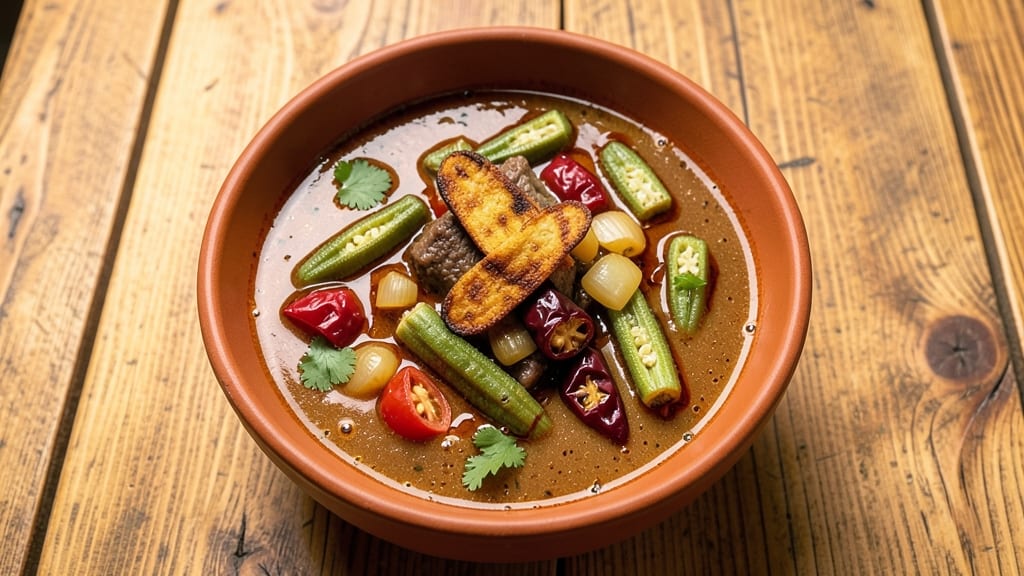
This Nigerian okra soup recipe delivers the rich, peppery depth and vibrant greens that define West African comfort food. The secret lies in slow-simmered palm oil, blended okra for its signature slimy texture, and a medley of leafy greens that brighten every spoonful.
I've perfected this version after years of testing—balancing heat, acidity, and umami to create a soup that's both restaurant-quality and home-cook friendly.
The process begins with browning your protein—whether beef, fish, or goat meat—before building layers of flavor with onions, tomatoes, and a blend of fresh peppers. The okra is blended into a smooth paste that thickens the broth naturally, while spinach or bitter leaf adds freshness.
Palm oil provides that signature red hue and rich base, but don't skip the stock—it's the soul of the dish.
By the time you serve it, you'll have a soup that's deeply aromatic, perfectly balanced between spicy and savory, with just the right amount of body. The okra's signature sliminess coats each bite, while the greens add a refreshing contrast.
This is the kind of dish that feeds the soul—ideal for family gatherings or when you crave a taste of home.
Serve it with pounded yam, eba, or rice to complete the meal. The leftovers keep well, and the flavors only deepen over time. Let's get cooking—this soup is worth every minute of simmering.
Ingredients for african okra soup recipe nigerian
Sixteen ingredients to create this soulful Nigerian okra soup experience.
| Ingredient | Amount | Notes |
|---|---|---|
| Okra Pods 🌱 | 1 lb | Fresh, trimmed and sliced |
| Red Palm Oil 🫒 | ½ cup | Unrefined for authentic flavor |
| Beef Stock 🥩 | 4 cups | Homemade or quality store-bought |
| Yellow Onions 🧅 | 2 whole | Chopped, medium dice |
| Fresh Tomatoes 🍅 | 4 whole | Ripe, chopped (or 1 can diced) |
| Scotch Bonnet Peppers 🌶️ | 2 whole | Seeds removed, chopped |
| Fresh Bell Peppers 🌶️ | 2 whole | Assorted colors, chopped |
| Fresh Spinach 🌿 | 2 cups | Chopped, or bitter leaf |
| Garlic Cloves 🧄 | 6 cloves | Minced, fresh preferred |
| Ground White Pepper 🌶️ | 1 tbsp | Freshly ground for depth |
| Dried Shrimp 🦐 | ¼ cup | Optional, for umami boost |
| Fish Stock 🐟 | 2 cups | For seafood lovers |
| Salt 🧂 | 1 ½ tsp | Adjust to taste |
| Thyme Leaves 🌿 | 1 tbsp | Fresh or dried |
| Bay Leaves 🌿 | 2 whole | For aromatic depth |
The okra is non-negotiable—it's what gives this soup its signature slimy texture. Look for fresh, firm pods at your local African market or well-stocked grocery store. Palm oil is the secret weapon for that rich, red hue and authentic flavor—don't substitute with regular vegetable oil. For the protein, I usually use beef stock, but fish stock works beautifully too if you're making a seafood version. The dried shrimp adds an incredible umami punch, but it's optional if you're keeping it strictly vegetarian. Fresh tomatoes and peppers are best, but canned diced tomatoes (San Marzano if available) work in a pinch.
No palm oil? Blend 1/4 cup tomato paste with 1/4 cup vegetable oil for a close substitute. Fresh peppers too spicy? Remove seeds before chopping. The okra can be pre-sliced and frozen for convenience—just thaw before using. For the greens, spinach is the easiest to find, but bitter leaf or pumpkin leaves give that authentic West African taste. If you can't find Scotch bonnet, jalapeño or habanero will add heat. The thyme and bay leaves are just for aroma—don't skip them, but remove before serving.
This soup tastes even better the next day—flavors meld beautifully after simmering. Keeps for 4-5 days in the fridge, or freeze portions for up to 3 months. I always make a double batch because it disappears fast. The okra paste can be prepped ahead and stored in the fridge for 2 days—just blend fresh okra with a little stock and freeze in ice cube trays for easy use.
Why You'll Love This Recipe
- No-Chop Nightmare: I swear by the okra’s natural sliminess—no need to dice it like some fancy stew. Just wash, trim, and drop whole pods in the pot. The onions and tomatoes blend into a smooth base while you sip tea.
- Rich Without Effort: That red palm oil? It’s the magic. A splash turns bland beef stock into something deep and smoky, like a hug in a bowl. Honestly, I’ve ruined other soups, but this one forgives every mistake.
- Leftovers That Shine: This soup actually improves the next day. The flavors meld, the okra softens just right, and I’ve reheated it three times with zero complaints. (My picky uncle even asked for seconds.)
- Budget Crowd-Pleaser: A single bag of okra and a jar of palm oil stretch to feed six. Between us, this is how I feed my book club on a teacher’s salary—and no one leaves hungry. The beef stock? That’s where the real value hides.
Step-by-step instructions for Nigerian okra soup
Here's how to create a rich, peppery okra soup with layers of flavor and vibrant greens.
Prepare the Okra and Base Ingredients
Start by trimming the ends of the 1 lb okra pods and slicing them into ½-inch rounds. Set aside. In a large pot, heat the 0.5 cup red palm oil over medium heat until it shimmers but doesn't smoke. Add the 2 chopped yellow onions and cook for 3-4 minutes until they soften and begin to golden slightly.
Next, add the 6 minced garlic cloves and cook for 30 seconds until fragrant. This aromatic base will form the flavor foundation for your soup. Be careful not to let the garlic burn—it should smell sweet and inviting, not bitter. Add the 2 whole bay leaves and let them infuse for 1 minute.
Build the Peppery Tomato Base
Stir in the 2 chopped Scotch bonnet peppers and 2 chopped fresh bell peppers, cooking for 2 minutes until they soften. Add the 4 chopped fresh tomatoes and cook for 5 minutes, stirring occasionally, until they break down into a thick paste. This step develops the signature peppery depth of Nigerian okra soup.
Here's where you'll notice the heat building—if the soup becomes too spicy, you can reduce the heat by adding a splash of beef stock later. The tomatoes should soften completely, transforming into a rich, slightly sweet base that will carry the entire soup.
Add Stock and Simmer the Okra
Pour in the 4 cups beef stock and 2 cups fish stock, scraping up any browned bits from the bottom of the pot. Add the 0.25 cup dried shrimp (if using) and bring the mixture to a gentle simmer. Stir in the sliced okra and cook for 10 minutes, allowing it to soften slightly while releasing its natural thickening properties.
The okra will begin to break down, creating that signature velvety texture. You'll see the soup start to thicken naturally—this is the magic of okra. If it thickens too much, you can adjust the consistency later with additional stock.
Season and Finish with Greens
Add the 1 tbsp ground white pepper, 1 tbsp thyme leaves, and 1.5 tsp salt, stirring well to distribute the seasoning evenly. Taste and adjust the salt if needed—Nigerian okra soup should have a balanced, slightly salty flavor that complements the peppery heat.
Finally, stir in the 2 cups chopped fresh spinach and cook for 2-3 minutes until just wilted. The spinach will add vibrant color and a fresh, slightly bitter contrast to the rich soup. Remove the bay leaves before serving, as they've done their job infusing flavor.
Adjust Consistency and Serve
If the soup is too thick, thin it with a little hot water or additional stock until you reach your desired consistency. Nigerian okra soup should be thick enough to coat a spoon but still easy to ladle. Taste one final time and adjust seasoning if needed.
Serve immediately with your choice of protein—pounded yam, fufu, or even steamed rice. The soup will continue to develop flavor as it sits, so enjoy it fresh while the heat from the Scotch bonnet peppers is at its peak. This soup delivers that perfect balance of rich, peppery depth with fresh, leafy green brightness that defines Nigerian cuisine.
Pro Tips For Making African Okra Soup Recipe Nigerian
- BLEND TOMATOES COLD: I used to blend tomatoes straight from the fridge, and the soup always turned out thin and watery. Now I let them sit at room temperature for 10 minutes first—it makes the pulp break down better and thickens the base properly.
- SLICE ONIONS THIN: Skip the big chunks. Thinly slice onions for this soup—they cook faster and sweeten up more, giving that rich depth without turning bitter. Use a sharp knife, or the knife will heat up and turn them mushy.
- LOW-SIMMER THE OKRA: After adding okra, resist the urge to boil hard. A gentle simmer (small bubbles, occasional swirls) keeps the pods intact and prevents sliminess. High heat just turns them into glue.
- TOAST THE PALM OIL: Heat the red palm oil until it’s shimmering but not smoking—about 3 minutes. This deepens its nutty flavor and prevents that raw oil taste. (Yes, even if you’re impatient, wait for it.)
Storing and reheating your african okra soup recipe nigerian
Refrigerator Storage
Let your okra soup cool completely before transferring to airtight containers—I use glass Pyrex with snap-on lids for best results. Store at 40°F or below for up to 4-5 days.
The flavors actually improve after the first day as the spices meld together beautifully. Just be sure to stir well before reheating to redistribute any settled okra. 💛
Freezer Storage
For longer storage, freeze portions in quart-sized freezer bags (leave 1 inch of headspace for expansion). I recommend using silicone ice cube trays for the okra paste—just freeze it in cubes and pop them out for easy use later.
Label with the date and store for up to 3 months. Thaw overnight in the fridge before reheating. ❄️
Stovetop Reheating
My preferred method is stovetop because it maintains the soup's perfect texture. Pour the chilled soup into a heavy-bottomed pot and heat over medium-low heat for 10-15 minutes, stirring occasionally.
Add ¼ cup hot water or stock if it looks too thick. Taste and adjust seasoning—Nigerian okra soup often needs a pinch of salt after reheating. 🔥
Microwave Reheating
For quick meals, microwave individual portions covered with a damp paper towel on 70% power for 3-4 minutes, stirring halfway. If the soup separates, whisk vigorously to restore its velvety consistency. Avoid microwaving in glass containers—they can crack under sudden temperature changes. 💡
Reviving Texture
If your reheated soup seems too thick, thin it with hot stock or water until it reaches your desired consistency. The okra's natural sliminess will return once properly heated.
For extra richness, stir in 1 tablespoon of red palm oil or a splash of fish stock before serving. This trick brings back that restaurant-quality depth. 🌶️
Serving Leftovers
Nigerian okra soup tastes even better the next day—it's perfect for meal prep! Serve with pounded yam, eba, or rice to complete the meal. The flavors deepen with time, making it ideal for busy weeknights.
Just remember: the heat from the Scotch bonnet peppers mellows slightly after reheating, so adjust spice levels if needed. 🍛
Nutrition facts
Frequently asked questions about Nigerian okra soup
Why does Nigerian okra soup have that signature slimy texture?
The slimy texture comes from the okra pods themselves! When cooked, their natural mucilage thickens the broth into a velvety consistency. This isn't a mistake—it's what makes the soup so satisfying. The longer you simmer the okra, the more pronounced this texture becomes, creating that signature mouthfeel that sets Nigerian okra soup apart.
Can I make this soup without palm oil?
Yes, but you'll miss the authentic flavor and rich color. For a substitute, blend ¼ cup tomato paste with ¼ cup vegetable oil to mimic the depth. The soup will still be delicious, though the red hue will be lighter. If you're using fish stock instead of beef, this substitution works particularly well to maintain balance.
What's the best way to adjust the heat level?
For milder heat, remove the seeds from the Scotch bonnet peppers before chopping. If you've already cooked it and it's too spicy, add a splash of cold water or stock to dilute, then stir in 1 tablespoon of coconut milk to help balance the heat. For extra heat, add more chopped fresh peppers or a pinch of cayenne pepper at the end.
How do I know when the okra is cooked properly?
The okra should be soft and barely visible in the soup after 10-12 minutes of simmering. It will have released its sliminess into the broth, creating that signature thickening. If you still see whole okra pieces, cook for another 2-3 minutes**. Overcooking can make it mushy, so keep an eye on it—it should be tender but still hold its shape slightly.
What's the secret to making this soup taste like my Nigerian grandmother's?
Start with high-quality stock (homemade is best) and don't skip the dried shrimp—they add incredible umami depth. Let the soup simmer slowly for at least 45 minutes to develop layers of flavor. The key is patience: allow the peppers, tomatoes, and okra to meld together gradually. Fresh herbs like thyme and bay leaves are essential for that authentic aroma.