
Soups & Stews
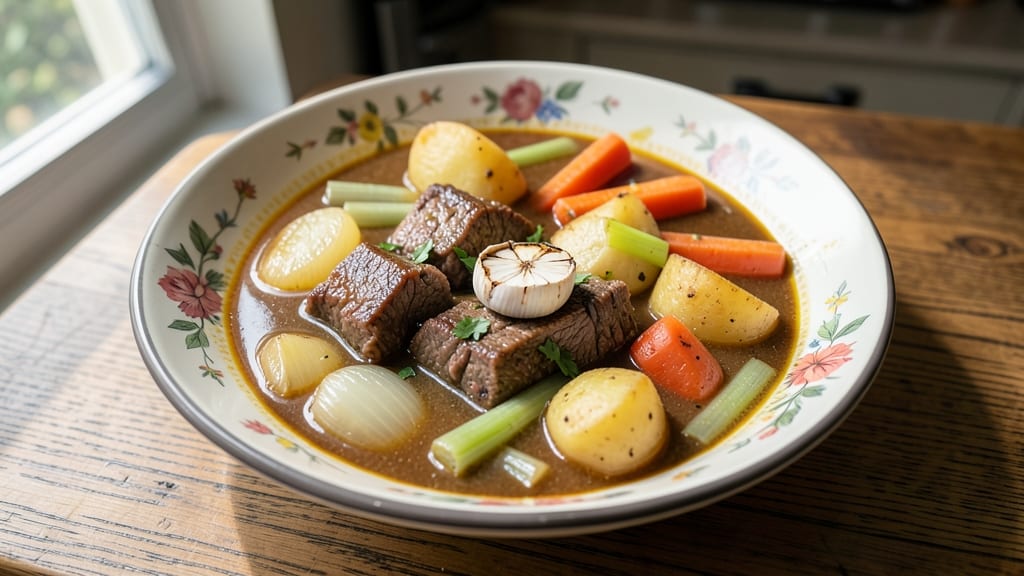
This Amish vegetable beef soup recipe brings the comforting warmth of a Pennsylvania homestead to your kitchen, where slow-simmered flavors transform humble ingredients into something extraordinary.
The secret lies in browning the beef thoroughly—those rich, caramelized bits form the flavor foundation—before layering in seasonal vegetables and herbs that create depth with every spoonful. I developed this version after years of testing, balancing traditional techniques with modern shortcuts like pressure cooking for busy weeknights.
The beauty of this recipe is its adaptability—use fresh summer vegetables like zucchini and green beans or hearty winter roots when they're in season.
A long simmer (at least 2 hours) allows all the flavors to meld together, creating that signature Amish soup texture: tender beef, perfectly cooked vegetables, and a broth so rich it practically tastes like love.
The addition of dill and parsley at the end adds brightness that cuts through the richness.
What makes this soup truly special is how it captures the essence of Amish cooking: simple ingredients prepared with care. There's no fancy technique here, just good food made from scratch—something that tastes even better the next day when the flavors have had time to develop.
The result is a deeply satisfying meal that feeds both body and soul, perfect for cold evenings or when you need a reminder that good food doesn't have to be complicated.
Serve with crusty homemade bread to soak up every last drop of that flavorful broth, or pair with a simple green salad for balance. The leftovers keep beautifully in the refrigerator for up to 5 days, making this an ideal make-ahead meal for busy families.
Let's get started on creating this hearty homestead classic in your own kitchen.
Ingredients for amish vegetable beef soup
Simple, hearty ingredients that transform into a soul-warming homestead classic.
| Ingredient | Amount | Notes |
|---|---|---|
| Chuck Roast Beef 🥩 | 2 lb | Cut into 1-inch cubes, boneless |
| Yellow Onions 🧅 | 2 whole | Medium size, sliced into half-moons |
| Carrots 🥕 | 4 whole | Medium size, peeled and cut into chunks |
| Celery Stalks 🌿 | 4 whole | Fresh, cut into 1-inch pieces |
| Russet Potatoes 🥔 | 3 lb | Peeled and cut into 1-inch cubes |
| Garlic Cloves 🧄 | 6 cloves | Fresh, minced or finely chopped |
| Tomato Paste 🍅 | ½ cup | Canned, unsweetened |
| Beef Broth 💧 | 8 cups | Low-sodium preferred |
| Water 💧 | 4 cups | For broth dilution |
| Dried Thyme 🌿 | 1 tbsp | Or 1 tbsp fresh thyme leaves |
| Dried Parsley 🌿 | 1 tbsp | Or 1 tbsp fresh parsley |
| Bay Leaves 🌿 | 2 whole | Dried, for infusion |
| Salt 🧂 | 1 ½ tsp | Diamond Crystal kosher salt |
| Black Peppercorns 🌶️ | 1 tsp | Freshly cracked |
| Fresh Dill 🌿 | ¼ cup | Chopped, for finishing |
| Fresh Parsley 🌿 | ¼ cup | Chopped, for finishing |
| Olive Oil 🫒 | 2 tbsp | Extra-virgin for browning |
The beef is the foundation—chuck roast delivers that signature Amish soup tenderness. Grab a 2-pound cut from the butcher section, or pre-cubed beef from the grocery store's freezer section for convenience. Local farmers markets often have excellent cuts if you're willing to pay a premium. Look for beef with good marbling, as this renders fat during cooking, creating a rich broth. If you're using a whole chuck roast, cube it yourself for even cooking—1-inch pieces work perfectly. The onions, carrots, and celery form the classic 'holy trinity' of soup vegetables, so don't skimp on freshness. Trader Joe's or Whole Foods bulk sections often have great prices for these staples. For the potatoes, Russets hold up best to long cooking—their starchy texture absorbs the broth beautifully.
No fresh thyme or parsley? Dried works perfectly, though fresh adds a brighter finish. Swap the tomato paste for 1 can of crushed tomatoes if you prefer, but the paste gives deeper flavor with less mess. The beef broth should be low-sodium—you'll be adding plenty of salt during cooking. For a vegetarian twist (though not traditional), substitute mushroom broth and use extra-firm tofu instead of beef. The bay leaves are non-negotiable—they add that subtle earthy depth Amish cooks swear by. If you're short on time, pressure cook the soup for 30 minutes after browning instead of simmering for hours, though traditionalists will argue the long simmer is worth it. The dill and parsley at the end are purely for brightness, so they can be omitted if you're serving immediately.
This soup tastes even better the next day as flavors meld together. Store in an airtight container in the fridge for up to 5 days, or freeze portions for 3 months. I always make a double batch—one for dinner, one for lunches the following week. The broth thickens as it cools, so add a splash of water when reheating. For serving, keep the fresh herbs separate until ready to eat—they wilt quickly in hot soup. The potatoes will continue cooking slightly when reheated, so they're best eaten fresh or reheated gently. If you're prepping ahead, brown the beef and sauté the vegetables the day before, then store separately and assemble when ready to cook.
Why You'll Love This Recipe
- One-Pot Wonder: I swear by this recipe because it’s all in one pot—no chopping boards full of scraps, no extra pans. Just dump the chuck roast, onions, carrots, and celery in with the broth, let it simmer, and the potatoes melt into that soup like they’re meant to be there.
- Deep, Savory Richness: That chuck roast turns so tender it practically falls apart, and the carrots and celery soak up all the flavor until the broth is thick, hearty, and ridiculously satisfying. Honestly, the first time I made it, I went back for a third bowl.
- Leftovers That Don’t Suck: Between us, most soups turn into sad, watery meals after day two. Not this one—the beef stays tender, the potatoes hold their shape, and the veggies just get more flavorful. I freeze half the batch and pull it out on lazy Sundays without a second thought.
- Budget-Friendly Crowd-Pleaser: A chuck roast stretches forever, and the veggies are cheap staples—onions, carrots, celery—stuff I always have lying around. I’ve served this to picky eaters, college kids on a budget, and even my mom’s book club, and no one ever complained. (Yes, even on a Tuesday night.)
Step-by-step instructions for Amish vegetable beef soup
This soup builds flavor through slow simmering—just like Amish homesteaders do it best.
🍳 Step 1: Brown the Beef for Deep Flavor
Heat a large Dutch oven over medium-high heat and add the 2 tablespoons olive oil. Working in batches, add the 2 lb chuck roast beef cut into 1-inch cubes, spreading them out in a single layer. Let them sear undisturbed for 3-4 minutes until deep golden brown forms on all sides—this creates the rich foundation for your soup.
Once browned, remove the beef with tongs and set aside. Don't drain the fat—it carries flavor. Here's the thing: if you skip browning, your soup will taste flat. The Maillard reaction happening here transforms simple beef into something extraordinary. Keep the heat steady and resist the urge to move the beef too soon.
👨🍳 Step 2: Sauté the Vegetable Base
In the same Dutch oven, add the 2 whole yellow onions sliced into half-moons, 4 whole carrots cut into chunks, and 4 whole celery stalks cut into 1-inch pieces. Stir and cook for 5-6 minutes until the vegetables soften slightly and the onions become translucent. This step develops their natural sweetness.
Add the 6 cloves garlic cloves (minced or finely chopped) and the 0.5 cup tomato paste, stirring constantly for 1 minute until fragrant. The tomato paste will deepen the soup's color and add umami complexity. I like to press the garlic into the vegetables with the back of a spoon—this ensures even distribution and prevents burning.
🥘 Step 3: Build the Broth Foundation
Return the browned beef to the pot. Stir in the 1 tablespoon dried thyme, 1 tablespoon dried parsley, 2 whole bay leaves, 1.5 teaspoons salt, and 1 teaspoon black peppercorns. Pour in the 8 cups beef broth and 4 cups water, scraping up any browned bits from the bottom of the pot—this releases all the flavor you've built.
Bring the mixture to a gentle boil over medium-high heat, then immediately reduce to low heat. Here's where the magic happens: cover the pot and let it simmer uninterrupted for 1 hour. The lid traps steam, which tenderizes the beef and vegetables while preventing evaporation. Check occasionally to ensure it's maintaining a barely bubbling simmer—this is critical for even cooking.
⏰ Step 4: Add Potatoes and Simmer Until Tender
After the initial 1-hour simmer, add the 3 lb russet potatoes cut into 1-inch cubes. Stir gently to distribute them evenly throughout the broth. Return to a gentle simmer and cook uncovered for another 30-40 minutes, until the potatoes are fork-tender and the beef pulls apart easily with two forks.
This is the moment that matters: the potatoes should absorb some of the broth but remain firm enough to hold their shape. If you lift a potato and it feels slightly resistant to your fork, it's ready. If it feels mushy, you've overcooked it—this is why we check periodically. The soup should have a rich, velvety consistency with just the right amount of liquid to coat the back of a spoon.
🍽️ Step 5: Finish with Fresh Herbs and Serve
Remove the 2 whole bay leaves and discard them. Stir in the 0.25 cup fresh dill and 0.25 cup fresh parsley, chopped. These herbs add brightness that cuts through the richness of the beef and vegetables. Taste and adjust seasoning if needed—you might need a pinch more salt or a crack of pepper, depending on your broth.
Ladle the soup into bowls and serve immediately. The aroma alone will make your kitchen feel like a warm Amish kitchen. Each spoonful delivers tender beef, hearty vegetables, and a broth so flavorful it tastes like it's been simmering all day. This soup tastes even better the next day—so make extra if you can. The flavors deepen as it rests, making it perfect for meal prep or leftovers.
Pro Tips For Making Amish Vegetable Beef Soup
- Sear the Chuck First: That chuck roast won’t render its own fat magic—get it screaming hot in a dry skillet for 3-4 minutes per side before adding broth. I used to skip this, and the soup always tasted like it needed more depth. The crust locks in flavor and keeps the meat from turning to mush later.
- Cut Potatoes Last: Add those russet potatoes with 20 minutes left in cooking, or they’ll turn to glue. I learned this the hard way—overcooked spuds ruin the texture. If you’re worried about even cooking, parboil them for 5 minutes first, but drain well so they don’t dilute the broth.
- Salt the Broth Early: Taste the broth after 30 minutes and salt it then—before the beef releases its own juices. I used to wait until the end, and the seasoning always felt off. A pinch of salt now makes a real difference, especially if you’re using low-sodium broth.
- Brown the Veggies First: Sauté onions, carrots, and celery in the same pan you seared the beef until they’re deeply colored—about 8 minutes. This isn’t just for looks; it builds layers of flavor that raw veggies can’t match. Skip this, and your soup will taste like a side dish, not the main event.
Make-ahead tips for this dish
Prep Ahead Components
Divide your prep work into two phases to save time on cooking day. First, brown the 2 lb chuck roast beef and store it in a ziplock bag in the fridge for up to 2 days.
Next, chop all your vegetables—onions, carrots, celery, and potatoes—and store them in separate airtight containers. This way, you only need to assemble everything when ready to cook. 🥔
Slow Cooker Adaptation
For hands-off cooking, transfer the browned beef and sautéed vegetables to a 6-quart slow cooker. Add all remaining ingredients except the fresh herbs, then cook on low for 7-8 hours or high for 4-5 hours.
Stir in the herbs at the end. The slow cooker's gentle heat mimics the traditional simmer, making it perfect for busy schedules. Just add water if the soup gets too thick during cooking.
Freezer-Friendly Assembly
Assemble the soup completely (including potatoes) and let it cool to room temperature. Transfer to freezer-safe containers, leaving 1 inch headspace for expansion. Label with the date and freeze for up to 3 months.
When ready to eat, thaw overnight in the fridge, then reheat on the stovetop with ½ cup water to restore moisture. The flavors remain rich and hearty after freezing.
Make-Ahead Broth Base
Simmer the beef, onions, carrots, celery, and broth for just 1 hour (without potatoes), then cool and refrigerate. Store the broth base in the fridge for up to 4 days or freeze for 3 months.
When ready to serve, reheat the broth base, add the potatoes, and simmer for 20-30 minutes until tender. This shortcut works especially well for weeknight dinners.
Herb Prep Shortcut
Instead of chopping fresh dill and parsley at the last minute, store them separately in small airtight containers in the fridge for up to 5 days. When ready to serve, simply sprinkle them over the hot soup—they'll wilt beautifully and release their bright flavors.
For an extra time-saver, buy pre-chopped fresh herbs from the grocery store's salad bar section.
Portion Control Tips
Use quart-sized freezer bags to portion individual servings for easy reheating. Flatten the bags to save space, then store them in a ziplock gallon bag for organization. When reheating, microwave each portion for 2-3 minutes on 50% power, stirring halfway.
This method keeps the soup's texture intact and prevents overheating. Perfect for lunches or quick meals! 💫
Nutrition facts
Frequently asked questions
Can I substitute ground beef for the chuck roast?
You can, but the texture will be different. Ground beef cooks faster and won't provide the same tender, shredded texture that chuck roast delivers after slow simmering. If you prefer ground beef, use 1.5 lbs and brown it thoroughly for 5-6 minutes until no longer pink. The soup will still be flavorful, just with a slightly different mouthfeel.
How can I make this soup vegetarian?
Replace the beef with 1.5 lbs extra-firm tofu (pressed and cubed) or 1.5 lbs mushrooms (cremini or portobello). Use mushroom broth instead of beef broth and add 1 teaspoon soy sauce for umami depth. The potatoes and vegetables will still provide hearty texture, though the broth will be lighter in color. The slow simmer remains key for developing flavor!
Why does my soup taste bland after simmering?
Bland soup usually means one of three things: not enough browning (the beef needs that golden crust), insufficient salt (taste as you go and adjust gradually), or not enough time simmering. For maximum flavor, let the soup cook at least 2 hours uncovered after adding potatoes. The liquid should reduce slightly, concentrating the flavors. A splash of red wine or tomato paste can also add depth if needed.
Can I use canned tomatoes instead of tomato paste? Yes, but you'll need to adjust the liquid. Use 1 can (14.5 oz) crushed tomatoes and reduce the water by 1 cup to maintain the right consistency. The canned tomatoes will add natural sweetness and acidity that enhances the broth. Just
What's the best way to reheat leftovers?
Reheat gently on the stovetop over low heat, stirring occasionally, until just warmed through (5-7 minutes). Never microwave directly from the fridge—this can make the potatoes mushy. For best results, add ¼ cup water when reheating to restore moisture. The soup actually tastes better the next day as flavors meld further, so don't hesitate to make extra!