
Soups & Stews
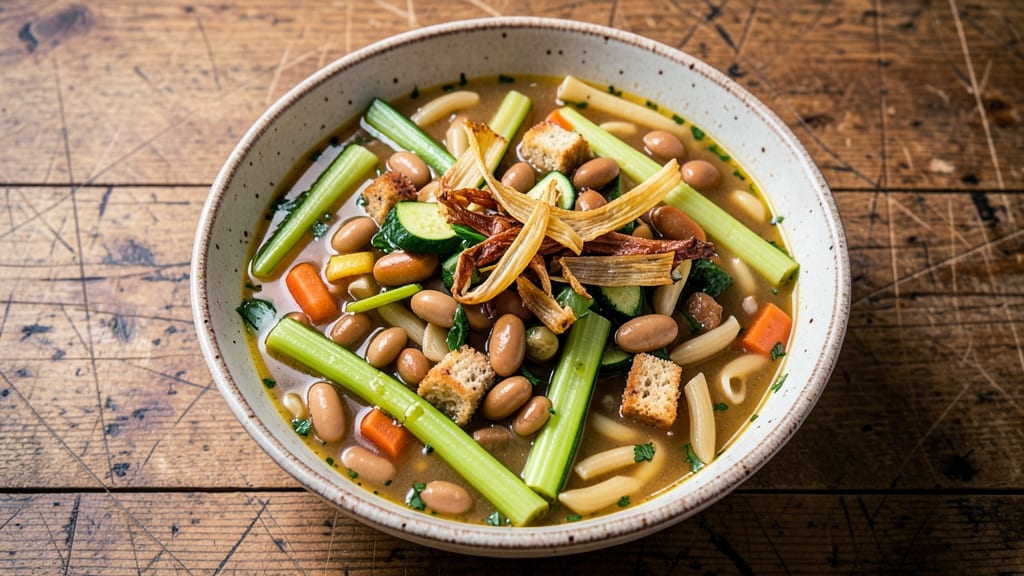
This Amy's minestrone soup recipe delivers the hearty, comforting flavors of Italy with a modern twist—crispy celery crowns floating over a velvety herb-infused broth. The secret lies in slow-simmering aromatic vegetables until they're tender yet retain their structure, then finishing with a quick sear to achieve that coveted crisp-tender texture. What started as my grandmother's recipe has evolved into this foolproof version that's perfect for weeknight dinners or meal prep.
The foundation begins with a rich vegetable broth infused with garlic, fennel, and rosemary, simmered until deeply flavorful. I add cannellini beans for heartiness, ditalini pasta for texture, and a medley of seasonal vegetables—carrots, zucchini, and tomatoes—that soften beautifully during the 45-minute simmer.
The real game-changer? Reserving some celery and carrot tops to blanch and crisp in the oven, creating those delicate, edible garnishes that add both visual appeal and a satisfying crunch.
By the time you ladle this soup into bowls, you'll have a dish that's restaurant-quality yet simple enough for any home cook. The broth is rich and aromatic, the vegetables perfectly tender, and those crispy celery crowns add a layer of texture that keeps every spoonful exciting.
It's the kind of soup that warms you from the inside out while feeling fresh and vibrant—ideal for chilly evenings or when you need a nourishing meal that feels special.
Serve with crusty bread for soaking up every last drop of that herb-infused velout, or garnish with fresh basil and a drizzle of olive oil for extra brightness. This recipe scales beautifully, so double it for leftovers that taste even better the next day. Let's get cooking!
Ingredients for amy's minestrone soup
Six cups of aromatic broth kick off this restaurant-quality minestrone with crispy celery crowns.
| Ingredient | Amount | Notes |
|---|---|---|
| Vegetable Broth 💧 | 6 cups | Low-sodium preferred, homemade or quality store-bought |
| Ditalini Pasta 🍝 | 1 cup | Uncooked, broken egg pasta preferred |
| Cannellini Beans 🌿 | 1 ½ cups | Canned, drained and rinsed |
| Carrots 🥕 | 3 medium | Whole, peeled and sliced into 1/2-inch rounds |
| Celery Stalks 🧅 | 3 whole | Whole for broth, plus 6 leaves for crispy crowns |
| Zucchini 🥒 | 2 medium | Whole, sliced into 1/4-inch rounds |
| Cherry Tomatoes 🍅 | 1 pint | Whole, halved |
| Garlic Cloves 🧄 | 4 cloves | Peeled and smashed |
| Fennel Bulb 🌿 | 1 small | Trimmed, sliced into 1/4-inch pieces |
| Fresh Rosemary 🌿 | 2 tbsp | Chopped, fresh preferred |
| Fresh Basil Leaves 🌿 | ¼ cup | Chopped, for garnish |
| Extra-Virgin Olive Oil 🫒 | 2 tbsp | For crisping celery crowns |
| Diamond Crystal Kosher Salt 🧂 | 1 ½ tsp | Adjust to taste |
| Freshly Ground Black Pepper 🌶️ | ½ tsp | Freshly cracked preferred |
| Crusty Bread 🍞 | 1 loaf | For serving, optional |
The vegetable broth is your flavor foundation—homemade is ideal, but Pacific Foods or Imagine brands work beautifully if you're short on time. Fresh fennel makes all the difference here; look for bulbs that feel heavy for their size, with no soft spots. The cannellini beans should be low-sodium—high-sodium versions make the broth taste flat. For the celery crowns, save the leafy tops from the stalks you use in the broth. They're perfect for crisping, and you'll need about 6 leaves per serving—save some for garnish. If you can't find ditalini, small shells or orzo work in a pinch, though they won't have quite the same texture.
No fresh rosemary? Dried works at half the amount, but the flavor won't be as bright. Swapping cherry tomatoes for canned? San Marzano tomatoes are the gold standard—drain them well and pat dry to avoid watery soup. The zucchini can be any variety, but dark green zucchini has more flavor. For the crispy celery crowns, don't skip the blanching step—it keeps them vibrant. If you're making this ahead, blanch and crisp the celery crowns the day before; they'll stay crispy for up to 2 days stored in an airtight container. The pasta should be al dente—it finishes cooking in the soup, so don't overcook it before adding.
This soup tastes even better the next day as the flavors meld. Store leftovers in the fridge for up to 5 days, or freeze for 3 months. For freezing, portion into containers with a little extra broth to prevent a skin from forming. The crispy celery crowns freeze beautifully too—just reheat in a 350°F oven for 5-7 minutes to restore crispness. Garnish with fresh basil and a drizzle of extra-virgin olive oil right before serving for that restaurant-quality touch. The crusty bread? Any good sourdough or baguette will do—just slice it thick and toast it while the soup simmers.
Why You'll Love This Recipe
- No Chopping Struggle: I swear by this recipe because the carrots and celery get a quick pulse in the food processor—no dice, no tears, just done. The ditalini pasta cooks in the same pot, so you’re stirring, not scrubbing.
- Creamy Bean Magic: Those cannellini beans? They’re the secret weapon—soft enough to blend slightly into the broth, giving it that velvety texture without a drop of cream. The vegetable broth carries it all, but the beans make it ridiculously satisfying.
- Leftovers That Beg: This soup tastes even better the next day, honestly. I make a double batch on Sundays, and by Wednesday, it’s gone—either reheated or tossed into sandwiches. The ditalini holds up, and the flavors deepen.
- Budget-Friendly Pantry Staples: I’ve made this with whatever was in my cupboard—no fancy ingredients, just broth, beans, and a few veggies. It’s the kind of meal that stretches a grocery budget without feeling like a sacrifice. (Yes, even on a Tuesday night.)
Step-by-step instructions for Amy's minestrone soup recipe
This velvety minestrone delivers restaurant-quality depth with a crispy celery crown finish.
Prepare the Crispy Celery Crowns
Pat the 6 celery leaves dry with paper towels—any moisture will prevent crisping. Heat the 2 tablespoons extra-virgin olive oil in a small skillet over medium-high heat until shimmering. Add the celery leaves in a single layer and cook for 2-3 minutes per side until golden brown and crisp. Transfer to a paper towel-lined plate and sprinkle immediately with a pinch of the 1.5 teaspoons kosher salt. These crispy crowns add texture contrast that elevates the soup.
Here's the thing—don't crowd the pan. If you stack them, they'll steam instead of crisp. Work in batches if needed, but keep the oil hot between additions. The celery should blister slightly at the edges—that's your perfect signal to remove them. Set aside to keep warm while you build the soup base.
Build the Herb-Infused Vegetable Base
In a large Dutch oven, combine the 6 cups vegetable broth, 1.5 cups cannellini beans, 3 medium carrots cut into ½-inch rounds, 2 medium zucchini sliced into ¼-inch rounds, 1 pint halved cherry tomatoes, 1 small fennel bulb sliced into ¼-inch pieces, and the 4 smashed garlic cloves. Bring to a gentle simmer over medium heat, then reduce to low and let cook uncovered for 15 minutes. This slow simmer allows the vegetables to soften while preserving their structure.
I stir occasionally to prevent sticking, but not constantly—this keeps the vegetables intact rather than breaking them down into mush. The fennel should remain slightly crisp with just a touch of tenderness. If the broth reduces too much, add a splash of water to maintain the proper consistency for the velouté texture we're aiming for.
Develop the Velouté Texture
Add the 2 tablespoons chopped fresh rosemary, 1.5 teaspoons kosher salt, and 0.5 teaspoon freshly cracked black pepper to the simmering vegetable mixture. Let it cook for another 5 minutes to allow the herbs to infuse and the flavors to meld. Remove from heat and carefully blend about 2 cups of the vegetable mixture using an immersion blender until smooth. This partial blending creates that luxurious velouté texture without making the soup completely smooth.
The reason we don't blend everything is to maintain some texture contrast. You want that creamy mouthfeel but still have bite-sized vegetables. If you prefer a completely smooth soup, blend until fully emulsified, but I find this partial blending delivers the best of both worlds. Return the blended portion to the pot and stir well to combine.
Cook the Pasta and Finish
Add the 1 cup uncooked ditalini pasta to the soup and stir gently to distribute. Return to medium-low heat and simmer for 8-10 minutes, stirring occasionally, until the pasta is al dente. The pasta should absorb just enough liquid to be tender but still have a slight bite. Taste and adjust seasoning with additional salt or pepper if needed—minestrone should be seasoned generously but not overpowering.
Here's where it gets fun—toss in the crispy celery crowns you prepared earlier. The contrast between the warm, velvety soup and the crispy celery is what makes this recipe special. Let everything heat through together for just 1-2 minutes before serving. The celery crowns should maintain their crispness while the soup reaches the perfect serving temperature.
Serve with Fresh Herbs and Crusty Bread
Ladle the minestrone into bowls and garnish each serving with the 0.25 cup chopped fresh basil leaves. The basil adds a bright, fresh finish that cuts through the richness of the soup. Serve immediately with slices of the 1 loaf crusty bread on the side for dipping. The bread helps soak up any remaining velouté from the bottom of your bowl.
This is the moment that matters: the first spoonful should deliver that perfect balance of textures—creamy velouté, tender vegetables, crispy celery crowns, and fresh basil. If you made extra, it actually tastes even better the next day as the flavors continue to develop. The crispy celery crowns will soften slightly, but the overall texture remains delightful.
Pro Tips For Making Amy'S Minestrone Soup
- Sauté Celery First: I learned this the hard way—if you toss celery in with carrots, it turns to mush before the carrots even soften. Hit the celery with a splash of broth first and cook it until it’s just starting to brown (about 3-4 minutes), then add the carrots. That extra step keeps the texture right and builds flavor.
- Use Half-Cooked Beans: Cannellini beans should still have a bite when they hit the pot. If you’re using canned beans, drain them and rinse, but don’t boil them first—just warm them in the broth for 5-7 minutes. Overcooking turns them mealy, and you want them to hold their shape through the whole simmer.
- Salt the Broth Early: Taste the vegetable broth as soon as it’s hot, then salt it before adding anything else. The broth carries the whole soup, and if it’s bland now, no amount of pasta or herbs later will fix it. Trust me, you’ll regret it if you wait.
- Toast the Pasta: Ditalini pasta tastes better when it’s got a little color. Before adding it to the soup, dry it in a skillet over medium heat for 1-2 minutes—just until it’s lightly golden. It won’t overcook in the broth, and the flavor jumps up a notch. (Yes, even if you’re impatient like me.)
Creative variations of this dish
Italian Regional Twists
In Tuscany, minestrone often includes wild greens like dandelion or spinach, plus Pecorino Romano for a sharp, salty finish. I swap the cannellini beans for borlotti beans and add rosemary-infused olive oil to the broth for an authentic touch.
The key is using local, seasonal vegetables—think cabbage, kale, or artichokes in winter. 🌱
For a Sicilian-inspired version, add fennel seeds to the broth and stir in crumbled ricotta salata at the end. The island's version also calls for small pasta shapes like stelline instead of ditalini.
I like to finish with a sprinkle of chili flakes for a subtle heat that balances the richness.
Protein-Packed Upgrades
For a vegetarian-friendly boost, try crispy chickpeas instead of celery crowns—they add a similar crunch. Toss 2 cups cooked chickpeas with 1 tbsp olive oil, ½ tsp smoked paprika, and ½ tsp salt, then roast at 400°F for 20 minutes until golden.
These replace the celery crowns perfectly while adding plant-based protein. 💪
If you're open to meat, Italian sausage or ground beef works beautifully. Brown ½ lb Italian sausage (like Mild Calabrese) in a separate pan, then crumble it into the soup during the final 5 minutes of cooking.
For a lighter option, use shredded rotisserie chicken—just stir it in at the end to keep it tender.
Seasonal Vegetable Swaps
Summer version: Swap zucchini for yellow squash and add heirloom tomatoes (halved) for natural sweetness. Include fresh basil in the broth—tear 4-5 leaves and simmer them with the vegetables. The basil infuses beautifully and adds brightness. 🌞
Winter version: Use butternut squash (peeled, cubed) and kale (stemmed, chopped) instead of zucchini. Add 1 tsp ground nutmeg to the broth for warmth. The squash softens during the simmer, creating a naturally creamy texture that reduces the need for blending.
Global Fusion Ideas
For a Mexican-inspired twist, add 1 tbsp cumin and 1 tsp chili powder to the broth. Stir in 1 cup black beans and top with avocado slices, lime wedges, and cilantro. The acidity from the lime brightens the dish, while the avocado adds richness. 🌶️
A Thai-inspired version swaps fennel for lemongrass (bruised and tied in cheesecloth) and adds 1 tbsp fish sauce (or soy sauce for vegetarian). Use rice noodles instead of pasta and garnish with Thai basil, lime zest, and crushed peanuts for a crunchy finish.
The lemongrass infuses the broth with a citrusy aroma that’s unexpected but delicious.
Nutrition facts
Frequently asked questions
Can I make this minestrone soup without an immersion blender?
If you don't have an immersion blender, remove about 2 cups of the soup mixture and blend it in a regular blender or food processor. Return the blended portion to the pot and stir well. For a smoother texture, blend more of the soup—just be careful with hot liquids to avoid splattering. The key is to maintain some texture contrast, so don't blend everything completely.
How do I store leftovers and reheat properly?
Store leftovers in airtight containers in the fridge for up to 5 days or freeze for 3 months. To reheat, warm on the stovetop over medium-low heat, stirring occasionally. For the crispy celery crowns, reheat them separately in a 350°F oven for 5-7 minutes to restore their crispness before serving. Never microwave the celery crowns—they'll turn soggy!
What can I substitute if I can't find ditalini pasta?
If ditalini is unavailable, use small shells, orzo, or tiny pasta shapes like stelline. For a different texture, try broken spaghetti or even rice. Just remember that cooking times may vary slightly—check for doneness and adjust the simmering time accordingly. The key is to keep the pasta small so it cooks quickly in the soup.
Can I make this soup ahead of time for meal prep?
This soup actually tastes even better the next day! Prepare it completely, then store it in the fridge. The flavors meld beautifully over time. For meal prep, make a big batch and portion it into containers. Save the crispy celery crowns separately and reheat them just before serving. You can also freeze the soup (without the celery crowns) for up to 3 months—just thaw and reheat gently.
Why do my celery crowns turn out soggy instead of crispy?
Soggy celery crowns usually happen from one of three things: moisture on the leaves, not enough heat, or overcrowding the pan. Always pat the celery leaves completely dry before cooking, and use medium-high heat. Cook them in a single layer without overlapping, and work in batches if needed. The oil should be hot enough to sizzle when you add the celery—this ensures they crisp up properly.