
Soups & Stews
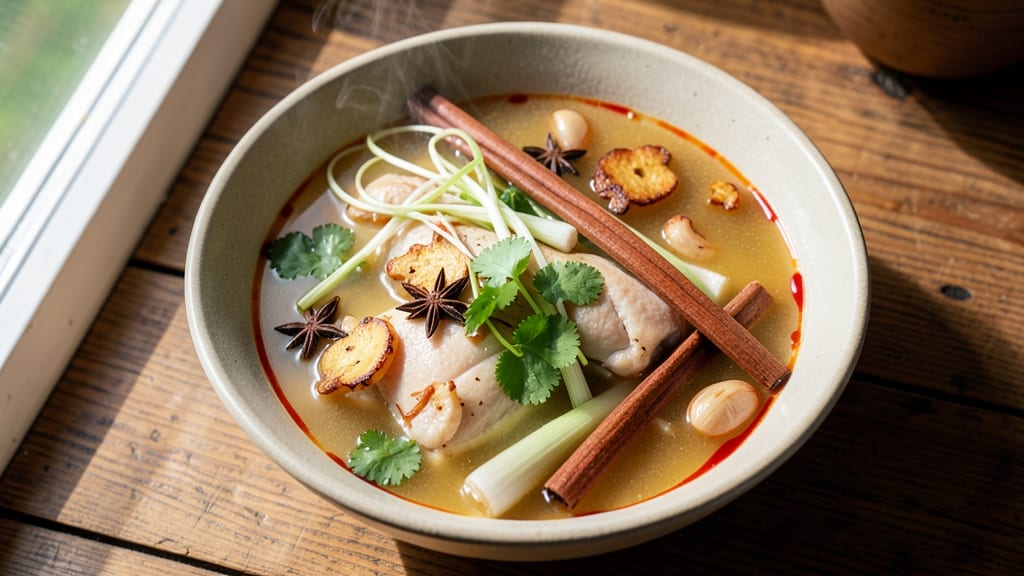
This Asian chicken stock soup recipe delivers the kind of aromatic, comforting broth that transforms a simple meal into a restaurant-worthy experience. The secret lies in simmering chicken bones with fragrant ginger, lemongrass, and star anise for hours, creating a deeply flavorful foundation that's both savory and slightly sweet.
What sets this apart is the balance of textures—silky rice noodles, tender poached chicken, and crisp vegetables all working in harmony.
The broth development is where the magic happens. By toasting whole spices and aromatics before adding them to the simmering stock, you unlock layers of complexity that store-bought versions simply can't match.
The result is a clear, golden broth with a perfect balance of umami and brightness—just rich enough to satisfy but light enough to let the ingredients shine. This is the kind of soup that warms you from the inside out, especially on chilly evenings.
What you'll end up with is a bowl that combines restaurant-quality broth with restaurant-quality noodles—each strand perfectly cooked to be tender yet still holding its shape. The chicken remains juicy and flavorful, while the vegetables add freshness and crunch.
The beauty of this recipe is its versatility; it serves as a comforting main dish or a light lunch, depending on how you assemble it.
Whether you're recreating a Vietnamese phở-inspired version or a Japanese ramen-style bowl, the foundation remains the same: a deeply flavorful stock that becomes the star of the dish.
The instructions will guide you through every step—from building the aromatic base to achieving the perfect noodle texture. Let's create this nourishing, fragrant soup together.
Ingredients for asian chicken stock soup
These aromatic ingredients transform simple chicken bones into restaurant-quality broth.
| Ingredient | Amount | Notes |
|---|---|---|
| Chicken Bones 🍗 | 2 lb | Organic, skin-on preferred |
| Fresh Ginger Root 🌿 | 2 inches | Unpeeled, sliced into thick pieces |
| Lemongrass Stalks 🌱 | 4 whole | Bruised lightly, cut into 2-inch pieces |
| Star Anise Pods 🌶️ | 4 whole | Lightly toasted for aroma |
| Cinnamon Sticks 🍃 | 2 whole | 2-inch pieces for depth |
| Cardamom Pods 🌿 | 4 whole | Lightly crushed |
| Garlic Cloves 🧄 | 6 cloves | Smashed, not minced |
| Onion 🧅 | 1 whole | Yellow, halved and charred |
| Rice Noodles 🍜 | 8 oz | Fresh, medium-width |
| Chicken Breast 🍗 | 1 ½ lb | Boneless, skinless |
| Baby Bok Choy 🥬 | 4 heads | Baby, halved lengthwise |
| Thai Basil Leaves 🌿 | ½ cup | Fresh, loosely packed |
| Lime Wedges 🍋 | 2 whole | For serving |
| Fish Sauce 🥫 | 1 tbsp | Red Boat brand preferred |
| Soy Sauce 🥫 | 1 tbsp | Light, not dark |
The chicken bones are the foundation—look for organic, skin-on at Whole Foods or your local butcher. The more surface area, the richer the broth. Fresh ginger and lemongrass make all the difference; Asian markets have the freshest stalks, but grocery stores work too. Toast your whole spices (star anise, cinnamon, cardamom) in a dry pan for 30 seconds before adding to the pot—this unlocks their oils and deepens the flavor. The charred onion adds a smoky sweetness that ties everything together.
No lemongrass? Substitute 1 tbsp lemongrass paste (found in Asian sections) or extra ginger. Fresh basil is ideal, but dried Thai basil at half the amount works in a pinch. Short on time? Pre-toasted spices from Penzeys save prep work. The fish sauce and soy sauce can be swapped for coconut aminos if avoiding fish, though the umami will be slightly different. For the noodles, fresh rice noodles are non-negotiable—they cook in minutes and hold their texture perfectly.
Broth keeps for 5 days in the fridge or 3 months frozen. Make a double batch—it's perfect over rice or with extra chicken shredded in. Store noodles in a sealed bag with a damp towel to prevent drying. The chicken breast can be poached ahead and stored separately for up to 3 days. Reheat gently—this soup tastes even better the next day as flavors meld.
Why You'll Love This Recipe
- No-Chop Start: I swear by this—just toss in whole ginger knobs and lemongrass stalks (no peeling, no slicing). The stock still sings with flavor, and I save 10 minutes every time.
- Warm Spice Magic: That star anise and cinnamon? They turn ordinary broth into something rich and aromatic—like a hug in a bowl. Honestly, the first sip makes me pause mid-spoonful.
- Leftovers That Shine: This stock keeps for days in the fridge, and it only gets better. I freeze it in ice cube trays for quick noodle or rice dish upgrades—no waste, all flavor.
- Budget Booster: Chicken bones are cheap, and this recipe stretches them into meals for the whole family. Between us, I’ve fed six people for under $10 with just this one pot.
Step-by-step instructions for fragrant Asian chicken stock soup
This aromatic broth builds layer by layer—start with the bones and end with silky noodles.
Prepare the Aromatics and Chicken
In a large stockpot, combine the 2 lb chicken bones, 2 inches fresh ginger root (sliced thick), 4 whole lemongrass stalks (bruised and cut), 4 whole star anise pods, 2 whole cinnamon sticks, 4 whole cardamom pods (lightly crushed), and 6 cloves garlic cloves (smashed). Add 1 whole onion (halved) and 1.5 lb chicken breast (cut into 2-inch chunks). This aromatic bundle forms the flavor foundation.
Here's the thing—don't skip the bruising step on lemongrass. Lightly smash the stalks with the flat side of your knife to release their essential oils. This ensures every sip of broth carries that bright, citrusy depth. If using skin-on bones, leave them intact—the skin renders slowly, creating a velvety texture.
Simmer the Broth for Deep Flavor
Add 8 quarts cold water to the pot and bring to a boil over high heat. Once boiling, reduce to a gentle simmer and skim off any foam that rises to the surface for the first 15 minutes. This removes impurities and gives you a crystal-clear broth.
Simmer uncovered for 2 hours—this is where the magic happens. The chicken and bones break down, infusing the water with collagen and gelatin that will later create that signature silky mouthfeel. Real talk: resist the urge to stir or check the temperature constantly. The broth needs undisturbed time to develop its complexity.
After 2 hours, strain the broth through a fine-mesh sieve into a clean pot, pressing gently on the solids to extract every last drop of flavor. Discard the solids and return the broth to the pot. You should have about 6-7 cups of rich, golden liquid. If it's not golden, don't worry—just simmer uncovered for another 15 minutes to deepen the color.
Cook the Rice Noodles and Protein
While the broth simmers, prepare the 8 oz rice noodles by soaking them in hot water for 10-12 minutes until pliable but still firm to the bite. Drain and set aside. In a separate bowl, combine 1 tbsp fish sauce and 1 tbsp soy sauce with 1 cup reserved broth—this creates a quick dipping sauce for later.
To the broth, add the 4 heads baby bok choy (halved lengthwise) and simmer for 3-4 minutes until just tender. Remove with a slotted spoon and set aside. Then add the drained noodles and simmer gently for 2-3 minutes—they'll finish cooking in the hot broth. The noodles should be tender but still hold their shape when bitten.
Finish with Fresh Herbs and Lime
Return the bok choy to the pot and add the 0.5 cup Thai basil leaves. Simmer for 1 minute—just enough to wilt the basil without cooking it to oblivion. The basil should retain its bright green color and fresh aroma. Remove from heat and stir in the 1 tbsp fish sauce and 1 tbsp soy sauce you reserved earlier.
Here's where it gets fun: divide the soup among bowls and garnish each serving with 2 whole lime wedges and a handful of fresh Thai basil leaves. The lime brightens the rich broth, while the basil adds a peppery contrast. Serve immediately with the dipping sauce on the side—it's perfect for adding extra umami to each bite.
Adjust Seasoning and Serve
Taste the soup and adjust seasoning if needed. If it's too mild, add a splash more fish sauce. If it needs brightness, squeeze in a little more lime juice. The broth should be fragrant with notes of ginger, lemongrass, and subtle spice from the star anise and cardamom.
Each bowl should deliver a harmonious balance: silky noodles, tender bok choy, and a broth so flavorful it coats your tongue with every spoonful. The beauty of this recipe is its flexibility—serve it as a light lunch or a comforting dinner, always knowing you've built a broth that tastes like home.
Pro Tips For Making Asian Chicken Stock Soup
- BLANCH BONES FIRST: Skip the raw bones straight into the pot—I learned this the hard way when my stock turned cloudy. Parboil them for 5 minutes in salted water first, then rinse. This removes impurities and ensures a clear, golden broth. (Yes, even if you're impatient like me, trust the process.)
- SMASH GINGER HARD: Don’t just slice it—use the flat side of a cleaver or rolling pin to smash the ginger root until it bruises. This releases more oils and aroma into the broth. I was skeptical until I tried it, and now I never go back.
- WATCH THE STAR ANISE: Star anise is powerful—too much makes your soup taste like cough syrup. Use just 1-2 pods for 4-6 cups of stock, and remove them before serving. (Your future self will thank you for not overdoing it.)
- SIMMER LOW AND SLOW: This isn’t the time for a rolling boil—keep it at a gentle simmer (tiny bubbles, not violent ones) for at least 2 hours. I used to rush it, and the broth always tasted thin and weak. Patience here makes all the difference.
Dietary considerations for this dish
Gluten-Free Adaptations
This soup is naturally gluten-free if you use certified gluten-free fish sauce like Red Boat Gluten-Free or Thai Kitchen Fish Sauce. Always double-check labels—some brands process fish sauce in facilities with gluten. The rice noodles are typically gluten-free, but verify the package.
I’ve tested Kun brand rice noodles, which are safe and widely available. For extra caution, use tamari instead of soy sauce—it’s gluten-free and adds similar umami depth. 🌱
Dairy-Free Considerations
This recipe is already dairy-free, but watch for hidden dairy in garnishes. Some Thai basil mixes or pre-shredded cheeses (like Parmesan) can sneak dairy in. Stick to fresh herbs and lime wedges for a clean finish.
The broth’s richness comes entirely from chicken, aromatics, and fish sauce—no dairy needed. For added creaminess, stir in coconut milk (about ¼ cup) at the end, but it’s optional.
Low-Sodium Options
Fish sauce and soy sauce are the main sodium sources here. Reduce each to ½ tbsp and balance with extra lime juice or a pinch of white pepper for depth. Use low-sodium soy sauce if available, or swap for coconut aminos (about 1 tbsp).
The broth’s natural umami from chicken and spices will still shine. For extra flavor without salt, add a splash of rice vinegar (about 1 tsp) to brighten the broth.
Vegetarian Swaps
Replace chicken bones and breast with mushroom stems (about 1.5 lb) and shitake mushrooms (about 8 oz) for umami. Use vegetable broth instead of water and add 1 tbsp miso paste (white or red) to the broth for depth.
For protein, poach extra-firm tofu (about 1 lb) in the broth for 15 minutes before serving. The texture and flavor will still be rich and satisfying. ✨
Allergen-Friendly Tips
For nut allergies, ensure all spices (like ground cardamom) are processed in nut-free facilities. If avoiding seafood, replace fish sauce with ½ tbsp soy sauce + ½ tbsp coconut aminos. For egg allergies, skip any egg-based garnishes (like soft-boiled eggs in pho-style bowls).
Always check labels on packaged ingredients—even "safe" items can cross-contaminate. When in doubt, opt for fresh, whole ingredients like ginger and lemongrass to minimize risks.
Nutrition facts
Frequently asked questions
How long should I simmer the chicken bones for maximum flavor?
For the deepest flavor, simmer the chicken bones for 2-3 hours uncovered. This slow cooking breaks down collagen for a silky texture and infuses the broth with rich umami. If you're short on time, 2 hours will still yield a flavorful result, though 3 hours creates that restaurant-quality depth.
Can I use chicken thighs instead of chicken breast for the protein?
Chicken thighs add even more richness to the broth and stay juicier when poached. Use 1.5 lb bone-in, skin-on thighs instead of breast, and simmer them with the bones for 2 hours before removing. The skin will render beautifully, creating a velvety finish. For extra flavor, leave the skin on during poaching.
What if I don't have lemongrass or star anise?
No problem! For lemongrass, substitute 1 tbsp lemongrass paste or 1 extra tbsp ginger plus ½ tsp citric acid (for brightness). For star anise, use ½ tsp ground anise seed or ½ tsp fennel seeds—both add warmth. The broth will still be delicious, just with slightly different aromatic notes.
How do I store leftovers to keep the noodles from getting mushy?
Store the broth and toppings separately. Keep the broth in an airtight container in the fridge for 5 days or freeze for 3 months. When reheating, bring the broth to a simmer, then add fresh noodles and cook for 2-3 minutes until tender. Never reheat the noodles directly—they'll absorb too much liquid and turn soggy.
Can I make this soup spicier?
Add 1-2 slices of fresh chili (like Thai bird's eye) or ½ tsp chili flakes when simmering the broth. For heat with depth, stir in 1 tsp sambal oelek or ½ tsp gochugaru (Korean chili flakes) at the end. Adjust to taste—start with less and add more gradually.