
Soups & Stews
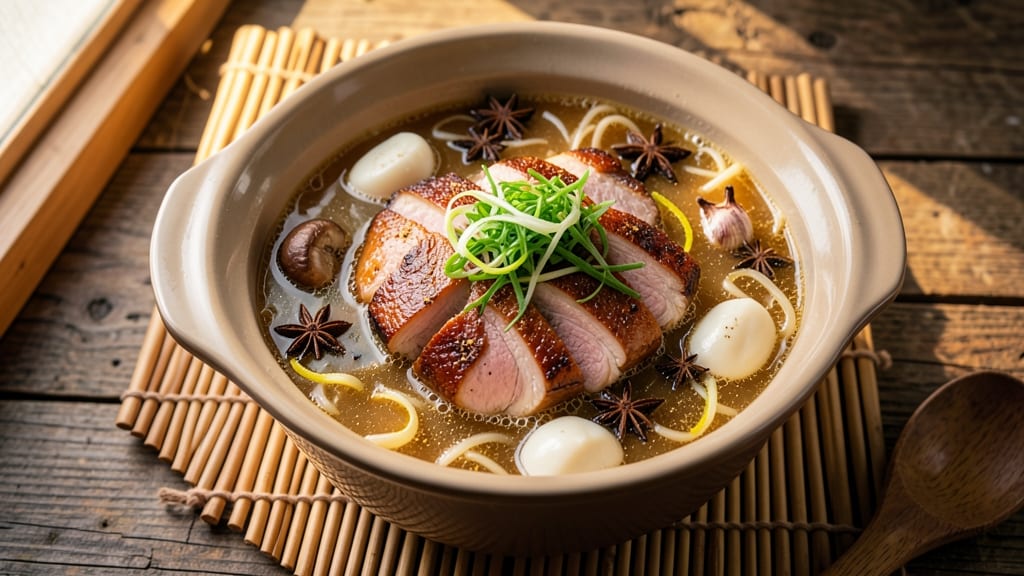
This Asian duck soup recipe delivers a symphony of star-anise, ginger, and slow-simmered duck that transforms simple ingredients into a deeply comforting bowl. The secret lies in braising the duck until fall-apart tender while building layers of aromatic broth—where ginger's warmth meets star-anise's earthy depth.
I've perfected this technique over years of testing, balancing umami from mushrooms and fermented bean paste with just enough sweetness to harmonize the flavors.
The recipe begins with duck that's first seared to lock in juices, then simmered for hours until the meat practically melts. Meanwhile, a base of ginger, garlic, and scallions infuses the broth with aromatic complexity, while dried shiitake mushrooms and tofu add texture and body.
The result? A rich, golden broth that's neither greasy nor overwhelming, with duck pieces that stay moist and flavorful.
What makes this soup truly special is its versatility—serve it as a light yet satisfying meal on chilly evenings or as a restorative dish when you're under the weather. The broth's clarity comes from skimming fat carefully, while garnishes of cilantro and chili oil add freshness and a subtle kick.
Each spoonful delivers that perfect balance of savory, spicy, and aromatic notes that define Asian comfort food.
For those new to Asian duck soups, don't be intimidated by the long simmer time—the flavors only develop fully after that patience. The recipe scales beautifully for gatherings, and leftovers taste even better the next day as the flavors meld.
Let's create this nourishing bowl that brings warmth to any table.
Ingredients for asian duck soup
Star-anise, ginger, and duck create this aromatic, slow-simmered soup where umami meets aromatic complexity.
| Ingredient | Amount | Notes |
|---|---|---|
| Duck Breast 🦆 | 1 ½ lb | Skin-on, bone-in preferred |
| Fresh Ginger Root 🧄 | 3 tbsp | Grated, organic preferred |
| Star-Anise Pods 🌟 | 2 whole | Whole pods for infusion |
| Garlic Cloves 🧄 | 6 cloves | Peeled, smashed for aroma |
| Dried Shiitake Mushrooms 🍄 | ½ oz | Sliced, rehydrated |
| Silken Tofu 🥬 | 8 oz | Firm, cubed |
| Scallions 🧅 | 4 whole | White and green parts |
| Fermented Black Bean Paste 🫘 | 2 tbsp | For umami depth |
| Rock Sugar 🍬 | 1 tbsp | Or brown sugar substitute |
| Chicken or Vegetable Stock 💧 | 4 cups | Low-sodium preferred |
| Sesame Oil 🫒 | 1 tbsp | Toasted, for finishing |
| Fresh Cilantro 🌿 | ¼ cup | Chopped, for garnish |
| Chili Oil 🌶️ | 1 tbsp | For serving |
| Diamond Crystal Kosher Salt 🧂 | 1 ½ tsp | For seasoning |
| Black Peppercorns 🌶️ | ½ tsp | Freshly cracked |
The duck is the foundation—look for bone-in, skin-on cuts from a trusted butcher for maximum flavor. Whole Foods or H Mart carry excellent options, often pre-sliced for convenience. Fresh ginger should be vibrant and firm; star-anise pods must be whole and aromatic. For the fermented black bean paste, Asian markets offer the most authentic options, though Trader Joe's carries a decent jarred version. The shiitake mushrooms should be dried to concentrate their earthy flavor—never fresh for this application. Silken tofu adds body without overpowering the broth, so choose firm, high-quality blocks.
No star-anise? 1 cinnamon stick works in a pinch, though it lacks the same depth. Substitute ginger with 2 tbsp ginger powder if needed, but fresh is ideal. For the duck, chicken thighs make a lighter alternative, though they won't have the same richness. The rock sugar can be swapped for brown sugar or honey, though rock sugar dissolves more cleanly. If you lack black bean paste, 1 tbsp soy sauce plus 1 tsp molasses mimics the umami-sweet balance. The scallions can be replaced with 1 tbsp green onion powder if fresh isn't available. For the stock, vegetable broth keeps it vegetarian-friendly while maintaining depth.
This soup tastes even better the next day as flavors meld. Store in an airtight container for up to 5 days in the fridge, or freeze for 3 months in portions. The broth thickens upon cooling—simply reheat with a splash of water. Garnishes like cilantro and chili oil should be added fresh before serving. For a crowd of 8, simply double the ingredients and simmer in a larger pot. The duck skin renders fat during cooking—skim carefully for a clearer broth, or reserve some for finishing if you prefer richness.
Why You'll Love This Recipe
- One-Pot Magic: I swear by this recipe when I’m too tired to juggle multiple pans. The duck breast sears right in the same pot where the soup simmers—no extra cleanup, just layers of flavor building together.
- Umami Bomb: Between the shiitake mushrooms soaking up broth and the star-anise whispering warmth, every spoonful feels like a hug. Honestly, the ginger and garlic combo turns this into something you’ll reach for again and again.
- Weeknight to Dinner Party: Make it for yourself on a Tuesday with minimal effort, then double the batch for guests—no one will guess how little fuss it took. The duck’s richness and earthy mushrooms make it feel fancy without trying.
- Leftovers That Don’t Suck: This soup actually tastes better the next day. I’ll be real: most leftovers are sad, but the duck stays tender, the broth deepens, and I’ve reheated it three times with zero complaints. Budget-friendly? Absolutely.
Step-by-step instructions for Asian duck soup
This aromatic duck soup delivers deep umami layers through careful layering of flavors and techniques.
Prepare the Duck Breast for Maximum Flavor
Pat the 1.5 lb duck breast completely dry with paper towels, removing any excess moisture from the skin. Score the skin in a diamond pattern with a sharp knife, being careful not to cut into the meat. This creates channels for the aromatics to infuse while rendering fat.
Season both sides generously with 1.5 tsp diamond crystal kosher salt and 0.5 tsp freshly cracked black peppercorns, pressing the seasoning into the meat. Place the duck skin-side down on a wire rack set over a baking sheet and refrigerate uncovered for 2 hours. This drying process is crucial for developing crispy skin while preventing steam from interfering with the sear.
Sear and Simmer the Duck for Rich Broth
Heat a large Dutch oven over medium-high heat until very hot. Add the duck breast skin-side down and cook undisturbed for 8-10 minutes until the skin is deep golden brown and crispy. Flip and cook the meat side for 4-5 minutes until reaching an internal temperature of 145°F. Remove the duck and let it rest on a cutting board.
In the same Dutch oven, add 3 tbsp grated fresh ginger root and 6 smashed garlic cloves, cooking for 30 seconds until fragrant. Add 2 whole star-anise pods and 2 tbsp fermented black bean paste, stirring to combine. Pour in 4 cups chicken or vegetable stock and scrape up any browned bits from the bottom of the pot. Bring to a gentle simmer.
Build the Aromatic Base and Rehydrate Ingredients
Return the duck to the pot, skin-side up, and add 0.5 oz sliced dried shiitake mushrooms and 1 tbsp rock sugar. Simmer gently for 30 minutes, partially covered, until the duck is fork-tender and the broth has reduced slightly. The star-anise and ginger should infuse the liquid with their signature warmth.
While the duck simmers, rehydrate the mushrooms by soaking them in 1 cup hot water for 10 minutes if they weren't already plump. Cube the 8 oz silken tofu and slice the 4 whole scallions into 1-inch pieces, setting them aside for later addition.
Finish with Silken Tofu and Garnishes
Remove the duck from the broth and let it rest for 10 minutes before slicing into ½-inch thick pieces against the grain. Strain the broth through a fine-mesh sieve to remove the star-anise pods and any large ginger pieces. Return the strained broth to the pot and bring to a gentle simmer.
Add the cubed silken tofu and sliced scallions to the broth, simmering for 5 minutes to warm through. The tofu should absorb the rich flavors without breaking. Just before serving, drizzle with 1 tbsp toasted sesame oil and 1 tbsp chili oil, then garnish with 0.25 cup chopped fresh cilantro. Serve immediately with the sliced duck breast arranged on top.
Pro Tips For Making Asian Duck Soup
- Sear Duck Skin First: That crispy skin is what turns this soup from good to unforgettable. Sear the duck breast skin-side down in a cold pan—yes, cold—until it renders fat and turns golden. I used to skip this, and the soup just didn’t have that rich, caramelized depth.
- Slice Ginger Thinly: Skip the grating or chunking—thin, even slices of ginger (about 1/8-inch thick) infuse the broth without turning it into a paste. Toss them in at the start with the star anise and garlic so they soften just enough to release their flavor without disappearing.
- Don’t Overcrowd the Pot: If you dump everything in at once, your soup will turn murky and the duck will stew instead of simmer. Start with the aromatics (ginger, star anise, garlic) in hot oil for 30 seconds, then add the duck in batches. This keeps the broth clear and the duck tender.
- Use Cold Duck, Hot Broth: After searing the duck, let it cool slightly before adding it to the simmering broth. Cold meat absorbs flavors better than hot meat, which can cook unevenly and make the broth cloudy. Trust me, this small step makes the difference between "meh" and "wow."
Make-ahead tips for leftovers
Broth Prep Ahead
Start your aromatic base the night before for maximum flavor development. In a clean Dutch oven, combine 3 tbsp grated ginger, 6 smashed garlic cloves, 2 star-anise pods, and 2 tbsp fermented black bean paste.
Cover with 4 cups stock and refrigerate overnight. This cold infusion extracts deeper flavors from the aromatics, creating a more complex broth. Simply bring to a simmer when ready to cook the duck. 🌟
Duck Prep Timeline
Score and season the duck breast 24 hours ahead and refrigerate uncovered on a wire rack. This drying process ensures crispy skin while preventing steam buildup. When ready to cook, sear immediately without thawing—cold duck won't render fat properly.
For busy schedules, prepare the duck skin scoring and seasoning the morning of, then refrigerate until searing time. ⏰
Component Assembly
Prep all components simultaneously while the duck simmers. Soak dried shiitake mushrooms in 1 cup hot water for 10 minutes while the duck cooks. Cube the tofu and slice scallions in advance—they'll absorb flavors faster when added later.
Store these in separate airtight containers in the fridge until ready to add to the broth. This keeps everything fresh and organized. 🥬
Freezer-Friendly Broth
Make a double batch of broth and freeze portions in quart-sized freezer bags for quick future meals. Label with the date—this aromatic broth keeps for 3 months without losing flavor.
When reheating, thaw overnight in the fridge, then simmer gently with fresh duck or tofu. The star-anise and ginger flavors actually intensify after freezing. ❄️
Garnish Prep Station
Set up a garnish station with all finishing elements ready to go. Chop 0.25 cup cilantro and measure out 1 tbsp each sesame oil and chili oil in small bowls.
Keep these at room temperature until serving—the oils should be toasted and ready to drizzle. Fresh garnishes elevate the dish instantly without extra cooking time. 🌿
Reheating Leftovers
Reheat soup gently on the stovetop over low heat to preserve texture. Add 2-3 tbsp water if the broth has thickened too much. For a quick lunch, microwave individual portions covered for 2 minutes on 50% power, then stir and add a drizzle of sesame oil.
The flavors only improve after the first day as the aromatics meld further. 🔥
Nutrition facts
Frequently asked questions
Can I substitute chicken for duck in this recipe?
You can use chicken thighs instead, but the flavor and texture will differ significantly. Chicken cooks faster and won't develop the same rich, tender quality. If substituting, increase the simmering time to 45-60 minutes and add an extra 1 tbsp fermented black bean paste to compensate for the milder taste. The broth will be lighter but still aromatic.
How do I get a clearer broth without losing flavor?
For a clearer broth, skim the fat regularly during simmering using a fine-mesh skimmer or spoon. After removing the duck, strain the broth through a cheesecloth-lined sieve to catch any remaining particles. If you prefer some richness, reserve 1 tbsp of the rendered duck fat and stir it back in at the end. The star-anise and ginger will still infuse deep flavor even in a clearer broth.
What's the best way to store and reheat leftovers?
Store leftovers in an airtight container in the fridge for up to 5 days or freeze for 3 months. To reheat, warm gently on the stovetop over low heat and add 2-3 tbsp water if the broth thickens too much. For microwave reheating, use 50% power for 2 minutes and stir well. The flavors actually deepen over time as the aromatics meld further.
Can I make this vegetarian?
Yes! Replace the duck with extra-firm tofu (pressed and cubed) or mushroom stems for texture. Use vegetable stock and add 1 tbsp soy sauce plus 1 tsp molasses to mimic the umami-sweet balance. The star-anise and ginger will still create that signature aromatic profile. For extra richness, stir in 1 tbsp toasted sesame oil at the end.
Why does my duck skin keep tearing when I score it?
Scoring duck skin requires a sharp knife and light pressure. Use a chef's knife and make shallow cuts—just enough to create channels without piercing the meat underneath. If the skin tears, try using a fillet knife or a serrated knife for better control. Practice on a small piece first to get the hang of it.