
Soups & Stews
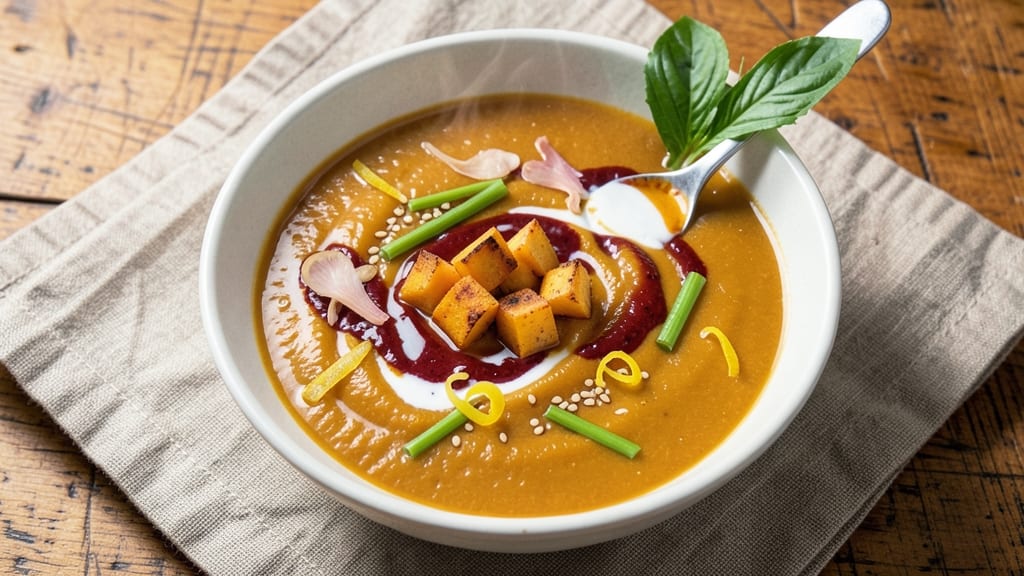
This Asian pumpkin soup recipe delivers the perfect balance of coconut curry warmth and silky texture that feels both comforting and sophisticated. The secret lies in blending traditional Southeast Asian flavors—ginger, lemongrass, and galangal—with the natural sweetness of pumpkin and the creaminess of coconut milk.
What makes this dish special is how it transforms simple ingredients into a velvety soup that’s rich yet light, with just the right amount of spice to linger on your palate.
The process is straightforward but rewarding: you’ll start by sautéing aromatic spices until fragrant, then simmering pumpkin and coconut milk until perfectly tender. A touch of fish sauce or soy sauce adds depth, while fresh herbs like cilantro or Thai basil brighten the finish.
The result is a soup that’s naturally sweet, subtly spicy, and impossibly smooth—ideal for chilly evenings or as a hearty starter.
What sets this recipe apart is its versatility. Serve it as a standalone dish with a sprinkle of chili flakes or toasted sesame seeds, or pair it with steamed rice and grilled shrimp for a full meal.
The flavors develop beautifully as it sits, making it perfect for meal prep or hosting. Whether you’re introducing someone to Asian cuisine or looking to elevate your soup repertoire, this recipe delivers restaurant-quality results at home.
For those who love customization, you can adjust the spice level to taste or swap in butternut squash for a different texture.
The key is balancing the coconut’s creaminess with the earthy pumpkin and aromatic spices—once you master that harmony, you’ll have a soup that’s as comforting as it is impressive. Let’s get started!
Ingredients for asian pumpkin soup
Aromatic roots and velvety coconut milk transform simple pumpkin into restaurant-quality Asian soup.
| Ingredient | Amount | Notes |
|---|---|---|
| Sugar Pumpkin (or Kabocha) 🎃 | 2 lbs | Cubed, skin removed |
| Coconut Milk (full-fat, canned) 🥥 | 1 can | 400 ml/14 oz preferred |
| Fresh Ginger Root 🌿 | 2 tbsp | Finely grated, aromatic |
| Lemongrass Stalk 🌿 | 1 whole | Bruised, 3-inch section |
| Galangal Root 🌿 | 1 tbsp | Finely grated, aromatic |
| Red Curry Paste 🌶️ | 2 tbsp | High-quality, fresh preferred |
| Fish Sauce 🍶 | 1 tbsp | Red Boat preferred |
| Vegetable or Chicken Stock 💧 | 4 cups | Homemade or quality store-bought |
| Fresh Thai Basil Leaves 🌿 | ¼ cup | Whole leaves for garnish |
| Fresh Cilantro Leaves 🌿 | ¼ cup | Chopped, for garnish |
| Lime Juice 🍋 | 1 tbsp | Freshly squeezed |
| Toasted Sesame Seeds 🌰 | 1 tsp | For garnish |
| Chili Flakes 🌶️ | ½ tsp | Adjust to taste |
| Salt 🧂 | 1 tsp | Kosher or sea salt |
| White Pepper 🌶️ | ¼ tsp | Freshly ground |
Galangal and lemongrass are the soul of this soup. Asian markets carry fresh roots—look for vibrant, firm stalks with no mold. If you can't find galangal, extra ginger at double the amount works in a pinch, though it won't be identical. The curry paste matters too—Maesri or Thai Kitchen brands deliver authentic depth. For the pumpkin, sugar or kabocha varieties work best; their natural sweetness balances the coconut perfectly. Costco often sells pre-cubed pumpkin for convenience, but fresh is worth the extra minute of prep.
No lemongrass? Lime zest plus 1 tbsp lime juice mimics its bright citrus notes. Substituting coconut milk with light coconut milk plus 2 tbsp cream adds richness. Fresh Thai basil is ideal, but regular basil at half the amount works if that's what you have. The fish sauce adds umami—Red Boat is the gold standard, but any reputable brand will work. For a vegetarian version, swap fish sauce for soy sauce plus 1 tsp miso paste. The chili flakes can be omitted entirely for a milder soup, or doubled if you love heat.
This soup tastes even better the next day—flavors meld beautifully when refrigerated. Store in an airtight container for 4-5 days, or freeze for 3 months in portions. For meal prep, double the batch and freeze half. Reheat gently on the stove with a splash of water or coconut milk to restore creaminess. Garnishes like sesame seeds and herbs are best added fresh after reheating to preserve their bright flavors.
Why You'll Love This Recipe
- No Chopping Chaos: I swear by this—just halve the pumpkin, scoop out the seeds, and toss it in whole. No peeling, no dicing, no stress. The skin softens right into the broth, and honestly? You’d never know it was there.
- Creamy Without Guilt: That full-fat coconut milk makes it velvety, but the ginger and galangal cut through the richness like a bright, zesty hug. Between us, it’s the kind of soup that tastes indulgent but still feels light enough for lunch or dinner.
- Weeknight to Holiday: I’ve served this to my roommate’s skeptical vegan friend (who now asks for seconds) and my mom’s brunch crowd (who thought it was store-bought). Simmer it longer for deeper flavor, or keep it quick for a 20-minute fix—it works both ways.
- Leftovers That Don’t Suck: Unlike most soups, this one actually tastes better the next day. Reheat with a splash of water, and the flavors meld into something even richer. I’ve got three containers in my freezer right now—because why make one when you can make five?
Step-by-step instructions for coconut curry pumpkin soup
This velvety soup delivers restaurant-quality depth with simple techniques you can master at home.
Prepare the Aromatics and Pumpkin Base
In a large pot, combine the 2 lbs sugar pumpkin (or kabocha) cut into 1-inch cubes with the 4 cups vegetable or chicken stock. Bring to a gentle boil over medium-high heat, then immediately reduce to a simmer. Let it cook uncovered for 15 minutes until the pumpkin begins to soften—you'll see the cubes lose their firmness and the liquid develop a subtle sweetness.
While the pumpkin simmers, use a mortar and pestle to bruise the 3-inch section of lemongrass stalk (no need to remove the outer leaves) until fragrant. In the same pot, add the 2 tbsp finely grated fresh ginger root, 1 tbsp finely grated galangal root, and the bruised lemongrass. Cook for 3-4 minutes until the aromatics release their oils and the kitchen fills with that bright, citrusy aroma. Here's the thing—galangal has a peppery kick similar to ginger but more floral, so don't skip it if you have it.
Build the Curry Flavor Foundation
Reduce the heat to medium-low and stir in the 2 tbsp red curry paste, letting it bloom for 2 minutes until the raw curry flavor mellows and the pot smells like a Thai street market. Add the 1 can full-fat coconut milk and 1 tbsp fish sauce, stirring gently to combine. The coconut milk will look slightly broken at first, but keep stirring—it's normal until the heat integrates everything.
Let the soup simmer uncovered for 10-12 minutes, stirring occasionally. You're looking for the flavors to meld and the pumpkin to become fork-tender. If the soup starts to thicken too much, add ½ cup water to maintain a silky consistency. The galangal and lemongrass should infuse the broth with their signature complexity, creating that perfect balance between sweet, spicy, and umami.
Season and Finish the Soup
Use an immersion blender to purée the soup until completely smooth, or carefully transfer it to a blender in batches (don't fill beyond ¾ capacity). Return the puréed soup to the pot and stir in the 1 tbsp freshly squeezed lime juice, 1 tsp salt, and 0.25 tsp freshly ground white pepper. Taste and adjust seasoning—you might need a touch more fish sauce for depth or lime for brightness. The soup should be vibrant, with a perfect balance of creamy coconut, spicy curry, and bright citrus.
For the final touch, gently heat the soup over low heat for 2-3 minutes to warm through. If the soup looks too thick after blending, thin it with 2-3 tablespoons of hot stock until it reaches a luxurious, velvety consistency. Real talk: this is where the magic happens—the subtle interplay of all those flavors creates something greater than the sum of its parts.
Garnish and Serve with Confidence
Ladle the hot soup into bowls and immediately garnish with 0.25 cup chopped fresh cilantro leaves and 0.25 cup whole fresh Thai basil leaves. Sprinkle with 1 tsp toasted sesame seeds and 0.5 tsp chili flakes for color, texture, and a final heat boost. The contrast between the cool coconut cream and the fiery chili flakes is what makes this dish truly special.
Serve with warm crusty bread or steamed jasmine rice to soak up every last drop of that rich, aromatic broth. Each spoonful should deliver creamy pumpkin, spicy curry notes, and a bright finish from the lime and herbs. If you're feeling ambitious, add a drizzle of chili oil or extra fish sauce for even more depth. This soup tastes even better the next day as the flavors continue to develop—so make extra if you can.
Pro Tips For Making Asian Pumpkin Soup
- CHAR THE GALANGAL: Cut it lengthwise into thin slices—no need to peel—and bruise it with the flat side of your knife before adding to the pot. This releases its oils faster and saves you from waiting for it to infuse properly (I used to skip this and still wondered why the soup tasted flat).
- PEEL THE LEMONGRASS LAST: Split the stalk lengthwise and scrape out the pale inner pith with a spoon—discard the tough outer layers. Add it to the pot whole, then remove it before blending. This keeps the soup clean and prevents a bitter, fibrous texture (yes, even if you’re impatient like me).
- LOW AND SLOW WITH PUMPKIN: Simmer the pumpkin chunks in the broth or coconut milk at a gentle bubble—never a rolling boil—or they’ll turn to mush before the flavors meld. I learned this the hard way when my soup looked like baby food.
- UPGRADE THE GINGER: Use a microplane to zest the ginger instead of grating it—this keeps the texture silky and avoids clumps. If you’re short on time, a 1-inch piece of sliced ginger (peeled) works, but the zested version adds depth without effort (your future self will notice).
Best sauces and condiments for these flavors
Coconut Milk Magic
The secret to this soup’s velvety texture lies in using full-fat coconut milk—it creates that luxurious mouthfeel while balancing the earthy pumpkin. I always opt for 400ml canned coconut milk (like Thai Kitchen brand) because it’s rich enough to stand up to the spices but still blends smoothly.
For extra depth, stir in 1 tbsp of coconut cream after blending if you want it even silkier. 🥥
Spicy Depths
Red curry paste is non-negotiable here—it brings the aromatic complexity that makes this soup taste authentically Asian. I recommend Maesri brand for that perfect balance of heat and sweetness. If you can’t find it, Thai Kitchen paste works too. For a milder version, reduce the paste to 1 tbsp and add ½ tsp sugar to offset the spice. The paste should bloom for 2-3 minutes before adding coconut milk to let its flavors fully develop.
Umami Boosters
Fish sauce is the umami powerhouse in this soup—Red Boat brand is my go-to because it’s clean and flavorful. Use it sparingly at first (start with 1 tbsp), then taste and adjust. For a vegetarian version, swap it for 1 tbsp soy sauce + ½ tsp miso paste for a similar depth. The fish sauce should enhance the curry and coconut flavors without overpowering them. Trust me, this is where the soup goes from good to restaurant-worthy.
Bright Finishes
Fresh lime juice and Thai basil are the finishing touches that elevate this soup. The lime brightens the coconut’s richness, while Thai basil adds a floral, slightly peppery note. If you can’t find Thai basil, regular basil works in a pinch, but it won’t be the same.
Garnish with toasted sesame seeds for crunch and chili flakes for a final kick. These elements turn a simple soup into something truly special. 🌿
Extra Flavor Boosters
Want to take this soup to the next level? Drizzle with chili oil (like Lao Gan Ma) or a spoonful of peanut butter for a Thai-inspired twist. A sprinkle of crushed peanuts adds texture, while a dash of palm sugar syrup (or honey) deepens the sweetness.
These additions are optional but can transform your soup into a full-blown flavor experience.
Storage Secrets
This soup tastes even better the next day as the flavors meld. Store leftovers in an airtight container in the fridge for 4-5 days or freeze for 3 months. When reheating, add 1-2 tbsp of water or coconut milk to restore creaminess.
Garnishes like herbs and sesame seeds are best added fresh after reheating to keep their flavors bright. 💫
Nutrition facts
Frequently asked questions
Can I use butternut squash instead of pumpkin?
Yes! Butternut squash works beautifully and has a slightly sweeter, nuttier flavor. Use the same amount (2 lbs) and cut it into 1-inch cubes for even cooking. The texture will be slightly denser than pumpkin, so you may need an extra 5 minutes of simmering to achieve fork-tenderness. For best results, peel and seed it first.
How can I make this soup vegetarian?
Swap the fish sauce for 1 tbsp soy sauce + ½ tsp miso paste to maintain umami depth. For extra richness, stir in 2 tbsp coconut cream after blending. The soup will still be delicious—just slightly less savory. Garnish with toasted peanuts or extra herbs to add texture and brightness.
Why does my soup taste too coconutty?
The coconut flavor can overpower if the paste or milk isn't balanced. Reduce the coconut milk to ½ can (200ml) and add ½ cup extra stock> to lighten the texture. Boost brightness with an extra 1 tbsp lime juice> and ½ tsp salt> to cut through the richness. A pinch of sugar (½ tsp) also helps balance the flavors.
Can I make this soup in an Instant Pot?
Sauté the aromatics (ginger, galangal, lemongrass) for 3 minutes> on "Sauté" mode. Add pumpkin, stock, and curry paste, then cook on High Pressure for 8 minutes>. Quick-release the pressure, stir in coconut milk, and blend until smooth. Finish with lime juice and herbs as directed. The Instant Pot version cooks 30% faster> but requires no simmering time.
What's the best way to reheat leftovers?
Reheat gently on the stove over low heat> with 1-2 tbsp water or coconut milk> to restore creaminess. Microwaving can make the soup watery—always stir well and add liquid gradually. For extra flavor, finish with fresh herbs and a squeeze of lime after reheating. Store leftovers in an airtight container> for up to 5 days>.