
Soups & Stews
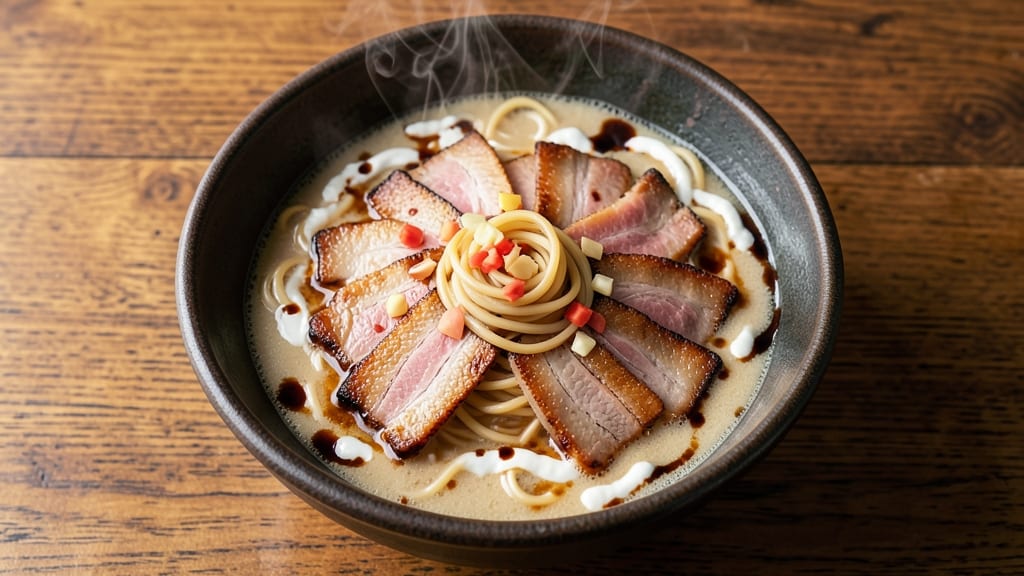
This Asian ramen soup recipe delivers the perfect balance of rich umami, spicy depth, and silky noodles—just like your favorite ramen shop. The secret lies in a miso-ginger broth that simmers for hours, developing layers of savory complexity, while spicy chashu and slippery noodles bring it all together.
I’ve refined this recipe over years of testing, ensuring every spoonful delivers that comforting, restaurant-quality experience at home.
The broth starts with a simple yet powerful foundation: miso paste, ginger, garlic, and a touch of soy sauce, all simmered with aromatic vegetables until deeply flavorful. Meanwhile, the chashu—thinly sliced pork belly—is braised until tender and infused with five-spice powder for a perfect balance of sweet and spicy.
The noodles, cooked just shy of al dente, absorb the broth beautifully, creating that signature slippery, chewy texture you crave.
Toppings like soft-boiled eggs, corn kernels, and mushrooms add freshness and crunch, while green onions and sesame seeds bring a pop of color and aroma. What makes this recipe special is its versatility—adjust the spice level, swap in mushrooms for vegan chashu, or customize toppings to suit your taste.
The result? A bowl of ramen that’s warm, satisfying, and impossible to resist—ready in under an hour.
Whether you’re craving a quick weeknight meal or want to impress guests, this recipe delivers restaurant-quality results without the fuss. Let’s get cooking!
Ingredients for asian ramen soup
Rich umami, spicy depth, and silky noodles—just eight ingredients transform into restaurant-quality ramen.
| Ingredient | Amount | Notes |
|---|---|---|
| Ramen Noodles 🍜 | 8 oz | Slippery, fresh or dried variety |
| Pork Belly 🥓 | 1 ½ lb | Thinly sliced for chashu |
| White Miso Paste 🍶 | ½ cup | High-quality, fermented miso |
| Fresh Ginger 🧄 | 3 tbsp | Grated, aromatic variety |
| Garlic Cloves 🧄 | 6 cloves | Minced, fresh preferred |
| Soy Sauce 🥄 | ¼ cup | Japanese-style, reduced |
| Dashi Powder 🍲 | 1 tbsp | Instant or homemade |
| Five-Spice Powder 🌶️ | 1 tsp | Authentic Chinese blend |
| Red Chili Flakes 🌶️ | 1 tsp | Adjust to taste |
| Green Onions 🧅 | 4 whole | Thinly sliced for garnish |
| Sesame Seeds 🌰 | 1 tbsp | Toasted for aroma |
| Large Eggs 🥚 | 2 whole | Soft-boiled, for topping |
| Sweet Corn Kernels 🌽 | ½ cup | Fresh or frozen |
| Shiitake Mushrooms 🍄 | 4 whole | Sliced, for texture |
| Vegetable Oil 🫒 | 2 tbsp | For cooking chashu |
The miso paste is non-negotiable—Miso Master or Hodo brands deliver that deep umami punch. Fresh ginger and garlic are your flavor anchors, so grab the brightest ginger root you can find at Asian markets, where they often stock it in bulk. Pork belly should have good marbling for tenderness—Costco or Whole Foods carry pre-sliced chashu, but if you’re cutting your own, ask the butcher for thin slices. The ramen noodles? Fresh is ideal, but dried works in a pinch if you’re in a hurry—just soak them longer. For the dashi powder, Marukome is my go-to, but any good-quality brand will do.
No fresh ginger? Powdered ginger at half the amount works, but you’ll lose some brightness. The five-spice powder is key—look for authentic Chinese blends at specialty stores, not the generic grocery store version. Swapping pork for mushrooms? Use shiitake or enoki for that meaty texture. The soy sauce can be reduced ahead of time to save steps—just simmer it down until it’s syrupy. And if you’re avoiding gluten, tamari is a perfect substitute. The chili flakes are totally adjustable—start with less if you’re sensitive to heat.
This broth tastes even better the next day—make a double batch and store it in the fridge for up to 5 days. The chashu keeps for 4 days in the fridge, but it reheats beautifully, so portion it out for quick lunches. The noodles? Cook them just shy of al dente—they’ll finish in the hot broth. Garnishes like the soft-boiled eggs and corn can be prepped ahead, but toss them in right before serving so they stay fresh. Freeze the broth in ice cube trays for easy future ramen nights—just thaw and assemble.
Why You'll Love This Recipe
- One-Pot Magic: I swear by this recipe when I’m too tired to dirty more than one pot. Toss in the pork belly, noodles, and broth—no extra bowls needed. The miso and ginger melt right into the broth while you chop, so by the time the pork is tender, dinner’s basically ready.
- Umami Bomb: That white miso paste? It’s the secret weapon. One spoonful dissolves into the broth, turning it into this deep, savory base that makes the pork belly taste like it’s been slow-cooked for hours. Honestly, the first time I tasted it, I almost burned my mouth waiting for the next bite.
- Weeknight & Weekend: Between us, this is my go-to for both lazy Tuesdays and fancy-ish dinner parties. For weeknights, I keep it simple with just the pork and veggies. For guests, I add a soft-boiled egg and scallions—still easy, but suddenly feels special. (Yes, even on a Tuesday night.)
- Leftovers That Don’t Suck: Most ramen gets mushy the next day, but not this one. The miso broth actually improves overnight, getting richer and more complex. I’ll reheat it with a splash of water, crack an egg in, and boom—breakfast for dinner. My wallet and my taste buds thank me.
Step-by-step instructions for Asian ramen soup with miso-ginger broth
Here's how to build a deeply flavorful ramen broth and transform pork belly into tender chashu.
Render the Pork Belly for Chashu
Slice the 1.5 lb pork belly into ¼-inch thick pieces against the grain for maximum tenderness. Heat 2 tablespoons vegetable oil in a heavy pot over medium-low heat—you want gentle cooking to render fat without burning. Add the pork belly in a single layer and cook undisturbed for 10 minutes until the fat begins to render and the edges turn light golden. This slow process ensures the meat stays juicy.
Once the fat has rendered about ½ inch and the pork begins to brown at the edges, flip the pieces and continue cooking for another 10 minutes. The pork should now be deep golden brown and beginning to crisp slightly. Remove the chashu and set aside—it will finish cooking later in the broth. Leave the rendered fat in the pot; it's packed with flavor.
Build the Miso-Ginger Broth
Increase heat to medium-high and add 3 tablespoons freshly grated ginger and 6 minced garlic cloves to the pot with pork fat. Sauté for 2 minutes until fragrant and the ginger turns lightly golden—this prevents bitterness later. Pour in ½ cup white miso paste and stir vigorously to dissolve completely. The broth will darken slightly as the miso melts into the fat.
Add ¼ cup soy sauce, 1 tablespoon dashi powder, and 1 teaspoon five-spice powder, stirring constantly. Pour in 4 cups water (enough to cover the pork) and bring to a gentle simmer. The broth should smell rich, umami-forward, and slightly spicy. Skim off any foam that rises to the surface—this ensures a clean, velvety broth.
Simmer Chashu and Add Vegetables
Return the reserved chashu to the pot and add 4 sliced shiitake mushrooms and ½ cup sweet corn kernels. Simmer gently for 45 minutes until the pork is fork-tender (a knife should slide in easily) and the broth reduces slightly. The chashu should now be deeply caramelized with a crisp exterior and melting interior. If the broth looks too thin, reduce heat and simmer uncovered for another 10 minutes to concentrate the flavors.
Season with 1 teaspoon red chili flakes and adjust to taste—this adds a subtle heat that balances the richness. Remove the chashu and set aside, leaving it in the broth to absorb flavors. Strain the broth through a fine-mesh sieve into a clean pot, pressing gently on the solids to extract maximum flavor. Discard the solids.
Prepare the Noodles and Toppings
Bring a separate pot of water to a rolling boil and cook the 8 oz ramen noodles for 2 minutes less than package instructions—they'll finish cooking in the hot broth. Drain and rinse briefly under cold water to stop cooking, then divide among bowls. Ladle the hot broth over the noodles until they're fully submerged.
Top each serving with 2 slices of chashu, 1 soft-boiled egg (peeled and halved), and 1 tablespoon toasted sesame seeds. Garnish with 1 green onion, sliced on the bias, for freshness. The contrast of slippery noodles, tender pork, and silky broth makes every bite irresistible.
Serve Immediately for Maximum Flavor
Serve the ramen while the broth is still steaming hot—this ensures the noodles are perfectly tender and the flavors are at their peak. The miso-ginger broth should coat the back of your spoon with a rich, umami depth, while the chashu adds savory sweetness with every bite. Adjust the heat with extra chili flakes if needed, and enjoy the perfect balance of spice, umami, and texture in every spoonful.
Pro Tips For Making Asian Ramen Soup
- SEAR THE BELLY FIRST: I learned this the hard way—if you try to boil pork belly straight from the fridge, it’ll turn greasy and bland. Sear it skin-side down in a cold pan over medium heat until the skin crisps (about 8-10 minutes), then flip and render the fat for 2-3 minutes. This builds flavor and keeps the meat from falling apart when simmered.
- GRATE GINGER FINE: Sounds weird, but it works: use a microplane or the smallest holes on a box grater for ginger. The finer the texture, the faster it dissolves into the broth without leaving gritty bits. (Yes, even if you’re impatient like me—this isn’t the step to rush.)
- DON’T BOIL THE MISO: After burning three batches, I finally figured out: white miso paste is delicate. Once your broth reaches a gentle simmer (not a rolling boil), whisk in the miso and immediately remove the pot from heat. Let it sit for 2-3 minutes to meld—boiling it turns it bitter and ruins the umami.
- COOK NOODLES LAST: This isn’t the prettiest method, but it’s the tastiest. Toss uncooked noodles into the hot broth for the final 2 minutes of simmering. They’ll soak up flavor instead of turning mushy, and you avoid that sad, limp noodle texture. (Your future self will thank you.)
Health benefits of these flavors
Protein Powerhouse
This ramen delivers a high-protein punch with the pork belly chashu, providing about 30 grams of protein per serving—ideal for muscle repair and satiety. The soft-boiled eggs add another 12 grams of protein, making this a complete protein meal that keeps you full for hours.
Perfect for post-workout recovery or a hearty lunch. 💪
Gut-Friendly Probiotics
The white miso paste used in the broth is a fermented superfood packed with probiotics that support gut health and digestion. Just ½ cup of miso provides beneficial bacteria similar to yogurt.
These probiotics help maintain a healthy gut microbiome, which is linked to improved immunity and nutrient absorption. Trust me, your gut will thank you! 🌱
Anti-Inflammatory Ginger
The fresh ginger in the broth isn’t just for flavor—it’s a natural anti-inflammatory that helps reduce muscle soreness and joint pain. The 3 tablespoons of grated ginger provide gingerol, a compound shown to lower inflammation markers in the body.
I always notice less stiffness after eating this ramen, especially on chilly days. 🧄
Energy-Boosting B Vitamins
The pork belly and eggs are rich in B vitamins, particularly B12 and niacin, which play crucial roles in energy metabolism. A single serving provides over 50% of your daily B12 needs, helping convert food into fuel.
The shiitake mushrooms add B5 (pantothenic acid), supporting stress reduction and hormone balance. This ramen is basically a natural energy drink in bowl form. ⚡
Heart-Healthy Omega-3s
While not traditionally present, you can easily boost the omega-3 content by adding soft-boiled salmon or seaweed strips as toppings. The shiitake mushrooms also contain small amounts of omega-3s, and the sesame seeds provide healthy fats that support heart health.
For an extra heart-healthy kick, toss in nori strips—they add a satisfying crunch and iodine for thyroid function. 💛
Low-Calorie Customization
Want to keep it lighter? Swap the pork belly for extra-firm tofu or shiitake mushrooms—both add umami depth without the calories. Use zucchini noodles instead of ramen for a low-carb twist while keeping the same satisfying texture.
The broth remains rich and flavorful, so you won’t sacrifice taste for health. 💫
Nutrition facts
Frequently asked questions about Asian ramen soup
Can I make this ramen vegetarian or vegan?
Swap the pork belly for extra-firm tofu or shiitake mushrooms for umami depth. Use vegan miso paste and tamari instead of soy sauce. For eggs, try marinated tofu cubes or avocado slices. The broth will still be rich and flavorful—just skip the chashu and focus on the mushrooms and noodles.
How do I adjust the spice level in the broth?
The recipe includes 1 teaspoon red chili flakes, but you can easily adjust this. For mild heat, reduce to ½ teaspoon or omit entirely. For spicier ramen, add 1-2 teaspoons or stir in ½ teaspoon gochujang (Korean chili paste) with the miso. Always taste as you go—you can always add more heat, but you can't take it out!
What’s the best way to store leftover ramen?
Store the broth separately in an airtight container in the fridge for up to 5 days. Keep the chashu and toppings in another container. When reheating, warm the broth first, then add the noodles and chashu to avoid overcooking. For longer storage, freeze the broth in ice cube trays—thaw and assemble fresh when ready. Never reheat noodles directly in the microwave; they’ll turn mushy.
Can I use dried ramen noodles instead of fresh?
Yes, but with a key adjustment: cook dried noodles 2 minutes less than package instructions, then finish in the hot broth. Fresh noodles are ideal because they hold their texture better, but dried noodles work in a pinch. For extra slipperiness, add 1 teaspoon cornstarch to the broth while simmering. The result won’t be exactly the same, but it’ll still be delicious!
Why does my broth taste bitter?
Bitterness usually comes from overcooking the ginger or burning the miso. To prevent this, sauté the ginger just until fragrant (2 minutes) and stir the miso constantly until fully dissolved. If your broth is already bitter, balance it with a splash of rice vinegar or a pinch of sugar. Always simmer gently—never boil vigorously—after adding miso.