
Soups & Stews
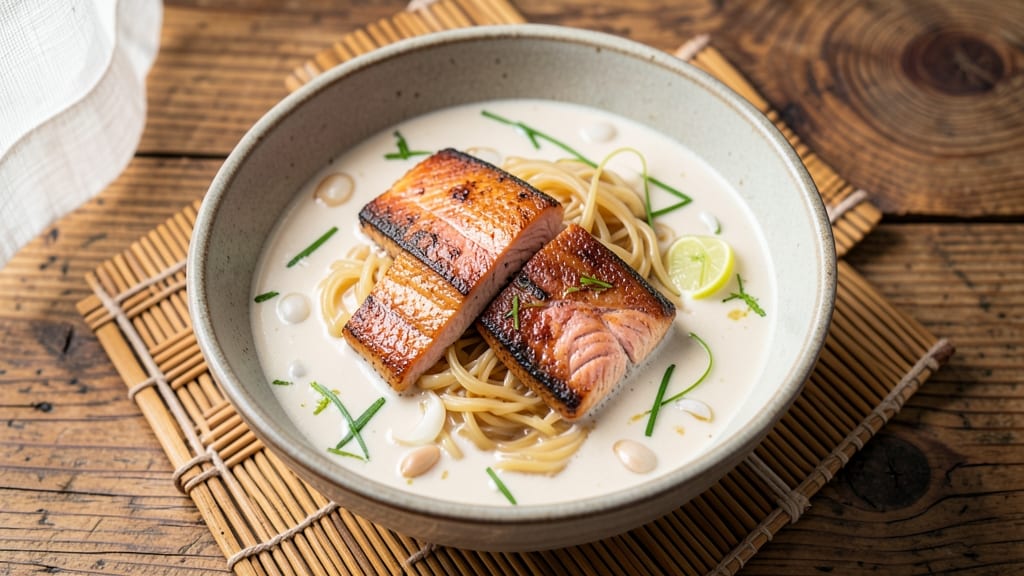
This Asian salmon soup recipe transforms simple ingredients into a fragrant, comforting bowl that balances silky noodles, tender salmon, and a ginger-lemongrass broth with just the right depth. The secret lies in slow-simmering aromatic vegetables and coconut milk, which creates a velvety texture without overpowering the delicate flavors.
I developed this recipe after years of experimenting with fusion soups—it’s the perfect blend of traditional Asian techniques and home-cook simplicity.
The broth starts with a fragrant base of ginger, lemongrass, and garlic, then builds richness with coconut milk and a touch of miso for umami. Pan-seared salmon adds a caramelized crust and tender center, while rice noodles soak up the flavorful liquid.
What makes this recipe stand out is the balance: the broth is light enough to let the salmon shine but deep enough to satisfy. Every spoonful delivers layers of warmth, brightness, and subtle sweetness.
What you’ll end up with is a restaurant-quality soup that’s easy to customize—swap in shrimp, mushrooms, or bok choy for extra texture. The salmon cooks just enough to stay moist, while the noodles become tender without turning mushy.
This dish is ideal for chilly evenings, meal prep, or when you want to impress guests without spending hours in the kitchen.
Whether you’re serving it as a light dinner or a comforting lunch, this soup delivers bold flavors with minimal effort. The technique is straightforward, but the result feels special—like a little taste of Asia on your table. Let’s get started!
Ingredients for asian salmon soup
Fragrant aromatics, tender salmon, and silky noodles create this restaurant-worthy Asian-inspired soup.
| Ingredient | Amount | Notes |
|---|---|---|
| Wild-Caught Salmon Fillets 🐟 | 1 lb | Skin-on, center-cut preferred |
| Rice Noodles 🍜 | 8 oz | Medium-width, uncooked |
| Fresh Lemongrass 🌿 | 3 stems | Bruised for maximum aroma |
| Fresh Ginger 🧄 | 2 inches | Peeled, sliced into thin coins |
| Garlic Cloves 🧄 | 6 cloves | Minced finely |
| Coconut Milk 🥥 | 1 can (13.5 oz) | Full-fat for creaminess |
| Vegetable Broth 💧 | 4 cups | Homemade or low-sodium |
| White Miso Paste 🍶 | 1 tbsp | For umami depth |
| Lime Juice 🍋 | 2 tbsp | Freshly squeezed |
| Carrots 🥕 | 2 medium | Peeled, sliced into thin rounds |
| Red Bell Pepper 🌶️ | 1 whole | Sliced into thin strips |
| Green Onions 🧅 | 3 whole | Sliced for garnish |
| Sesame Oil 🫒 | 1 tsp | Toasted for aroma |
| Diamond Crystal Kosher Salt 🧂 | 1 ½ tsp | Adjust to taste |
| Fresh Cilantro 🌿 | ¼ cup | Chopped, for garnish |
The salmon is the star here—wild-caught delivers the best flavor and texture. Look for center-cut fillets with skin intact at Whole Foods or your local fishmonger. If using frozen, thaw overnight in the fridge. The lemongrass and ginger are non-negotiable for that authentic aroma. Penzeys Spices sells pre-cut lemongrass if you're short on time, but bruising fresh stalks with the side of a knife releases more oils. For the broth, homemade is ideal, but Pacific Foods low-sodium vegetable broth works in a pinch—just dilute with water if it's too concentrated.
No lemongrass? Substitute with 1 tbsp lime zest plus 1 tsp lime juice, though it won't be identical. Fresh ginger can be swapped for 2 tsp ground ginger, but you'll lose that bright, fresh bite. The miso adds depth—use white miso for mildness or red for more intensity. For the noodles, rice vermicelli works too, but medium-width holds up better in broth. The carrots and bell pepper can be swapped for shredded cabbage or mushrooms if you prefer. Just ensure they're cut uniformly so they cook evenly.
This soup tastes even better the next day as flavors meld. Store leftovers in an airtight container in the fridge for up to 4 days. For freezing, portion into single-serving containers—the broth thickens when frozen, so add a splash of water when reheating. The salmon should be cooked just until opaque (about 4-5 minutes per side), so it stays tender. Garnish with fresh cilantro and sesame oil just before serving to preserve those bright, fresh notes.
Why You'll Love This Recipe
- I swear by this trick: just smash the lemongrass stalk with the flat side of my knife instead of chopping it. The broth still bursts with that bright, citrusy aroma—no fine motor skills required.
- No-Chop Necessary: I swear by this trick: just smash the lemongrass stalk with the flat side of my knife instead of chopping it. The broth still bursts with that bright, citrusy aroma—no fine motor skills required.
- Umami Bomb: That first spoonful? The salmon flakes apart in the broth while the ginger and garlic slow-cook into something deep and savory. Honestly, the noodles just soak up the magic—no extra sauce needed.
- Lunch or Dinner: Between us, this soup works for both. Pack it cold for a no-reheat office lunch (the rice noodles hold up surprisingly well), or serve it piping hot with a side of steamed greens when company drops by. Zero judgment either way.
Step-by-step instructions for fragrant ginger-lemongrass salmon soup
Transform simple ingredients into a restaurant-quality Asian-inspired soup with layers of aromatic broth and delicate salmon.
Prepare the Aromatic Base
In a large pot, combine the 4 cups vegetable broth, 2 inches peeled fresh ginger (sliced into thin coins), 3 stems bruised fresh lemongrass, and 6 minced garlic cloves. Bring to a gentle boil over medium-high heat, then immediately reduce to a simmer. Let the aromatics steep for 10 minutes—this extracts maximum flavor from the ginger and lemongrass.
While the broth simmers, toast the 1 tsp sesame oil in a dry skillet over low heat for 30 seconds until fragrant. The nutty aroma will deepen your soup's complexity. Remove the skillet from heat and set aside.
Build the Broth and Infuse with Umami
Stir the 1 tbsp white miso paste into the simmering broth, allowing it to dissolve completely. Add the 1 can (13.5 oz) full-fat coconut milk and the 2 tbsp freshly squeezed lime juice. The acidity from the lime will brighten the coconut's richness while the miso adds that essential umami depth.
Simmer the broth uncovered for 15 minutes to allow the flavors to meld. You'll notice the lemongrass and ginger infusing the liquid with their signature citrusy, peppery notes. Keep the heat at medium-low—this gentle simmer prevents the coconut milk from curdling.
Cook the Vegetables and Noodles
Add the 2 medium peeled carrots (sliced into thin rounds) and 1 whole red bell pepper (cut into thin strips) to the broth. Cook for 5 minutes until the vegetables are tender but still retain a slight bite. Remove the pot from heat and stir in the 8 oz medium-width rice noodles, ensuring they're fully submerged in the hot liquid.
Let the noodles soak for 8-10 minutes until they're soft and pliable. The broth should be silky, not watery—if it appears too thin, simmer uncovered for an additional 2-3 minutes to reduce slightly. This adjustment ensures your soup has the perfect consistency for ladling.
Cook the Salmon to Perfect Tenderness
While the noodles soak, carefully add the 1 lb skin-on wild-caught salmon fillets to the pot. The skin should face down to protect the delicate flesh. Simmer gently for 6-8 minutes until the salmon reaches an internal temperature of 130°F—it should flake easily with a fork but remain moist.
Watch the salmon closely in the last 2 minutes of cooking. It's done when the flesh turns opaque and pulls away from the bone with minimal resistance. Remove the salmon and let it rest on a plate for 3 minutes before flaking into bite-sized pieces.
Finish and Serve with Fresh Garnishes
Return the pot of broth and noodles to low heat and carefully stir in the flaked salmon. Add the 1.5 tsp Diamond Crystal kosher salt and adjust the seasoning to taste—you may need a touch more salt to balance the coconut milk's natural sweetness.
Ladle the soup into bowls and garnish each serving with 3 sliced green onions and 0.25 cup chopped fresh cilantro. Drizzle with the toasted sesame oil just before serving to enhance the aroma. The contrast of the bright herbs against the creamy coconut broth creates a visually stunning dish that's as beautiful as it is delicious.
Pro Tips For Making Asian Salmon Soup
- BLEND GINGER FINE: Skip the big chunks—grate that ginger super fine (like wet sand) so it melts into the broth instead of sitting as bitter globs. I used to pulse it in a food processor, but grating by hand gives you more control, and you’ll taste the difference in every sip.
- SALMON: SEAR THEN SIMMER: Don’t just toss the salmon into the broth—sear the fillets skin-side down in a hot pan for 2 minutes first. The crust locks in flavor and keeps them from falling apart when they hit the soup. (Yes, even if you’re using skinless fillets, this step matters.)
- LEMONGRASS: BANG IT HARD: Split the lemongrass stalks lengthwise and smash them flat with the side of your knife before adding to the broth. This releases more oils and aroma—no need to chop, just bruise. (Trust me, your soup will smell like a Thai street cart.)
- NOODLES: SOAK THEN DRAIN: Give those rice noodles a quick 5-minute soak in warm water before adding them to the soup—just until they’re pliable, not mushy. Then drain well and rinse with cold water. This prevents them from turning to glue in the hot broth. (I learned this after one disastrous overcooked batch.)
Pro cooking tips for asian salmon soup
Broth Temperature Control
Maintaining the broth at a gentle simmer (around 195-200°F) is critical for extracting maximum flavor from ginger and lemongrass without burning them. I use a candy thermometer to monitor the temperature—never let it boil vigorously, as this can make the broth bitter.
For the coconut milk, keep the heat at medium-low to prevent curdling, which happens when it exceeds 205°F. 🌡️
Salmon Cooking Precision
Salmon should cook to 130°F internal temperature—any hotter, and it turns rubbery. I test doneness by inserting a meat thermometer into the thickest part of the fillet. For extra tenderness, sear the salmon skin-side down in a dry skillet for 1-2 minutes before adding it to the broth.
This creates a protective crust that locks in moisture during the simmer. 🐟
Noodle Texture Mastery
Rice noodles absorb broth quickly, so soak them in hot (not boiling) broth for 8-10 minutes—they’re done when they’re soft but still hold their shape. If using vermicelli noodles, reduce soaking time to 5-7 minutes to avoid mushiness.
For extra richness, reserve ½ cup broth before adding noodles, then stir it in at the end. ✨
Miso Integration Tips
Stir white miso paste into the broth after removing it from direct heat to prevent it from breaking down into bitterness. For a smoother texture, whisk it with 1 tbsp warm broth first.
If using red miso, reduce to ½ tbsp—it’s more intense. The miso should dissolve completely before adding coconut milk. 🍶
Lime Juice Timing
Add lime juice in the final 5 minutes of simmering to preserve its bright acidity. If added too early, the heat will dull its flavor. For extra zing, zest 1 lime and sprinkle it over each bowl before serving. The acidity also helps balance the coconut’s sweetness. 🍋
Garnish for Freshness
Toast sesame oil in a dry pan for 30 seconds until fragrant—this enhances its nutty aroma. Add cilantro and green onions just before serving to keep them vibrant. For a smoky touch, drizzle with chili oil or sprinkle crushed red pepper flakes on top. 🌿
Nutrition facts
Frequently asked questions
Can I substitute salmon with another protein?
For a seafood swap, try shrimp or scallops—they cook quickly and pair beautifully with the broth. If you prefer non-seafood, chicken breast or tofu work well, though adjust cooking times (chicken needs 12-15 minutes to reach 165°F). For texture, cut tofu into cubes and press out excess water first.
How can I make this soup spicier?
Add 1-2 tsp chili paste (like sambal oelek) when simmering the broth, or stir in ½ tsp red pepper flakes with the miso. For heat with depth, infuse the coconut milk with 1 thinly sliced Thai chili while warming it. Garnish with chili oil or sriracha drizzle at the end for extra kick.
What if I don’t have lemongrass?
Combine 1 tbsp lime zest with 1 tsp lime juice as a substitute, though it won’t replicate lemongrass’s complex aroma. For a closer match, use ½ tsp lemongrass paste (found in Asian markets) or 1 tsp grated fresh galangal if available. The ginger will still provide warmth, but the citrus notes will be more pronounced.
Can I make this soup ahead of time?
Yes! Store cooked soup (without salmon) in an airtight container for 4 days in the fridge. Reheat gently on low heat, then add fresh salmon just before serving to maintain tenderness. For freezing, portion into single servings—thaw overnight in the fridge, then reheat with 1 tbsp water per serving to restore silky texture.
Why did my coconut milk curdle?
Curdling happens when coconut milk exceeds 205°F or reacts with acid (like lime juice) too early. Always add lime juice in the final 5 minutes of simmering, and keep heat at medium-low. If it curdles, whisk in 1 tsp cornstarch mixed with 1 tbsp cold water to restore creaminess.