
Soups & Stews
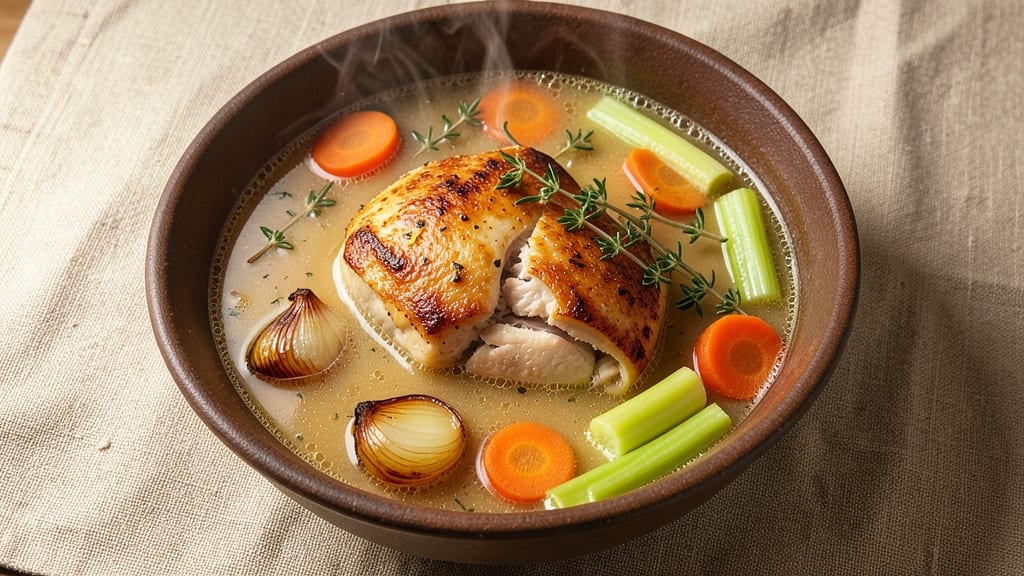
This authentic chicken soup recipe delivers the soul-soothing warmth of a slow-simmered classic, built on a rich herbed velouté base that transforms simple ingredients into something deeply comforting.
The secret lies in layering flavors—caramelized onions and garlic form the foundation, while aromatic herbs like thyme and bay leaf infuse the broth with complexity.
Unlike rushed versions, this method demands patience, allowing the chicken to become fork-tender while vegetables melt into the broth, creating a velvety texture that feels like a hug in a bowl.
The velouté base sets this soup apart, achieved by whisking a roux into warm broth for a naturally thickened, silky consistency without heavy cream. Traditional techniques like skimming impurities and straining ensure clarity, while a touch of lemon brightens the depth of flavor.
This isn’t just soup—it’s a restaurant-quality dish that balances richness with freshness, proving homemade can surpass even the most beloved takeout versions.
By the final spoonful, you’ll taste the harmony of caramelized aromatics, tender chicken, and vegetables that have absorbed the broth’s essence. The result is a slow-simmered comfort that warms both body and spirit—perfect for chilly evenings or when you crave the kind of meal that feels like coming home.
Serve with crusty bread to soak up every last drop of that herbed velouté.
What makes this recipe truly authentic is the attention to detail: from the way the chicken is poached to the precise seasoning balance. It’s the kind of soup that improves with leftovers, as flavors deepen overnight.
Whether you’re feeding a crowd or treating yourself, this is the foolproof method for a bowl that tastes like tradition meets modern simplicity.
Ingredients for authentic chicken soup
Sixteen ingredients crafting restaurant-quality comfort in one bowl of velouté-infused chicken soup.
| Ingredient | Amount | Notes |
|---|---|---|
| Chicken Thighs, Bone-In 🍗 | 2 ½ lb | Skin-on, cut into even pieces |
| Yellow Onions 🧅 | 2 whole | Yellow or red, peeled |
| Garlic Cloves 🧄 | 6 cloves | Fresh, peeled and smashed |
| Carrots 🥕 | 1 ½ lb | Medium, peeled and cut into chunks |
| Celery Stalks 🧅 | 4 whole | Fresh, trimmed and cut into pieces |
| Fresh Thyme Sprigs 🌿 | 2 whole | Or 1 tbsp dried thyme |
| Bay Leaves 🌿 | 2 whole | Dried or fresh |
| All-Purpose Flour 🌾 | ¼ cup | For velouté roux |
| Unsalted Butter 🧈 | ½ cup | Cold, cut into small pieces |
| Chicken Broth 💧 | 6 cups | Homemade or high-quality store-bought |
| Lemon Juice 🍋 | 1 tbsp | Freshly squeezed |
| Salt 🧂 | 1 ½ tsp | Diamond Crystal kosher salt |
| Ground Black Pepper 🌶️ | ½ tsp | Freshly ground |
| Fresh Parsley 🌿 | ¼ cup | Chopped, for garnish |
The chicken thighs are non-negotiable here—their fat and connective tissue create a naturally rich broth. Look for bone-in, skin-on pieces from a trusted butcher or well-stocked grocery store like Whole Foods or Costco. The onions and celery form your 'holy trinity' base, so choose fresh, firm vegetables with vibrant color. For the carrots, organic varieties from the produce section avoid wax coatings that can cloud your broth. The thyme and bay leaves should be aromatic when crushed—if they smell stale, replace them. For the butter, Plugrá or Land O'Lakes brands provide consistent quality for your velouté roux.
No fresh thyme? Dried works at one-third the amount, but toast it lightly in a dry pan first to deepen the flavor. Short on chicken broth? Vegetable broth plus 1 tbsp soy sauce mimics umami depth. The flour for your roux must be all-purpose—bread flour creates a grittier texture. For the butter, if you're using salted, reduce your added salt by half a teaspoon. The carrots can be baby carrots if that's what's available, but whole carrots peel better and create more visual appeal. If you're making this ahead, freeze the raw ingredients in a bag for up to 3 months—just add broth and simmer when ready.
This soup tastes even better the next day as flavors meld. Store in an airtight container in the fridge for up to 5 days, or freeze portions for 3 months. The velouté thickens when cold, so reheat gently over low heat, adding a splash of broth if needed. For serving, I like to portion into bowls with a sprinkle of fresh parsley and a slice of crusty baguette on the side. The broth can be reduced and used as a sauce for pasta or dumplings—just strain it first to remove any solids.
Why You'll Love This Recipe
- One-Pot Wonder: I swear by this recipe because it’s actually one-pot—no chopping boards covered in veggie scraps, no extra pots to wash. Just brown the bone-in thighs, toss in the onions, garlic, carrots, and celery, then let the broth work its magic. The bones melt into the broth, and you’re left with a rich, flavorful base without extra effort.
- Rich, Deep Flavor: That bone-in chicken? It’s the secret weapon—crispy edges and marrow-infused broth that tastes like you simmered for hours (even if you didn’t). The onions caramelize right in the pot, and the garlic? Oh, it’s just al dente—no bitterness, just pure aromatic punch.
- Weeknight to Holiday: This soup is my lazy night and my dinner party hero. Serve it with crusty bread for a no-fuss weeknight meal, or add a splash of white wine and fresh herbs for a restaurant-worthy dish when company’s over. Same recipe, totally different vibes.
- Budget-Friendly Leftovers: Bone-in thighs stretch further than breast meat, and the veggies are cheap but pack serious flavor. Make a big batch—it reheats beautifully, and the broth freezes like a dream. Honestly, I’ve had this soup for breakfast (yes, really) and it’s still the star of the meal.
Step-by-step instructions for slow-simmered chicken soup
Master this timeless technique for velvety broth and tender chicken—authentic comfort in every spoonful.
Sear the Chicken Thighs for Deep Flavor
Pat the 2.5 lb chicken thighs, bone-in completely dry with paper towels. Season generously with 1.5 tsp salt and 0.5 tsp ground black pepper, pressing the spices into the skin to adhere. Heat a large Dutch oven over medium-high heat and add 0.5 cup unsalted butter, melting until foamy but not browned.
Working in batches to avoid crowding, add the chicken thighs skin-side down and cook undisturbed for 5-6 minutes until the skin turns deep golden brown and crispy. Flip the thighs and sear the other side for 3-4 minutes. Remove the chicken and set aside, leaving the rendered fat in the pot. This searing step develops the rich, caramelized foundation for your soup.
Build the Velouté Roux with Aromatics
Reduce heat to medium and add the 2 whole yellow onions, 6 cloves garlic cloves, 1.5 lb carrots, and 4 whole celery stalks, all cut into ½-inch pieces. Cook for 8-10 minutes, stirring occasionally, until the vegetables soften and the onions become translucent. Add the 2 whole fresh thyme sprigs and 2 whole bay leaves, stirring to combine.
Sprinkle the 0.25 cup all-purpose flour over the vegetables and stir vigorously for 1-2 minutes to coat everything evenly. This creates a velouté roux that will thicken the broth naturally. Cook for another 2 minutes, stirring constantly, until the mixture turns a pale golden color and smells nutty—this signals the roux is ready to absorb the broth.
Simmer the Broth for Maximum Flavor Extraction
Pour in the 6 cups chicken broth slowly while stirring continuously to prevent lumps. Return the seared chicken thighs to the pot, skin-side up, and bring the mixture to a gentle simmer. The broth should just bubble softly at the edges—never a rolling boil, as this can make the broth cloudy. Skim off any foam or impurities that rise to the surface with a spoon.
Partially cover the pot and simmer for 45-50 minutes, maintaining a gentle simmer. Check occasionally and add ½ cup hot water if the broth reduces too much. The chicken should become fork-tender, and the broth should develop a rich, herbed aroma. This slow simmering extracts collagen from the bones and vegetables, creating a naturally thickened, velvety texture.
Finish with Bright Acid and Fresh Herbs
Remove the chicken thighs from the broth and let them rest on a cutting board for 5 minutes. Strain the broth through a fine-mesh sieve into a clean pot, pressing gently on the solids to extract maximum flavor. Discard the solids or save for stock. Return the broth to the pot and stir in the 1 tbsp lemon juice, which brightens the flavors and cuts through the richness.
Shred the chicken thighs using two forks, discarding any bones or cartilage. Return the shredded chicken to the broth and simmer gently for 5 minutes to heat through. Taste and adjust seasoning with additional salt or black pepper if needed. Ladle the soup into bowls and garnish each serving with 0.25 cup fresh parsley, chopped finely. The parsley adds a fresh contrast to the deep, herbed broth.
Pro Tips For Making Authentic Chicken Soup
- Brown the Thighs Hard: Don’t just sear—get those bone-in thighs deep golden in spots, even if it takes 10 minutes. I used to rush this, and the soup always tasted like it was missing something. The crust releases flavor into the broth, so resist the urge to move them when they’re not quite there yet.
- Mince the Onions Fine: Skip the rough chop—grate the yellow onions on the large holes of a box grater. This dissolves them into the broth instead of turning to mush, giving your soup that rich, sweet base without gummy texture. (Yes, it’s extra work, but the difference is noticeable.)
- Don’t Crowd the Pot: Start with just the chicken thighs and onions in a cold pot, then add everything else later. I learned this the hard way—overloading the pot steams the veggies instead of browning them, and the broth turns cloudy. Give the ingredients room to develop flavor first.
- Save the Starch Water: When peeling carrots and celery, save the water from rinsing them—it’s packed with natural starch. Add it to the broth at the end to thicken it slightly without resorting to flour or cornstarch. (Works especially well if you’re making a thicker, rustic-style soup.)
Flavor customization for these flavors
Herb Variations
Swap the thyme for rosemary or tarragon to add piney or anise notes that pair beautifully with the velouté base. I often add ½ tsp dried marjoram for a sweeter, more floral depth—it reminds me of my grandmother’s Italian chicken soup.
For a Middle Eastern twist, include 1 tsp ground cumin and ½ tsp coriander alongside the thyme. 🌿
Spice Infusions
Add ½ tsp smoked paprika or ¼ tsp cayenne when searing the chicken for warmth without overpowering the delicate velouté. For a North African touch, toast 1 tsp ground fennel seeds in the butter before adding the onions—it adds a subtle licorice sweetness.
A pinch of ground cinnamon (just ¼ tsp) enhances the carrots’ natural sweetness while keeping the soup comforting. 🌶️
Umami Boosters
Incorporate 1 tbsp soy sauce or 1 tsp fish sauce when adding the broth to deepen the savory profile without altering the velouté’s natural thickness. For a vegetarian-friendly version, add 2 tbsp miso paste (white or red) to the simmering broth—it dissolves beautifully and adds fermented complexity.
A splash of Worcestershire sauce (just 1 tsp) works wonders too. 💡
Vegetable Swaps
Replace carrots with sweet potatoes (peeled and cubed) for a naturally sweet, creamy texture that complements the velouté. Swap celery for leeks (white and light green parts only) for a milder, slightly sweeter flavor.
Add ½ cup diced fennel bulb alongside the onions—its licorice notes play well with the thyme. For a rustic touch, include ½ cup chopped mushrooms (cremini or shiitake) when building the roux. 🥕
Protein Alternatives
Use chicken breasts instead of thighs for a leaner version, but reduce simmering time to 25-30 minutes to avoid dryness. Swap chicken for duck confit legs (skin removed) for a richer, gamey depth—simmer for 35 minutes.
For a seafood twist, add ½ lb shrimp or 8 oz mussels in the last 5 minutes of cooking. A ½ cup cooked lentils adds heartiness without altering the velouté’s texture. 🍗
Dairy & Creamy Additions
Stir in ¼ cup heavy cream or ½ cup Greek yogurt at the end for a lighter, tangy finish—just heat gently to avoid curdling. For a French-inspired touch, whisk in 1 tbsp crème fraîche per bowl before serving.
A sprinkle of grated Parmesan cheese (just 1 tbsp per serving) adds umami richness. For a vegan option, use ¼ cup coconut milk (full-fat) and omit the butter in the roux. 🧈
Nutrition facts
Frequently asked questions
Why does this recipe use bone-in chicken thighs instead of breasts?
The bone-in thighs create a naturally richer broth as collagen breaks down during simmering. Their fat content also adds depth of flavor that lean breasts can't match. Plus, the skin crisps beautifully for extra texture—perfect for soaking up the velouté!
Can I make this soup without a velouté roux?
Yes! Skip the flour and butter roux, but simmer the broth uncovered for 1-2 extra hours to reduce it naturally. For thickness, stir in 1 tbsp cornstarch mixed with water at the end instead. The flavor will be lighter but still comforting.
How do I prevent the soup from getting cloudy?
Skimming foam during simmering and straining the broth through a fine-mesh sieve removes impurities. For extra clarity, chill the broth overnight—the fat solidifies and can be skimmed off before reheating. Never boil vigorously, as this causes cloudiness.
What's the best way to reheat leftovers?
Gently reheat on the stovetop over low heat with the lid slightly ajar. Add 2-3 tbsp broth or water if the velouté thickens too much. Microwaving can make the texture grainy—avoid it for best results. Leftovers actually improve overnight as flavors meld!
Can I use this broth for other recipes?
Strain the broth completely and use it as a base for risotto, dumplings, or pasta. Reduce it by half for a rich sauce, or freeze it in ice cube trays for future use. The velouté thickens when chilled, so reheat gently with extra liquid if needed.