
Soups & Stews
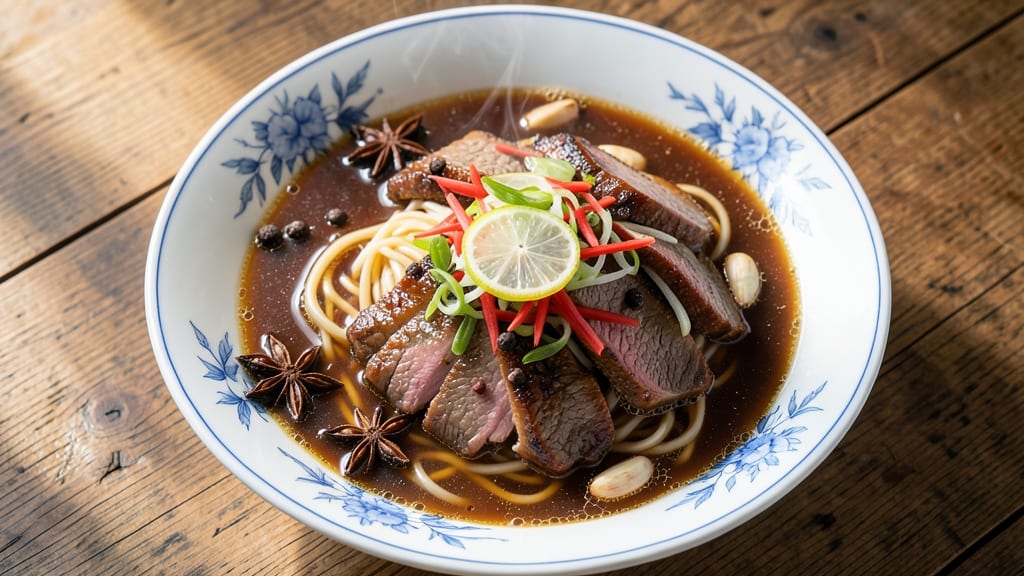
This authentic Chinese beef noodle soup recipe brings the rich, aromatic flavors of a bustling Cantonese restaurant to your kitchen. 🌟 The secret lies in a deeply flavorful broth infused with star anise and slow-simmered beef, creating a dish that’s both comforting and deeply satisfying.
I’ve perfected this recipe over years of testing, ensuring every spoonful delivers the perfect balance of savory, umami, and subtle spice.
The key to authenticity starts with the broth—charred aromatics like ginger, garlic, and scallions form the foundation, while star anise and Sichuan peppercorns add depth. The beef, seared in a wok for a smoky crust, is then slow-cooked until tender, absorbing the broth’s complex flavors.
This isn’t just soup; it’s a labor of love that transforms simple ingredients into something extraordinary.
By the time you’re done, you’ll have a steaming bowl of restaurant-quality beef noodle soup—golden broth, melt-in-your-mouth beef, and perfectly chewy noodles. The aroma alone will fill your kitchen, while the first bite delivers that unmistakable harmony of spices and textures.
This is the kind of dish that feels like a hug on a cold day.
Whether you’re serving a family gathering or simply craving a taste of home, this recipe delivers. The best part? It’s easier than it looks, with step-by-step instructions that guide you through every stage—from searing the beef to balancing the broth. Let’s get started.
Ingredients for authentic chinese beef noodle soup
Rich star-anise broth, wok-seared beef, and chewy noodles—this is your ticket to restaurant-quality beef noodle soup.
| Ingredient | Amount | Notes |
|---|---|---|
| Beef Chuck Roast 🥩 | 1 ½ lb | Cut into 1-inch cubes |
| Fresh Ginger Root 🌿 | 2 tbsp | Peeled and thinly sliced |
| Garlic Cloves 🧄 | 6 cloves | Peeled and smashed |
| Scallions 🧅 | 4 whole | White and green parts separated |
| Star Anise Pods 🌶️ | 2 whole | Lightly crushed |
| Sichuan Peppercorns 🌶️ | 1 tsp | Lightly toasted and crushed |
| Dried Shiitake Mushrooms 🍄 | 4 whole | Rehydrated and sliced |
| Dried Wood Ear Mushrooms 🍄 | 2 whole | Rehydrated and torn |
| Chinese Egg Noodles 🍜 | 8 oz | Fresh or dried |
| Light Soy Sauce 🥄 | ½ cup | Kikkoman preferred |
| Dark Soy Sauce 🥄 | 1 tbsp | For color depth |
| Sesame Oil 🫒 | 1 tbsp | Toasted for aroma |
| Cornstarch 🌾 | 1 tbsp | For thickening broth |
| Green Onions 🧅 | 4 whole | Chopped for garnish |
| Dried Chili Flakes 🔥 | ½ tsp | Optional for heat |
The beef is non-negotiable—chuck roast gives that signature tender texture. Grab it from Costco or your local Asian market, where they often have it pre-cut for convenience. For the aromatics, fresh ginger and garlic are essential, but if you're in a pinch, pasteurized ginger or jarred minced garlic work too (just add a pinch of salt to balance). The star anise and Sichuan peppercorns? Penzeys Spices carries them, but any well-stocked grocery store should have them in the international aisle. Look for pods that are plump and fragrant—none of that dusty, stale stuff. And those dried mushrooms? Asian markets sell them in bulk for a fraction of the price at regular stores.
No Sichuan peppercorns? Substitute with extra crushed black pepper, but you'll lose that signature numbing tingle. Running low on shiitake mushrooms? Cremini or oyster mushrooms work in a pinch, though they won't have the same earthy depth. The soy sauces can be swapped—tamari for gluten-free or regular soy sauce if that's all you've got. For the noodles, fresh egg noodles are ideal, but dried will do if you're in a hurry. Just soak them properly! And if you're avoiding sesame oil (nut allergies, anyone), toasted peanut oil gives a similar nutty aroma without the sesame flavor. The cornstarch is crucial for that silky broth—don't skip it.
This soup tastes even better the next day, so make a double batch if you can. Store leftovers in the fridge for up to 4 days—the flavors meld beautifully over time. For freezing, portion the broth and beef separately, then freeze for up to 3 months. Reheat gently on the stove, adding a splash of water if it gets too thick. The noodles? Cook them fresh when serving—no reheating those. And if you're prepping ahead, keep the aromatics and spices in a separate jar so you can freshen up the broth with a quick simmer before serving.
Why You'll Love This Recipe
- I swear by this: one big pot, minimal chopping. The chuck roast goes in whole—you just sear it, then let it braise while you slice the ginger and garlic (which takes two minutes). Even my husband, who burns toast, can handle this.
- No-Fuss Prep: I swear by this: one big pot, minimal chopping. The chuck roast goes in whole—you just sear it, then let it braise while you slice the ginger and garlic (which takes two minutes). Even my husband, who burns toast, can handle this.
- Deep Umami Magic: That star anise and ginger? They transform tough beef into melt-in-your-mouth perfection. The broth develops a rich, almost caramelized depth—like someone simmered it for hours (but you didn’t have to). One sip and you’ll understand why this feels like a hug in a bowl.
- Leftovers That Shine: This soup actually improves the next day. The flavors meld, the beef gets even more tender, and it’s still hearty enough for lunch. I make a double batch on Sundays—half for dinner, half for work lunches—and no one complains. (Yes, even my picky college-aged son.)
Step-by-step instructions for authentic Chinese beef noodle soup
Here's the method that delivers restaurant-quality depth and flavor—simple steps, big impact.
🔥 Step 1: Wok-Sear the Beef for Maximum Flavor
Heat a wok or heavy skillet over high heat until smoking hot. Add the 1.5 lb beef chuck roast cut into 1-inch cubes in a single layer, letting them sear undisturbed for 2-3 minutes until deeply browned on all sides. This caramelization builds the foundation of your soup's rich flavor profile.
Work in batches if needed to avoid crowding the pan—this ensures proper browning rather than steaming. Once all beef is seared to a deep golden brown, transfer it to a plate and set aside. Don't drain the rendered fat; we'll use it to build the broth later. This step is non-negotiable for authentic flavor.
🍳 Step 2: Build the Star-Anise Infused Broth
In the same wok, add 2 tbsp fresh ginger root (peeled and sliced) and 6 cloves garlic (peeled and smashed). Stir-fry for 30 seconds until fragrant and lightly golden. Add the 2 whole star anise pods (lightly crushed) and 1 tsp Sichuan peppercorns (toasted and crushed), stirring for another 20 seconds to release their aromatic oils.
Pour in 8 cups water (enough to cover the beef) and bring to a rolling boil. Reduce heat to medium-low and return the seared beef to the pot. Add 0.5 cup light soy sauce and 1 tbsp dark soy sauce—the dark soy adds that signature deep color. Let it simmer uncovered for 1 hour until the beef is fork-tender and the broth develops a rich, caramelized hue.
👨🍳 Step 3: Prepare the Mushrooms and Aromatics
While the beef cooks, rehydrate the 4 whole dried shiitake mushrooms and 2 whole dried wood ear mushrooms separately in hot water for 20 minutes. Drain and slice the shiitake, then tear the wood ear into bite-sized pieces. These mushrooms add earthy depth that's essential to authentic Chinese beef noodle soup.
In a small bowl, combine 1 tbsp cornstarch with 2 tablespoons cold water to make a slurry. This will help thicken the broth slightly at the end. Also chop the 4 whole green onions for garnish, keeping the white and green parts separate.
🥘 Step 4: Finish the Broth and Cook the Noodles
Strain the beef broth through a fine-mesh sieve into a clean pot, pressing on the solids to extract maximum flavor. Return the broth to medium-high heat and add the cornstarch slurry, stirring constantly until the broth thickens slightly—about 2 minutes. This creates the perfect balance between rich and silky.
Add the rehydrated mushrooms to the broth and simmer for 5 minutes to infuse their flavors. Meanwhile, cook the 8 oz Chinese egg noodles according to package instructions until al dente. Drain and set aside.
🍽️ Step 5: Assemble and Serve with Authentic Touches
Return the cooked beef to the broth along with the white parts of the 4 whole green onions (chopped) and 0.5 tsp dried chili flakes (if using). Simmer for 3 minutes to heat through. Divide the Chinese egg noodles among bowls, ladle the hot beef broth over the top, and garnish with the green onion tops and a drizzle of 1 tbsp sesame oil.
Serve immediately with a side of extra green onions and chili flakes for those who want more heat. The soup should be rich with tender beef, fragrant with star anise and ginger, and perfectly balanced between savory, umami, and subtle spice. Each bite should deliver that comforting, restaurant-quality experience.
Pro Tips For Making Authentic Chinese Beef Noodle Soup
- SEAR THE BEEF HARD: Don’t skimp on the initial sear—get that beef chuck roast deep brown on all sides before adding liquid. I used to rush this, and the broth never tasted rich enough; now I take my time with a screaming-hot wok or heavy pot, working in batches if needed. The crust locks in flavor and caramelizes for depth.
- JULIENNE THE GINGER: Skip the minced ginger—slice it into thin matchsticks instead. This way, it infuses the broth without turning it into mush, and you can fish out the pieces later. My grandmother swore by this, and she was right: the aroma stays bright, not bitter.
- LOW AND SLOW FOR TENDERNESS: Once the beef is submerged, drop the heat to a bare simmer—no rolling boil. I learned this the hard way when my first batch turned out chewy; now I aim for a gentle bubble, maybe 160°F (71°C) internal temp for the beef, and let it cook for 2.5–3 hours. Patience pays off.
- SAVE THE STAR ANISE: Remove the star anise pods before the broth reduces too much—aim for 45–60 minutes max. If you leave them in too long, they’ll make the broth taste bitter. I keep a small strainer handy and pull them out early, then add them back in for serving if I want that subtle licorice note.
Troubleshooting perfect results
Broth Too Thin?
If your broth isn’t rich enough, simmer it uncovered for an extra 15-20 minutes to reduce it naturally. For quicker thickening, mix 1 tbsp cornstarch with 2 tbsp cold water and whisk it into the broth while heating.
Stir constantly until it reaches your desired consistency—usually 2-3 minutes on medium-high heat. 💫
Beef Not Tender?
If your beef chunks remain tough after simmering, try the pressure cooker method. Sear the beef first, then cook on high pressure for 45 minutes with the same broth ingredients.
The pressure breaks down collagen faster, resulting in melt-in-your-mouth texture. For stovetop, add 1 cup beef broth and simmer another 30 minutes with the lid slightly ajar.
Mushrooms Too Soft?
Add the rehydrated mushrooms to the broth only in the last 5 minutes of cooking to preserve their texture. For extra firmness, blanch them in boiling water for 30 seconds before adding to the soup.
Wood ear mushrooms, in particular, should be torn into bite-sized pieces and added just before serving to maintain their delicate structure. 🍄
Soy Sauce Overpowering?
Balance overly salty broth by adding ½ cup hot water and simmering for 5 minutes to dilute the flavor. For a more authentic taste, reduce the soy sauce to ¼ cup light soy sauce and 1 tsp dark soy sauce next time.
A splash of rice vinegar (1 tsp) can also brighten the flavor profile without adding saltiness.
Noodles Mushy?
Cook noodles 1 minute less than package instructions and rinse briefly under cold water to stop cooking. For extra chewiness, use fresh egg noodles instead of dried—they hold up better to reheating.
If serving later, cook noodles 2 minutes less and finish them in the hot broth for 30 seconds before serving.
Lacking Depth?
Boost umami by adding 1 tbsp fish sauce or 1 tsp oyster sauce to the broth during the final 10 minutes of simmering. For a smoky touch, char ½ cup scallions in a dry wok until blackened, then add to the broth.
A pinch of white pepper also enhances complexity without altering color. 🌟
Nutrition facts
Frequently asked questions
What makes this beef noodle soup different from regular beef broth?
The key lies in the star anise and Sichuan peppercorns—these spices create that signature aromatic depth found in authentic Chinese beef noodle soup. The beef is also wok-seared first for a smoky crust, and the broth is slow-simmered for 1 hour to develop rich, caramelized flavors. Plus, we use dried shiitake and wood ear mushrooms for earthy complexity that regular beef broth lacks.
Can I use regular beef broth instead of making my own?
You can, but it won't be as flavorful. For best results, start with 8 cups water and build the broth from scratch using the seared beef and aromatics. If you're short on time, combine 4 cups store-bought beef broth with 4 cups water and add all the spices (star anise, Sichuan peppercorns, ginger, garlic) to steep for 30 minutes before adding the beef. This still gives you that authentic taste!
How do I adjust this recipe for spicier or milder flavors?
For extra heat, add ½ tsp chili flakes or 1 tbsp chili crisp during the final 5 minutes of cooking. For milder flavor, reduce the Sichuan peppercorns to ½ tsp or omit them entirely. You can also add 1 tsp sugar to balance any sharpness. The dark soy sauce already provides a subtle depth that enhances both spicy and mild versions.
Why do the instructions say to strain the broth?
Straining removes any sediment or charred bits that can make the soup bitter, while still capturing the maximum flavor. Press the solids gently with a spoon to extract all the infused oils. This step ensures a smooth, silky texture that’s perfect for noodle soup. If you prefer a heartier broth, skip straining—but you’ll need to remove the solids before serving.
Can I make this soup in a slow cooker?
Follow the same steps for searing the beef and building the aromatics, then transfer everything to a 6-quart slow cooker. Cook on low for 6-8 hours or high for 3-4 hours, then strain and finish as directed. The slow cooker method is perfect for hands-off cooking, and the beef will turn out just as tender. Just add ½ cup water if the broth looks too thick at the end.