
Soups & Stews
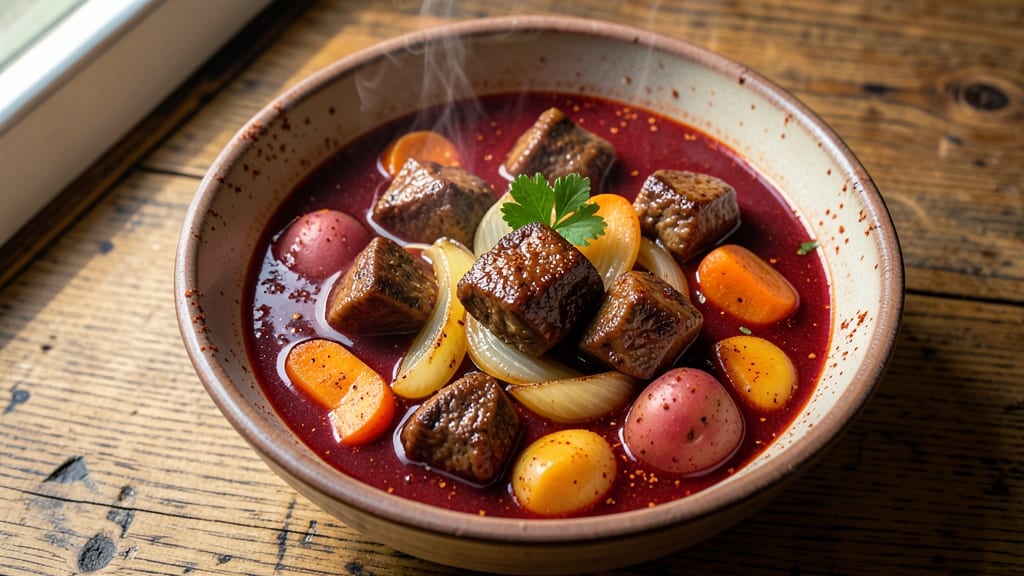
This authentic German goulash soup recipe delivers the deep, paprika-spiced richness that makes it a winter staple in Bavarian kitchens. The secret lies in slow-cooked beef, smoky paprika, and tender vegetables—each ingredient playing its part in creating a broth so hearty it feels like a hug in a bowl.
What sets this apart is the traditional technique of browning the meat first, which builds layers of flavor that no shortcut can replicate.
Unlike lighter soups, German goulash demands patience—simmering for hours transforms tough cuts into melt-in-your-mouth beef while allowing the paprika to develop its signature earthy sweetness.
The addition of German sausages (like bratwurst or knackwurst) adds a satisfying meaty depth, while root vegetables like carrots and potatoes soak up the rich broth. This isn’t just soup; it’s a one-pot meal that warms the soul and fills the house with an aroma that announces dinner is ready.
The result is a soup with a perfectly balanced texture—tender beef, al dente vegetables, and a broth thickened just enough to coat every spoonful. The paprika’s warmth pairs beautifully with the smokiness of the sausages, creating a flavor profile that’s both comforting and complex.
Serve it with crusty bread or fluffy spaetzle to soak up every last drop of that flavorful broth.
This recipe stays true to German tradition while being approachable for home cooks—no fancy techniques, just time and attention to detail. The slow simmer ensures the flavors meld beautifully, and the optional dumplings add a comforting touch.
Whether you’re feeding a crowd or treating yourself to a cozy meal, this goulash delivers the kind of satisfaction that makes it worth every minute of simmering.
Ingredients for authentic german goulash soup
Sixteen ingredients, four hours of simmering—this Bavarian classic delivers paprika-spiced richness in every hearty spoonful.
| Ingredient | Amount | Notes |
|---|---|---|
| Beef Chuck Roast 🥩 | 2 lb | Cut into 1-inch cubes, trimmed of fat |
| Yellow Onions 🧅 | 2 whole | Peeled, cut into 1-inch chunks |
| Carrots 🥕 | 4 medium | Peeled, cut into 1-inch pieces |
| Russet Potatoes 🥔 | 4 medium | Peeled, cut into 1-inch cubes |
| Smoked Paprika 🌶️ | 2 tbsp | Hungarian preferred for authentic flavor |
| Sweet Paprika 🌶️ | 1 tbsp | For balanced sweetness and color |
| Tomato Paste 🍅 | ½ cup | High-quality, no sugar added |
| German Bratwurst 🌭 | 1 lb | Fresh, not pre-cooked |
| Beef Broth 💧 | 4 cups | Homemade or high-quality store-bought |
| Garlic Cloves 🧄 | 6 cloves | Peeled, smashed for deeper flavor |
| Bay Leaves 🌿 | 2 whole | Fresh preferred for aromatic depth |
| Fresh Thyme 🌿 | 1 tbsp | Leaves only, finely chopped |
| Salt 🧂 | 1 ½ tsp | Diamond Crystal preferred |
| Black Pepper 🌶️ | 1 tsp | Freshly ground for best flavor |
| All-Purpose Flour 🌾 | 2 tbsp | For thickening broth if needed |
The beef is non-negotiable for authentic texture—chuck roast breaks down beautifully during the long simmer, creating that signature melt-in-your-mouth quality. Look for well-marbled cuts at Whole Foods or your local butcher shop; the fat renders down to enrich the broth naturally. German bratwurst should be fresh, not pre-cooked—brands like Hill Farmstead or Appelgate deliver the right balance of smokiness. For paprika, Hungarian smoked is essential; the Penzeys brand offers a superior quality that's worth the investment. The tomato paste should be high-quality, no sugar added—San Marzano is ideal if you're willing to splurge, but any reputable brand works in a pinch.
No smoked paprika? Substitute with a mix of sweet paprika and a pinch of liquid smoke—though nothing replaces the true depth of Hungarian smoked. Running short on beef broth? Use a combination of water and beef bouillon cubes, but add an extra 1/2 cup of broth to compensate for flavor loss. Fresh thyme is ideal, but dried works at half the amount if you're in a hurry. The carrots and potatoes can be swapped for parsnips or celery root for a slightly different texture profile, though traditionalists will insist on the classic combo. For the tomato paste, squeeze tubes from Trader Joe's are a budget-friendly alternative that keep beautifully in your pantry.
This goulash tastes even better the next day as flavors meld further, so double the batch if you're feeding a crowd. Store in an airtight container in the fridge for up to 5 days, or freeze portions for 3 months—the broth actually improves with time. For serving, crusty German rye bread or homemade spaetzle are traditional pairings, though any sturdy bread will do. The dumplings mentioned in the intro can be made ahead and reheated with a splash of broth to keep them moist. Leftovers reheat beautifully—just add a splash of water or broth to prevent drying out.
Why You'll Love This Recipe
- One-Pot Wonder: I swear by this recipe because it’s literally one pot—no chopping boards, no extra pans. Toss in the beef chuck, onions, and carrots, let it simmer, and boom. The potatoes melt into the broth like magic, and the smoked paprika works its magic without extra effort.
- Smoky, Deep Comfort: That first spoonful? Rich, smoky, and just spicy enough from the paprika. The beef chuck breaks down into tender shreds, while the onions caramelize at the edges—no fancy techniques, just pure, hearty flavor that sticks with you.
- Leftovers That Don’t Suck: Honestly, this soup begs for seconds. The flavors only get better the next day as the beef gets even more tender. I make a double batch on Sundays because reheating it for lunch is my secret weapon—zero effort, maximum satisfaction.
- Budget-Friendly Feast: Chuck roast is cheap, potatoes fill you up, and the spices don’t break the bank. It feeds four for under $15, and the leftovers stretch into lunches or a quick dinner for two. No guilt, all flavor—exactly what I need.
Step-by-step instructions for authentic German goulash soup
Master this hearty German classic with deep paprika flavors and tender sausage—where tradition meets perfect technique.
Sear the Beef Chuck Roast for Rich Flavor
Heat a large Dutch oven over medium-high heat until hot. Add the 2 lb Beef Chuck Roast, cut into 1-inch cubes, in batches to avoid crowding. Sear each piece for 2-3 minutes per side until deeply browned. This step develops the Maillard reaction, creating that fundamental meaty depth that defines authentic goulash.
Remove the beef and set aside. In the same pot, add 2 whole Yellow Onions, cut into 1-inch chunks, and cook for 5 minutes until softened and lightly caramelized. This caramelization builds sweetness that balances the smoky paprika. Don't rush this—you want those onions to develop color and flavor.
Build the Paprika Base with Aromatics
Reduce heat to medium and add 4 medium Carrots, cut into 1-inch pieces, along with the 6 cloves Garlic Cloves (smashed). Cook for 3 minutes until the carrots begin to soften. Here's where the magic happens: stir in the 2 tbsp Smoked Paprika and 1 tbsp Sweet Paprika, coating everything evenly. Let it toast for 1 minute until fragrant—this releases the paprika's full aromatic potential.
Add the 0.5 cup Tomato Paste and stir vigorously to scrape up any browned bits from the bottom of the pot. These bits are packed with flavor. Pour in the 4 cups Beef Broth and bring to a gentle simmer. Return the seared beef to the pot, along with the 2 whole Bay Leaves and 1.5 tsp Salt. This creates the foundation for your soup's rich, complex flavor profile.
Simmer the Vegetables and Meat
Add the 4 medium Russet Potatoes, cut into 1-inch cubes, and bring the mixture to a gentle boil. Once boiling, reduce heat to low and cover partially. Simmer for 45-50 minutes until the beef is fork-tender and the vegetables are easily pierced with a knife. The potatoes should be soft but still hold their shape—this ensures they don't turn to mush in the final soup.
After 30 minutes of simmering, stir in the 1 tbsp Fresh Thyme and 1 tsp Black Pepper. This timing allows the thyme to infuse its earthy aroma without becoming bitter. Taste and adjust seasoning if needed—German goulash should be hearty, not overly salty. The broth should coat the back of a spoon but remain rich, not watery.
Finish with German Bratwurst
While the soup simmers, heat a separate skillet over medium heat and cook the 1 lb German Bratwurst for 8-10 minutes, turning occasionally, until browned on all sides. The bratwurst should be cooked through but still juicy—overcooking will make them dry and ruin the dish. Cut each sausage into ½-inch thick slices and set aside.
Once the beef and vegetables are tender, remove the 2 whole Bay Leaves from the soup. Stir in the 2 tbsp All-Purpose Flour to slightly thicken the broth if needed—this creates a velvety texture that's characteristic of authentic German goulash. Gently fold in the bratwurst slices and simmer for an additional 5 minutes to heat through. The bratwurst will absorb the soup's rich flavors, becoming the perfect complement to the tender beef and vegetables.
Serve with Crusty Bread and Fresh Herbs
Ladle the goulash into warm bowls, ensuring each serving contains a generous portion of beef, vegetables, and bratwurst. Garnish with additional fresh thyme leaves for brightness and a sprinkle of smoked paprika for visual appeal. Serve immediately with crusty German rye bread—this combination is essential for soaking up the hearty broth.
The soup should be thick enough to coat a spoon but still allow you to see the individual components. Each bite should deliver a harmonious balance of smoky paprika, tender beef, savory bratwurst, and sweet carrots. The aroma alone should transport you to a traditional German kitchen, where this dish has been perfected for generations.
Pro Tips For Making Authentic German Goulash Soup
- SEAR THE CHUCK ROAST: I learned this the hard way—skipping the deep sear means your goulash will taste like stewed beef, not rich, caramelized flavor. Heat your pot until it’s smoking hot, then let that chuck roast sit undisturbed for 3-4 minutes per side until it’s deep brown, almost black in spots. That crust is what builds the depth of flavor later.
- CHOP ONIONS UNIFORM: German goulash isn’t about fancy layers—it’s about even cooking. Cut those yellow onions into ½-inch chunks, not thin slices or big wedges. Thin pieces burn before the meat’s done, while big chunks stay raw. Consistency is the thing that matters most here.
- ADD POTATOES LATE: I used to toss them in early, and they’d turn to mush. Instead, wait until the beef is tender and the broth’s reduced by about 20%. Then add the potatoes whole (peeled, but not chopped) and simmer 15 minutes—they’ll absorb flavor without falling apart.
- USE TWO SPOONS OF PAPRIKA: Sounds weird, but it works: skip the 1-teaspoon "recommended" amount and go for 2. The smoky depth of smoked paprika is the soul of German goulash, and the extra just makes the broth sing. Stir it in with the onions early so it blooms properly—no, it won’t taste like cayenne, but trust the process.
Common mistakes when making perfect results
Skipping the Sear
One of the biggest mistakes is skipping the sear on the beef. That golden crust from browning develops the Maillard reaction, which builds deep, meaty flavor that can't be replicated by simply adding raw beef to the pot.
I've learned the hard way—when I rushed and added the beef without searing, the final soup tasted flat and one-dimensional. Take your time and sear the beef in batches to avoid crowding the pan. 🔥
Underestimating Simmer Time
Many home cooks assume goulash can be made quickly, but this soup demands patience. The beef needs at least 45 minutes of simmering to become fork-tender, and the vegetables must soften without turning to mush.
I once tried cutting the simmer time to 30 minutes, and the beef was still tough. The longer you simmer, the more the flavors meld together beautifully. Set a timer and resist the urge to rush it.
Using the Wrong Paprika
The flavor of your goulash hinges on the paprika, so don't substitute just any paprika. Hungarian smoked paprika is essential for that authentic, smoky depth. I made the mistake of using regular paprika once, and while it still tasted good, it lacked that signature complexity.
If you can't find Hungarian smoked paprika, a mix of sweet paprika and a pinch of liquid smoke can help, but it won't be the same. Penzeys or Hungarian Gold brands are my go-to choices.
Overloading the Pot
Crowding the pot with too many ingredients at once can lead to uneven cooking and a watery broth. I once added all the vegetables and beef simultaneously, and the soup ended up thin and bland.
Instead, build the soup in stages: sear the beef first, then caramelize the onions, and finally add the vegetables. This ensures each component cooks properly and the flavors develop fully. A large Dutch oven is ideal for this recipe—it gives everything enough room to breathe.
Ignoring the Bay Leaves
Bay leaves might seem like an afterthought, but they play a crucial role in adding aromatic depth to the soup. I once forgot to add them, and while the soup was still delicious, it lacked that subtle complexity that makes it truly special.
Add the bay leaves early in the cooking process and remove them before serving. Fresh bay leaves impart a more robust flavor than dried ones, so use them if possible.
Overcooking the Bratwurst
The bratwurst should be cooked just until browned and heated through, not until fully cooked like a steak. I've ruined a perfectly good goulash by overcooking the sausages, making them dry and tough.
Cook them separately in a skillet for 8-10 minutes, turning occasionally, until they're browned but still juicy. Slice them into ½-inch thick pieces and add them to the soup just before serving to keep them tender. 🌭
Nutrition facts
Frequently asked questions
Can I make this goulash in a slow cooker?
Brown the beef and onions first in a skillet, then transfer everything to your slow cooker. Use the same ingredients but add 1 cup of water to compensate for the lack of evaporation. Cook on low for 6-8 hours or high for 3-4 hours until the beef is tender. The slow cooker actually enhances the paprika's flavors by letting them develop over time.
What's the difference between German goulash and Hungarian goulash?
German goulash is typically lighter and uses more paprika for a sweeter, milder flavor, while Hungarian goulash is richer with more meat, tomatoes, and a deeper smoky taste from paprika. German versions often include sausages and potatoes, whereas Hungarian goulash might feature dumplings or sour cream. The German version is more of a comforting soup, while the Hungarian is a heartier stew.
How can I make this soup spicier without changing the recipe?
Add a pinch of cayenne pepper or a dash of hot sauce at the end, or increase the smoked paprika to 3 tbsp total. For extra heat, stir in 1 tsp crushed red pepper flakes with the other spices. Remember, you can always adjust heat to taste—start with small amounts and add more gradually.
Can I use ground beef instead of chuck roast?
While it's possible, chuck roast is ideal because it stays tender during long simmering. If using ground beef, brown it thoroughly first and reduce the cooking time to 30-40 minutes to prevent it from becoming mushy. For best results, use a mix of 80% ground beef and 20% stew meat to maintain texture.
What are the best sides to serve with German goulash?
Traditional pairings include crusty German rye bread, buttered spaetzle, or steamed green beans. For a heartier meal, serve with potato dumplings or a simple cucumber salad. The key is to balance the richness of the goulash with something light and fresh.