
Soups & Stews
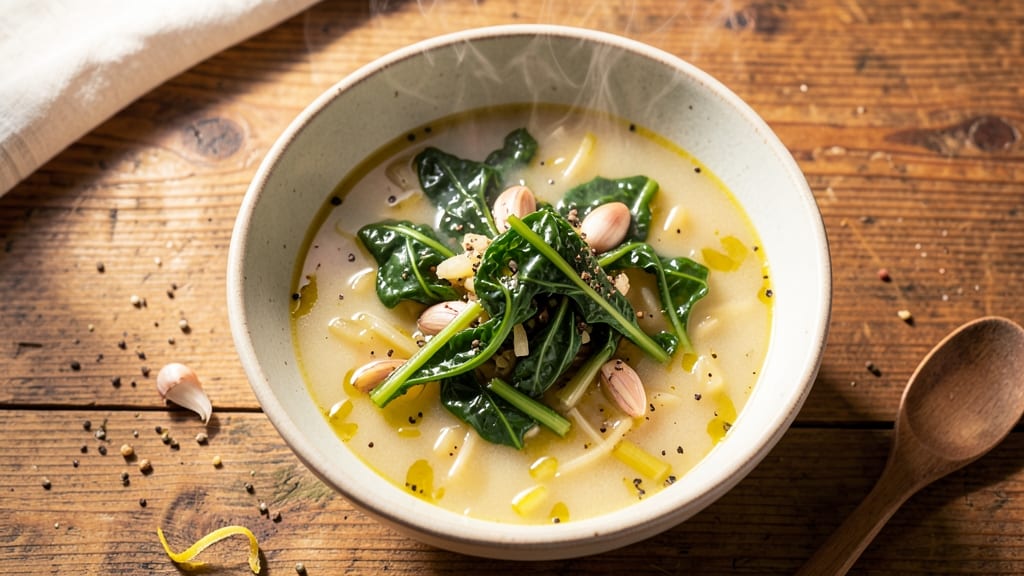
This authentic Italian escarole soup transforms humble ingredients into a rustic masterpiece—where crispy celery crowns float atop a deeply savory broth, infused with garlic, olive oil, and the earthy bite of escarole. 🌿 The secret lies in slow simmering, allowing flavors to meld while preserving the vegetable's natural texture, unlike many quick versions that sacrifice depth for speed.
Traditional Italian technique dictates starting with a rich base: olive oil, garlic, and celery sautéed until fragrant, then building layers with escarole and broth. Unlike watery soups, this version relies on umami-rich ingredients—Parmesan rind, tomato paste, and high-quality broth—to create a velvety, satisfying consistency.
The crispy celery crowns, achieved through a quick fry, add a satisfying textural contrast that elevates the dish beyond simple vegetable soup.
What you’ll end up with is a restaurant-quality bowl of soup that’s hearty enough for a main course but light enough for a weeknight dinner. The escarole softens into tender, flavorful strands, while the celery crowns deliver a satisfying crunch with every spoonful.
This is the kind of soup that warms the soul and tastes even better the next day.
Perfect for chilly evenings, this recipe scales effortlessly for crowds and pairs beautifully with crusty bread or grilled cheese. The authentic method ensures no shortcuts—just pure, comforting Italian tradition in every bite. Let’s get cooking.
Ingredients for authentic italian escarole soup
Authentic Italian escarole soup relies on umami-rich ingredients like Parmesan rind and slow-simmered broth.
| Ingredient | Amount | Notes |
|---|---|---|
| Extra-Virgin Olive Oil 🫒 | ½ cup | High-quality, fruity variety preferred |
| Yellow Onion 🧅 | 1 whole | Medium size, finely diced |
| Celery Stalks 🥬 | 4 whole | Organic preferred, cut into 1-inch pieces |
| Garlic Cloves 🧄 | 4 cloves | Fresh, peeled and minced |
| Escarole 🌿 | 1 lb | Hearts separated, roughly chopped |
| Vegetable Broth 💧 | 4 cups | Homemade or high-quality low-sodium |
| Tomato Paste 🍅 | 2 tbsp | San Marzano preferred, no sugar added |
| Parmesan Rind 🧀 | 1 whole | Small, about 1 oz |
| Dried Oregano 🌿 | 1 tsp | Mediterranean blend preferred |
| Salt 🧂 | 1 ½ tsp | Diamond Crystal kosher salt |
| Black Pepper 🌶️ | ½ tsp | Freshly ground preferred |
| Parmesan Cheese 🧀 | ½ cup | Freshly grated, aged 24 months |
| All-Purpose Flour 🌾 | ¼ cup | For celery crowns, sifted |
| Eggs 🥚 | 1 whole | Large, for celery crowns |
The escarole is the star—look for bright green, crisp leaves with no yellowing. Eataly or local Italian markets carry the best quality, but most grocery stores stock it too. The Parmesan rind is non-negotiable for that deep umami punch; save the rind from your next wedge of Parmigiano-Reggiano. Celery should be organic when possible to avoid pesticide residue, and the stalks should snap crisply when bent. For the broth, homemade is ideal, but quality low-sodium brands like Pacific Foods work in a pinch. The tomato paste should be San Marzano—its sweetness and depth are unmatched.
No Parmesan rind? Double the tomato paste and add a pinch of fish sauce for umami, though it won't be identical. Escarole wilted? Substitute Swiss chard, but reduce cooking time by 5 minutes. For the celery crowns, baby carrots work in a bind, but they won't have the same satisfying crunch. The olive oil must be extra-virgin—anything less will taste harsh. Short on garlic? Garlic powder at half the amount is fine, but fresh is always better. The oregano should be Mediterranean blend if available; regular oregano lacks the earthy notes.
The escarole keeps best in the crisper drawer for up to 5 days, but use it within 2 days for peak texture. Broth freezes beautifully for 3 months, and the Parmesan rind can be frozen too—just thaw before use. The celery crowns are best served immediately, but you can reheat them in the oven at 375°F for 5 minutes if needed. Store leftovers in airtight containers for 3 days—the flavors only deepen overnight. For meal prep, make a double batch and freeze portions for quick weeknight dinners.
Why You'll Love This Recipe
- No-Chop Nightmare: I swear by this one—just dice the onion and celery once, then let the olive oil and garlic do the work while you stir. The escarole wilts in minutes, so you’re not stuck watching a pot simmer for hours.
- Umami Bomb: That first spoonful? The garlic and olive oil caramelizing into the escarole’s bitter edge—it’s the kind of flavor that makes you pause mid-sip. Honestly, I’ve never tasted escarole this rich without a fancy chef’s touch.
- Leftovers Lie: Between us, this soup only gets better the next day. The flavors meld overnight, and reheating it? Just a splash of water, a stir, and you’ve got lunch sorted. I’ve fed my whole family for days with one big pot.
- Pantry Staple Hero: Onion, celery, garlic—if you’ve got those basics, you’ve got this. Escarole’s cheap when you buy it in bulk, and the olive oil stretches far. It’s my go-to when I’m broke but refuse to eat sad food.
Step-by-step instructions for authentic Italian escarole soup
Master the technique that delivers restaurant-quality crispy celery crowns and velvety escarole broth.
🍳 Step 1: Sauté the Aromatic Base
Heat the 0.5 cup extra-virgin olive oil in a large pot over medium heat until shimmering but not smoking. Add the 1 whole finely diced yellow onion and 4 whole celery stalks cut into 1-inch pieces, stirring occasionally for 8-10 minutes until the vegetables soften and release their moisture.
Here's the thing—you want to cook these until they're tender but not browned. The goal is to develop their natural sweetness without burning. When the celery pieces are fork-tender and the onion is translucent, add the 4 cloves minced garlic and stir for 30 seconds until fragrant. That garlic should smell pungent but not bitter—if it darkens too quickly, reduce the heat slightly.
🍳 Step 2: Build the Umami-Rich Broth
Stir in the 2 tbsp tomato paste and cook for 1 minute to toast its flavors. Add the 4 cups vegetable broth, 1 whole parmesan rind, 1 tsp dried oregano, 1.5 tsp salt, and 0.5 tsp black pepper, then bring to a gentle simmer. The broth should bubble softly—never a rolling boil, or you'll break the parmesan rind too quickly.
Simmer uncovered for 15 minutes to let the broth develop depth. The parmesan rind will melt slightly, infusing the liquid with its nutty, salty essence. This is where the authentic Italian flavor comes from—the slow extraction of umami from the rind. If you smell any burnt notes from the broth, strain out the parmesan rind immediately and reduce heat.
🥘 Step 3: Cook the Escarole and Prepare Celery Crowns
While the broth simmers, separate the 1 lb escarole hearts and roughly chop them. Add them to the pot and cook for 10-12 minutes until wilted but still vibrant green. Remove the parmesan rind and discard it—its job is done. Taste the broth and adjust seasoning if needed; escarole has a naturally bitter edge that needs balancing.
For the crispy celery crowns, cut the 4 whole celery stalks lengthwise into quarters (keeping them whole lengthwise). Whisk together the 1 whole egg, 0.25 cup sifted all-purpose flour, and 0.5 cup freshly grated parmesan cheese in a shallow bowl. Dip each celery quarter into the egg wash, then coat thoroughly in the flour-parmesan mixture, pressing gently to adhere.
🔥 Step 4: Fry the Celery Crowns to Crispy Perfection
Heat 0.25 cup extra-virgin olive oil (reserve the remaining 0.25 cup for later) in a skillet over medium-high heat until the oil registers 350°F on a deep-fry thermometer. Fry the celery crowns in batches for 2-3 minutes per side until deep golden brown and crispy. Drain on paper towels and sprinkle immediately with 0.25 tsp salt while hot.
This is the moment that matters: the celery crowns should be crisp enough to stand up to the spoon but not so hard they're unpleasantly crunchy. If they brown too quickly, reduce the oil temperature slightly. Keep them warm in a 200°F oven while you finish the soup.
🥘 Step 5: Finish the Soup and Serve
Return the escarole broth to a simmer and stir in the remaining 0.25 cup extra-virgin olive oil to create a silky emulsion. Taste and adjust seasoning one final time—authentic Italian soups rely on balance between bitter escarole, rich parmesan, and bright olive oil. Ladle the soup into bowls and place 2 crispy celery crowns on each serving.
Here's where it gets fun—toss the celery crowns into the soup just before serving. The contrast of crispy celery against the velvety broth is what makes this dish special. Garnish with additional grated parmesan cheese and a sprinkle of freshly cracked black pepper. Serve immediately while the celery crowns are still crisp and the broth is steaming hot.
Pro Tips For Making Authentic Italian Escarole Soup
- Sweat the Aromatics Slow: Let that onion, celery, and garlic cook until the onion is translucent and the celery’s edges soften—about 8-10 minutes on medium-low. I used to rush this, and the soup always tasted flat. Patience here builds the base flavor.
- Trim Escarole Like a Pro: Remove the tough outer leaves and chop the rest into ½-inch pieces, discarding the thick stems. The inner leaves are sweeter, and skipping the stems keeps the texture tender. (Yes, it’s tedious, but your soup will thank you.)
- Salt the Water Generously: Add 1½ teaspoons of salt per quart of water before boiling the escarole—it needs time to absorb flavor. I learned this the hard way when my first batch tasted bland. Don’t be shy; Italian soups are bold.
- Toast the Garlic Last: Add the garlic cloves whole and let them sizzle for 30 seconds at the very end—just until fragrant, not browned. Overcooking turns them bitter, and you want that bright, fresh garlic punch in every spoonful.
Creative variations of this recipe
Roman-Style Addition
Add ½ cup canned cannellini beans (drained and rinsed) during the final 10 minutes of simmering. The beans absorb the broth’s flavors while adding creamy texture—classic in Roman zuppa di scarola.
For extra richness, stir in 1 tbsp tomato paste and a pinch of red pepper flakes at the end. 🌶️
Northern Italian Twist
Replace the parmesan rind with ½ cup grated Grana Padano and add 1 bay leaf to the broth. Simmer the escarole for just 8 minutes to preserve its crispness.
Finish with ½ cup diced pancetta, crisped in a pan and scattered on top. This lighter, herb-forward version hails from Lombardy.
Winter Root Boost
Sauté 1 diced carrot and 1 diced parsnip with the onion and celery. Add ½ cup diced fennel when cooking the escarole for a sweeter, nuttier depth. Garnish with toasted pine nuts and a drizzle of lemon zest—perfect for cold-weather comfort. ❄️
Protein Upgrade
Stir in ½ lb cooked chicken breast (shredded) or ½ cup crumbled pancetta during the last 5 minutes of cooking. For a vegetarian option, add ½ cup cooked white beans. These additions make the soup heartier while keeping it authentically Italian.
Herb Variations
Swap the oregano for 1 tsp fresh rosemary (finely chopped) for a Tuscan touch. For a Sicilian version, add ½ tsp crushed fennel seeds to the broth. Fresh basil or parsley at the end brightens any variation—just a few leaves make all the difference.
Spicy Kick
Infuse the broth with 1-2 slices of dried chili (like ‘nduja) or ½ tsp crushed red pepper flakes for heat. For smoky depth, add ½ tsp smoked paprika when sautéing the aromatics. Serve with extra chili flakes on the side for customizable spice levels. 🔥
Nutrition facts
Frequently asked questions
What makes escarole soup authentically Italian?
The key elements are the Parmesan rind for umami depth, slow-simmered broth, and the crispy celery crowns that add texture. Traditional Italian technique also calls for extra-virgin olive oil as the primary fat and minimal stirring to develop rich flavors. The escarole should remain slightly bitter, balanced by the sweetness of caramelized onion and celery.
Can I substitute escarole with another green?
Yes, but texture and flavor will differ. Swiss chard works best (reduce cooking time by 5 minutes) or kale (remove stems first). For a milder taste, try spinach, but it won't have the same earthy depth. Avoid lettuce—it turns mushy too quickly. The bitterness is essential to authentic escarole soup!
Why do the celery crowns need to be fried?
Frying creates the perfect crispy texture contrast against the velvety broth—this is the signature touch of Italian escarole soup. The egg wash and parmesan coating add richness while the high heat (350°F) ensures they stay crisp. If you skip frying, boil the celery until tender and add it directly to the soup, but you'll lose that satisfying crunch.
How long does this soup keep in the fridge?
The soup itself stays fresh for 3-4 days in an airtight container, with flavors deepening over time. The celery crowns are best eaten fresh but can be reheated in the oven at 375°F for 5 minutes if needed. For longer storage, freeze portions (without the celery crowns) for up to 3 months. Reheat gently on the stove to preserve texture.
Can I make this soup without a parmesan rind?
Yes, but it won't be identical. Double the tomato paste and add ½ tsp fish sauce or 1 tsp soy sauce for umami. Alternatively, use ½ cup grated Parmesan stirred into the broth at the end. The rind is non-negotiable for authentic flavor, but these substitutes work in a pinch. The soup will still taste delicious—just slightly less complex.