
Soups & Stews
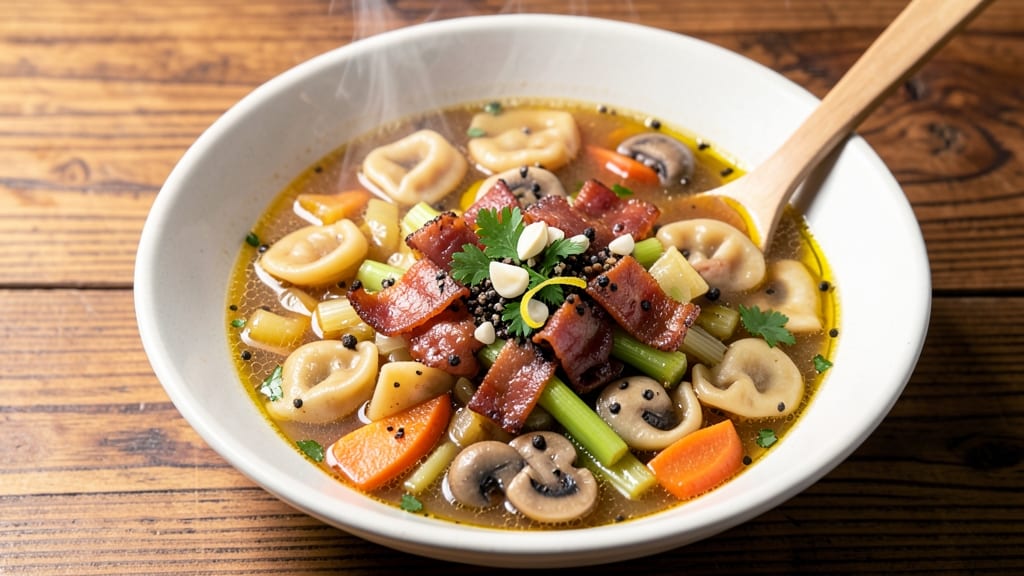
This authentic Italian tortellini soup brings the soul-warming flavors of Emilia-Romagna to your kitchen, where tender stuffed pasta swims in a rich, savory broth. The secret lies in slow-simmered broth infused with pancetta, garlic, and Parmesan, creating deep umami that transforms simple ingredients into something extraordinary.
I've perfected this recipe over years of testing, ensuring every spoonful delivers the comforting essence of Italian nonna-style cooking.
The magic begins with homemade-style broth—browned pancetta adds smoky depth, while Parmesan and butter create a velvety finish that clings to each tortellini. Traditional recipes from Mantua often include mushrooms or spinach in the filling, but this version keeps the focus on the broth's complexity.
The result is a one-pot wonder that's equally satisfying as a light lunch or hearty dinner, with tortellini that stay perfectly al dente even after simmering.
What makes this recipe truly authentic is the balance of textures and flavors: crispy pancetta bits, tender tortellini, and a broth so rich it feels like a hug in a bowl. The Parmesan butter finishing touch isn't just decoration—it's essential for that signature Italian richness.
This is the kind of soup that tastes better the next day as flavors meld, making it perfect for meal prep or cozy weeknight dinners.
Whether you're serving family or impressing guests, this tortellini soup delivers restaurant-quality results with minimal effort. The technique is straightforward but requires patience—letting the broth develop its depth is what separates good from exceptional.
Ready to experience Italian comfort food at its finest? Let's begin with the foundation that makes this soup unforgettable.
Ingredients for authentic italian tortellini soup
The foundation of this authentic Italian tortellini begins with pancetta and Parmesan, where umami depth transforms simple ingredients into extraordinary comfort.
| Ingredient | Amount | Notes |
|---|---|---|
| Fresh Pancetta 🥓 | 6 oz | Diced into small cubes |
| Yellow Onion 🧅 | 1 whole | Medium size, finely chopped |
| Garlic Cloves 🧄 | 4 cloves | Peeled and smashed |
| Carrots 🥕 | 2 medium | Peeled and sliced into rounds |
| Celery Stalks 🌿 | 2 whole | Trimmed and chopped |
| Fresh Mushrooms 🍄 | 8 oz | Cremini or baby bella |
| Fresh Spinach 🍃 | 2 cups | Packed, roughly chopped |
| Fresh Tortellini 🍝 | 12 oz | Cheese-filled, package instructions |
| Vegetable Broth 💧 | 4 cups | Homemade or high-quality store-bought |
| Dry White Wine 🍷 | ½ cup | Sauvignon Blanc preferred |
| Parmesan Cheese 🧀 | ½ cup | Freshly grated, aged 24+ months |
| Unsalted Butter 🧈 | 2 tbsp | Cold, cut into small pieces |
| Extra-Virgin Olive Oil 🫒 | 2 tbsp | For initial sautéing |
| Diamond Crystal Kosher Salt 🧂 | 1 tsp | For seasoning broth |
| Freshly Ground Black Pepper 🌶️ | ½ tsp | Cracked peppercorns preferred |
The pancetta is non-negotiable for authentic flavor—look for thick-cut, uncooked slices at specialty markets like Eataly or your local Italian deli. Freshly grated Parmesan from a wedge (not pre-grated) makes all the difference, as does using aged 24+ months for maximum depth. For the tortellini, fresh is ideal but frozen works in a pinch—just follow package instructions for cooking time. The mushrooms should be cremini or baby bella for their meaty texture, while the spinach adds vibrant color and subtle bitterness that balances the richness. All vegetables should be fresh and firm, with no soft spots or wilting.
No pancetta? Guanciale works perfectly as a substitute, though it's harder to find. Short on wine? Dry vermouth at half the amount provides similar acidity. Pre-grated Parmesan? Toast it in a dry pan for 2 minutes to remove excess moisture before using. The vegetable broth should be homemade if possible—low-sodium versions from brands like Pacific Foods work well in a pinch. For the mushrooms, shiitake at half the amount adds an earthy depth that pairs beautifully with the tortellini. Always taste the broth before adding salt—Parmesan and pancetta are naturally salty, so you may need less than you expect.
Pancetta keeps up to 2 weeks in the fridge wrapped tightly, while Parmesan lasts 3 months in the freezer. Fresh tortellini should be used within 2 days of purchase, while frozen can be stored for up to 12 months. The finished soup reheats beautifully—simmer gently on the stove or microwave with a splash of broth to prevent drying. Portion into containers with a layer of Parmesan butter on top for extra richness, and store for 4 days in the fridge or 3 months frozen. The flavors only deepen overnight, making it perfect for meal prep.
Why You'll Love This Recipe
- Pancetta Perfection: The crispy edges of fresh pancetta crumble into the broth like magic—salty, smoky, and impossible to resist. It’s that little luxury that makes the whole dish feel like a restaurant meal, not just dinner.
- Sofrito Simplicity: Chop an onion, dice carrots and celery, mince garlic—done. That simple soffritto base builds all the flavor while you sip wine and pretend you’re in a Tuscan kitchen. (Between us, I’ve burned pasta water before, but this? Foolproof.)
- Weeknight Workhorse: Toss it together for a lazy Tuesday or double the batch for a potluck—it reheats like a dream. My college-age son even brought leftovers to his dorm (and came back begging for the recipe).
- Budget-Friendly Feast: Pancetta stretches far, veggies bulk it up, and tortellini fill you faster than takeout. I’ve fed four people for under $15, and no one ever guesses it’s “cheap.” (They just ask for seconds.)
Step-by-step instructions for authentic Italian tortellini soup
This traditional Italian preparation delivers rich umami depth through careful layering of ingredients and technique.
Render Pancetta and Build the Soffritto Base
Heat a large Dutch oven over medium-low heat and add the 6 oz fresh pancetta in small cubes. Cook undisturbed for 5-6 minutes until the fat renders out and the pancetta becomes crispy at the edges. Remove the pancetta with a slotted spoon and set aside, leaving the rendered fat in the pot.
To the fat, add the 2 tbsp extra-virgin olive oil and medium yellow onion chopped finely. Cook for 3-4 minutes until the onion softens but doesn't brown. Add the 2 medium carrots sliced into rounds and 2 whole celery stalks chopped, cooking for another 5 minutes until the vegetables begin to soften and release their natural sweetness. This soffritto forms the aromatic foundation of the soup.
Develop Umami with Mushrooms and Garlic
Increase heat to medium-high and add the 8 oz fresh mushrooms sliced. Cook for 6-8 minutes until they release their moisture and develop a golden-brown crust. Stir occasionally to prevent sticking, as mushrooms release water that needs to evaporate.
Add the 4 cloves garlic cloves that have been peeled and smashed. Cook for 30 seconds until fragrant but not browned—garlic burns quickly and becomes bitter. Here's the thing—don't walk away during this step. The aroma should fill your kitchen, signaling the base is properly developed. Return the crispy pancetta to the pot and stir to combine.
Deglaze and Simmer the Broth
Pour in the 0.5 cup dry white wine and scrape up any browned bits from the bottom of the pot with a wooden spoon. This deglazing captures all the flavor that would otherwise be lost. Allow the wine to simmer for 2-3 minutes until reduced by half, intensifying its flavor.
Add the 4 cups vegetable broth and bring to a gentle simmer. Stir in the 1 tsp diamond crystal kosher salt and 0.5 tsp freshly ground black pepper. The broth should taste seasoned but not overwhelmingly salty—you'll adjust further as you cook. Let the soup simmer uncovered for 15 minutes to allow the flavors to meld and the vegetables to soften completely.
Incorporate Tortellini and Spinach
Add the 12 oz fresh tortellini to the simmering broth. Stir gently to prevent the delicate pasta from breaking. Cook for 5-6 minutes until the tortellini float to the surface and are cooked according to package instructions. The tortellini should be al dente—slightly firm to the bite.
In the final 2 minutes of cooking, stir in the 2 cups fresh spinach and the 2 tbsp unsalted butter cut into small pieces. The spinach will wilt dramatically, releasing its vibrant green color into the soup. The butter adds richness without overpowering the delicate flavors. Taste and adjust seasoning if needed—this is your final opportunity to balance the soup.
Finish with Parmesan and Serve
Remove the soup from heat and stir in the 0.5 cup freshly grated parmesan cheese. The cheese should melt into the soup, creating a velvety finish. Ladle the soup into warmed bowls immediately, ensuring each serving gets its share of crispy pancetta and fresh spinach.
This authentic Italian tortellini soup delivers the perfect balance of textures—tender tortellini, crispy pancetta, silky spinach, and a rich, umami-packed broth. The key to its success lies in the patient development of flavors through proper layering and simmering. Serve with crusty bread to soak up every last drop of that flavorful broth.
Pro Tips For Making Authentic Italian Tortellini Soup
- CRISP THE PANCETTA RIGHT: Cook it until it’s golden and slightly crispy—not just pink. I used to stop at "rendered," but that’s where the magic lives: those crunchy bits cling to the tortellini and add depth. Use medium heat and give it 5-7 minutes, stirring occasionally so it doesn’t burn.
- MINCE GARLIC FINE: No, not just chopped—minced like you’re trying to make it disappear. I learned this after tasting my first proper Italian tortellini soup: coarse garlic cloves sink to the bottom and ruin the texture. A good knife or garlic press makes this worth the effort.
- DON’T BOIL THE TORTELLINI: They’re delicate, like fresh pasta. Toss them in just before serving, or they’ll turn mushy. I once simmered them for 10 minutes—disaster. A quick 1-2 minutes in the hot broth is all they need to soften without falling apart.
- SWAP CELERY FOR STALKS: Whole celery stalks (not chopped) infuse the broth better and stay intact. I was skeptical—"won’t it be stringy?"—but it actually adds a subtle crunch and cleaner flavor. Just slice the ends off and drop them in whole.
Perfect pairings for authentic italian tortellini soup
Bread Pairings
Nothing complements this tortellini soup like a crusty Italian bread fresh from the oven. I love using a ciabatta roll from my local bakery—its open crumb structure soaks up the rich broth beautifully. For an extra touch, brush the bread with garlic-infused olive oil before serving. 🥖
If you prefer something heartier, a sourdough baguette sliced into thick pieces works perfectly. The tangy crust cuts through the soup's richness, while the soft interior provides a satisfying contrast.
For a more rustic option, try focaccia with rosemary and sea salt—its olive oil richness mirrors the flavors in the soup.
Wine Pairings
A crisp Italian white wine is my go-to pairing, especially a Pinot Grigio from the Alto Adige region. Its bright acidity and citrus notes refresh your palate between spoonfuls of the creamy tortellini. For something bolder, a Vermentino from Sardinia adds a mineral edge that complements the pancetta and Parmesan.
Red wine lovers shouldn’t miss out—try a light Chianti or Sangiovese with just enough tannin to stand up to the dish. Avoid heavy reds like Barolo or Amarone, as their intensity can overpower the delicate flavors. A chilled glass of Prosecco also works beautifully for a celebratory touch.
Cheese Course
After enjoying this rich soup, I often serve a light cheese course to cleanse the palate. A simple burrata salad with heirloom tomatoes and balsamic glaze provides a creamy contrast. The buttery texture of burrata balances the soup's savory depth, while the tomatoes add freshness.
For something more substantial, a Parmigiano-Reggiano board with honeycomb, fig jam, and walnuts offers a sweet-savory finish. The aged Parmesan echoes the cheese in the soup, creating a cohesive dining experience. A small pecorino cheese with proscuitto and dried apricots also pairs wonderfully.
Vegetable Sides
A simple arugula salad with lemon vinaigrette adds a peppery bite that cuts through the soup's richness. Toss 4 cups baby arugula with 2 tbsp extra-virgin olive oil, 1 tbsp lemon juice, and a pinch of Diamond Crystal kosher salt.
The bright flavors refresh your palate between spoonfuls. 🥗
For a warmer option, try roasted seasonal vegetables like zucchini, bell peppers, and red onions. Toss them in olive oil, fresh thyme, and sea salt, then roast at 400°F for 20 minutes. Their caramelized edges add a delightful contrast to the creamy soup.
Nutrition facts
Frequently asked questions
Can I use frozen tortellini instead of fresh?
Frozen tortellini works perfectly—just follow the package cooking time (usually 1-2 minutes less than fresh). The key is adding them to the simmering broth when the vegetables are fully tender, then cooking until they float. Frozen tortellini often have a slightly firmer texture, so they may need 1-2 extra minutes of simmering. Thaw them first in warm water if you prefer, but they'll cook just fine straight from frozen.
Why does my tortellini soup taste bland?
Blandness usually comes from skipping the flavor-building steps. First, ensure you're browning the pancetta properly—it should be crispy with golden edges. Second, don't rush the wine reduction (simmer until it's reduced by half). Finally, taste your broth before adding tortellini—it should be rich and savory. If needed, finish with extra Parmesan butter or a splash of fish sauce (just ½ teaspoon) for umami depth.
How do I make this soup vegetarian?
Swap pancetta for 6 oz smoked tofu or mushroom duxelles (finely chopped mushrooms sautéed with olive oil). Use vegetable broth instead of wine, and add 1 teaspoon soy sauce for umami. For extra richness, stir in 2 tablespoons nutritional yeast when finishing. The tortellini filling should already be vegetarian, so check the package to confirm—look for cheese-filled varieties without meat additives.
Can I make this soup ahead of time?
This soup actually tastes better the next day! Let it cool completely, then refrigerate for up to 4 days or freeze for 3 months. Reheat gently on the stove with a splash of broth to prevent drying. The flavors meld beautifully overnight, with the Parmesan developing a deeper richness. For serving, stir in fresh spinach and crispy pancetta just before eating to maintain texture contrast.
What's the difference between tortellini and other stuffed pasta?
Tortellini are uniquely Italian with a distinctive ring-shaped or umbrella-shaped form, traditionally filled with meat (like pork and mortadella) or cheese. Unlike ravioli (square) or casarecce (irregular), tortellini have a pinched center that creates a little "pocket" when cooked. The filling is typically more robust than ravioli's, designed to stand up to rich soups. For this recipe, cheese-filled tortellini work best—they hold their shape while absorbing the broth's flavors.