
Soups & Stews
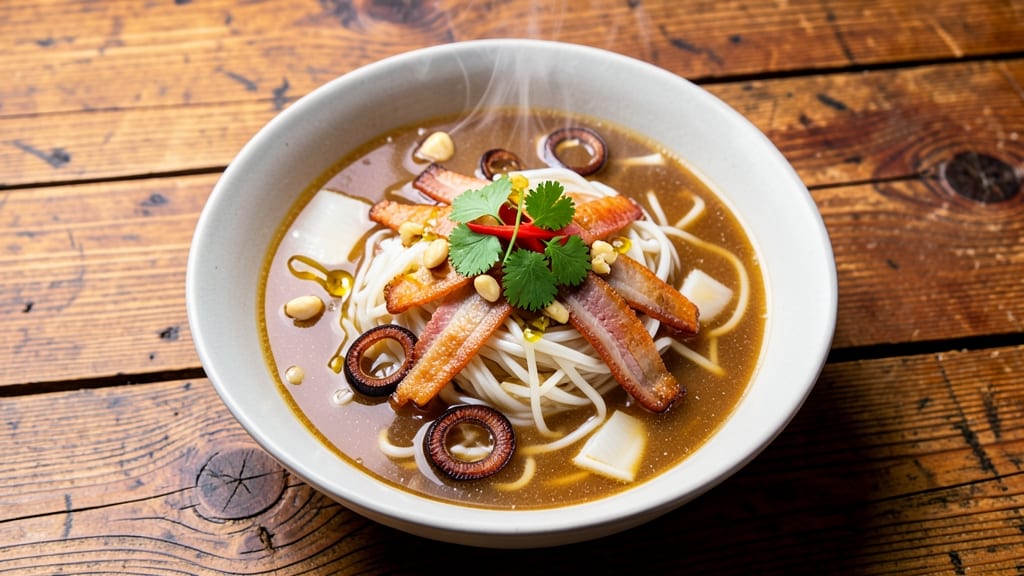
This bak chor mee soup recipe brings the aromatic, comforting flavors of Singaporean street food into your kitchen with its signature lemongrass-coconut broth and silky noodles.
The dish starts with a fragrant broth infused with lemongrass, coconut milk, and pork bones, creating a rich, creamy base that balances the bold flavors of stir-fried noodles and crispy toppings.
The secret lies in the stir-frying technique—cooking the noodles quickly in a hot wok with garlic, chili, and lard pearls to achieve that signature smoky, crispy texture. Topped with fried shallots, chili oil, and fresh herbs, every spoonful delivers a perfect harmony of creamy broth, tender noodles, and savory crunch.
This recipe delivers restaurant-quality results with traditional techniques simplified for home cooks.
What makes bak chor mee truly special is the contrast between the smooth, coconut-infused broth and the stir-fried noodles, which add a satisfying chewiness and smoky depth. The dish is hearty enough for a cold evening but light enough for a quick lunch, making it versatile for any occasion.
The aroma alone will transport you to Singapore's bustling hawker centers.
Perfect for feeding a family or meal prepping for the week, this recipe scales easily while maintaining its authentic flavors. Whether you're a seasoned cook or new to Asian cuisine, the step-by-step instructions ensure a foolproof process. Let’s bring the flavors of Singapore to your table today.
Ingredients for bak chor mee soup
The aromatic heart of Singaporean street food starts with these 15 quality ingredients.
| Ingredient | Amount | Notes |
|---|---|---|
| Pork Bones 🍖 | 2 lb | Marrow bones preferred for richness |
| Lemongrass Stalks 🌿 | 4 whole | Bruised and cut into 2-inch pieces |
| Coconut Milk 🥥 | 1 can | Full-fat, 13.5 oz can |
| Fresh Galangal 🍋 | ½ lb | Peeled and sliced, or substitute ginger |
| Shallots 🧅 | 6 whole | Peeled and halved horizontally |
| Garlic Cloves 🧄 | 8 cloves | Peeled and smashed |
| Bak Chor Mee Noodles 🍜 | 8 oz | Fresh or dried, 8 oz package |
| Dried Chili Beans 🌶️ | 1 tbsp | Soaked in warm water for 20 mins |
| Lard Pearls 🧈 | ¼ cup | For stir-frying noodles |
| Fried Shallots 🧅 | ¼ cup | Store-bought or homemade |
| Chili Oil 🌶️ | 2 tbsp | For garnish, store-bought preferred |
| Fresh Thai Basil 🌿 | ¼ cup | Chopped, stems removed |
| Fish Sauce 🐟 | 2 tbsp | Red Boat preferred |
| Sugar 🍚 | 1 tbsp | White granulated |
| Salt 🧂 | 1 tsp | Diamond Crystal preferred |
Lemongrass and galangal are the soul of this broth—freshness is non-negotiable. Asian markets carry the best stalks, often sold in bundles. If you can't find galangal, ginger at half the amount works in a pinch, though the flavor won't be identical. For the pork bones, marrow bones create the richest broth, but knuckle bones work too. The coconut milk should be full-fat and unshaken—the cream settles at the top, and you'll want that for maximum richness. Thai Kitchen brand is my go-to for quality.
No fresh Thai basil? Regular basil or cilantro will give a different but still delicious result. The lard pearls are crucial for that signature smoky texture—substitute crispy fried shallots if you're avoiding pork. For the chili oil, store-bought works perfectly—just look for one with visible chili flakes. The fish sauce should be Red Boat or Three Crabs brand for authentic umami. If you're using dried noodles, soak them for 10 minutes before cooking to ensure proper texture.
Store the broth base for 3 days in the fridge—it only gets better as flavors meld. The lard pearls keep for 1 month in an airtight container. Fresh herbs like Thai basil wilt fast, so wash and store them in a damp paper towel in a sealed bag. This dish reheats beautifully—simmer gently for 5-10 minutes to restore its creamy texture. For meal prep, portion the noodles separately from the broth to maintain freshness.
Why You'll Love This Recipe
- One-Pot Magic: I swear by this recipe because it’s all in one pot—no chopping boards full of mess. Toss in the pork bones, shallots, and lemongrass, then let the broth work its magic while you prep the noodles. (Yes, even on a Tuesday night.)
- Creamy, Spicy, Addictive: That coconut milk and galangal combo? It’s like a warm hug for your taste buds—rich, slightly funky, and just enough heat to linger. Honestly, the first time I made it, I went back for seconds before the noodles even cooled.
- Leftovers That Beg for More: This soup always tastes better the next day. The flavors meld into something deeper, and the broth gets even more velvety. I’ll be real: I’ve reheated mine three times, and it’s still my go-to when I’m lazy.
- Budget-Friendly Bone Broth: Pork bones are cheap, and they turn into a ridiculously flavorful broth. No need for fancy ingredients—just let them simmer, and you’ve got a freezer-friendly base for future meals. (My wallet thanks me every time.)
Step-by-step instructions for lemongrass-coconut bak chor mee soup
Master this aromatic broth with rich layers of coconut and lemongrass, balanced by spicy chili and umami depth.
Prepare the Aromatics and Soak Chili Beans
Begin by bruising the 4 whole lemongrass stalks by gently pounding them with the flat side of a knife. Cut each stalk into 2-inch pieces and set aside. Peel and slice the 0.5 lb fresh galangal into ¼-inch thick rounds, reserving any tough outer skin. Peel and halve the 6 whole shallots horizontally, and smash the 8 cloves garlic with the side of your knife to release their oils.
In a small bowl, soak the 1 tablespoon dried chili beans in warm water for 20 minutes to soften. This preparation ensures even distribution of flavors throughout the broth. The galangal and lemongrass will infuse the broth with their signature citrusy, piney notes, while the chili beans add subtle heat without overpowering the delicate coconut base.
Build the Broth with Pork Bones and Coconut Milk
In a large stockpot, combine the 2 lb pork bones with 8 cups cold water. Bring to a boil over high heat, then reduce to a simmer and skim off any foam that rises to the surface for 10 minutes. This removes impurities and ensures a clear, clean broth. Add the bruised lemongrass, galangal slices, halved shallots, smashed garlic, and soaked chili beans. Simmer uncovered for 1 hour, stirring occasionally.
After 1 hour, stir in the 1 can coconut milk, 2 tablespoons fish sauce, 1 tablespoon sugar, and 1 teaspoon salt. The coconut milk should blend smoothly into the broth, creating a velvety texture. Simmer for an additional 30 minutes until the broth reduces slightly and the flavors meld together. The broth should smell rich, with notes of coconut, lemongrass, and a hint of spice. If the broth isn't aromatic enough, simmer uncovered for another 15 minutes to concentrate the flavors.
Cook the Noodles and Finish the Soup
While the broth simmers, prepare the 8 oz bak chor mee noodles according to package instructions. Most dried noodles require soaking in hot water for 5-7 minutes until pliable but still firm. Drain and set aside. In a separate large skillet, heat 0.25 cup lard pearls over medium-high heat until they begin to sizzle. Add the noodles and stir-fry for 2-3 minutes until they turn golden and crispy in spots. This step adds texture and prevents the noodles from becoming mushy in the broth.
To assemble the soup, ladle 1 cup of hot broth into each of 4 bowls. Add 2 oz of the stir-fried noodles to each bowl, then top with 1 tablespoon fried shallots and 1 tablespoon chili oil. Drizzle with any remaining broth to reach your desired consistency. The noodles should float just below the surface, allowing you to enjoy both the broth and the crispy texture.
Garnish and Serve Immediately
Finish each bowl with 1 tablespoon chopped fresh Thai basil and adjust the seasoning with an additional drizzle of chili oil or a splash of fish sauce if needed. The basil adds a bright, herbal contrast to the rich coconut and spicy broth. Serve the soup immediately while the noodles are still crisp and the broth is steaming hot. The contrast between the silky broth, crispy noodles, and fragrant garnishes makes every spoonful a balanced experience.
For an authentic touch, serve with extra fried shallots on the side for topping. The soup tastes best fresh, so don't let it sit too long before serving. The flavors continue to develop as the noodles absorb the aromatic broth, making this a deeply satisfying dish that highlights the harmony of Thai flavors.
Pro Tips For Making Bak Chor Mee Soup
- Char the Shallots First: I learned this the hard way—raw shallots in the broth just turn mushy and bitter. Instead, finely mince them and fry in a dry pot over medium-high heat until they’re deep golden, almost caramelized. That’s the aroma base for your soup, and it takes 5 minutes. (Yes, even if you’re impatient like me.)
- Split the Lemongrass Properly: Don’t just chop it randomly—split the stalks lengthwise into three thin batons, then bruise them with the flat of your knife before adding to the pot. This releases more oil and fragrance without turning the broth bitter. My grandmother swore by this, and she was right: the soup tastes brighter and more complex.
- Simmer Pork Bones Low and Slow: The first 20 minutes should be high heat to render fat, but once you add water, drop to a bare simmer—no boiling. I used to rush this, and the bones would release sediment instead of rich, clear broth. A gentle roll every 10 minutes keeps the fat floating, and you’ll end up with a silky, golden stock. (Your future self will thank you.)
- Add Coconut Milk Late: Sounds weird, but it works: stir in the coconut milk only in the last 5 minutes of cooking. If you add it early, the heat breaks it down into a greasy film instead of velvety pockets of richness. For extra depth, whisk in a splash of cold water first to temper it—this keeps the texture smooth. Not a shortcut, but it actually changes the outcome.
Storing and reheating your bak chor mee soup
Broth Storage Secrets
The rich, coconut-infused broth is the soul of bak chor mee and stores beautifully. Let it cool completely before transferring to airtight containers—I use glass Pyrex with snap-on lids. Store in the refrigerator for up to 3 days, where the flavors deepen and meld.
For longer storage, freeze in 1-cup portions (standard ice cube trays work great) for up to 3 months. Thaw overnight in the fridge before reheating. 🥥
Noodle Prep Ahead
Cook the noodles fresh for the best texture, but you can prep them a day ahead. Rinse cooked noodles in cold water, drain well, and store in ziplock bags in the fridge for 24 hours.
The next day, stir-fry them as directed—this method preserves their chewiness. For meal prep, portion the stir-fried noodles into small containers and store separately from the broth to maintain crispness. ⏰
Reheating Like a Pro
Reheat the broth gently on the stovetop over medium-low heat for 5-10 minutes—never boil, or it will curdle. For the noodles, stir-fry them again in a dry skillet for 1-2 minutes to restore their crispy texture.
Combine with reheated broth and garnish with fresh toppings. If using frozen broth, transfer it to a saucepan and warm over low heat, stirring occasionally until fully thawed and heated through. 🔥
Freezer-Friendly Tips
Freezing works best for the broth and lard pearls. Use quart-sized freezer bags for broth, leaving 1-inch headspace to prevent expansion cracks. Label with the date—broth stays flavorful for 3 months. For lard pearls, store them in a separate airtight container to prevent sticking.
When ready to use, thaw the broth in the fridge overnight and crisp the lard pearls in a skillet over medium heat for 2-3 minutes. ✨
Garnish Refresh
Fresh herbs like Thai basil lose their vibrancy when stored, so keep them separate until serving. Store chopped basil in a damp paper towel inside a sealed bag in the fridge for up to 3 days.
Fried shallots and chili oil can be stored in small jars at room temperature for 1 month, but add them fresh when reheating for maximum flavor impact. The contrast of crispy toppings against warm broth is what makes bak chor mee irresistible. 🌿
Portion Control
For meal prep, divide the soup into individual servings before storing. Use microwave-safe bowls for easy reheating—cover with a damp paper towel and heat on 50% power for 2-3 minutes.
Avoid reheating in the microwave too long, or the noodles will turn soggy. The ideal ratio is 1 cup broth per 2 oz noodles per serving, so adjust portions accordingly. 🍜
Nutrition facts
Frequently asked questions
Can I make bak chor mee without lard pearls?
Lard pearls add texture, but you can substitute them with crispy fried shallots or toasted sesame seeds for a similar crunch. For extra flavor, try crispy fried garlic bits instead. The key is maintaining that satisfying contrast between the silky broth and crispy toppings.
How do I adjust the spice level?
The recipe includes dried chili beans for subtle heat, but you can customize it. For milder flavor, omit the chili beans or use ½ the amount. For extra spice, add 1-2 tbsp chili oil when serving or include fresh red chili slices as garnish. Always taste the broth before adding noodles to balance seasoning.
What's the best way to find fresh galangal?
Fresh galangal is available in Asian grocery stores or well-stocked supermarkets, often near ginger and lemongrass. Look for firm, pale yellow rhizomes with no soft spots. If unavailable, substitute with ginger at half the amount—though the flavor won't be identical. For extra depth, add a pinch of turmeric to mimic galangal's earthy notes.
Can I use chicken broth instead of pork bones?
Yes, but the flavor will differ. For a lighter version, use 4 cups chicken broth plus ½ cup coconut milk to maintain richness. For deeper umami, add 1 tbsp fish sauce to compensate. The pork bones create a naturally gelatinous texture that chicken broth lacks, so expect slightly less body in the soup.
How do I fix overly thick or thin broth?
If the broth is too thick, add hot water (1 cup at a time) until it reaches your preferred consistency. For thin broth, simmer uncovered for 10-15 minutes to reduce it. The ideal texture should coat a spoon lightly but still be pourable. Stir in 1 tsp cornstarch** mixed with water if you need quick thickening.