
Soups & Stews
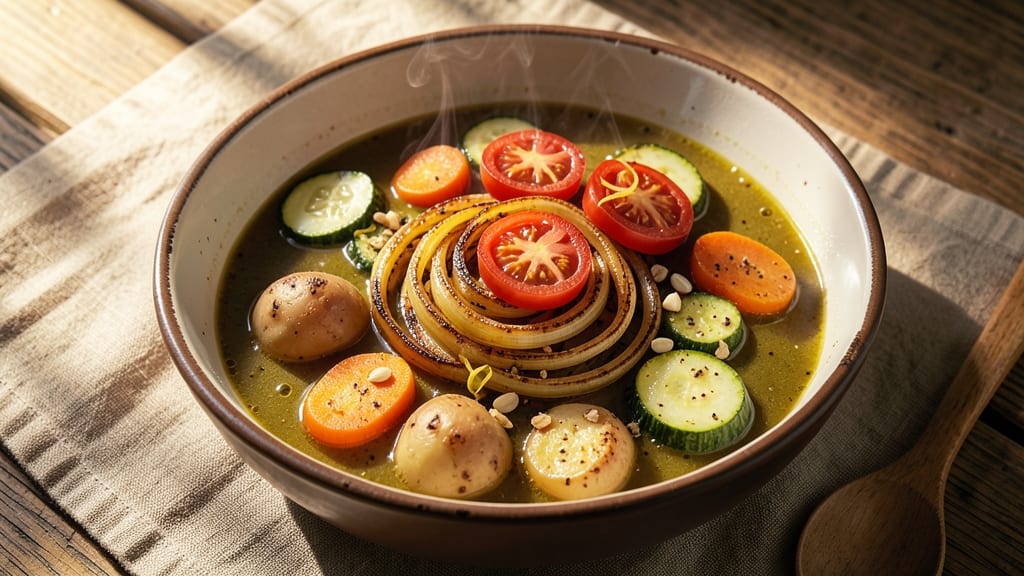
This baked vegetable soup recipe transforms humble ingredients into a deeply flavorful, creamy masterpiece that rivals restaurant-quality stews. The secret lies in roasting vegetables first—carrots, potatoes, zucchini, and tomatoes develop a caramelized depth that infuses the broth with layers of sweetness and complexity.
What starts as simple seasonal vegetables becomes a hearty, comforting bowl of soup that's perfect for chilly evenings or meal prep.
The process is straightforward yet transformative: hardy vegetables roast in the oven until tender and golden, then simmer in a rich herb-infused broth until everything melds into a velvety, satisfying consistency.
A touch of cream (or coconut milk for a vegan version) elevates the soup to creamy perfection, while fresh herbs and a sprinkle of cheese add finishing touches that make it feel special. No fancy techniques required—just patience and attention to the roasting step.
By the time you ladle the first bowl, you'll notice the difference immediately: vegetables that taste roasted rather than boiled, a broth packed with concentrated flavor, and a texture that's both comforting and elegant.
This is the kind of soup that disappears quickly—whether you're feeding a family or prepping for the week. The best part? Every bite delivers that perfect balance of earthy vegetables, creamy richness, and aromatic herbs.
Serve it as-is for a light but satisfying meal, or add crusty bread for dipping. The recipe scales effortlessly, making it ideal for batch cooking. Here's how to create this restaurant-worthy baked vegetable soup at home—where every spoonful tells the story of roasted vegetables and creamy comfort.
Ingredients for baked vegetable soup
Roasted vegetables meet creamy herb perfection in this hearty baked vegetable soup.
| Ingredient | Amount | Notes |
|---|---|---|
| Yellow Onion 🧅 | 1 whole | Diced, medium size preferred |
| Carrots 🥕 | 1 ½ lb | Whole, peeled and cut into chunks |
| Russet Potatoes 🥔 | 2 lb | Peeled and cut into 1-inch cubes |
| Zucchini 🍆 | 2 medium | Sliced into half-moons |
| Roma Tomatoes 🍅 | 4 whole | Halved, seeds removed |
| Garlic Cloves 🧄 | 6 cloves | Minced, fresh preferred |
| Vegetable Broth 💧 | 6 cups | Low-sodium preferred |
| Heavy Cream 🥛 | 1 cup | Full-fat for richness |
| Fresh Thyme 🌿 | ¼ cup | Leaves only, chopped |
| Fresh Rosemary 🌿 | ⅛ cup | Chopped, finely |
| Extra-Virgin Olive Oil 🫒 | ¼ cup | For roasting vegetables |
| Salt 🧂 | 1 ½ tsp | Kosher or sea salt |
| Black Pepper 🌶️ | ½ tsp | Freshly ground preferred |
| Parmesan Cheese 🧀 | ½ cup | Freshly grated, for serving |
The vegetables are the stars here—carrots, potatoes, zucchini, and tomatoes roast until caramelized, unlocking layers of sweetness that infuse the broth. Whole Foods or Trader Joe's carry perfect seasonal produce, but any grocery store will do if you pick firm, vibrant vegetables. For the potatoes, Russets hold up best to roasting without turning mushy. The zucchini? Medium-sized ones are ideal—they're less watery than the giant ones. If you can't find Roma tomatoes, vine-ripened varieties work just as well. The key is to roast them all together—they'll caramelize beautifully and create that restaurant-quality depth.
No fresh thyme? Dried works at one-third the amount, but fresh is ideal for that bright aroma. Short on heavy cream? Coconut milk makes an excellent vegan alternative—just reduce the broth slightly to balance the richness. The Parmesan is purely optional, but if you're serving it, freshly grated from a block makes all the difference. For the olive oil, extra-virgin is non-negotiable—it's what gives the roasted vegetables that golden finish. If you're prepping ahead, roast the vegetables a day in advance and store them in the fridge—they'll keep their caramelized flavor for up to 3 days.
This soup tastes even better the next day as the flavors meld. Store leftovers in an airtight container in the fridge for up to 5 days, or freeze for 3 months—the roasted veggies hold up beautifully. I always make a double batch because it disappears fast. For meal prep, portion into containers with a little extra broth on top to keep everything moist. The Parmesan, if using, should be added fresh when serving—it's the finishing touch that makes it feel special.
Why You'll Love This Recipe
- One-Pan Magic: I swear by this recipe because it’s literally one pan, one oven, and zero stress. Toss those onions, carrots, and potatoes in a sheet pan—no chopping like a fine chef, just rough dice—and let the oven do the work while you sip wine or scroll through memes.
- Sweet-Savory Balance: That caramelized onion base? Chef’s kiss. The Russets turn fluffy and golden, while the Roma tomatoes burst with bright acidity—like a hug from your grandma’s kitchen, but with way less cleanup. (Yes, even on a Tuesday night.)
- Leftovers That Don’t Suck: Between us, most baked veggie dishes turn sad after day two. Not this one. The potatoes stay creamy, the zucchini holds its shape, and I’ve reheated this stuff three times without judgment. Perfect for meal prep or lazy Sundays when you’re not feeling fancy.
- Budget-Friendly Pantry Staples: Honestly, this recipe uses ingredients you already own—no specialty items, no overpriced veggies. A yellow onion, a few carrots, and a couple potatoes stretch into a full bowl, and the zucchini and tomatoes add freshness without breaking the bank. My wallet and my taste buds thank me.
Step-by-step instructions for baked vegetable soup
This method transforms simple vegetables into a rich, layered soup with deep roasted flavor and velvety creaminess.
🔥 Step 1: Roast Vegetables for Maximum Flavor
Preheat your oven to 425°F and line two baking sheets with parchment paper. Toss the diced yellow onion, carrot chunks, potato cubes, zucchini half-moons, and halved Roma tomatoes with 2 tablespoons of the extra-virgin olive oil, ½ teaspoon salt, and ¼ teaspoon black pepper until evenly coated.
Spread the vegetables in a single layer on the baking sheets, leaving space between each piece. Roast for 25-30 minutes until the edges are deep golden brown and the potatoes begin to soften. The vegetables should smell intensely caramelized—this is where the magic happens. Real talk: don't skip this step. Roasting develops the sugars in the vegetables, creating a depth of flavor you can't achieve by boiling alone.
🍳 Step 2: Build the Herb-Infused Broth Base
While the vegetables roast, heat 2 tablespoons of the extra-virgin olive oil in a large Dutch oven over medium heat. Add the minced garlic cloves and sauté for 30 seconds until fragrant—you should smell that fresh garlic aroma wafting through your kitchen. Immediately add the chopped fresh thyme and chopped fresh rosemary, stirring for another 15 seconds to release their essential oils.
Pour in the 6 cups vegetable broth and bring to a gentle simmer. Add the roasted vegetables to the pot, along with any accumulated juices from the baking sheets. Stir gently to combine, then reduce the heat to low and let the mixture simmer uncovered for 15 minutes. This allows the flavors to meld and the vegetables to soften completely. Here's the thing—simmering at low heat preserves the bright, roasted flavors rather than letting them turn bland.
🥘 Step 3: Blend for Silky Texture
Using an immersion blender, blend the soup directly in the pot until completely smooth. If you prefer a chunkier texture, you can blend only half the soup and leave the rest as-is. Here's where the heavy cream comes into play—add it now and stir gently to incorporate. The soup should become luxuriously creamy, with a velvety consistency that coats the back of a spoon.
Taste and adjust seasoning with additional salt or black pepper as needed. The soup should be rich but not overly salty—remember, the Parmesan will add another layer of flavor. Keep the soup warm over low heat while you prepare to serve. Don't rush this step; letting the cream meld with the vegetable flavors ensures a harmonious blend that's far more complex than a simple cream addition.
🍽️ Step 4: Finish with Fresh Herbs and Cheese
Ladle the warm soup into bowls and immediately garnish with freshly grated Parmesan cheese. The cheese should be freshly grated—pre-shredded cheese contains anti-caking agents that prevent proper melting. Sprinkle with additional chopped fresh thyme and chopped fresh rosemary for a pop of color and fresh herb notes that contrast beautifully with the creamy soup.
Serve immediately while the soup is piping hot. Each spoonful should deliver a perfect balance of roasted vegetable depth, creamy richness, and bright herbal notes. The Parmesan adds a salty, umami finish that ties everything together. This soup tastes even better the next day as the flavors continue to develop, but it's at its absolute peak when fresh from the pot.
Pro Tips For Making Baked Vegetable Soup
- CUT POTATOES UNIFORMLY: I learned this the hard way—uneven potato chunks mean some parts turn to mush while others stay rock-hard. Aim for 1-inch cubes, and don’t skimp on the knife time; consistency is the thing that matters most here.
- ROAST TOMATOES FIRST: Sounds weird, but it works: Halve the Roma tomatoes and roast them at 425°F for 10 minutes before adding the rest. Their skins soften and deepen in flavor, giving the soup a richness that raw tomatoes just can’t match.
- SALT THE POTATOES BEFORE ROASTING: This isn’t the prettiest method, but it’s the tastiest. Toss the diced potatoes with ½ teaspoon salt before roasting—they’ll crisp up better and absorb less water from the other veggies, keeping the soup’s texture perfect.
- PEEL CARROTS AFTER COOKING: I skip this when I’m lazy, but the dish is noticeably better when I don’t. Carrot skins add earthy depth, and peeling them raw wastes nutrients. Just scrub them well under running water, then roast them whole or in large chunks—they’ll soften beautifully without losing flavor.
Pro cooking tips for perfect results
Roasting Perfection
Roasting vegetables at 425°F for 25-30 minutes unlocks their natural sweetness through the Maillard reaction. Spread them in a single layer on parchment-lined sheets to ensure even browning.
I use two baking sheets to prevent overcrowding—this is non-negotiable for crispy edges. Toss with 2 tbsp olive oil and ½ tsp salt before roasting to maximize caramelization. 🔥
Dutch Oven Advantage
A Dutch oven is my secret weapon for this recipe—its thick base distributes heat evenly and prevents scorching. Heat it over medium heat until hot, then add garlic and herbs to bloom their flavors before introducing the broth.
The deep sides make stirring easier, and it retains heat beautifully during the 15-minute simmer. I swear by Le Creuset for its durability, but any heavy pot works.
Blending Like a Pro
For silky smoothness, use an immersion blender directly in the pot—no transferring needed! If you prefer texture, blend only half the soup and leave the rest chunky. Add the heavy cream after blending to preserve its richness.
I like to pulse the blender in 10-second bursts while moving it around the pot for even results. 💫
Herb Timing Matters
Fresh thyme and rosemary should be added after the garlic sizzles but before the broth comes to a boil. This preserves their delicate flavors. For extra aroma, I lightly crush the thyme sprigs between my fingers before adding them.
When garnishing, use freshly chopped herbs—dried versions won't provide the same bright pop of color and flavor.
Creamy Texture Secrets
The key to velvety soup is patience. After blending, let the cream sit in the pot for 2-3 minutes off heat before serving. This allows it to fully incorporate without breaking. If the soup seems too thick, whisk in 1-2 tbsp warm broth.
For a vegan version, replace the cream with full-fat coconut milk and reduce the broth by ¼ cup first.
Make-Ahead Magic
Roast the vegetables a day ahead and store them in the fridge—they'll keep their caramelized flavor for up to 3 days. When ready to assemble, simply simmer with broth, blend, and add cream.
This shortcut saves 45 minutes of active time. For freezing, portion into airtight containers, leaving ½ inch headspace—the soup reheats beautifully with just a splash of water or broth added back. ❄️
Nutrition facts
Frequently asked questions
Can I make this baked vegetable soup vegan?
Swap the heavy cream for full-fat coconut milk and reduce the vegetable broth by ¼ cup to maintain balance. Use nutritional yeast or omit the Parmesan entirely for a dairy-free finish. The roasted vegetables will still deliver that deep, caramelized flavor while keeping it completely plant-based.
Why does roasting the vegetables first make such a difference?
The roasting step creates the Maillard reaction, which caramelizes the natural sugars in the vegetables, developing complex flavors you can't get from boiling alone. This transforms simple veggies into rich, sweet components that infuse the broth with depth. Think of it as a flavor multiplier—what starts as basic becomes extraordinary!
What if I don't have an immersion blender?
No problem! Transfer the soup to a blender in batches, blending until smooth. Just be careful—hot liquids can splatter. For chunkier texture, mash some vegetables with a potato masher instead. The key is to achieve some level of creaminess, even if it's not perfectly smooth.
Can I use frozen vegetables instead of fresh?
Fresh is ideal for that caramelized flavor, but you can use frozen veggies in a pinch. Thaw them first, drain excess moisture, and pat dry before roasting. Expect slightly less depth of flavor, but the soup will still be delicious. For best results, choose high-quality frozen vegetables without added sauces.
How do I prevent the soup from breaking when adding cream?
Always add the cream after blending and let it sit in the pot for 2-3 minutes off heat before serving. This allows it to fully incorporate without curdling. If the soup seems too thick, whisk in 1-2 tbsp warm broth to adjust the consistency. Patience is key here!