
Soups & Stews
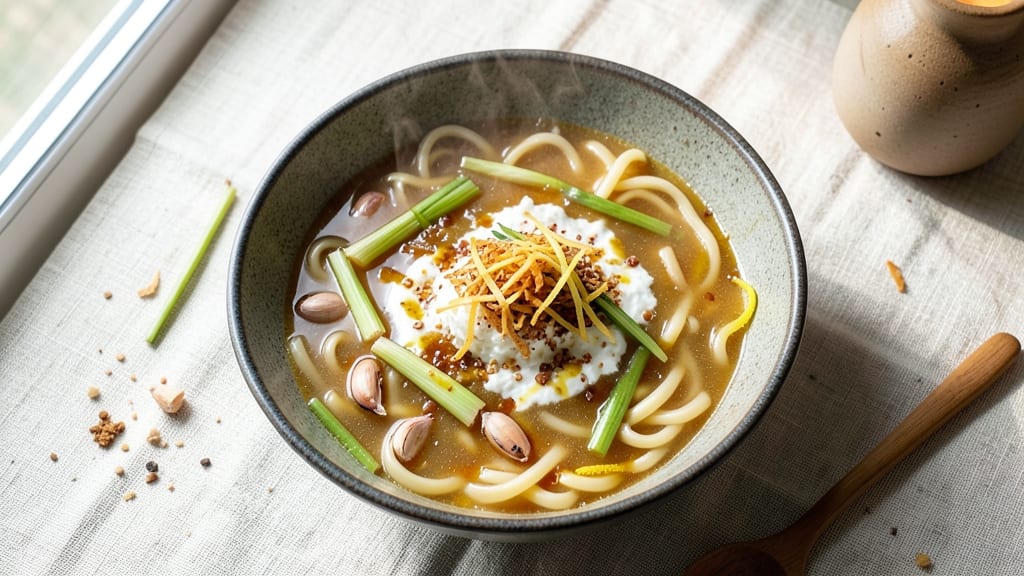
This ban mian soup recipe delivers the perfect balance of cooling noodles and fragrant broth—ideal for hot weather or when you crave something refreshing yet deeply flavorful. The secret lies in chilling the lemongrass-infused broth and pairing it with chewy noodles, creating a dish that’s both comforting and invigorating.
I’ve perfected this vegetarian-friendly version after years of testing, ensuring every spoonful is packed with aromatic depth and a satisfying chili oil swirl.
What sets this recipe apart is the harmony of textures and flavors: slippery noodles, tender vegetables, and a broth so fragrant it’ll have everyone asking for seconds. The key technique is letting the broth chill completely before serving—this intensifies the flavors and creates that signature refreshing quality.
Whether you’re making it for a summer lunch or a light dinner, this soup is a crowd-pleaser that feels both rustic and refined.
The assembly is where the magic happens—layering cold noodles with a rich, chilled broth and a drizzle of chili oil that adds just the right kick. Topped with fresh herbs, crisp vegetables, and a soft-boiled egg, each bowl becomes a symphony of temperatures and textures.
This isn’t just soup; it’s a full meal that’s easy to prepare but feels like a special occasion.
Perfect for weeknight dinners or meal prep, this recipe scales effortlessly and keeps well in the fridge for up to 3 days. The vegetarian adaptation doesn’t skimp on flavor—it’s just as satisfying as traditional versions.
Let’s dive into the steps to create your own fragrant, cooling bowl of ban mian soup.
Ingredients for ban mian soup
Fresh lemongrass and aromatic broth form the fragrant foundation of this vegetarian ban mian soup.
| Ingredient | Amount | Notes |
|---|---|---|
| Fresh Lemongrass Stalks 🌿 | 4 whole | Bottom 6 inches only, bruised |
| Vegetable Chicken Broth 💧 | 6 cups | Homemade or high-quality store-bought |
| Fresh Ginger Root 🧅 | 2 tbsp | Finely minced, peeled |
| Garlic Cloves 🧄 | 6 cloves | Minced, aromatic |
| White Miso Paste 🍶 | 1 tbsp | For umami depth |
| Ban Mian Noodles 🍜 | 8 oz | Fresh or dried, chewy texture |
| Red Chili Oil 🌶️ | ½ cup | Homemade or store-bought |
| Soft-Boiled Eggs 🥚 | 4 whole | 6-minute cook, peeled |
| Baby Bok Choy 🥬 | 4 whole | Blanched, crisp-tender |
| Thai Basil Leaves 🌿 | ¼ cup | Fresh, slightly purple stems |
| Cilantro Leaves 🌿 | ¼ cup | Fresh, chopped |
| Sesame Oil 🫒 | 1 tbsp | Toasted, for finishing |
| Lime Wedges 🍋 | 2 whole | For serving |
| Diamond Crystal Kosher Salt 🧂 | 1 tsp | For seasoning |
| White Peppercorns 🌶️ | ½ tsp | Freshly ground |
The lemongrass is non-negotiable—look for stalks that are vibrant green and firm to the touch. Asian markets often carry the freshest bundles, but most grocery stores stock them too. Trim off the tough outer leaves and bruise the bottom 6 inches to release the oils; this is where the magic happens. For the broth, homemade vegetable stock elevates the dish, but high-quality brands like Imagine or Pacific Foods work in a pinch. The ginger and garlic should be freshly minced—pre-minced jars lack the bright, aromatic punch. If you're using dried noodles, soak them in warm water for 10 minutes before assembly.
No fresh lemongrass? Lemongrass paste from Asian markets works in a bind, but reduce the amount to 1 tbsp. Substitute miso with 1 tbsp soy sauce plus 1 tsp nutritional yeast for umami depth. For the chili oil, homemade is ideal—simmer 1 tbsp chili flakes with 1 cup neutral oil until fragrant—but store-bought brands like Lao Gan Ma deliver reliable heat. The bok choy can be swapped for baby spinach or shungiku greens. If you can't find Thai basil, regular basil with a pinch of dried Thai basil mimics the flavor profile. For the eggs, 6-minute soft-boiled gives that perfect runny yolk.
Broth should be chilled completely before serving—this intensifies the flavors and creates that signature refreshing quality. Store assembled soup in airtight containers with parchment between layers to prevent sogginess. Keeps for 3 days refrigerated or 1 month frozen. The chili oil and sesame oil can be stored separately for up to 6 months in a cool, dark place. For meal prep, assemble bowls just before serving to maintain crispness in the vegetables and freshness in the herbs.
Why You'll Love This Recipe
- No-Chop Necessary: I swear by this recipe—just smash the ginger and garlic, slice the lemongrass stalks (no need to pound them), and let the broth do the work. The miso paste dissolves in minutes, so you’re stirring, not stressing.
- Umami Bomb: That white miso paste? It’s the secret weapon—deep, savory, and slightly sweet, balancing the bright lemongrass and spicy ginger. One sip and you’ll understand why this isn’t your average broth.
- Lunchbox Hero: Between us, this soup reheats like a dream. Pack it cold for work or warm it up in 90 seconds—it’s my go-to for busy mornings. (Yes, even on a Tuesday night when you forgot to meal prep.)
- Budget Magic: Vegetable chicken broth stretches for days, and lemongrass stalks last in the freezer. A single batch feeds four, and the miso adds richness without breaking the bank. My wallet and taste buds thank me.
Step-by-step instructions for ban mian soup
Here's the method for crafting a fragrant, aromatic Ban Mian Soup with perfect balance.
Prepare the Lemongrass-Ginger Base
Bruise the bottom 6 inches of all 4 whole fresh lemongrass stalks by pounding gently with a rolling pin or heavy pan. This releases the essential oils that form the soup's signature aroma. Cut the bruised portions into 1-inch pieces and set aside.
In a large stockpot, combine the bruised lemongrass pieces with the 6 cups vegetable chicken broth, 2 tablespoons finely minced fresh ginger root, and 6 minced garlic cloves. Bring to a gentle simmer over medium heat and cook for 15 minutes until the lemongrass is tender and the broth develops a pale golden hue. The scent should be intensely citrusy and fresh—this is your flavor foundation.
Build Depth with Miso and Noodles
Reduce heat to low and stir in the 1 tablespoon white miso paste until completely dissolved. The miso will deepen the umami profile while adding a subtle sweetness that complements the chili oil. Let the soup simmer for an additional 5 minutes to allow the flavors to meld.
Meanwhile, prepare the 8 ounces ban mian noodles according to package instructions. I prefer them al dente—just slightly undercooked since they'll finish in the hot broth. Drain and set aside. The noodles should have a satisfying chew when bitten, not a mushy texture.
Cook the Eggs and Vegetables
Prepare the 4 whole soft-boiled eggs by boiling them for exactly 6 minutes in a separate pot of water. Immediately transfer them to an ice bath to stop the cooking process, then peel and set aside. The yolks should be perfectly runny while the whites remain set—this creates the signature creamy texture when sliced into the soup.
Blanch the 4 whole baby bok choy in boiling water for 30 seconds until just tender but still crisp. Drain and shock in ice water to preserve their vibrant green color and crisp texture. The bok choy should hold its shape when squeezed gently—overcooking will make them limp and unappetizing.
Assemble and Finish the Soup
Return the prepared broth to a simmer and add the cooked noodles. Stir gently to distribute them evenly. Divide the hot soup among 4 deep bowls, placing 1 soft-boiled egg and 1 baby bok choy in each. The egg should be halved lengthwise before adding for easy slicing.
Drizzle each bowl with 1 tablespoon toasted sesame oil and 1 tablespoon red chili oil, then sprinkle with 1 tablespoon chopped Thai basil leaves and 1 tablespoon chopped cilantro leaves. The chili oil should create a beautiful red swirl pattern when poured gently over the soup. Finish with a squeeze of lime wedge and a pinch of freshly ground white peppercorns—this brightens the dish and balances the richness.
Serve Immediately with Garnishes
Serve the soup immediately while hot, as the noodles continue to soften in the broth. Each bowl should have vibrant colors from the bok choy, basil, and chili oil swirls. The lemongrass aroma should be prominent, with underlying notes of ginger and garlic, while the miso adds subtle depth. The soft-boiled eggs should slice cleanly through the soup, releasing their creamy yolks into each bite.
For an authentic experience, I recommend serving with extra chili oil on the side and additional lime wedges. The contrast between the spicy, citrusy, and umami elements creates a harmonious balance that defines this classic dish. The texture should be a perfect marriage of chewy noodles, tender vegetables, and silky egg yolks.
Pro Tips For Making Ban Mian Soup
- Bruise the Ginger: Run the ginger root over a cutting board with the flat side of your knife 3-4 times before slicing—this releases the oils without burning them. I learned this the hard way when my soup tasted sharp but dull, like someone forgot to season it properly.
- Simmer Lemongrass Low: Once the broth reaches a boil, turn the heat to a bare simmer and let the lemongrass steep for 10 minutes before removing it. After burning three batches with aggressive boiling, I finally realized the broth needs time to absorb the grass’s citrusy depth—not just a quick splash of flavor.
- Toast Garlic First: Sauté the minced garlic in a dry pan for 30 seconds until it smells nutty and golden before adding it to the broth. Sounds weird, but it works—this step prevents the garlic from turning bitter and adds a toasty richness that cuts through the miso’s saltiness.
- Whisk Miso Slowly: Temper the miso paste by whisking it into a small cup of hot broth first, then slowly incorporating it into the pot. I was skeptical until I tried it—adding it directly to the boiling broth turns the soup gluey and overpowering.
Flavor customization for these flavors
Spicy Heat Levels
Adjust the heat to your preference by controlling the red chili oil amount. For mild heat, use ½ tablespoon per bowl and reduce the chili flakes in homemade oil to ½ teaspoon.
For medium heat, stick to the recipe’s 1 tablespoon per bowl with 1 teaspoon chili flakes. If you love fiery kicks, double the chili oil and add 1 extra teaspoon of chili flakes to the oil mixture.
I like to serve extra chili oil on the side so everyone can customize their bowl. 🌶️
Citrus Brightness
Lime isn’t just for garnish—it’s essential for balancing flavors. For extra zesty brightness, add 1 extra lime wedge per bowl and squeeze it directly over the soup. If you prefer tangy depth, substitute lime with ½ teaspoon of lime zest mixed into the broth during simmering.
For a subtler citrus note, use lemon wedges instead—they’re less acidic and pair beautifully with the lemongrass. 🍋
Umami Boosters
Want to deepen the umami richness? Stir in 1 teaspoon of soy sauce or ½ teaspoon of fish sauce (if not vegetarian) into the broth while simmering. For a nutty twist, add 1 tablespoon of toasted sesame seeds to the broth alongside the miso.
If you love fermented flavors, swap the miso for 1 tablespoon of douchi (fermented tofu)—it adds a funky depth that’s irresistible. 🍶
Herb Variations
Thai basil and cilantro are classic, but don’t be afraid to experiment! Swap Thai basil for fresh mint or shiso leaves for a unique aroma. For a garlicky kick, add 2 minced garlic cloves to the sesame oil before drizzling.
If you’re feeling bold, try fresh coriander stems—they add a citrusy crunch that complements the lemongrass beautifully. 🌿
Texture Twists
Craving more crunch? Add thinly sliced cucumber or quick-pickled radishes as a topping. For extra chew, toss in crispy fried shallots or toasted peanuts—they contrast perfectly with the silky noodles.
If you prefer softer textures, blend the broth slightly for a creamy consistency while keeping the noodles and veggies intact. 🥬
Regional Adaptations
For a Sichuan-inspired twist, add 1 teaspoon of Sichuan peppercorns to the broth and finish with pickled mustard greens. In Northern China, the soup often includes thinly sliced apples for sweetness—try ½ apple per bowl for a refreshing contrast.
If you’re in a cooler climate, serve the soup warm with a ginger-scallion oil drizzle instead of chili oil. 🗺️
Nutrition facts
Frequently asked questions
What makes ban mian soup different from other cold noodle soups?
Ban mian soup stands out with its chilled broth and chewy noodles, creating a refreshing contrast to hot weather. The key difference is the aromatic lemongrass-ginger base and the signature chili oil swirl that adds both heat and visual appeal. Unlike other cold noodle dishes, ban mian soup emphasizes a fragrant, umami-rich broth that's served completely chilled for maximum refreshment.
Can I make this vegetarian ban mian soup without miso?
Yes! If you're avoiding miso, substitute with 1 tablespoon soy sauce plus 1 teaspoon nutritional yeast for umami depth. For a fermented alternative, try 1 tablespoon douchi (fermented tofu), which adds a funky depth that works beautifully with the lemongrass and chili oil. The broth will still develop rich flavor without miso.
How do I prevent the noodles from getting mushy in the broth?
Cook the ban mian noodles al dente (slightly undercooked) and drain them immediately. When assembling, add the noodles to the hot broth just before serving so they absorb flavor without over-softening. For extra insurance, chill the broth completely before adding the noodles—this slows down their cooking process.
What's the best way to store leftovers?
Store the assembled soup in airtight containers with parchment paper between layers to prevent sogginess. The broth and garnishes can be refrigerated separately for 3 days, while the noodles keep well for 2 days if stored dry. For longer storage, freeze the broth alone for up to 1 month—just reheat and chill before reassembling.
Can I make this soup spicier or milder?
For mild heat, reduce chili oil to ½ tablespoon per bowl and use ½ teaspoon chili flakes in homemade oil. For extra spice, double the chili oil and add 1 extra teaspoon of flakes. Always serve extra chili oil on the side so everyone can adjust to taste.