
Soups & Stews
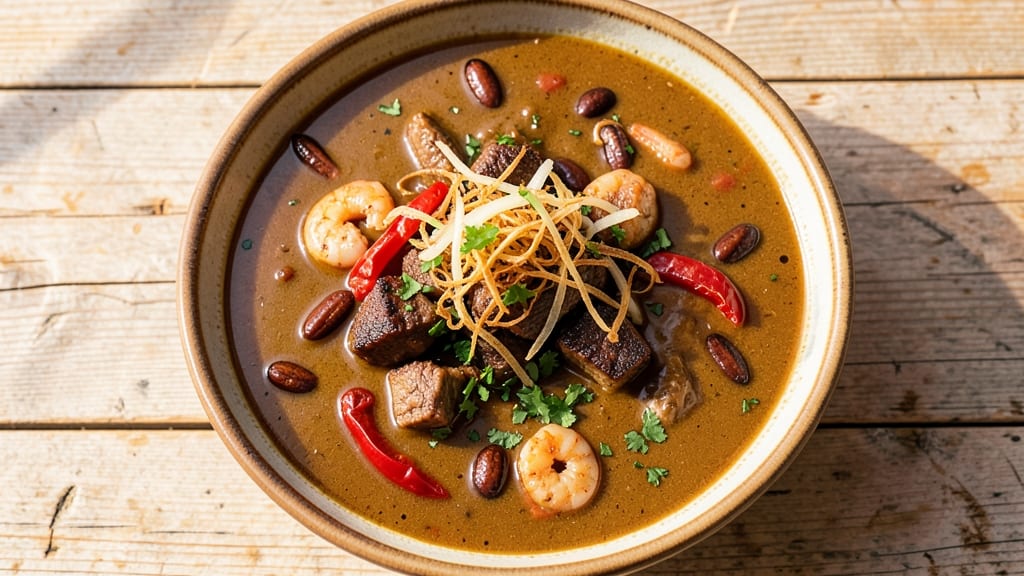
This Banga soup Nigerian recipe delivers the smoky, peppery depth that makes it a staple at family gatherings and celebrations. The secret lies in the carefully blended pepper base, which transforms simple ingredients into a rich, aromatic broth that's both comforting and complex.
I've perfected this version to balance heat and earthiness, creating a soup that's as satisfying as it is flavorful.
The recipe begins with a blend of dried peppers, tomatoes, and spices that create that signature smoky aroma. You'll cook it with your choice of protein—beef, goat meat, or fish—each bringing its own depth to the dish.
The key is letting the pepper base develop its full flavor before adding the vegetables and meat, ensuring every bite is packed with that authentic Banga taste.
What makes this recipe special is the crispy fried plantains that accompany the soup, adding a delightful contrast in texture and sweetness. The plantains should be golden and slightly caramelized, providing a perfect balance to the rich, spicy broth.
This combination is what makes Banga soup truly unforgettable—it's hearty, flavorful, and deeply rooted in tradition.
Serve this soup with pounded yam, eba, or rice for the full Nigerian experience. The crispy plantains elevate the meal, making it a complete and satisfying dish that's perfect for any occasion. Let's get started on creating this classic recipe in your own kitchen.
Ingredients for banga soup nigerian
Sixteen ingredients transform into a rich, smoky Banga soup with crispy fried plantains.
| Ingredient | Amount | Notes |
|---|---|---|
| Dried Red Bell Peppers 🌶️ | ½ cup | Smoked variety preferred for authentic flavor |
| Dried Cocoa Pods 🍫 | ¼ cup | Traditional for depth, optional but recommended |
| Dried Locust Beans 🌱 | ½ cup | Irru or daddawa for authentic umami |
| Dried Shrimp 🦐 | ¼ cup | For umami richness, optional for vegetarian |
| Fresh Tomatoes 🍅 | 4 whole | Ripe, Roma preferred for texture |
| Onions 🧅 | 2 whole | Yellow or red, medium-sized |
| Garlic Cloves 🧄 | 8 cloves | Minced for aromatic base |
| Scotch Bonnet Peppers 🌶️ | 2 whole | Adjust for heat preference |
| Goat Meat 🐐 | 2 lb | Or beef chuck, cut into bite-sized pieces |
| Fresh Green Bell Peppers 🌱 | 2 whole | For color and mild crunch |
| Fresh Okra 🥦 | 1 lb | Trimmed, cut into 1-inch pieces |
| Plantains 🍌 | 4 whole | Ripe for sweetness, unripe for starch |
| Vegetable Oil 🫒 | 2 tbsp | For frying plantains |
| Salt 🧂 | 2 tsp | Diamond Crystal preferred |
| Ground Black Pepper 🌶️ | 1 tsp | Freshly ground for heat |
The pepper base is where the magic happens. Dried red bell peppers and scotch bonnet create that signature smoky heat, while dried cocoa pods and locust beans add depth—look for these at African markets or specialty stores like African Grocery Store in your area. Fresh tomatoes should be vine-ripened; the grocery store's red ones lack the sweetness you need. For the goat meat, Costco or local butchers often carry it fresh, but frozen works too if you thaw it properly. The okra needs to be fresh—frozen loses its thickening power.
No dried shrimp? Mushrooms or extra locust beans add umami without it. Substitute beef for goat if needed, but it won't have the same tender texture. For the plantains, ripe ones caramelize beautifully while unripe ones stay starchy. If you can't find scotch bonnet, habanero or cayenne works in a pinch, but adjust the heat. The dried peppers should be toasted lightly before blending to enhance their smoky flavor—don't skip this step. For the pepper base, blend until smooth but leave some texture for authentic mouthfeel.
Store the pepper base in an airtight container for up to 2 weeks—it only gets better with time. The cooked soup reheats beautifully; add a splash of water if it thickens too much. For the plantains, fry in batches to maintain oil temperature. They're best served immediately but can be reheated briefly in a dry pan. The full meal keeps for 3 days in the fridge, though the plantains lose crispiness after day one. Freeze the soup base without plantains for up to 3 months.
Why You'll Love This Recipe
- Dried Ingredients Do the Work: I swear by this shortcut—soak those dried locust beans and shrimp overnight, then toss them in while you blend the tomatoes and peppers. No last-minute chopping, no stress, just deep flavor waiting for you.
- Umami Bomb Combo: That mix of dried cocoa pods and red bell peppers? It’s like a secret weapon. The cocoa adds this rich, almost chocolatey depth, while the peppers bring heat that lingers—without overpowering. Honestly, it’s the kind of taste that makes you pause mid-bite.
- Weeknight to Party Fix: Same recipe, different vibes. Slurp it with pounded yam for a lazy Tuesday, or serve it in bowls with crispy plantains at your next gathering. The dried shrimp adds that salty crunch, so it’s always impressive—even if you made it in 30 minutes.
- Leftovers That Still Shine: Banga soup tastes better the next day. The flavors meld into something even richer, and it reheats like a dream. Between us, I’ve had it cold with rice for lunch—still delicious. Plus, the dried ingredients stretch your budget without sacrificing taste.
Step-by-step instructions for Banga soup with Nigerian flavor
Master this traditional West African stew with its signature smoky depth and vibrant colors.
Prepare the Meat and Base Ingredients
Cut the 2 lb goat meat into 1-inch cubes and set aside. In a large pot, combine the 4 whole fresh tomatoes, 2 whole onions, 8 cloves garlic cloves, and 2 whole Scotch Bonnet peppers. Add 2 cups hot water and bring to a boil. Let it simmer for 10 minutes until the tomatoes break down and the mixture thickens slightly.
This initial cooking step extracts the natural juices and flavors from the vegetables, forming the foundation of your soup. The tomatoes should soften completely, and the onions should become translucent. If the mixture looks too watery, reduce it further by simmering uncovered for another 5 minutes.
Blend and Incorporate the Peppery Elements
Transfer the cooked tomato mixture to a blender and add the 0.5 cup dried red bell peppers, 0.25 cup dried cocoa pods, and 0.5 cup dried locust beans. Blend until smooth, adding 1 cup water if needed to help the blending process. Pour the blended mixture back into the pot and stir well.
The dried red bell peppers and cocoa pods are essential for that authentic smoky, slightly bitter depth characteristic of Banga Soup. The locust beans add a nutty, umami richness that balances the heat from the Scotch Bonnet peppers. This blend should create a thick, vibrant base for your soup.
Cook the Meat and Vegetables
Return the pot to medium-high heat and add the cubed goat meat. Stir gently to coat the meat in the sauce, then reduce heat to medium-low. Cover and let it simmer for 45 minutes, stirring occasionally. After 30 minutes, add the 1 lb fresh okra (trimmed and cut into 1-inch pieces) and 2 whole fresh green bell peppers (chopped).
You want the meat to become tender but not fall apart. The okra will soften and blend into the soup, adding a subtle sliminess that's traditional in Banga Soup. The green bell peppers provide a fresh contrast to the rich, smoky flavors. Keep the lid slightly ajar to allow excess moisture to escape, preventing a watery soup.
Add the Dried Shrimp and Season
After the meat is tender, stir in the 0.25 cup dried shrimp and the 2 tsp salt. Continue simmering for another 15 minutes to allow the shrimp to rehydrate and fully incorporate into the soup. Taste and adjust seasoning with 1 tsp ground black pepper if needed.
The dried shrimp adds a briny, umami depth that's crucial to the soup's complexity. This is when you should taste and balance the flavors—Banga Soup should have a perfect harmony of smoky, peppery, and slightly sweet notes. If the soup is too thick, add ½ cup water to reach your desired consistency.
Fry the Plantains and Serve
While the soup simmers, heat 2 tbsp vegetable oil in a separate pan over medium heat. Peel the 4 whole plantains, slice them lengthwise, and fry until golden brown and crispy on both sides, about 3-4 minutes per side. Drain on paper towels.
The crispy fried plantains are the perfect accompaniment to Banga Soup, providing a sweet contrast to the rich, savory broth. Serve the soup hot with the plantain slices on the side. Each spoonful should deliver layers of smoky heat, tender meat, and vibrant vegetable flavors that define this Nigerian classic.
Pro Tips For Making Banga Soup Nigerian
- STEAM THE COCOA PODS: First, soak the dried cocoa pods in hot water for at least 20 minutes—this softens the tough outer shell so they actually release flavor instead of turning your soup into a bitter, fibrous mess. I used to skip this and wondered why my soup tasted more like cardboard than the rich, earthy base it should be.
- TOAST THE LOCUST BEANS: Spread the dried locust beans on a dry skillet over medium heat and toast them for 3-4 minutes, stirring constantly, until they darken and smell nutty. This step isn’t just for aroma—it removes bitterness and makes them blend smoothly into the soup. (Yes, even if you’re impatient like me, don’t rush this.)
- SIMMER THE PEPPERS LOW: After frying the dried red bell peppers, transfer them to a pot and simmer on the lowest heat possible—just enough to keep them bubbling gently. High heat burns them in minutes, turning their sweet, smoky flavor into a charred aftertaste. I learned this the hard way after serving a batch that tasted like a campfire instead of a proper banga.
- BLEND THE TOMATOES FIRST: Peel, seed, and blend the fresh tomatoes into a smooth purée before adding them to the pot. This ensures even distribution of color and acidity, so every spoonful has that vibrant, balanced flavor. Skipping this step leaves you with uneven chunks and a soup that tastes more like a stew. (Your future self will thank you.)
Wine and beer pairings for this recipe
Traditional Nigerian Beer
For an authentic pairing, serve Banga soup with a cold Nigerian pale ale like Star Lager or Guinness Nigeria. The crisp, slightly malty profile balances the soup's smoky heat while complementing the rich umami flavors.
The light carbonation cuts through the soup's depth, making each bite more refreshing. I always keep a few bottles chilled in the fridge when making this dish—it's a must for the full experience. 🍺
West African Palm Wine
For a truly traditional touch, try palm wine, a fermented sap drink popular across West Africa. Its sweet, slightly tangy flavor enhances the soup's peppery notes while adding a unique cultural dimension.
Palm wine is best served chilled and slightly fizzy—look for it at African markets or specialty stores like African & Caribbean Foods. Serve in small glasses alongside the soup for an authentic Nigerian dining experience. 🌿
Spiced Rum Cocktails
A spiced rum cocktail like a dark 'n' stormy (rum, ginger beer, lime) works beautifully with Banga soup. The ginger's warmth complements the peppery heat, while the rum's caramel notes echo the soup's smoky depth.
I like to make a batch ahead and keep it in the freezer—just pour over ice when ready. For a non-alcoholic version, use ginger beer with lime and a splash of pineapple juice. 🍹
Light White Wine
If you prefer wine, a crisp Sauvignon Blanc from South Africa offers a refreshing contrast. Its citrusy acidity and herbal notes cleanse your palate between rich, spicy spoonfuls. Look for a bottle with 12-13% ABV—something like Delaire Graff Sauvignon Blanc.
Serve slightly chilled (45-50°F) to enhance its vibrant flavors. The wine's brightness makes the soup's depth even more satisfying. 🍷
Non-Alcoholic Options
For a family-friendly pairing, try hibiscus iced tea (sour soup) or ginger lemonade. The tartness of hibiscus tea balances the soup's richness, while ginger lemonade adds a zesty kick.
Both drinks are easy to make at home—simmer 1 cup dried hibiscus leaves in 4 cups water for 10 minutes, then sweeten with honey. For ginger lemonade, muddle 2-inch fresh ginger with juice of 2 lemons and ½ cup sugar. 💧
Nutrition facts
Frequently asked questions
What makes Banga soup different from other Nigerian soups?
Banga soup stands out with its signature smoky, peppery depth from dried red bell peppers and cocoa pods. Unlike lighter soups like Egusi or Okra, Banga has a rich, slightly bitter base that balances its heat. The addition of dried locust beans and dried shrimp gives it a unique umami richness that's hard to find in other Nigerian dishes.
Can I substitute goat meat with chicken or fish?
Yes! For a milder flavor, use chicken thighs (simmer for 30 minutes instead of 45). For a seafood version, try tilapia or mackerel, adding them in the last 10 minutes of cooking to avoid overcooking. The key is adjusting cooking times—fish and chicken cook faster than goat meat.
Why does my Banga soup taste too bitter?
Excessive cocoa pods or over-toasted dried peppers can cause bitterness. Balance it by adding 1 extra tomato or ½ cup fresh green bell peppers to sweeten the flavor. Also, reduce simmering time to 30 minutes instead of 45 to prevent over-extraction of bitter compounds. Taste as you go!
How do I make the plantains extra crispy?
Use ripe but firm plantains (yellow with black spots) and slice them ¼-inch thick. Fry in small batches in hot oil (350°F) until golden brown (3-4 minutes per side). Drain on a wire rack—not paper towels—to maintain crispiness. For extra crunch, sprinkle with ½ tsp salt while hot.
Can I prepare Banga soup ahead of time?
The soup base (without plantains) keeps for 3 days in the fridge or 3 months frozen. Reheat gently on low heat, adding ½ cup water if too thick. For plantains, fry fresh—they lose crispiness when reheated. The flavors actually improve overnight as the spices meld!