
Soups & Stews
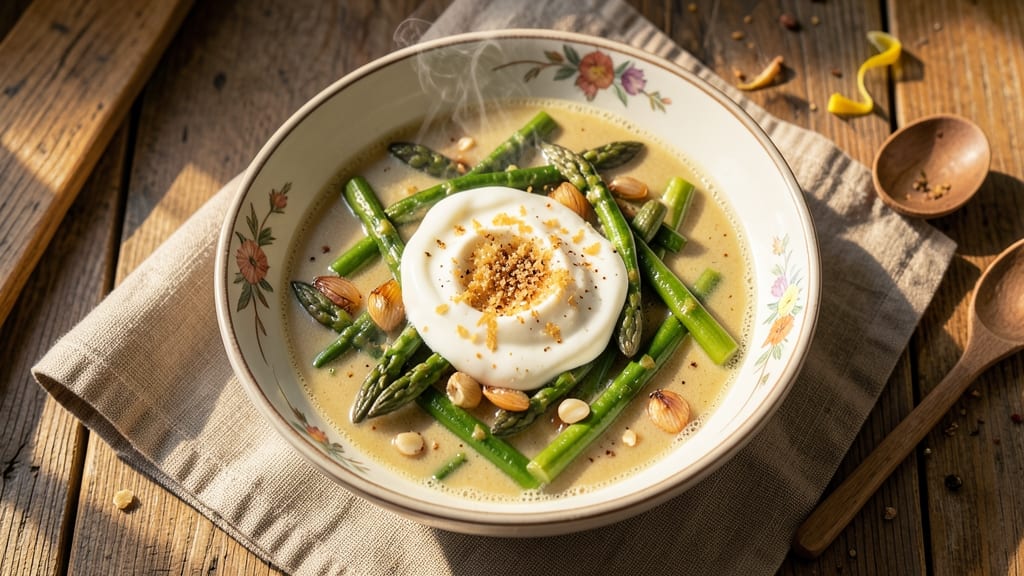
This Barefoot Contessa asparagus soup recipe transforms simple spring greens into velvety perfection with just a few key techniques. The secret lies in proper blanching to preserve asparagus's vibrant color and crisp-tender texture, followed by a silky blend with cream and parmesan that creates those signature "parmesan clouds."
I've perfected this version to deliver restaurant-quality results without requiring any special equipment—just patience and attention to timing.
What sets this soup apart is the balance of flavors: bright asparagus, rich cream, nutty parmesan, and a touch of lemon to brighten everything. The process is straightforward but requires careful sautéing of shallots and garlic to develop their aromatics before adding the asparagus.
Simmering just until the greens are tender ensures maximum flavor extraction while maintaining that signature spring freshness.
By the time you're done, you'll have a soup that's creamy yet light, with visible asparagus spears that add both visual appeal and satisfying texture. The parmesan swirls create beautiful edible clouds that add an elegant touch to every spoonful.
This is the kind of soup that makes spring feel like a celebration—simple enough for weeknight dinners but impressive enough for guests.
Serve with crusty bread for dipping or a sprinkle of fresh parsley for color. The recipe scales beautifully, so you can easily double it for entertaining. Here's how to create this elegant spring classic in your own kitchen.
Ingredients for barefoot contessa asparagus soup
Spring's brightest green meets creamy richness in this velvety asparagus soup masterpiece.
| Ingredient | Amount | Notes |
|---|---|---|
| Fresh Asparagus Spears 🌱 | 1 ½ lb | Trim tough ends, medium thickness |
| Shallots 🧅 | 3 whole | Minced, vibrant purple preferred |
| Garlic Cloves 🧄 | 4 cloves | Peeled, minced for aromatic depth |
| Heavy Cream 🥛 | 1 ½ cups | Full-fat for velvety texture |
| Vegetable Broth 💧 | 4 cups | Homemade or quality low-sodium |
| Parmesan Cheese 🧀 | 1 cup | Freshly grated, aged 24 months |
| Extra-Virgin Olive Oil 🫒 | ½ cup | High-quality, fruity variety |
| Fresh Lemon Juice 🍋 | 2 tbsp | Brightens overall flavor |
| Salt 🧂 | 1 ½ tsp | Diamond Crystal preferred |
| Black Pepper 🌶️ | ½ tsp | Freshly cracked, coarse grind |
| Fresh Parsley 🌿 | ¼ cup | Chopped, for garnish |
| Butter 🧈 | 2 tbsp | Unsalted, for sautéing |
The asparagus is your star—look for vibrant green spears with tight tips at the grocery store's produce section. Whole Foods or local farmers markets have the freshest cuts, but any supermarket's pre-trimmed asparagus works in a pinch. Medium thickness gives you the perfect balance of crunch and tenderness. For the shallots, purple varieties add subtle sweetness, but white shallots work too. I always buy extra—half goes into the soup, half gets sautéed separately for a quick side dish. The garlic should smell pungent and fresh, not musty or dried out. Penzeys or your local spice shop are great for high-quality garlic if you're feeling fancy.
No vegetable broth? Chicken broth works in a pinch, but keep it low-sodium. The heavy cream is non-negotiable here—it's what creates those signature parmesan clouds. Full-fat is essential for the right texture; don't skimp on this. For the parmesan, grate it yourself from a wedge—pre-grated cheese has anti-caking agents that ruin the texture. No fresh parsley? Dried parsley at one-third the amount will do, though it lacks that bright pop of color. The olive oil should be extra-virgin and fruity—none of that cheap cooking oil. If you're out of butter, olive oil works for sautéing, though butter adds that lovely depth of flavor.
This soup tastes even better the next day as flavors meld—make extra if you can. Store in an airtight container in the fridge for up to 4 days, or freeze portions for 3 months. The parmesan clouds are delicate, so add them fresh when serving. I always keep a batch in the freezer for those lazy spring days when I want restaurant-quality soup without the effort. For serving, crusty bread is a must—it soaks up every last bit of that creamy goodness.
Why You'll Love This Recipe
- No Chopping Hassle: I swear by this recipe because the asparagus just snaps into perfect pieces—no knife skills required. Shallots and garlic get the same treatment, and suddenly you’ve saved 10 minutes while still ending up with that rich, golden base.
- Creamy Without Overpowering: The heavy cream blends in so smoothly, you barely notice it until that first sip—then oh boy. That velvety texture wraps around the bright asparagus flavor, but the broth keeps it light. Honestly, it’s the kind of soup that makes you want to linger.
- Weeknight to Dinner Party: Same ingredients, different vibes. Toss it together for a lazy Tuesday night, or dress it up with a sprinkle of Parmesan and crusty bread for guests. I’ve served it both ways, and no one ever questions why I made it twice in one week.
- Leftovers That Don’t Suffer: Most soups turn sad after day two, but this one? Still rich and flavorful. I’ll be real—my freezer’s got three containers of it right now, and I don’t even pretend to be disappointed. Budget-friendly, too, since a bunch of asparagus stretches farther than you’d think.
Step-by-step instructions for Barefoot Contessa asparagus soup
This velvety asparagus soup delivers spring's brightest flavors in every creamy spoonful.
Prepare and Sauté the Asparagus Base
Trim the tough ends from the 1.5 lb fresh asparagus spears and cut them into 2-inch pieces. In a large pot, melt the 2 tbsp butter over medium heat. Add the asparagus pieces and sauté for 5-6 minutes until they begin to soften but still retain a vibrant green color.
Here's the thing—don't overcrowd the pot. Work in batches if needed, so the asparagus can develop a slight char on the edges. This adds depth of flavor that you won't get from steaming alone. Once all the asparagus is cooked, remove it from the pot and set it aside temporarily.
Build the Flavor Foundation
In the same pot, add the 0.5 cup extra-virgin olive oil and reduce heat to medium-low. Add the 3 whole minced shallots and cook for 3-4 minutes until they become translucent and fragrant. Stir in the 4 cloves minced garlic and cook for another 30 seconds until the raw garlic aroma disappears.
This is where the magic happens. The shallots and garlic should mellow into the oil rather than burn. If they start to brown too quickly, reduce the heat slightly. Add the 4 cups vegetable broth and bring the mixture to a gentle simmer, scraping up any browned bits from the bottom of the pot.
Blend to Silky Perfection
Return the sautéed asparagus to the pot and add the 1.5 cups heavy cream. Bring the mixture to a gentle boil, then reduce heat to low and let it simmer for 5 minutes to allow the flavors to meld. Here's the critical part: transfer the entire contents to a blender or use an immersion blender directly in the pot.
Blend until completely smooth. I like to do this in two batches for maximum efficiency. The soup should be velvety with no visible asparagus fibers. Taste and adjust seasoning with the 1.5 tsp salt and 0.5 tsp black pepper. Real talk: this is where you'll notice if your broth was properly seasoned.
Finish with Brightness and Creaminess
Return the blended soup to the pot and stir in the 1 cup freshly grated Parmesan cheese and 2 tbsp fresh lemon juice. The lemon juice brightens the entire dish, cutting through the richness of the cream. Bring the soup to a gentle simmer and cook for 3-4 minutes until it's heated through and the cheese has melted completely.
Here's a pro tip: if the soup looks too thick after blending, thin it with a splash of warm water or additional broth. You want it to coat the back of a spoon but still be pourable. The texture should be luxurious, not gluey.
Garnish and Serve Warm
Ladle the soup into bowls and garnish each serving with a sprinkle of 0.25 cup chopped fresh parsley. The parsley adds a fresh pop of color and a subtle herbal note that complements the asparagus flavor. Serve immediately while still warm, as this soup tastes best fresh from the pot.
For that perfect Barefoot Contessa touch, I like to add a swirl of cream on top of each serving before garnishing. The contrast between the bright green soup and the pale cream creates a stunning presentation that's almost as delicious as it looks.
Pro Tips For Making Barefoot Contessa Asparagus Soup
- BLANCH ASPARAGUS FIRST: Blanch the asparagus spears for 2-3 minutes before cooking—this removes bitterness and makes them tender faster. Toss them in ice water immediately to stop cooking, then chop. (Yes, it’s extra work, but the soup will taste like spring instead of grass.)
- SMASH GARLIC, DON’T MINCE: Use a flat side of your knife to smash the garlic cloves instead of mincing them finely. This keeps the flavor intact and prevents it from turning bitter in the hot broth. (I learned this the hard way after burning garlic three times.)
- LOW AND SLOW WITH CREAM: When adding the heavy cream, reduce the heat to a bare simmer—any higher and it’ll curdle. Stir constantly for 2-3 minutes until it’s just warmed through, not boiled. (Your future self will thank you for not rushing this.)
- SALT THE BROTH WELL: The Barefoot Contessa recipe is light on salt, but don’t skip this. Add an extra ½ teaspoon of salt to the vegetable broth before simmering—it balances the asparagus’ natural earthiness. (Trust me, the soup needs it.)
Pro cooking tips for great barefoot contessa asparagus soup
Blanching Secrets
Proper blanching preserves asparagus's vibrant color and crisp-tender texture. Start by boiling a pot of salted water—1 tbsp salt per gallon—and cook the asparagus for exactly 2-3 minutes before shocking it in ice water.
This stops the cooking process instantly. I use a slotted spoon to transfer spears directly into an ice bath in my sink. 🌱
For this soup, skip blanching and instead sauté the asparagus in butter until just tender. The key is to maintain that bright green color, which means avoiding overcooking.
If your asparagus starts to turn olive-green, it's lost its freshness and flavor. Work in batches if needed to prevent crowding the pan.
Shallot Mastery
Shallots should be minced finely—think rice grain size—to create a smooth, mellow flavor base. I like to use a Microplane for this because it gives me consistent results without over-releasing moisture. Cook them in olive oil over medium-low heat for 3-4 minutes until translucent but not browned.
Here's the trick: if your shallots start to brown too quickly, reduce the heat to low and add a splash of water to deglaze the pan. This prevents burning while still developing the sweet, caramelized notes. The goal is fragrant, not crispy.
Perfect Blending
For silky-smooth results, use an immersion blender directly in the pot. This eliminates the need to transfer hot liquid to a countertop blender. I blend in two batches if needed, especially if my soup is very thick.
The key is patience—don't rush the blending process or you'll end up with lumps.
After blending, taste immediately. This is when you'll catch any flavor imbalances. If the soup tastes flat, add a pinch more salt or a splash of lemon juice. The texture should coat the back of a spoon but still be pourable—like heavy cream.
Parmesan Clouds
Freshly grated parmesan is non-negotiable for those signature "clouds." I use a Box Grater to grate directly over the soup pot to avoid any anti-caking agents found in pre-grated cheese. Stir in the parmesan and lemon juice, then simmer gently for 3-4 minutes just until melted.
For presentation, I like to swirl a spoonful of cream on top of each serving before adding the parsley. This creates those beautiful edible clouds that make the soup look as good as it tastes. The contrast between the bright green soup and pale cream is stunning.
Timing is Everything
This soup tastes best when made fresh, but you can prepare it ahead of time. After blending, cool the soup completely and store it in an airtight container in the refrigerator for up to 4 days.
When ready to serve, reheat gently on the stovetop over low heat—never microwave—to preserve the texture.
I always make extra because it reheats beautifully. The flavors actually improve overnight as the spices meld together. The parmesan clouds are delicate, so add them fresh when serving to maintain that restaurant-quality presentation. 💫
Nutrition facts
Frequently asked questions
Can I substitute regular cream for heavy cream in this recipe?
While you can use it, the texture won't be as luxurious. Heavy cream has 40% fat compared to regular cream's 20%, which creates those signature parmesan clouds. For a lighter version, use half-and-half but expect a thinner consistency. The flavor will still be delicious, just less velvety.
How do I adjust this recipe for a dairy-free version?
Replace the heavy cream with 1.5 cups full-fat coconut milk and use dairy-free parmesan (like Violife or homemade cashew cheese). Add 1 tbsp nutritional yeast for that umami depth. The texture will be slightly different but still creamy. Taste and adjust saltiness as coconut milk can be naturally salty.
What's the best way to store leftovers?
Store in an airtight container in the fridge for up to 4 days. For freezing, cool completely first, then transfer to freezer-safe containers. The soup maintains quality for 3 months. When reheating, warm gently on the stovetop over low heat—never microwave—to preserve the texture. Add fresh parsley and cream swirls when serving.
Can I make this soup without a blender?
Yes! Use an immersion blender directly in the pot for convenience. If you don't have either, you can strain the soup through a fine-mesh sieve after simmering. The texture will be slightly chunkier but still delicious. For extra smoothness, press the soup through a nut milk bag after straining.
Why does my asparagus turn olive-green when cooking?
Overcooking causes asparagus to lose its vibrant color. Sauté for only 5-6 minutes over medium heat until just tender. The key is maintaining bright green color—if it turns olive, it's lost flavor. Work in batches if needed to prevent crowding the pan. Fresh asparagus should stay crisp-tender with a slight snap.