
Soups & Stews
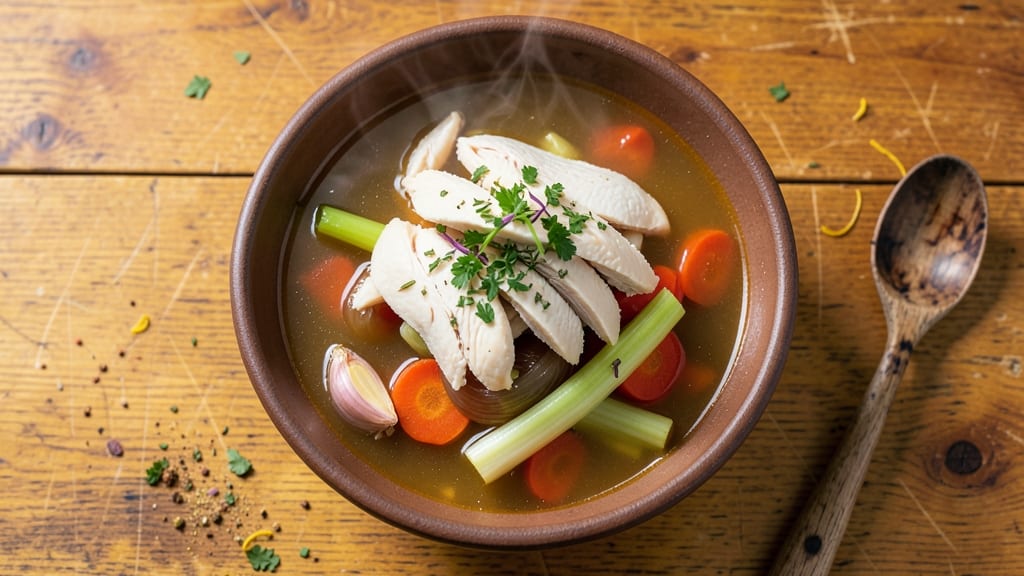
This basic chicken soup recipe from scratch transforms simple ingredients into a comforting, nourishing meal that warms both body and soul. 💛 The secret lies in slow-simmered broth packed with flavor, tender chicken, and vegetables that melt into perfect harmony—no shortcuts, just honest, wholesome cooking that tastes like home.
What makes this soup special is the one-pot simplicity combined with restaurant-quality depth. You'll start with a well-built broth using chicken bones and aromatics, then layer in vegetables and protein for a balanced, hearty result. The key? Low-and-slow simmering to develop rich, savory flavors without overcooking.
By the end, you'll have a golden, aromatic soup with tender chicken, al dente vegetables, and a broth so flavorful it tastes like it simmered all day. Every spoonful delivers warmth, nutrition, and that unmistakable homemade comfort—exactly what you need when you're craving something truly satisfying.
The best part? This recipe scales effortlessly—make it for one or double it for a crowd. Perfect for meal prep, sick days, or cozy weeknight dinners, it's the ultimate homemade healing in a bowl. Let's get started with the step-by-step instructions.
Ingredients for basic chicken soup recipe from scratch
Golden broth, tender chicken, and vegetables that sing with flavor—this is your one-pot healing in every spoonful.
| Ingredient | Amount | Notes |
|---|---|---|
| Chicken Bones (necks, backs, wings) 🍗 | 2 lb | Raw, for homemade broth |
| Yellow Onion 🧅 | 1 whole | Chopped, medium size |
| Carrots 🥕 | 3 whole | Medium, peeled and chopped |
| Celery Stalks 🌿 | 3 whole | Medium, chopped |
| Garlic Cloves 🧄 | 6 cloves | Fresh, peeled and smashed |
| Chicken Breast 🍗 | 1 ½ lb | Boneless, skinless, cut into bite-sized pieces |
| Chicken Thighs 🍗 | 1 lb | Bone-in, skin-on, cut into pieces |
| Bay Leaves 🌿 | 2 whole | Dried, for depth of flavor |
| Fresh Parsley 🌿 | ¼ cup | Chopped, for garnish |
| Salt 🧂 | 2 tsp | Diamond Crystal kosher salt |
| Black Peppercorns 🌶️ | ½ tsp | Freshly cracked |
| Extra-Virgin Olive Oil 🫒 | 2 tbsp | For initial sautéing |
| Fresh Thyme 🌿 | 1 tbsp | Leaves only, chopped |
| Dried Thyme 🌿 | ½ tsp | Substitute if fresh unavailable |
| Water 💧 | 8 cups | Filtered preferred |
The chicken bones are the soul of this soup—look for raw, meaty bones at your butcher or grocery store's meat counter. Costco or Whole Foods often have them pre-packaged, but if not, the butcher can cut them for you. Fresh thyme and bay leaves elevate the broth, so don't skip them—Penzeys or bulk bins at natural food stores are great for quality herbs. The carrots and celery should be fresh, with vibrant color—no wilted or rubbery veggies. For the chicken, thighs stay juicier than breasts, so I always use both for that perfect balance of tenderness.
No fresh thyme? Dried works at one-third the amount, but fresh is ideal. Running low on chicken bones? Chicken stock from a high-quality carton (like Pacific Foods) gets you close—just add an extra bay leaf. The olive oil matters here—use something fruity and peppery, not the cheap stuff. For the vegetables, baby carrots or pre-chopped celery save time, but fresh is always better. The water should be filtered if possible—it makes a noticeable difference in the final flavor. And if you're feeling fancy, a splash of white wine (about 1/4 cup) when sautéing the aromatics adds depth.
This soup tastes even better the next day, so make a double batch and portion it into containers for the week. Broth keeps for 5 days in the fridge or 3 months frozen. The chicken and vegetables reheat beautifully—just add a splash of water if it thickens too much. For meal prep, freeze the broth separately from the chicken and veggies so you can reheat just what you need. And if you're feeling generous, double the broth—it's perfect for rice, grains, or even a quick pasta dish later.
Why You'll Love This Recipe
- Soup Stock Magic: I swear by this trick—tossing in chicken bones (necks, backs, wings) with onion, carrots, and celery creates a broth so rich, it turns basic soup into something special. No fancy stock needed; just simmer and let the bones do the work.
- Carrot-Celery Crunch: That perfect trio of carrot, celery, and onion—mirepoix—adds sweetness, bite, and depth. Sauté them first, and you’ll get a flavor base that makes the whole soup sing, even if you’re short on seasoning.
- Leftovers That Save: This soup actually improves the next day. The broth gets deeper, the veggies softer, and it’s still hearty enough for lunch. Freeze extras—because nothing beats a quick reheat when you’re running late.
- Budget-Friendly Bone Truth: Chicken bones are cheap, and this recipe stretches them into three meals easy. No wasted ingredients here; every part gets used, and the flavor? Ridiculously good for pennies. My wallet thanks me every time.
Step-by-step instructions for homemade chicken soup
Here's how to create a rich, aromatic broth and tender chicken—no shortcuts, just pure comfort.
🔥 Step 1: Build the Broth Foundation
Heat the 2 tbsp extra-virgin olive oil in a large stockpot over medium-high heat. Add the 2 lb chicken bones (necks, backs, wings) and sear for 5-7 minutes until golden brown, stirring occasionally. This caramelization unlocks deep flavor in your broth.
Add the 1 whole chopped yellow onion, 3 chopped carrots, 3 chopped celery stalks, and 6 smashed garlic cloves. Cook for 5 minutes until the vegetables soften slightly and release their aromas. Here's the thing—don't rush this step. The vegetables should be tender but not mushy, or they'll turn bitter.
Pour in the 8 cups water, add the 2 whole bay leaves, 1 tbsp fresh thyme, 0.5 tsp dried thyme, 2 tsp salt, and 0.5 tsp cracked black peppercorns. Bring to a rolling boil, then reduce heat to low, cover partially, and simmer for 90 minutes. Skim off any foam that rises to the surface—this ensures a crystal-clear broth.
🍳 Step 2: Cook the Chicken to Perfection
While the broth simmers, prepare the chicken. Pat the 1.5 lb chicken breast and 1 lb chicken thighs dry with paper towels—this helps them cook evenly. Season generously with salt and pepper, then add them to the simmering broth. The chicken should be fully submerged, so adjust the water level if needed.
Simmer uncovered for 25-30 minutes until the chicken is cooked through. You'll know it's ready when the breast meat reaches 165°F internally and the thigh meat is fork-tender. Here's the trick: don't overcook the chicken. It'll continue cooking slightly as the soup rests.
Remove the chicken from the broth using tongs and transfer it to a cutting board. Let it rest for 5 minutes before shredding or slicing. This resting period keeps the meat juicy and makes it easier to handle.
🥘 Step 3: Strain and Finish the Soup
Strain the broth through a fine-mesh sieve into a clean pot, pressing down on the solids to extract every last drop of flavor. Discard the solids, then return the broth to the pot. Taste and adjust the seasoning—you might need a little more salt or pepper to balance the flavors.
Return the shredded chicken to the broth and warm through over low heat for 2-3 minutes. The soup should be steaming gently but not boiling. Stir in the 0.25 cup chopped fresh parsley just before serving—this adds a bright, fresh finish that cuts through the richness of the broth.
Ladle the soup into bowls and serve immediately. The aroma alone will make your kitchen feel like a warm hug. For extra comfort, serve with crusty bread or a sprinkle of grated Parmesan cheese.
Pro Tips For Making Basic Chicken Soup Recipe From Scratch
- CHAR THE BONES FIRST: Skip the slow simmer and blister those chicken bones in a dry pot over medium-high heat for 5–7 minutes until they turn deep golden brown. This caramelizes the skin and bones, giving your broth that rich, nutty depth you’d pay extra for at a restaurant. (Yes, it’ll smell like heaven—just open a window.)
- CUT ONIONS IN HALVES: Instead of dicing that onion, slice it into ½-inch thick half-moons—no need to peel. The layers cook faster, release flavor more evenly, and you won’t spend 10 minutes chopping. I learned this the hard way when I burned through three batches of finely minced onion before realizing half-moons work just as well.
- DON’T RUSH THE SIMMER: Once the broth starts, resist the urge to crank the heat to speed things up. A gentle simmer (tiny bubbles, not rolling) for at least 2 hours—3 if you can—pulls more collagen from the bones. I used to walk away after 45 minutes, wondering why my soup tasted thin. Patience here makes the difference between watery broth and something silky.
- SAVE TIME WITH FROZEN VEGETABLES: Swap fresh carrots and celery for a pre-chopped frozen mix—it’s already diced, won’t burn, and adds a subtle sweetness. Toss it in during the last 30 minutes of cooking. I skip this when I’m feeling fancy, but on weeknights, it cuts prep time by half without sacrificing flavor. (Your knife will thank you.)
Make-ahead tips for this dish
Broth Prep Ahead
Make the broth the night before—it develops deeper flavor as it rests. After simmering the bones for 90 minutes, let it cool completely, then refrigerate uncovered. The fat will solidify on top, making it easy to skim off the next day.
Store the broth in an airtight container for up to 5 days or freeze for 3 months. 💛
Chicken Prep Shortcut
Save time by prepping the chicken separately. Season and refrigerate the chicken pieces in a ziplock bag for up to 24 hours before cooking. When ready, simply add them directly to the simmering broth—no extra prep needed. This also lets the flavors meld overnight for even better taste.
Freezer-Friendly Components
Freeze the broth and chicken separately for easy assembly later. Use quart-sized freezer bags for broth (leave 1-inch headspace) and small containers for chicken. To reheat, thaw overnight in the fridge, then warm on the stovetop over low heat for 10-15 minutes.
Add fresh veggies and parsley when reheating for brightness.
Meal Prep Strategy
Divide the finished soup into 4-cup portions in glass containers. Reheat individual servings on the stovetop with ½ cup water to prevent drying out. Store in the fridge for 4 days or freeze for 3 months.
For extra convenience, freeze broth and chicken separately—just combine and heat when ready. ✨
Vegetable Flexibility
Pre-chop veggies and store them in airtight containers with a paper towel to absorb moisture. They’ll stay fresh for 3-4 days in the fridge. Add them directly to the broth during the final 10 minutes of cooking to keep them crisp.
Potatoes, corn, or spinach work well—just adjust cook times accordingly.
Garnish on Demand
Keep fresh parsley, grated Parmesan, and a squeeze of lemon in separate containers. Add them just before serving to keep the soup vibrant.
Store the parsley in a damp paper towel in the fridge for up to 5 days, and the cheese in an airtight container for 2 weeks. 💡
Nutrition facts
Frequently asked questions
Can I use chicken stock instead of making broth from scratch?
For a shortcut, use 6 cups high-quality chicken stock (like Pacific Foods) instead of homemade broth. Add an extra bay leaf and 1 tsp fresh thyme to boost flavor. Simmer the chicken in the stock for 20-25 minutes instead of 90 minutes, then strain and finish as directed. The texture will be slightly different but still delicious.
Why does my homemade broth look cloudy?
Cloudiness is normal during the initial simmer—it's just foam from rendering fat and proteins. Skim it off during the first 30 minutes of simmering for clearer broth. If it stays cloudy, strain it through a cheesecloth-lined sieve after cooking for a smoother texture. The flavor won't be affected, just the appearance.
How do I prevent the chicken from getting rubbery?
Overcooking is the main culprit! Remove chicken when it reaches 160°F (it'll rise to 165°F while resting). For extra tenderness, add a 1-inch piece of kombu seaweed to the broth while simmering—it naturally breaks down collagen. Also, never boil vigorously after adding chicken; keep it at a gentle simmer.
Can I make this soup vegetarian?
Yes, but with adjustments. Replace chicken with mushrooms (like shiitake) and use vegetable broth instead. Add 1 cup cooked lentils or tofu for protein. Boost umami with 1 tbsp soy sauce or miso paste in the broth. The texture will be heartier but equally comforting.
What's the best way to reheat leftovers?
Reheat gently on the stovetop over low heat with ½ cup water per 4 cups of soup. Stir frequently to prevent scorching. For microwave reheating, cover with a damp paper towel and heat in 1-minute intervals, stirring between each. Never reheat to boiling—just until steaming hot (165°F).