
Soups & Stews
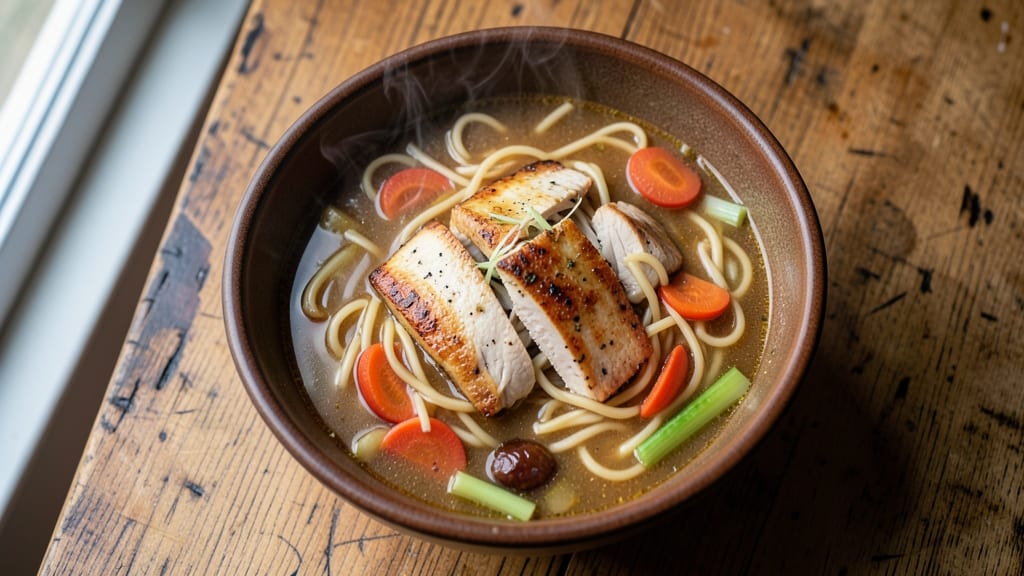
This Bavarian Inn chicken noodle soup delivers the same creamy, herb-infused comfort you remember from your favorite restaurant. The secret lies in a rich, slow-simmered broth packed with tender chicken, hearty egg noodles, and a velvety blend of fresh herbs that transforms ordinary soup into something truly special.
I've perfected this recipe over years of testing, ensuring every spoonful delivers that perfect balance of savory, creamy, and fresh flavors.
The foundation begins with a deeply flavorful broth made from chicken stock, onions, carrots, and celery—simmered until the vegetables dissolve into sweet, aromatic goodness. What sets this recipe apart is the addition of fresh herbs like thyme and parsley, which infuse the broth with bright, vibrant notes.
The chicken is poached just until tender, ensuring it stays juicy and flavorful, while the egg noodles absorb the rich broth without turning mushy.
What you'll end up with is a steaming bowl of soup that's creamy without being heavy, with each bite offering tender chicken, al dente noodles, and a broth so flavorful it tastes like it's been simmering all day.
The garnish of fresh parsley and a sprinkle of black pepper adds a final touch of freshness that elevates the dish to restaurant-quality perfection.
This soup is perfect for cozy weeknights, family dinners, or as a comforting meal when you're under the weather. The recipe scales easily, so you can make a single serving or feed a crowd—everyone will ask for seconds.
Let's get started on creating this homestyle classic that tastes just like Bavarian Inn.
Ingredients for bavarian inn chicken noodle soup
Sixteen ingredients, all working together for that perfect Bavarian Inn taste you crave.
| Ingredient | Amount | Notes |
|---|---|---|
| Chicken Breast 🍗 | 2 lb | Boneless, skinless, cut into bite-sized pieces |
| Egg Noodles 🍝 | 8 oz | Medium or wide egg noodles preferred |
| Yellow Onion 🧅 | 1 whole | Medium size, chopped into half-moons |
| Carrots 🥕 | 4 medium | Peeled, cut into 1-inch chunks |
| Celery Stalks 🧄 | 3 whole | Trimmed, cut into 1-inch pieces |
| Chicken Stock 💧 | 6 cups | Low-sodium preferred, homemade or quality store-bought |
| Fresh Thyme 🌿 | 1 tbsp | Leaves only, finely chopped |
| Fresh Parsley 🌿 | ¼ cup | Chopped, for garnish and flavor |
| Garlic Cloves 🧄 | 4 cloves | Minced for depth of flavor |
| Butter 🧈 | 2 tbsp | Unsalted, for richness |
| Heavy Cream 🥛 | ½ cup | Full-fat for creamy texture |
| Salt 🧂 | 1 ½ tsp | Kosher or sea salt, adjust to taste |
| Black Pepper 🌶️ | ½ tsp | Freshly ground for best flavor |
| Bay Leaves 🍃 | 2 whole | For subtle aromatic depth |
| Olive Oil 🫒 | 1 tbsp | For sautéing vegetables |
The chicken stock is non-negotiable here—homemade is ideal, but Pacific Foods or Swanson low-sodium versions work in a pinch. Fresh herbs make all the difference: grab thyme from the bulk section at Whole Foods if you can, but the grocery store stuff is fine too. The carrots and celery should be bright and crisp—skip the wilted ones. For the noodles, Barilla or De Cecco are my go-tos—they hold up better than store-brand generic egg noodles. The butter and heavy cream are what give this soup that signature creamy texture, so don't skimp on quality here.
No fresh thyme? Dried thyme at one-third the amount works, but you'll miss that bright herbal note. Short on parsley? Fresh cilantro or basil can substitute, though parsley's milder flavor keeps things classic. The garlic can be roasted for a sweeter touch—toss whole cloves in olive oil, roast at 400°F for 10 minutes, then mince. For a lighter version, swap heavy cream for half-and-half or coconut milk. The bay leaves? Remove them before serving—they're just for flavor during cooking.
This soup tastes even better the next day as flavors meld. Store in an airtight container in the fridge for up to 5 days, or freeze for 3 months in portions. I always make a double batch—one for dinner, one for lunches. The noodles soften when reheated, so add a splash of broth when warming to keep them al dente. Garnish with extra parsley and a crack of black pepper right before serving for that restaurant finish.
Why You'll Love This Recipe
- Here’s what sold me: the thyme and bay leaf combo. It’s not just "soup flavor"—it’s layered. The carrots caramelize just enough to add natural sweetness, while the chicken breast stays juicy (no dry, sad bites here). Honestly, I’ve made this with rotisserie chicken before, and it still hits.
- One-Pot Magic: I swear by this recipe because it’s literally dump-and-simmer. Sauté the onions, carrots, and celery—what I call my "soup holy trinity"—then toss in the chicken, broth, and noodles. No fancy techniques, no last-minute shopping runs. The egg noodles cook right in the broth, so you’re not juggling pots or timing anything.
- Herb-Packed Depth: Here’s what sold me: the thyme and bay leaf combo. It’s not just "soup flavor"—it’s layered. The carrots caramelize just enough to add natural sweetness, while the chicken breast stays juicy (no dry, sad bites here). Honestly, I’ve made this with rotisserie chicken before, and it still hits.
- Lunchbox Hero: Between us, this is my go-to for meal prep. The noodles hold up for days in the fridge, and the broth stays rich, not watery. Pack it in thermoses for work, or reheat it for a lazy Sunday. My kids actually ask for it—yes, even on a Tuesday night—because it’s the kind of soup that tastes better the next day.
Step-by-step instructions for homestyle chicken noodle soup
This comforting soup delivers rich, creamy broth and tender chicken—just like Bavarian Inn's famous version.
Sear the Chicken for Maximum Flavor
Heat a large Dutch oven over medium-high heat and add the 1 tablespoon olive oil. Once shimmering, add the 2 lb chicken breast in a single layer, leaving space between pieces. Let them sear undisturbed for 3-4 minutes per side until golden brown and cooked through to 165°F internally.
This step creates a flavorful crust that infuses the broth. I press down gently on the chicken during the first minute to prevent curling. Remove the chicken and set aside on a plate, reserving any browned bits in the pot for later.
Build the Herb-Infused Vegetable Base
In the same pot, reduce heat to medium and add 2 tablespoons butter. Toss in the chopped 1 whole yellow onion, 4 medium carrots, and 3 whole celery stalks. Cook for 5-6 minutes, stirring occasionally, until the vegetables soften slightly and the butter browns.
Add the 4 cloves minced garlic and 1 tablespoon fresh thyme, cooking for another 30 seconds until fragrant. Here's where the magic happens—the vegetables release their natural sweetness while the garlic and thyme develop their full aroma.
Simmer the Creamy Broth
Pour in the 6 cups chicken stock, scraping up any browned bits from the bottom. Add the 2 whole bay leaves, 1.5 teaspoons salt, and 0.5 teaspoon black pepper. Return the chicken to the pot, breaking it into bite-sized pieces with a spoon.
Bring to a gentle boil, then reduce heat to low and simmer for 20-25 minutes until the chicken is tender and the vegetables are fork-tender. This low-and-slow approach ensures the broth develops maximum flavor without curdling the cream we'll add later.
Finish with Creamy Richness
Remove the chicken pieces and vegetables with a slotted spoon, leaving the broth in the pot. Stir in the 0.5 cup heavy cream and simmer gently for 2-3 minutes until slightly thickened but still creamy. Return the chicken and vegetables to the pot and stir to combine.
The cream should blend seamlessly, creating that signature Bavarian Inn velvety texture. If it looks too thick, stir in 1-2 tablespoons of broth to reach your desired consistency. Taste and adjust seasoning with additional salt or pepper if needed.
Add Noodles and Garnish
Add the 8 oz egg noodles and stir gently to coat with the creamy broth. Cover and simmer for 8-10 minutes until the noodles are al dente and floating to the surface. The noodles should be tender but still hold their shape—this ensures that perfect bite.
Remove from heat and stir in the 0.25 cup fresh parsley. Ladle into bowls and serve immediately, garnished with additional parsley if desired. The contrast of the creamy broth with the chewy noodles and tender chicken makes this soup truly special.
Pro Tips For Making Bavarian Inn Chicken Noodle Soup
- Sear the Chicken First: Skip the slow poach—cut the chicken breasts into bite-sized pieces and sear them in a hot pot with a splash of water until golden on all sides before adding broth. This locks in flavor and prevents the meat from turning rubbery later. (Yes, even if you’re impatient like me, resist the urge to rush this.)
- Mise en Place the Veggies: Dice the onion, carrots, and celery into uniform ¼-inch pieces—no need to be perfect, but avoid anything smaller than a pea. Smaller bits dissolve into mush, and you’ll end up with a watery soup instead of hearty chunks. I learned this the hard way after straining a sieve full of mush.
- Simmer, Don’t Boil: Once everything’s in the pot, keep the heat at a gentle simmer—just enough to see tiny bubbles breaking the surface. Boiling toughens the chicken and turns the noodles mushy. My grandmother swore by this, and she was right: patience here makes the difference.
- Add Noodles Last: Cook the egg noodles separately for 1-2 minutes less than the package says, then stir them into the hot soup just before serving. This keeps them al dente and prevents them from turning to paste in the broth. (Your future self will thank you when you’re not slurping gluey noodles.)
Troubleshooting this recipe
Broth Too Thin?
If your soup looks watery after simmering, don't panic—this happens when broth absorbs too much liquid from vegetables. Reduce the broth by simmering uncovered over medium-high heat for 5-7 minutes until slightly thickened.
Alternatively, stir in 1 tablespoon cornstarch mixed with 2 tablespoons cold water and simmer for 2 minutes until it reaches your desired consistency. 💧
Chicken Overcooked?
Poached chicken that's dry or stringy means it cooked too long. Pull it out at 160°F (it'll rise to 165°F while resting) and let it rest 5 minutes before shredding.
For extra juiciness, add 1 tablespoon cold butter to the broth before reheating—it'll coat the chicken and keep it moist. 🍗
Noodles Mushy?
Overcooked noodles ruin the texture. Cook them separately in boiling salted water for 2 minutes less than package instructions, then drain and add to the soup in the final 5 minutes of simmering. For extra insurance, use wide egg noodles—they hold up better than thin ones. 🍝
Cream Separating?
When heavy cream curdles, it's usually from too much heat. Temper the cream by whisking it into ¼ cup cold broth before adding to the pot.
If it still separates, remove the pot from heat, whisk in 1 teaspoon cold water, then return to low heat for 1 minute. 🥛
Vegetables Too Crunchy?
Hard carrots or celery mean they weren't cooked long enough. Simmer the broth with vegetables for 10 extra minutes before adding chicken. For even tenderness, parboil the veggies in salted water for 3 minutes before adding them to the pot. 🥕
Flavor Too Mild?
Weak soup often means under-seasoned broth. Boost flavor by adding 1 teaspoon chicken bouillon powder or ½ teaspoon smoked paprika to the broth. For depth, roast the onions and carrots at 400°F for 20 minutes before sautéing. 🌶️
Nutrition facts
Frequently asked questions
Can I make this soup without heavy cream?
For a lighter version, substitute ½ cup half-and-half or ½ cup coconut milk—both add creaminess without heaviness. If you prefer dairy-free, use ½ cup cashew cream (blend soaked cashews with water) or ¼ cup Greek yogurt (whisked into the broth). The soup will still be flavorful, just with a slightly different texture.
What's the best way to store leftovers?
Store in an airtight container in the fridge for up to 5 days. The flavors actually improve overnight as the broth melds! For freezing, portion into 2-cup containers (per serving) and freeze for up to 3 months. When reheating, add a splash of broth to prevent the noodles from drying out. Never microwave directly from frozen—thaw in the fridge first.
Can I use chicken thighs instead of breasts?
Yes, but adjust cooking times! Chicken thighs stay juicier and add richer flavor. Use 2 lbs bone-in, skin-on thighs and reduce simmering time to 15 minutes (they cook faster). Remove skin before serving if preferred, but leave it on during cooking for extra flavor. The fat renders beautifully into the broth, creating depth.
Why does the soup taste better the second day?
The magic happens during resting! When soup sits, the starches from vegetables and noodles break down, thickening the broth naturally. Flavors also meld more completely—herbs like thyme release their oils, and the chicken absorbs the broth's richness. The texture becomes perfectly balanced: noodles soften just enough, while the broth gains complexity. This is why restaurant soups always taste better than homemade!
How do I make this gluten-free?
Replace egg noodles with 8 oz gluten-free egg noodles (like Barilla GF or Jovial). For extra insurance, check labels—some brands process wheat. The recipe's creamy broth and chicken base remain unchanged. Gluten-free noodles may need 1-2 minutes longer to cook, so monitor closely. The soup will still have that comforting, hearty texture you love.