
Soups & Stews
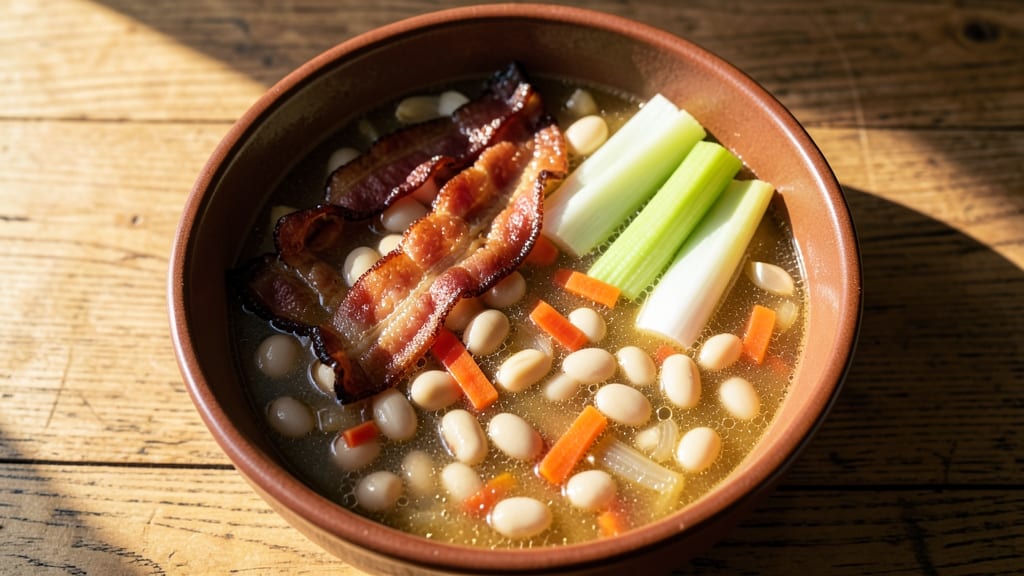
This bean and bacon soup recipe with canned beans transforms pantry staples into a deeply satisfying bowl of smoky, hearty comfort. The secret lies in crispy bacon that adds rich crunch, while canned beans deliver that essential meaty texture without hours of soaking.
I developed this recipe during a particularly busy week when I needed a meal that was both nourishing and quick—30 minutes from start to finish, with minimal prep.
The beauty of using canned beans is their convenience without sacrificing depth of flavor. The bacon renders its fat into the pot, creating a flavorful base that caramelizes slightly, while aromatics like onions and garlic build layers of warmth.
A splash of vinegar brightens the broth, balancing the richness of the bacon and the earthiness of the beans. This soup is the kind that tastes even better the next day as flavors meld together.
What you'll end up with is a hearty, smoky soup where each spoonful delivers crispy bacon bits, tender beans, and a broth so flavorful it disappears quickly. The texture contrast—creamy broth, tender beans, and crunchy bacon—makes it irresistibly satisfying. It's the perfect balance of convenience and restaurant-quality comfort food.
Serve this soup with crusty bread for dipping or a sprinkle of fresh parsley for brightness. The leftovers keep beautifully in the fridge for up to 4 days, making it ideal for meal prep. Here's how to make it—simple, foolproof, and packed with flavor.
Ingredients for bean and bacon soup recipe with canned beans
Pantry staples meet smoky bacon magic for this quick, hearty soup.
| Ingredient | Amount | Notes |
|---|---|---|
| Thick-Cut Bacon 🥓 | 6 oz | Thick-cut for crispiness |
| Yellow Onion 🧅 | 1 whole | Diced into small pieces |
| Garlic Cloves 🧄 | 3 cloves | Minced for aromatic base |
| Canned White Beans 🌾 | 2 cups | Drained and rinsed well |
| Carrot 🥕 | 1 whole | Diced into small cubes |
| Celery Stalks 🥬 | 2 whole | Diced into small pieces |
| Chicken Broth 💧 | 4 cups | Low-sodium preferred |
| Tomato Paste 🍅 | 2 tbsp | For rich depth of flavor |
| Apple Cider Vinegar 🍎 | 1 tbsp | Brightens the broth |
| Dried Thyme 🌿 | 1 tsp | Or 1 tbsp fresh thyme |
| Bay Leaves 🌿 | 2 whole | For subtle earthy flavor |
| Salt 🧂 | 1 tsp | Adjust to taste |
| Black Pepper 🌶️ | ½ tsp | Freshly ground preferred |
| Fresh Parsley 🌿 | ¼ cup | Chopped for garnish |
The bacon is non-negotiable here—thick-cut from Oscar Mayer or Costco gives the best crunch. Look for the kind that's thicker than 1/4 inch—it renders slowly and stays crispy. If you're feeling fancy, grab some applewood-smoked bacon at Whole Foods. The canned beans? Great Northern or cannellini work perfectly, but any white bean will do. Just make sure to drain and rinse them well—no one likes a watery soup. The broth matters too—low-sodium so you can control the seasoning.
No chicken broth? Vegetable broth with a splash of Worcestershire sauce gets you close. Fresh thyme isn't essential, but if you've got it, double the amount—it adds a lovely herbal note. The tomato paste can be swapped for 1/4 cup crushed tomatoes if you're in a pinch. For extra richness, stir in 1 tbsp of nutritional yeast at the end. The carrots and celery can be swapped for frozen mixed vegetables if you're short on time, but fresh has better texture. And if you're worried about the vinegar making the soup too tangy, reduce it to 1 tsp—you can always add more later.
This soup tastes even better the next day—3-4 days in the fridge, honestly. The bacon stays crispy if you store it in a sealed container with a paper towel underneath to absorb moisture. For freezing, portion it into 2-cup servings and freeze for up to 3 months. Just reheat on the stove with a splash of water or broth to restore the creamy texture. And if you're making a big batch, double the bacon—trust me, you won't regret it.
Why You'll Love This Recipe
- Crisps in Minutes: I swear by thick-cut bacon here—no waiting for flimsy strips to cook. Toss those slices in the pot first, and by the time you’re stirring in the beans, they’re already rendering fat like a dream. That first bite? Pure salty satisfaction.
- Garlic-Bacon Magic: Between us, the secret’s in the garlic and bacon combo. Sauté those cloves until they’re golden and fragrant, then let them mingle with the crispy bacon edges. It’s the kind of flavor that makes you want to eat it straight from the pot—no shame.
- Leftovers That Save: This soup actually improves the next day. The flavors meld, the beans soften just right, and reheating it takes two minutes. I make a double batch on Sundays so I can grab it for lunch without thinking. Zero guilt, all comfort.
- Budget-Friendly Powerhouse: Canned beans and bacon? That’s my wallet’s best friend. A single can of beans and a pack of bacon stretch to feed four for under $8. Honestly, it’s the kind of meal that makes grocery day feel like a win. Plus, the carrot adds just enough sweetness to keep it interesting.
Step-by-step instructions for bean and bacon soup with canned beans
Here's how to build a rich, smoky soup where crispy bacon meets tender beans in a savory broth.
Cook the Bacon Until Crispy
Cut the 6 oz thick-cut bacon into ½-inch pieces and place them in a large Dutch oven over medium heat. Let them render slowly without stirring for the first 5 minutes—this allows the fat to pool and create that signature smoky crunch. You'll know it's ready when the edges turn deep golden brown and the fat shimmers but doesn't smoke.
Use a slotted spoon to remove the bacon and set it aside on a paper towel-lined plate. Leave the rendered fat in the pot—this is where all the flavor lives. If you're worried about excess fat, you can drain off all but 2 tablespoons after cooking, but I like to keep it for that rich mouthfeel. The bacon should be crisp enough to hold its shape when you press it gently with tongs.
Sauté the Vegetables Until Soft
In the same Dutch oven, add the diced 1 whole yellow onion, diced 1 whole carrot, and diced 2 whole celery stalks. Cook over medium heat for 8-10 minutes, stirring occasionally, until the vegetables soften and the onion becomes translucent. You want them to caramelize slightly at the edges—that's where the sweetness comes from.
Add the minced 3 cloves garlic and cook for another 30 seconds until fragrant. Here's the thing—garlic burns fast, so keep an eye on it. If it starts to darken, remove the pot from heat for 10 seconds to let it cool slightly before continuing. The goal is aromatic, not bitter. Stir in the 2 tbsp tomato paste and cook for 1 minute to deepen the flavor.
Build the Flavor Base
Pour in the 4 cups chicken broth, scraping up any browned bits from the bottom of the pot with a wooden spoon. Add the 1 tbsp apple cider vinegar, 1 tsp dried thyme, 2 whole bay leaves, 1 tsp salt, and 0.5 tsp black pepper. Bring the mixture to a gentle boil over high heat, then reduce the heat to medium-low and let it simmer uncovered for 15 minutes.
This step is where the magic happens—the flavors meld and the broth develops depth. You'll notice the aroma intensify as the thyme and bay leaves infuse the liquid. If the soup reduces too much during this time, add a splash of water to maintain the proper consistency. The broth should be rich but not syrupy at this stage.
Add Beans and Finish Cooking
Add the drained 2 cups canned white beans to the simmering broth. Stir gently and return to a simmer for 10 minutes, allowing the beans to absorb some of the flavorful liquid. The beans should be heated through but still hold their shape—overcooking will make them mushy. Taste the soup and adjust the seasoning if needed, adding more salt or pepper as necessary.
Here's a pro tip: If you want extra richness, stir in the crispy bacon you set aside earlier. The contrast between the tender beans and crispy bacon is what makes this soup so satisfying. The bacon will soften slightly but still maintain that delightful crunch when you take a bite. If you prefer it extra crispy, add it back in just before serving.
Serve with Fresh Parsley
Remove the 2 whole bay leaves and discard them. Ladle the soup into bowls and garnish each serving with 1 tablespoon chopped fresh parsley from the 0.25 cup you've prepared. The parsley adds a bright, fresh finish that cuts through the richness of the bacon and beans. Serve immediately while the bacon is still crispy and the broth is hot.
This soup tastes even better the next day as the flavors continue to develop, but the bacon will lose its crunch if left too long. For that reason, I like to make a fresh batch and enjoy it while it's at its peak. Pair it with crusty bread to soak up every last drop of that smoky, savory broth.
Pro Tips For Making Bean And Bacon Soup Recipe With Canned Beans
- CRISP THE BACON LOW: Thick-cut bacon needs patience—cook it slow and steady at 300°F (150°C) until the edges are glassy and the fat renders just enough to coat the pan. I used to rush it, and the bacon turned chewy. Trust me, the soup will taste richer if you let that fat drip out properly.
- CHOP ONIONS UNIFORM: Slice the yellow onion into even ¼-inch pieces so they soften at the same rate as the carrot. Uneven chunks mean some parts stay crunchy while others turn mushy. (Yes, it’s tedious, but your soup will be smoother.)
- DRAIN BEANS DRY: Rinse the canned beans, then shake them in a colander until they’re completely dry—no liquid clinging to them. Wet beans dilute the soup and make it watery. I learned this after making a batch that tasted more like broth than hearty stew.
- SAUTE GARLIC IN FAT: Don’t skip frying the garlic in the bacon fat—it adds depth. Cook the minced cloves for 30 seconds until fragrant but not browned. (Burnt garlic tastes bitter, and nobody wants that.) This step makes a real difference in flavor.
Common mistakes when making this dish
Skipping the Bacon Crisp
One of the biggest mistakes is rushing the bacon cooking process. If you stir too frequently or cook it on high heat, the bacon will steam instead of crisp up. I learned this the hard way—my first attempt resulted in greasy, limp bacon that dissolved into the soup.
Let those ½-inch bacon pieces render slowly over medium heat for at least 10 minutes without stirring. The fat needs time to pool and create that signature smoky crunch. 🥓
Overcooking the Beans
Canned beans are a game-changer for convenience, but they can turn mushy if simmered too long. I once left my soup on the stove for 30 minutes while I answered emails, and the beans lost all their texture.
The ideal time is 10 minutes of simmering after adding them to the broth. If you're worried about undercooking, taste them early—you want them heated through but still holding their shape. For extra protection, use Great Northern beans; they hold up better than cannellini when reheated.
Ignoring the Vinegar
The 1 tbsp apple cider vinegar might seem like an afterthought, but it's what brightens the entire soup. I've made this recipe without it, and the broth tasted flat. The acidity balances the richness of the bacon and beans, cutting through the fat.
If you're new to vinegar in soups, start with 1 tsp and adjust to taste. For a tangier finish, add ½ tsp lemon juice at the end.
Using High-Sodium Broth
Store-bought chicken broth can be packed with sodium, which can make your soup taste bland if you don't adjust. I always use low-sodium broth and compensate with extra salt at the end. If you're using regular broth, reduce the salt to ½ tsp and taste as you go.
Another trick? Add 1 tsp Worcestershire sauce to the broth—it adds depth without extra salt. The goal is a well-seasoned soup, not a salty one.
Not Tasting as You Go
Seasoning soup is all about layers, and the only way to get it right is to taste frequently. I've made the mistake of adding all the salt at the beginning, only to realize it needed more later.
Taste the broth after simmering the aromatics, again after adding the beans, and once more before serving. Adjust gradually—it's easier to add salt than to fix an overly salty soup. A pinch of black pepper or a splash of vinegar can often rescue an underseasoned pot.
Forgetting the Bay Leaves
Bay leaves might seem optional, but they add a subtle earthy depth that's hard to replicate. I once skipped them because I didn't have any, and the soup lacked complexity. If you're using dried thyme, the bay leaves are non-negotiable—they work together to create a well-rounded flavor. Just
Nutrition facts
Frequently asked questions
Can I substitute fresh beans for canned in this recipe?
Fresh beans require soaking (8-12 hours) and longer cooking time (1-1.5 hours), which changes the texture. For convenience, stick with canned beans—they're pre-cooked and ready to use. If you must use fresh, add them 20 minutes before serving to avoid mushiness.
How can I make this soup vegetarian?
Swap bacon for smoked paprika (1 tsp) and vegetable broth, then add ½ cup mushrooms (sautéed with onions) for umami. Use 1 tbsp soy sauce instead of Worcestershire for depth. The vinegar and tomato paste will still brighten the broth beautifully.
Why does my soup taste bland after reheating?
Broth loses intensity when cooled. Reheat gently over low heat and add 1 tsp apple cider vinegar or a pinch of smoked paprika to revive flavors. For extra richness, stir in 1 tbsp bacon fat (saved from cooking) or a splash of Worcestershire sauce.
Can I make this soup in a slow cooker?
Yes! Brown bacon first, then transfer everything to the slow cooker. Cook on low for 6-7 hours or high for 3-4 hours. The beans will soften more, so add them only in the last 1-2 hours of cooking. Skip the bay leaves—they can turn bitter.
What's the best bread to serve with this?
Crusty sourdough or a sturdy baguette work perfectly—their chewy texture soaks up the rich broth. For extra indulgence, toast slices and rub with garlic. Avoid soft breads like brioche, which will turn soggy.