
Soups & Stews
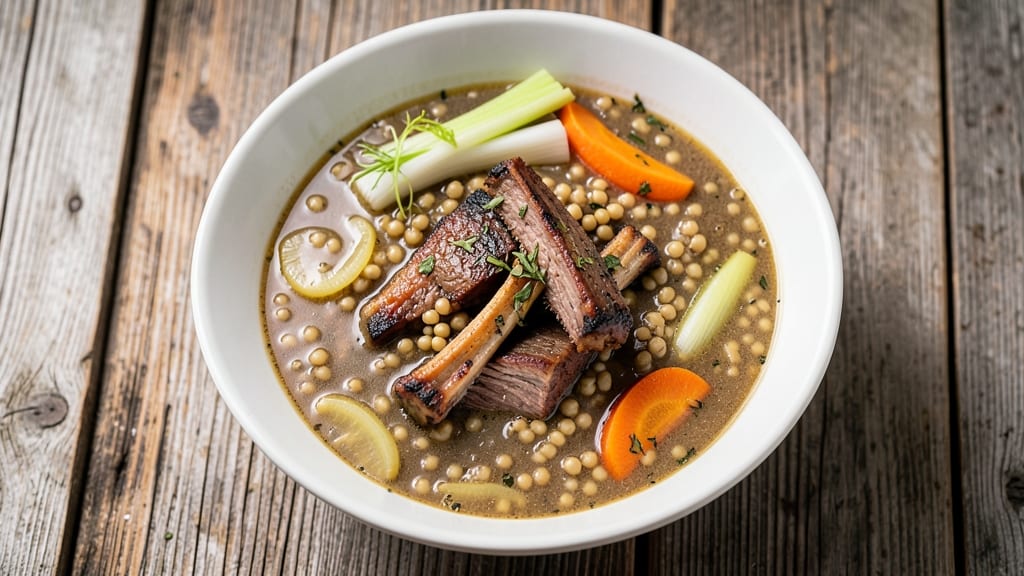
Transforming leftover prime rib into beef barley soup is the ultimate way to elevate simple ingredients into a deeply satisfying meal.
The rich, savory depth of the prime rib infuses the broth with unmatched flavor, while barley and vegetables create a hearty, comforting texture that feels like a hug in a bowl. This recipe turns leftovers into a showstopper without requiring extra effort—just time and patience to let flavors meld together.
The secret lies in simmering the prime rib bones to extract every last bit of collagen and marrow, creating a broth so rich it practically melts in your mouth.
Barley soaks up the flavor while softening just enough to add a pleasant chew, and vegetables like carrots and celery round out the dish with natural sweetness and earthiness. Every spoonful delivers layers of umami, making this soup both nourishing and indulgent.
What you'll end up with is a restaurant-quality soup that's perfect for chilly evenings or when you want to stretch a special cut of meat into multiple meals. The technique is straightforward—no fancy skills required—but the result is a deeply flavorful dish that tastes like it simmered all day.
This is comfort food at its finest, where leftovers become the star of the show.
Serve with crusty bread to soak up every last drop of that velvety broth, or pair it with a simple green salad for balance. The beauty of this recipe is its versatility—it works as a main dish for dinner or a light lunch when reheated the next day.
Let's get started on creating this savory masterpiece.
Ingredients for beef barley soup recipe with leftover prime rib
Rich prime rib bones and hearty barley transform leftovers into restaurant-quality beef barley soup.
| Ingredient | Amount | Notes |
|---|---|---|
| Leftover Prime Rib Bones 🥩 | 2 lb | With attached meat, broken into pieces |
| Pearl Barley 🌾 | 1 cup | Rinsed before cooking |
| Carrots 🥕 | 4 medium | Peeled and cut into chunks |
| Yellow Onion 🧅 | 1 whole | Diced, medium size |
| Celery Stalks 🧅 | 4 whole | Trimmed and cut into pieces |
| Garlic Cloves 🧄 | 4 cloves | Peeled and smashed |
| Tomato Paste 🍅 | 2 tbsp | High-quality, no sugar added |
| Dry Red Wine 🍷 | 1 cup | Bold variety like Cabernet |
| Beef Broth 💧 | 6 cups | Low-sodium preferred |
| Fresh Thyme 🌿 | 2 sprigs | Or 1 tsp dried thyme |
| Fresh Parsley 🌿 | ¼ cup | Chopped for garnish |
| Bay Leaves 🍃 | 2 whole | Removed before serving |
| Olive Oil 🫒 | 2 tbsp | Extra-virgin preferred |
| Salt 🧂 | 1 ½ tsp | Kosher or sea salt |
| Black Peppercorns 🌶️ | 1 tsp | Freshly cracked |
The prime rib bones are the soul of this soup—look for ones with good marrow and attached meat. Costco or Whole Foods often have high-quality cuts, but any leftover prime rib bones work. If you're buying fresh, ask the butcher to save the bones for you after carving. The pearl barley should be rinsed thoroughly before cooking to remove any dirt or debris. For vegetables, I prefer organic carrots and celery—they're sweeter and more flavorful, but conventional works too. Fresh thyme and parsley make all the difference; dried spices can't replicate their brightness.
No red wine? Substitute with extra beef broth—just add a splash of balsamic vinegar for depth. Running short on thyme? Dried thyme at one-third the amount works in a pinch. The tomato paste can be swapped for 1 cup crushed tomatoes if you prefer. For the barley, if you can't find pearl barley, wild rice or brown rice add a nice texture variation. The olive oil matters—use something with good flavor, not the cheap stuff. And if you're using pre-made broth, opt for low-sodium versions to control the seasoning better.
This soup tastes even better the next day as flavors meld together. Store leftovers in the fridge for up to 5 days or freeze for 3 months. For freezing, cool the soup completely first, then portion into airtight containers. The barley thickens when reheated, so add a splash of broth if it's too thick when serving. I always make a big batch—it reheats beautifully for lunches all week. The bones can be roasted first for 15 minutes at 400°F to deepen their flavor before simmering.
Why You'll Love This Recipe
- Here’s what sold me: the barley soaks up the marrow from the bones while the carrots and celery caramelize just enough to add natural sweetness. That first spoonful? Chef’s kiss—like a hug in a bowl, but with actual flavor.
- I’ll be real: pearl barley is cheap, and those bones? Free if you’ve already roasted prime rib. A big pot feeds four for under $10, and the leftovers? Even better the next day. My wallet and my taste buds thank me.
Step-by-step instructions for beef barley soup with leftover prime rib
Transform prime rib bones into a rich, hearty soup with deep umami flavor and satisfying texture.
Sear the Prime Rib Bones and Sauté the Vegetables
Heat the 2 tablespoons olive oil in a large Dutch oven over medium-high heat. Add the 2 lb leftover prime rib bones and sear for 3-4 minutes per side until deeply browned. This step develops rich flavor through the Maillard reaction.
Remove the bones and set aside. In the same pot, add 1 whole yellow onion and 4 whole celery stalks, cutting them into ½-inch pieces as you go. Cook for 5 minutes until softened. Add 4 medium carrots, also cut into ½-inch chunks, and cook for another 3 minutes until slightly tender. The vegetables should release their natural juices and begin to caramelize slightly.
Build the Flavor Base with Wine, Tomato, and Aromatics
Stir in the 2 tablespoons tomato paste and cook for 1 minute to toast its flavors. Pour in the 1 cup dry red wine, scraping up any browned bits from the bottom of the pot. Let it simmer for 3 minutes until reduced by half.
Add the 4 cloves smashed garlic and cook for 30 seconds until fragrant. Sprinkle in the 1.5 teaspoons salt and 1 teaspoon black peppercorns, then add the 2 sprigs fresh thyme and 2 whole bay leaves. The aromatics will infuse the soup with complex layers of flavor as it simmers.
Simmer the Soup with Barley and Broth
Pour in the 6 cups beef broth and bring to a gentle boil. Stir in the 1 cup rinsed pearl barley and return to a simmer. The barley should be fully submerged—if not, add a splash of water. Reduce heat to low and let it cook uncovered for 45 minutes, stirring occasionally.
After 45 minutes, the barley should be tender but still hold its shape. If it's not quite done, continue simmering for another 10-15 minutes. The soup should have a rich, deep color and a fragrant aroma that fills your kitchen. The prime rib bones will continue to infuse flavor into the broth as they simmer.
Finish and Serve with Fresh Herbs
Remove the prime rib bones and discard them. If you want to strain the soup for a smoother texture, use a fine-mesh sieve. For a heartier soup, leave the vegetables in place. Stir in the ¼ cup chopped fresh parsley just before serving to brighten the flavors.
Taste and adjust seasoning if needed—this soup should be rich but balanced, with a deep umami flavor from the prime rib bones and a satisfying chew from the barley. Serve immediately with crusty bread to soak up every last drop of the savory broth.
Pro Tips For Making Beef Barley Soup Recipe With Leftover Prime Rib
- CRACK THE BONES FIRST: Leftover prime rib bones are still rich with marrow—smash the ends with a hammer or meat mallet before simmering. This releases flavor faster than waiting for slow extraction, and you’ll taste the difference within 20 minutes instead of an hour.
- SWEAT THE AROMATICS LOW: Onion, celery, and carrots should soften for 8–10 minutes in a dry pot before adding liquid. Too much heat and they’ll burn; too little and they’ll steam into mush. Aim for a deep golden color—this builds the soup’s foundation.
- SKIP THE BARLEY SOAK: Pearl barley doesn’t need pre-soaking—it just needs patience. Toss it in cold broth, then bring to a boil for 2 minutes to soften the outer layer. After that, simmer uncovered; otherwise, it’ll turn to glue.
- SAVE THE BROTH: Strain the soup through a fine-mesh sieve, then press the solids with a wooden spoon. You’ll recover 2–3 extra cups of flavorful liquid—enough to make the broth richer without adding water.
Pro cooking tips for great beef barley soup recipe with leftover prime rib
Prime Rib Bone Prep
Before starting, roast your prime rib bones at 400°F for 15 minutes to deepen their flavor through caramelization. This step transforms ordinary bones into flavor bombs. I like to place them on a baking sheet and turn occasionally for even browning.
The extra effort pays off with a broth that practically sings with richness. 🔥
Low-and-Slow Simmering
Maintain a gentle simmer at 180-190°F throughout cooking—this is where magic happens. The collagen breaks down slowly, creating a velvety texture. I use a meat thermometer to monitor temperature, adjusting heat as needed. Covering the pot helps retain moisture and intensify flavors while preventing evaporation.
Barley Timing Trick
Add your barley only after the soup has simmered for 30 minutes with the bones. This ensures the grain absorbs maximum flavor from the deeply infused broth.
Pearl barley needs about 45-50 minutes total cooking time—check for tenderness by tasting a piece. Overcooked barley becomes mushy, so keep an eye on it.
Wine Reduction Secret
Don't skip reducing the wine by half—this concentrates its flavors dramatically. I use a bold Cabernet Sauvignon for depth, but any dry red works. The alcohol burns off during reduction, leaving behind rich fruit and tannin notes that elevate the entire soup.
Add the wine after searing the vegetables for maximum impact.
Broth Boost Technique
For an extra-rich broth, add 1 cup cold water after removing the bones and before straining. The cold water helps extract more gelatin from the bones, creating a silkier texture. Let it sit for 10 minutes before straining—this simple step makes a noticeable difference in body and richness.
Fresh Herb Finish
Always add fresh parsley and thyme at the very end—this preserves their bright, vibrant flavors. The heat from simmering dulls dried herbs, so fresh is non-negotiable. I like to chop parsley finely and sprinkle it generously over each serving.
A final pinch of kosher salt right before serving ensures perfect seasoning balance. ✨
Nutrition facts
Frequently asked questions
Can I use regular barley instead of pearl barley?
Pearl barley is ideal for this recipe because it holds its shape and absorbs flavor beautifully. However, you can substitute with wild rice blend or brown rice for a different texture. Just note that cooking times will vary—wild rice needs about 45 minutes while brown rice cooks in 30-35 minutes. The soup will still be delicious, just with a slightly different mouthfeel.
How do I make the soup richer without extra ingredients?
Roast the prime rib bones at 400°F for 15 minutes before simmering to deepen their flavor. For extra richness, add 1 cup cold water after removing the bones and let it sit for 10 minutes before straining—this extracts more gelatin. Also, reduce the wine by half to concentrate its flavors. These simple tweaks create a velvety broth without adding anything new.
What's the best way to store and reheat leftovers?
Store in an airtight container in the fridge for up to 5 days or freeze for 3 months. To reheat, warm over medium-low heat on the stovetop, stirring occasionally. If the barley thickens too much, add a splash of broth or water. The soup actually tastes better the next day as flavors meld together—just check seasoning before serving.
Can I make this soup in a slow cooker?
Yes! Sear the bones and vegetables first, then transfer everything to your slow cooker. Add the broth, wine, and barley, then cook on low for 6-8 hours or high for 4-5 hours. The slow cooker's gentle heat makes the broth even more tender and flavorful. Just check the barley's doneness at the end—it may need a few extra minutes if it didn't absorb enough liquid.
Why did my barley turn mushy?
Overcooking is the most common cause—pearl barley should be tender but still hold its shape. For this recipe, cook it for 45-50 minutes total. If using a slow cooker, check after 4 hours and test for doneness. For extra insurance, add the barley only after the soup has simmered for 30 minutes with the bones to maximize flavor absorption.