
Sauces & Condiments
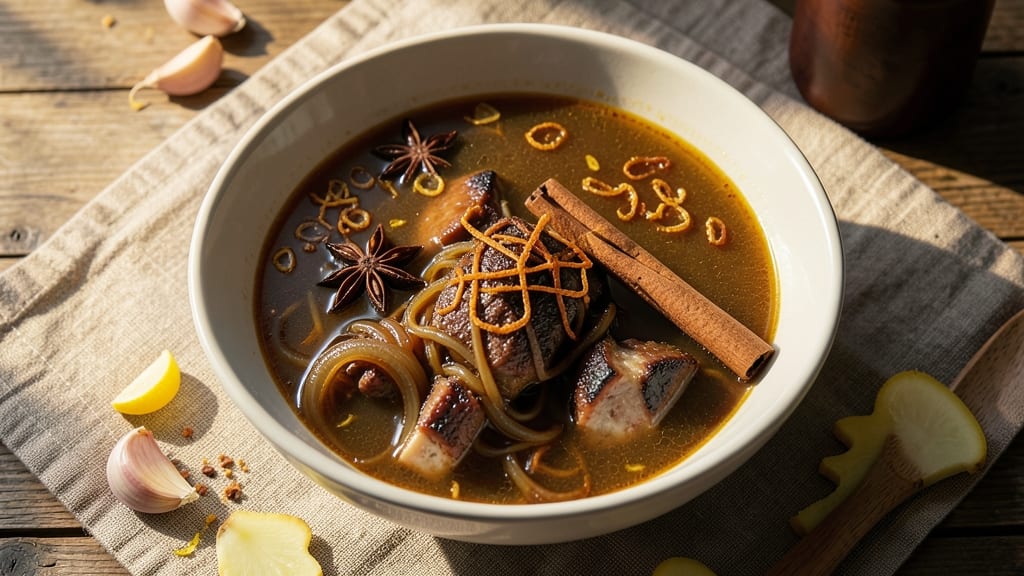
This beef-flavored pho soup base transforms simple pantry staples into a deep umami-rich broth that forms the heart of any pho bowl. The secret lies in slow-simmering beef bones with aromatic spices—star anise, cinnamon, and ginger—that infuse the liquid with complex, savory depth over 4-6 hours.
Unlike store-bought versions, this homemade base develops layers of flavor impossible to replicate, making every spoonful taste like a Vietnamese street stall.
The process is straightforward but requires patience: roasting the bones first deepens their flavor, while the spices bloom in hot oil before simmering. You'll strain out the solids, leaving behind a golden, aromatic liquid that's the foundation for any pho variation—beef, chicken, or even vegetarian.
This concentrated base keeps well in the fridge for up to 5 days or freezes for months, so you can always have restaurant-quality flavor at home.
What makes this recipe stand out is its versatility—use it as-is for classic beef pho or dilute with water for lighter soups. The slow simmering extracts collagen from the bones, creating a naturally thick, velvety texture without added cornstarch.
Whether you're preparing for a crowd or meal prepping for the week, this broth delivers authentic depth with minimal effort once you've mastered the technique.
The key to success is low-and-slow cooking—never rush the simmering, as this is where the magic happens. The result is a broth so flavorful it transforms even simple ingredients into a memorable meal.
Perfect for weeknight dinners or special occasions, this recipe proves that homemade can truly outshine the store-bought versions.
Ingredients for beef flavored pho soup base
Pantry staples and aromatic spices transform simple beef bones into restaurant-quality pho broth.
| Ingredient | Amount | Notes |
|---|---|---|
| Beef Bones 🦴 | 4 lb | Marrow and knuckle bones preferred |
| Yellow Onions 🧅 | 2 whole | Chopped into 1-inch pieces |
| Garlic Cloves 🧄 | 8 cloves | Smashed for deeper flavor |
| Fresh Ginger 🌿 | ½ cup | Grated, skin on preferred |
| Star Anise Pods 🌟 | 4 whole | Whole pods for easy removal |
| Cinnamon Sticks 🍃 | 2 whole | 1-inch pieces for even infusion |
| Cardamom Pods 🌿 | 4 whole | Lightly crushed to release oils |
| Cloves 🌶️ | 6 whole | Whole for easy straining |
| Fish Sauce 🍶 | 2 tbsp | Red Boat preferred for quality |
| Soy Sauce 🍶 | 2 tbsp | Light soy sauce preferred |
| Sugar 🍚 | 1 tbsp | White granulated preferred |
| Black Peppercorns 🌶️ | 1 tsp | Whole, lightly crushed |
| Vegetable Oil 🫒 | ½ cup | High smoke point preferred |
| Water 💧 | 8 cups | Filtered preferred for clarity |
The beef bones are the foundation—marrow and knuckle bones deliver the richest flavor and gelatinous texture. Most grocery stores carry them in the meat or butcher section, often labeled as 'beef soup bones.' For best results, pat them dry before roasting to ensure even browning. If you can't find marrow bones, knuckle or neck bones work well as substitutes. Look for bones with visible marrow cavities—they're worth the extra effort at specialty butchers or Asian markets like H Mart or 99 Ranch. The spices—star anise, cinnamon, and cardamom—should be whole and aromatic; Penzeys Spices or bulk bins at Whole Foods offer high-quality options.
No star anise? A single 1-inch piece of fresh nutmeg adds a similar depth, though the flavor will differ slightly. Running out of cardamom? A pinch of allspice bridges the gap, though it lacks the floral notes. The fish sauce is non-negotiable for authentic umami—Red Boat is the gold standard, but Three Crabs is a solid backup. For a vegetarian version, mushroom powder or soy sauce can mimic some depth, though the texture will differ. The ginger should be freshly grated (never pre-grated from a jar)—its sharpness cuts through the richness of the broth. If you're short on time, microwave the whole knob for 30 seconds to soften before grating.
This broth develops flavor over time—never rush the simmer. The roasted bones can be refrigerated for up to 3 days or frozen for 3 months before use. Once made, the concentrated broth keeps 5 days in the fridge or 6 months frozen in airtight containers. For easy storage, portion into ice cube trays—each cube equals about 1 oz of broth, perfect for adding to soups or sauces later. The spices can be comminuted in a spice grinder and stored in a jar for up to 6 months, though whole pods infuse better. Always skim fat from the surface before storing to extend shelf life.
Why You'll Love This Recipe
- One-Pot Magic: Honestly, I love that this just simmers—no stirring every five minutes, no fancy gadgets. Toss the bones, onions, garlic, and ginger in a pot, add water, and let it do its thing while you chop veggies or fold laundry. The star anise? It infuses that deep, aromatic warmth without any fuss.
- Umami Bomb: Between us, the beef bones alone make this taste like a hug in a bowl. But add the charred onion and garlic—that crispy edge with the creamy, slow-cooked richness? It’s the kind of flavor that lingers, making you want to sip it all day. The star anise gives it this subtle, spicy-sweet kick that’s secretly addictive.
- Leftovers That Work: I make a big batch on Sundays, and it lasts me all week. Freeze half, and boom—you’ve got a quick weeknight dinner. Reheat it, add rice noodles and fresh herbs, and suddenly you’ve got a restaurant-worthy bowl without the stress. (Yes, even on a Tuesday night.)
- Budget-Friendly Gold: Beef bones are cheap, and this recipe stretches them into so much flavor. No need for fancy cuts or pre-made broth—just a handful of ingredients that turn into something deeply satisfying. I’ll be real: my wallet thanks me every time I use this instead of store-bought.
Step-by-step instructions for beef flavored pho soup base
This method extracts maximum umami from bones while balancing aromatic spices for authentic depth.
Char the Aromatics for Complexity
Heat the vegetable oil in a large stockpot over medium-high heat until shimmering. Add the chopped yellow onions and cook for 8-10 minutes until deeply golden brown and caramelized—this develops rich sweetness. Remove with a slotted spoon and set aside.
In the same pot, add the smashed garlic cloves and grated fresh ginger. Cook for 2-3 minutes until fragrant and just beginning to color. Immediately transfer to a bowl and set aside with the onions. This quick char prevents bitterness while building aromatic depth.
Sear the Beef Bones for Richness
Return the pot to medium heat and add the beef bones in a single layer. Let them sear undisturbed for 5-7 minutes until deeply browned on all sides. This Maillard reaction creates the foundation for umami development.
Add the whole spices—star anise pods, cinnamon sticks, cardamom pods, and whole cloves—directly to the pot. Stir to coat the bones with spices, ensuring even distribution. The spices will infuse their oils into the bones during the long cooking process.
Simmer the Bones for Deep Extraction
Pour in the 8 cups of water, bringing the mixture to a gentle boil. Immediately reduce heat to maintain a barely simmering state—this prevents cloudiness and ensures slow extraction. Skim off any foam that rises to the surface during the first 15 minutes of cooking.
Add the reserved onions, garlic, and ginger back to the pot. Stir in the fish sauce, soy sauce, sugar, and whole black peppercorns. The sugar helps balance the acidity of the fish sauce while the peppercorns add subtle heat. Simmer uncovered for 3-4 hours, maintaining the gentle simmer and occasionally skimming any impurities.
Strain and Finish the Broth
After simmering, strain the broth through a fine-mesh sieve or cheesecloth-lined colander into a clean pot. Discard the bones and spices. Return the strained broth to the pot and bring to a simmer over medium heat.
Taste and adjust seasoning—add a touch more fish sauce for saltiness or sugar if needed. The broth should be deeply aromatic with a rich, umami-forward flavor. For best results, use immediately or refrigerate for up to 5 days or freeze for 3 months. The flavors will continue to develop over time.
Pro Tips For Making Beef Flavored Pho Soup Base
- Blacken the Bones First: Toss raw beef bones in a dry pot over medium-high heat until they’re deep brown in spots—this isn’t burning, it’s caramelizing the marrow. I used to skip this, and my broth always tasted flat until I learned the hard way that a quick sear locks in flavor before the simmer.
- Char the Onions Low: Once onions turn golden, drop the heat to medium-low and let them caramelize for 10–15 minutes. Rushing this step means bitter, burnt bits instead of sweet depth—your broth will thank you later, even if you’re impatient like me.
- Smash the Ginger: Peel and smash fresh ginger with the flat side of a knife before adding it to the pot. This releases more oils and aroma than thin slices, and it won’t clump into an unusable pulp during the long simmer.
- Toast Spices Separately: Dry-toast star anise and whole spices in a separate pan for 30 seconds until fragrant—this prevents them from burning in the broth. My grandmother swore by this, and she was right: it adds a warm, nutty complexity without bitterness.
Regional styles of these flavors
Northern Vietnamese Style
In Hanoi, the pho broth is lighter and clearer, emphasizing the delicate balance of spices. The key difference is using more ginger—up to 1 inch thick slices—and reducing the soy sauce to 1 tablespoon to avoid heaviness.
I like adding a splash of Shaoxing wine (about 1 tablespoon) during the final simmer for a subtle floral note. This version pairs beautifully with thinly sliced eye of round beef and fresh herbs like Thai basil and cilantro. 🌿
Central Vietnamese Adaptation
The central region, particularly Hue, creates a richer, slightly sweeter broth by adding 1 small piece of tangerine peel (about 1-inch square) during the simmer. This brings a bright citrus aroma that cuts through the meatiness.
I also increase the sugar to 2 tablespoons and add 1 teaspoon of rock sugar (if available) for a caramelized depth. The broth is often served with shredded chicken and a side of pickled vegetables for tangy contrast.
Southern Vietnamese Twist
In Ho Chi Minh City, the broth is bolder and slightly spicier, influenced by regional preferences. Add 1-2 slices of fresh turmeric (about ½ inch thick) along with the ginger for earthy warmth. I also include 1 small piece of galangal (about 1-inch cube) for a piney kick.
The fish sauce is increased to 3 tablespoons, and 1 teaspoon of chili oil is stirred in at the end for a subtle heat. This version works perfectly with thick-cut beef slices and a generous drizzle of hoisin sauce on top.
Modern Fusion Approach
For a contemporary take, I blend traditional techniques with global flavors. Add 1 teaspoon of smoked paprika during the bone searing for a smoky depth, and finish with a pinch of sumac for a tangy brightness.
This fusion style also incorporates 1 cup of coconut milk (added in the last 30 minutes of simmering) for a creamy, slightly tropical note. It pairs wonderfully with grilled lemongrass beef and a sprinkle of toasted sesame seeds for texture. 🔥
Vegetarian Pho Base
For a plant-based version, replace the beef bones with 4 cups of dried shiitake mushrooms (soaked and chopped) and 2 cups of kombu seaweed (simmered first). Use 3 tablespoons of soy sauce, 1 tablespoon of mushroom powder, and 1 teaspoon of miso paste for umami.
The spices remain the same, but I reduce the simmer time to 2 hours to avoid bitterness. This broth works beautifully with tofu, rice noodles, and bean sprouts for a lighter, yet deeply flavorful dish.
Nutrition facts
Frequently asked questions
Can I use chicken bones instead of beef bones for this pho base?
Yes, but the flavor will differ significantly. Chicken bones create a lighter, more delicate broth that works well for chicken pho, though it lacks the deep umami richness of beef. For a beef-like flavor with chicken, add an extra 1 tablespoon of fish sauce and ½ teaspoon of MSG (optional) during the final simmer. The texture will also be less gelatinous since chicken bones contain less collagen.
How do I prevent the broth from becoming cloudy during simmering?
Cloudiness usually means the broth is boiling too vigorously. Maintain a gentle simmer—small bubbles should barely break the surface. Skim off any foam that rises during the first 15 minutes, and avoid stirring vigorously. If cloudiness persists, strain the broth through a cheesecloth-lined sieve for a crystal-clear result. The key is patience and low heat!
What’s the best way to store and reheat this pho base?
Store in an airtight container in the fridge for up to 5 days or freeze for 3 months. To reheat, warm gently over low heat—never boil—to preserve its delicate flavors. For frozen broth, thaw overnight in the fridge, then reheat slowly. Avoid microwaving, as it can create a skin and dilute the aromatics. Stir occasionally for even heating.
Can I make this broth in a slow cooker or Instant Pot?
Yes, but with adjustments. For a slow cooker, sear the bones and aromatics first, then transfer everything to the pot and cook on low for 8-10 hours. For an Instant Pot, use the "Sauté" function to sear, then add liquids and cook on High Pressure for 60 minutes (natural release). The Instant Pot version will be slightly more concentrated—dilute with water if needed. Both methods work, but the stovetop simmer yields the most nuanced flavor.
Why does my pho base taste bitter? How can I fix it?
Bitterness often comes from overcooking the aromatics or using too much ginger/cloves. To fix it, add a pinch of sugar or rock sugar to balance the flavors. For prevention, remove ginger and garlic after 2-3 minutes of charring (don’t let them burn) and avoid over-simmering. If the bitterness persists, strain the broth again through a fresh cheesecloth and reduce it slightly to intensify the other flavors.