
Soups & Stews
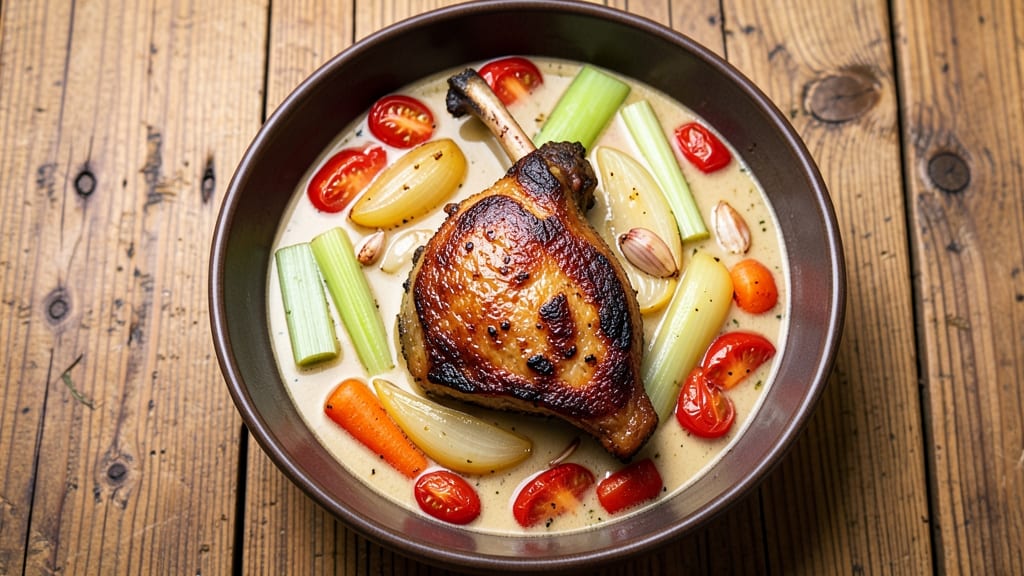
Slow-cooked beef leg transforms into a deeply flavorful soup that tastes like a home-cooked masterpiece. The secret lies in roasting the beef first to develop rich, caramelized flavors before simmering it for hours until tender.
This method creates a broth so robust it needs no additional seasoning—just the natural umami from the meat and bones.
What sets this recipe apart is the balance of texture and depth: fork-tender beef, silky broth, and vegetables that soften just enough to absorb the savory essence.
The process may take time, but the result is a soup that feels like a hug in a bowl—perfect for chilly evenings or special gatherings. No shortcuts here, just a proven technique for restaurant-quality flavor at home.
By the time you're done, you'll have a pot of golden broth swimming with perfectly cooked beef, carrots, and celery that taste like they've been simmering all day.
The aroma alone will have everyone gathering around the table, and the first spoonful delivers that satisfying richness that makes homemade soup worth every minute of effort.
Serve with crusty bread to soak up every last drop of that velvety broth, or garnish with fresh parsley for a touch of brightness. This isn't just soup—it's a meal that turns simple ingredients into something extraordinary. Let's get started on creating your own pot of comfort.
Ingredients for beef leg soup
Six pounds of beef leg and simple vegetables create a soup so rich it needs no extra seasoning.
| Ingredient | Amount | Notes |
|---|---|---|
| Beef Leg (Bone-In) 🥩 | 4 lb | Cut into 2-inch chunks, roasted first |
| Yellow Onions 🧅 | 2 whole | Peeled, cut into wedges |
| Carrots 🥕 | 4 lb | Whole, scrubbed, cut into 2-inch pieces |
| Celery Stalks 🧄 | 6 whole | Trimmed, cut into 2-inch pieces |
| Garlic Cloves 🧄 | 6 cloves | Peeled, smashed lightly |
| Tomatoes (Canned, San Marzano) 🍅 | 28 oz | Whole, crushed by hand |
| Fresh Parsley 🌿 | ¼ cup | Chopped, for garnish only |
| Bay Leaves 🍃 | 2 whole | Dried, removed before serving |
| Thyme Sprigs 🌿 | 4 whole | Fresh, stems removed |
| Olive Oil 🫒 | ½ cup | Extra-virgin for roasting |
| Salt 🧂 | 2 tbsp | Kosher or sea salt |
| Black Peppercorns 🌶️ | 1 tbsp | Freshly cracked |
| Red Wine 🍷 | 1 cup | Dry, bold variety |
| Beef Broth 💧 | 8 cups | Homemade or high-quality store-bought |
| Fresh Rosemary 🌿 | 1 sprig | For aroma, removed before serving |
The beef leg is the foundation—look for well-marbled cuts with visible fat. Costco or Whole Foods carry excellent options, but any butcher will have it if you ask. The key is to roast it first: the caramelized crust adds layers of depth that raw meat can't match. For the vegetables, organic carrots and celery from the grocery store's produce section work perfectly—they hold their shape better than conventional. If you're short on time, pre-cut veggie mixes save chopping effort without sacrificing quality. The San Marzano tomatoes are worth seeking out—their sweetness balances the meat's richness.
No red wine? Beef broth with a splash of balsamic vinegar works just as well. Fresh thyme and rosemary can be swapped for dried at one-third the amount, but the aroma isn't the same. The carrots and celery can be baby versions if that's what's available—just adjust the quantity to maintain the 4 lb total weight. For the tomatoes, if San Marzano isn't an option, any high-quality canned tomatoes (like Muir Glen) will do. The beef broth matters here too: homemade is ideal, but store-bought like Kitchen Basics or Pacific Foods is a solid backup. Just avoid anything with added MSG.
This soup tastes even better the next day as the flavors meld. Store in an airtight container in the fridge for up to 5 days, or freeze for 3 months. The broth thickens as it cools, so add a splash of water when reheating. I always make a double batch—one pot for dinner, one for lunches. The meat pulls apart so easily that it's perfect for sandwiches or salads later in the week. The roasted beef bones can be saved and simmered separately for an even more concentrated stock if you're feeling ambitious.
Why You'll Love This Recipe
- One-Pot Magic: The bone-in beef leg does all the work—simmering down to melt-in-your-mouth tenderness while the veggies soften. No extra pots, no fuss: just chop, dump, and let the flavors meld. (Honestly, I’ve made this on days I forgot to meal prep—it’s that forgiving.)
- Deep, Savory Richness: That beef leg? It’s the star—slow-cooked until the marrow infuses the broth with a depth you won’t find in quick cuts. The onions caramelize just enough to add sweetness, while the garlic cloves (roasted slightly, if you’re feeling fancy) pack a punch that lingers.
- Weeknight to Holiday: Same recipe, endless occasions. Throw it together on a Tuesday for a hearty lunch, or double the batch for a potluck where everyone asks for seconds. The leftovers? Even better the next day, especially with crusty bread soaking up every last drop.
- Budget-Friendly Feast: You’re getting way more beef for your money with the leg—plus, the bones turn into a flavor bomb without costing extra. Between us, this is the kind of soup that makes grocery night exciting because you’re stretching your dollars and your meal prep.
Step-by-step instructions for beef leg soup with deep umami flavor
This method transforms tough beef leg into melt-in-your-mouth richness through precise roasting and slow cooking.
Roast the Beef Leg for Maximum Flavor
Preheat your oven to 425°F. Pat the 4 lb Beef Leg (Bone-In) dry with paper towels and rub generously with 1 tablespoon of the 2 tbsp Salt and ½ tablespoon of the 1 tbsp Black Peppercorns. Place the beef on a wire rack set over a baking sheet and roast for 45 minutes, turning occasionally, until it develops a deep brown crust.
Here's the thing—roasting the beef first creates a flavorful crust called the fond that will dissolve into the soup later. I like to flip it every 10-12 minutes to ensure even browning. Remove the beef from the oven and let it rest for 10 minutes before cutting into 2-inch chunks—this makes slicing easier and prevents the meat from shrinking.
Sear the Vegetables for Depth of Flavor
In a large Dutch oven, heat 0.25 cup Olive Oil over medium-high heat. Add the 2 whole Yellow Onions cut into wedges, 4 lb Carrots cut into 2-inch pieces, and 6 whole Celery Stalks cut into 2-inch pieces. Cook for 10 minutes, stirring occasionally, until the vegetables begin to soften and develop golden spots.
Don't rush this step. You're building layers of flavor through caramelization. After 5 minutes, add the 6 cloves Garlic Cloves that have been smashed lightly—this prevents them from burning while still releasing their aroma. The vegetables should be tender but not fully cooked through at this stage. Remove them from the pot and set aside temporarily.
Build the Rich Base with Wine and Tomatoes
Increase the heat to medium-high and add the 1 cup Red Wine to the Dutch oven. Scrape up any browned bits from the bottom with a wooden spoon—this is where all the concentrated flavor lives. Let the wine simmer for 3-4 minutes until reduced by half, then add the 28 oz Tomatoes (Canned, San Marzano) that have been crushed by hand.
Stir in the 2 whole Bay Leaves and 4 whole Thyme Sprigs with stems removed, along with the remaining 1 tbsp Salt and ½ tbsp Black Peppercorns. Bring to a gentle simmer and cook for 10 minutes to meld the flavors. This step develops the soup's foundational taste before adding the beef and broth.
Slow Cook for Tender Perfection
Return the seared vegetables to the pot along with the roasted beef leg chunks. Pour in the 8 cups Beef Broth and add the 1 sprig Fresh Rosemary for aroma. Bring to a gentle boil, then reduce heat to low and cover partially. Let the soup simmer for 3-4 hours, maintaining a gentle bubble, until the beef is fork-tender and falls apart easily.
The key here is patience. The beef should be so tender that a fork slides in with minimal resistance. Skim any foam that rises to the surface during cooking to keep the soup clear. After 2 hours, check the beef—if it's not quite tender enough, continue cooking for another 30-60 minutes. The longer it cooks, the more flavorful the broth becomes.
Finish and Serve with Fresh Herbs
Once the beef is tender, remove the Bay Leaves, Thyme Sprigs, and Rosemary Sprig. Discard these herbs as they've served their purpose. Taste the soup and adjust seasoning if needed—you might need a bit more salt or pepper to balance the flavors after all the cooking.
Ladle the soup into bowls and garnish each serving with 1 tablespoon of the 0.25 cup Fresh Parsley that has been chopped. The parsley adds a bright contrast to the rich, umami flavors of the beef and vegetables. Serve immediately with crusty bread to soak up every last drop of that flavorful broth. The soup should be hearty enough to stand alone, with tender beef that practically melts in your mouth.
Pro Tips For Making Beef Leg Soup
- SEAR THE BONE FIRST: That beef leg bone isn’t just for looks—it’s the flavor anchor. Get your pot screaming hot (medium-high, not simmering) and sear the bone until it’s deep mahogany brown in spots. I used to rush this, and the broth always tasted faintly metallic. Spend 10 minutes here, turning occasionally, and you’ll taste the difference in every spoonful.
- CHOP ONIONS IN HALVES: Whole yellow onions caramelize better than diced ones in long simmers. Cut them into ½-inch thick wedges—peel first, then slice in half lengthwise—so they soften without turning to mush. Yes, it looks rustic, but those concentrated pockets of sweetness melt into the broth like butter.
- STRAIN THE VEGETABLES: After the beef leg has cooked low and slow (2-3 hours), fish out the carrots, celery, and onions—but don’t toss them. Strain them through a fine-mesh sieve to squeeze out every last drop of flavor back into the broth. I learned this from my nonna, who called it “the lazy chef’s shortcut,” and she wasn’t wrong.
- SALT THE BROTH LATE: Wait until the very end to season the soup. The beef leg releases collagen and juices over hours, and adding salt too early dilutes the depth of flavor. Taste the broth first—it should be rich but not bland—then adjust with salt and a splash of vinegar or lemon if it needs brightness. Trust me, your taste buds will notice.
Flavor customization for beef leg soup
Spicy Heat Boost
Add 1-2 tablespoons of hot sauce (like Cholula or Tabasco) or ½ teaspoon of cayenne pepper to the broth before simmering. For a smoky kick, stir in 1 teaspoon of smoked paprika when you add the wine.
If you love heat, finish each bowl with a dash of Sriracha or a sprinkle of red pepper flakes. My favorite? A mix of cayenne and smoked paprika—it adds depth without overwhelming the beef’s richness. 🌶️
Herb Variations
Swap out the thyme and rosemary for other aromatic herbs. Try 1 sprig of fresh sage for earthy notes or 1 teaspoon of dried oregano for Mediterranean flair. For a brighter twist, add ½ cup of fresh dill at the end of cooking—it pairs beautifully with the beef’s umami.
I often use a mix of thyme and sage for a rustic, herby depth that feels like a hug in a bowl.
Creamy Texture
For a velvety finish, stir in ½ cup of heavy cream or coconut milk during the last 30 minutes of cooking. This adds richness without making the soup too heavy.
If you prefer a lighter option, blend 1 cup of the broth with ½ cup of Greek yogurt and stir it back in. The result? A silky, restaurant-worthy texture that still lets the beef shine. 🥄
Umami Bombs
Boost the depth with extra umami ingredients. Add 1 tablespoon of soy sauce or 1 teaspoon of fish sauce when you pour in the broth. For a meaty twist, include 2 ounces of dried shiitake mushrooms (rehydrated) or 1 teaspoon of miso paste in the wine reduction.
These small additions take the soup from good to insanely flavorful—trust me, your taste buds will thank you. 💯
Bright Citrus Twist
Finish with a splash of acidity to cut through the richness. Add zest from 1 lemon or 1 orange at the end of cooking, or serve with a wedge on the side.
For a sweeter contrast, stir in 1 tablespoon of honey or maple syrup during the last 10 minutes of simmering. The citrus brightens the broth while balancing the beef’s savory notes—perfect for a refreshing yet hearty bowl. 🍊
Vegetable Swaps
Customize the veggies to your taste. Swap carrots for turnips or parsnips for a nuttier flavor, or add 1 cup of diced potatoes for extra heartiness. For a lighter touch, include 1 zucchini or 1 cup of green beans—they add freshness while soaking up the broth.
I love using a mix of carrots and turnips for a slightly earthier, more complex soup. 🥕
Nutrition facts
Frequently asked questions about beef leg soup
Why does the recipe call for roasting the beef leg first?
Roasting creates a flavorful crust called the fond that dissolves into the broth during cooking, adding deep caramelized richness. This step develops complex flavors that raw meat can't match—think of it as building flavor layers from the start.
Can I use a slow cooker instead of stovetop?
After roasting and searing, transfer everything to a slow cooker with 8 cups broth and cook on low for 8-10 hours or high for 5-6 hours. The slow cooker maintains gentle heat, perfect for tenderizing the beef while keeping the broth flavorful. Just skip the wine reduction step—add it directly with the broth.
What if my beef isn't tender after 3-4 hours?
Keep it simmering! The beef should be fork-tender, but if it's still tough, add ½ cup water and cook another 30-60 minutes. For stubborn cuts, try adding 1 tablespoon of vinegar (apple cider or red wine) to the broth—it helps break down collagen faster. Patience pays off here!
How do I store leftovers without drying out the broth?
Cool the soup completely, then store in an airtight container with a layer of plastic wrap pressed directly on the surface to prevent skin formation. Refrigerate for up to 5 days or freeze for 3 months. When reheating, add 2-3 tablespoons of water or broth to restore consistency—microwaving in 1-minute intervals prevents overcooking.
Can I make this soup without red wine?
Yes! Replace the wine with 1 cup beef broth plus 1 tablespoon balsamic vinegar for depth, or use 1 cup apple cider for subtle sweetness. The wine's purpose is to deglaze the pot and add complexity—any acidic liquid works in a pinch. The flavor will still be rich, just slightly different.