
Soups & Stews
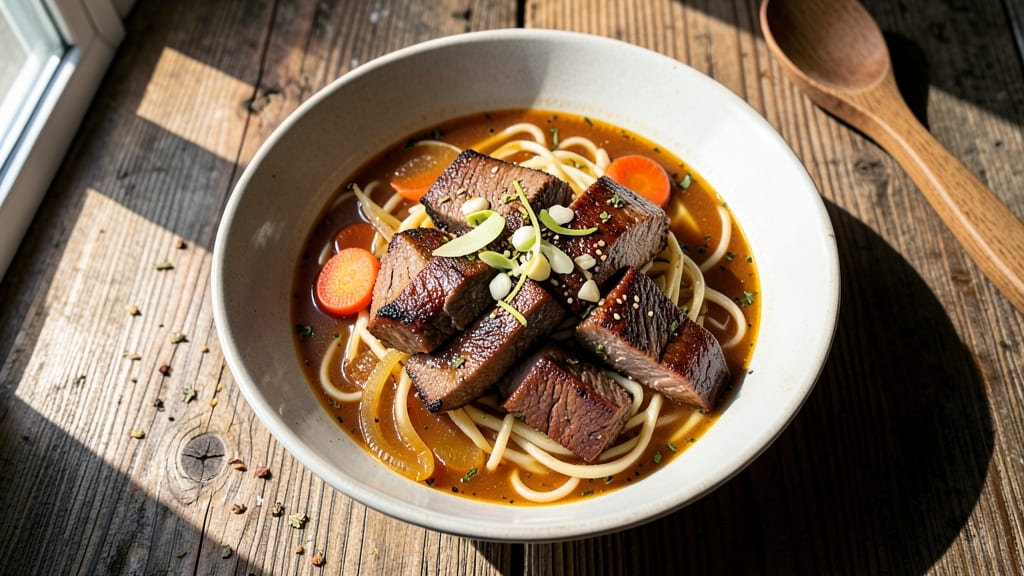
This beef noodle bowl soup recipe delivers the perfect balance of rich, savory broth and silky noodles in every spoonful. The secret lies in a deep umami broth built from slow-cooked beef and aromatic vegetables, creating a flavor foundation that transforms simple ingredients into something extraordinary.
What sets this apart is the technique of braising the beef first—this ensures tender, melt-in-your-mouth texture while infusing the broth with layers of depth.
You’ll start with a base of beef chuck, simmered low and slow until fork-tender, then combined with a blend of soy sauce, ginger, and garlic for that signature umami punch.
The noodles—typically wide egg noodles—absorb the flavorful broth beautifully, becoming silky rather than mushy. This isn’t just soup; it’s a hearty, comforting meal that brings restaurant-quality results to your kitchen.
The assembly is where the magic happens: tender beef slices layered over noodles, topped with a bright garnish of green onions and a drizzle of chili oil for heat. Serve immediately while the broth is steaming, or let it sit for 10 minutes to let the flavors meld even deeper.
Each bowl is a perfect harmony of protein, carbohydrates, and bold seasoning—ideal for a cozy weeknight dinner or meal prep for the week.
For extra richness, stir in a spoonful of sesame oil or a splash of fish sauce before serving. If you love leftovers, this soup only gets better as the flavors develop overnight.
Ready in about 90 minutes with minimal hands-on time, this recipe is your go-to for satisfying, flavor-packed comfort food.
Ingredients for beef noodle bowl soup
Fourteen ingredients for a bowl that tastes like restaurant comfort food.
| Ingredient | Amount | Notes |
|---|---|---|
| Beef Chuck Roast 🥩 | 1 ½ lb | Cut into 1-inch cubes for even cooking |
| Wide Egg Noodles 🍜 | 12 oz | Fresh or dried, uncooked |
| Yellow Onion 🧅 | 1 whole | Sliced into half-moons |
| Carrot 🥕 | 2 whole | Cut into thick matchsticks |
| Garlic Cloves 🧄 | 5 cloves | Minced for depth of flavor |
| Fresh Ginger 🌿 | 2 tbsp | Grated, about 1-inch piece |
| Soy Sauce 🍶 | ½ cup | Use high-quality, low-sodium |
| Beef Broth 💧 | 4 cups | Homemade or quality store-bought |
| Sesame Oil 🫒 | 1 tbsp | For finishing, not cooking |
| Green Onions 🧅 | 4 whole | Sliced thin for garnish |
| Chili Oil 🌶️ | 2 tbsp | Store-bought or homemade |
| Salt 🧂 | 1 ½ tsp | Kosher or sea salt preferred |
| Black Pepper 🌶️ | ½ tsp | Freshly ground for best flavor |
| Fish Sauce 🍶 | 1 tbsp | Optional for extra umami |
The beef chuck is non-negotiable here—it's the backbone of that rich, slow-cooked flavor. Costco or Whole Foods usually have it pre-cut into cubes, which saves time, but if you're buying a whole roast, ask the butcher to trim off excess fat. Look for good marbling—it's what melts into the broth and makes everything taste incredible. For the noodles, fresh egg noodles from the Asian market section give the best texture, but dried works in a pinch. Just make sure they're wide, not thin spaghetti-style—they need to hold up to the broth.
No beef broth? Chicken broth with a splash of soy sauce works, but it won't have that deep umami punch. Fresh ginger is ideal, but if you've got dried, one teaspoon is the equivalent of 2 tablespoons fresh. The fish sauce adds that restaurant-quality depth—skip it if you're avoiding it, but trust me, it's worth having. For the soy sauce, Kikkoman or Pearl River Bridge are solid choices. The green onions can be regular onions in a pinch, but the bright green color makes it look (and taste) fresh. And if you're feeling fancy, toast the sesame seeds separately for extra crunch on top.
This soup tastes even better the next day—honestly, the flavors meld overnight into something magical. Store leftovers in an airtight container in the fridge for up to 4 days, or freeze for 3 months. I always make a double batch because it disappears fast. For meal prep, portion it into containers with the noodles on the bottom and broth on top—when you reheat, just stir everything together. The chili oil can be made ahead too—just store it in a sealed jar in the fridge.
Why You'll Love This Recipe
- One-Pot Magic: I swear by this recipe—just brown the beef chuck, toss in the onions and carrots, then let it simmer while the noodles cook. No extra pots, no extra stress. The broth builds right in the same pot, and by the time the garlic cloves are sizzling, dinner’s ready.
- Deep Umami Bomb: That beef chuck roast? It melts into shreds so tender they fall apart at the touch of a fork. The carrots caramelize just enough to add natural sweetness, while the garlic cloves roast until they’re fragrant and slightly crisp. Honestly, the first bite makes you forget how simple the ingredients are.
- Lunchbox Hero: Between us, this is my go-to for meal prep. Double the batch on Sunday, and I’ve got hearty bowls for lunches all week. The noodles hold up perfectly, and the beef stays juicy—no sad, dry leftovers here. (Yes, even on a Tuesday night.)
- Budget-Friendly Feast: A whole chuck roast for this recipe? That’s a steal. The onions, carrots, and garlic are pantry staples, and wide egg noodles stretch further than you’d think. I’ve fed four people for under $10, and they’ve never complained—because it’s that good.
Step-by-step instructions for beef noodle bowl soup
Here's how to build a rich, umami-packed beef noodle bowl with tender beef and silky noodles.
Sear the Beef Chuck for Deep Flavor
Heat a large pot or Dutch oven over medium-high heat. Add the 1.5 lb beef chuck roast, cut into 1-inch cubes, in a single layer without overcrowding. Let them sear undisturbed for 3-4 minutes until they develop a deep golden-brown crust—this builds incredible flavor for your broth.
Once browned on one side, stir and sear the other sides for another 3-4 minutes. The beef should be well-browned but not fully cooked through. Remove the beef and set it aside—we'll finish cooking it later in the broth. Don't drain the browned bits; they'll form the base of your rich umami broth.
Build the Umami-Packed Broth
In the same pot, add 1 whole yellow onion sliced into half-moons, 2 whole carrots cut into thick matchsticks, 5 cloves garlic minced, and 2 tbsp fresh ginger grated. Stir everything together and cook for 2 minutes until the vegetables soften slightly and release their aromas.
Pour in 4 cups beef broth and bring to a gentle boil. Return the seared beef to the pot, then add 0.5 cup soy sauce, 1 tbsp fish sauce, 1.5 tsp salt, and 0.5 tsp black pepper. Reduce heat to low and let it simmer uncovered for 1 hour to 1 hour 15 minutes, until the beef is fork-tender and the broth has reduced slightly, intensifying its flavor.
Cook the Wide Egg Noodles Al Dente
While the beef is simmering, prepare the 12 oz wide egg noodles according to package instructions for al dente texture. I like to cook them in a separate pot of salted boiling water for 2-3 minutes less than the package suggests—they'll finish cooking in the hot broth. Drain and set aside, reserving 1 cup of pasta water for adjusting consistency later.
Here's the thing—wide egg noodles should have a slight bite to them. If they're mushy, they'll fall apart in the soup. Taste-test one noodle to ensure it's firm but not crunchy. The noodles will absorb some of the broth's flavor as they sit, so don't overcook them.
Finish and Assemble the Bowls
Once the beef is tender, strain the broth through a fine-mesh sieve into a clean pot, pressing on the vegetables to extract maximum flavor. Return the strained broth to the pot with the beef and bring to a gentle simmer. Add the cooked noodles and let everything heat through for 2-3 minutes.
Ladle the beef and noodles into bowls, reserving some broth to pour on top. Drizzle each bowl with 1 tbsp chili oil and 1 tbsp sesame oil. Garnish with 4 sliced green onions for freshness and color. The chili oil adds a subtle kick, while the sesame oil gives a nutty finish that ties everything together.
Serve Immediately for Maximum Flavor
This dish is best served right away while the noodles are still warm and the broth is steaming. The contrast between the silky noodles, tender beef, and rich broth creates a perfect balance of textures and flavors. Each bowl should have a deep umami punch from the slow-cooked beef and soy sauce, with just enough heat from the chili oil to wake up your palate.
If you're serving a crowd, keep the broth warm in a slow cooker or pot on low heat. The noodles will continue to soften slightly, so they're best eaten within 30 minutes of assembly. For extra richness, you can even top each bowl with a soft-boiled egg or crispy fried shallots if you're feeling adventurous!
Pro Tips For Making Beef Noodle Bowl Soup
- Sear the Chuck Roast Hard: I learned this the hard way—skipping a deep sear means flavor hiding in the broth instead of singing. Get that beef Chuck Roast screaming hot in a dry pan for 4-5 minutes per side until it’s dark brown, almost black in spots. The crust locks in juices and builds the soup’s depth—no one wants bland beef water.
- Cut Carrots Thinly and Long: Thick carrot chunks turn mushy in broth, but thin matchsticks hold their shape and soak up flavor better. Use a mandoline or sharp knife to slice them paper-thin—about 1/8-inch thick—and cut them lengthwise into 3-inch sticks. They’ll soften just enough to melt in your mouth without falling apart.
- Don’t Rush the Noodle Cook: Wide egg noodles need that extra 30 seconds past al dente to soften in the hot broth. Taste one cold—if it’s still firm, cook it another minute. Overcooked noodles turn to mush, but perfectly tender ones cling to the beef like they’re meant to. (Yes, even if you’re impatient like me.)
- Use Cold Broth for Noodles: Add the cooked noodles to the hot broth straight from the pot, and they’ll turn to glue. Instead, let the broth cool for 5 minutes before tossing in the noodles—just until it’s steaming, not scalding. This keeps them springy and prevents a sad, gummy mess. (Your future self will thank you.)
Storing and reheating your beef noodle bowl soup
Refrigerator Storage
Let your beef noodle bowl soup cool completely before transferring to airtight containers—I use glass Pyrex with snap-on lids for durability. Store in the fridge at 40°F or below for up to 4 days.
The flavors actually deepen overnight as the beef and broth meld together. Just before serving, reheat gently to maintain the silky noodle texture. ❄️
Freezer Storage
For longer storage, freeze individual portions in quart-sized freezer bags with 1-inch headspace to prevent expansion cracks. Seal tightly to avoid freezer burn, and label with the date.
This soup stays delicious for up to 3 months—thaw overnight in the fridge before reheating. I always freeze extra broth separately for quick future meals. 🧊
Stovetop Reheating
My preferred method is stovetop reheating to preserve texture. Transfer soup to a pot over medium-low heat and warm gently for 5-7 minutes, stirring occasionally. Add 2-3 tablespoons of water or beef broth if the noodles look dry.
Avoid boiling—just heat until steaming throughout. The beef should be tender, not rubbery. 🔥
Microwave Reheating
For quick reheating, use 50% power in 1-minute intervals, stirring between each. Cover with a damp paper towel to prevent drying. Most bowls reheat in 2-3 minutes total.
If the broth seems too thick, add a splash of water or reserved pasta water. The microwave method works best for individual servings. ⏰
Noodle Texture Tips
To prevent mushy noodles when reheating, cook them al dente initially and store them submerged in broth. If reheating stored separately, cook fresh noodles for 1 minute less than package instructions, then toss with warm broth. The key is gentle heat—never let it boil after initial reheating. 🍜
Broth Consistency
If the broth reduces too much during storage, add 1-2 tablespoons of water or reserved pasta water when reheating. The ideal consistency should coat the back of a spoon but still allow easy ladling.
For extra richness, stir in ½ teaspoon sesame oil during reheating. The broth should be velvety, not watery. 💫
Nutrition facts
Frequently asked questions
Can I use ground beef instead of beef chuck for this recipe?
While you can substitute ground beef, it won't give you the same rich, tender texture. Ground beef cooks much faster and can turn dry or rubbery in the broth. If you must use it, try lean ground chuck and cook it separately with the aromatics for just 3-4 minutes until browned, then add it back to the finished soup. For best results, stick with beef chuck—it's worth the effort for that melt-in-your-mouth quality.
How do I make this soup spicier?
For extra heat, add 1-2 teaspoons of red pepper flakes to the broth while simmering, or stir in 1 tablespoon of gochujang (Korean chili paste) during the final assembly. You can also increase the chili oil to 3 tablespoons per bowl or top with sliced jalapeños. For a smoky kick, add ½ teaspoon smoked paprika when building the broth base.
What's the best way to reheat leftovers without making the noodles mushy?
Reheat leftovers gently on the stovetop over medium-low heat for 5-7 minutes, stirring occasionally. Add 2-3 tablespoons of water or beef broth if needed to loosen the noodles. Never microwave on high—use 50% power in 1-minute intervals instead. For extra insurance, store noodles separately in broth and reheat them in fresh hot broth for 1-2 minutes before serving.
Can I make this recipe in an Instant Pot?
Yes! Sear the beef first in a separate pan, then transfer it to the Instant Pot with all broth ingredients. Cook on high pressure for 30 minutes, then quick-release. For the noodles, cook them separately (they won't finish in the Instant Pot) and add them to bowls before ladling the hot broth over top. The pressure cooker speeds up the process but still delivers that deep umami flavor.
What vegetables can I add for extra nutrition?
Try adding 1 cup sliced mushrooms (shiitake or cremini) with the aromatics, or ½ cup baby bok choy during the final 2-3 minutes of cooking. For heartier bowls, stir in ½ cup spinach or kale when assembling. Just avoid vegetables that turn mushy when cooked too long—like zucchini or cabbage. The key is adding them at the right stage to maintain texture.