
Soups & Stews
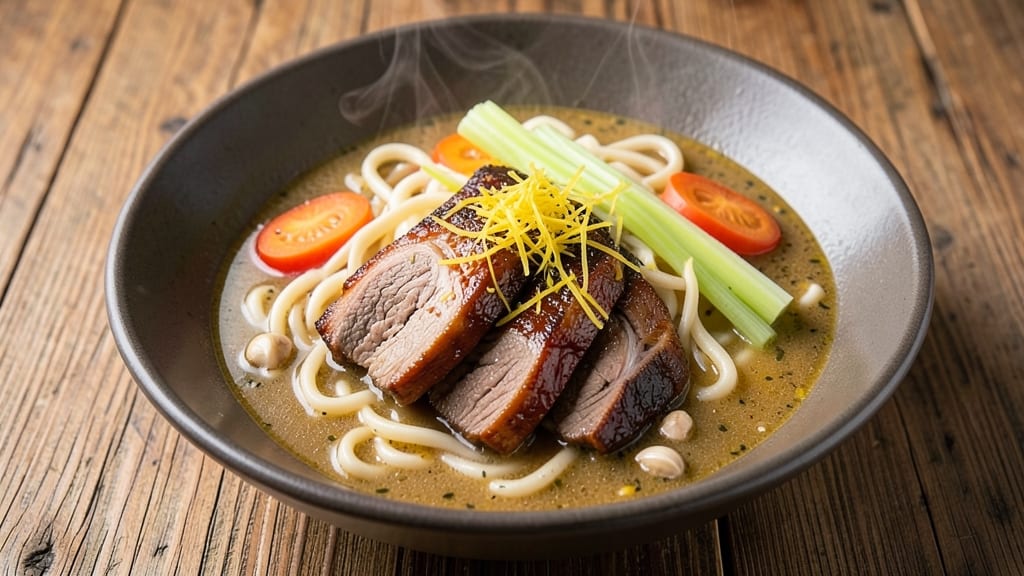
Slow-simmered beef shank noodle soup transforms tough cuts into melt-in-your-mouth tenderness with a broth so rich it becomes the star. This recipe delivers restaurant-quality depth through careful braising and layered aromatics—star anise, ginger, and soy sauce working together for hours to create umami that lingers long after the last spoonful. The crisp celery crowns add a satisfying crunch that contrasts beautifully with the silky noodles and tender beef.
What sets this dish apart is the technique: searing the beef shank first develops deep flavor through the Maillard reaction, while slow simmering breaks down collagen into gelatin, creating a naturally thickened broth without any cornstarch.
The balance of sweet and salty—from caramelized onions and soy sauce—elevates every component, making this more than just soup but a comforting, hearty meal that feels like a hug in a bowl.
The result is a bowl where each element plays its part: fork-tender beef shank that falls apart at the touch, chewy noodles that soak up the aromatic broth, and crisp celery crowns that add texture with every bite.
The aroma alone will have everyone gathering around the table, while the flavors reward with each spoonful—proof that patience in the kitchen pays off in the most delicious way.
Perfect for chilly evenings or when you want to impress guests without complicated techniques, this soup scales beautifully and tastes even better the next day. Whether you're using a Dutch oven on the stovetop or an Instant Pot for convenience, the principles remain the same: slow cooking creates magic.
Let's create this comforting classic together.
Ingredients for beef shank noodle soup
Six aromatic ingredients transform tough beef shank into melt-in-your-mouth perfection with crisp celery crowns.
| Ingredient | Amount | Notes |
|---|---|---|
| Beef Shank 🥩 | 3 lb | Bone-in, cut into 2-inch pieces |
| Yellow Onions 🧅 | 3 whole | Medium, sliced into half-moons |
| Fresh Ginger 🌿 | ½ inch | Peeled, sliced into thin coins |
| Carrots 🥕 | 4 whole | Medium, cut into 2-inch chunks |
| Celery Stalks 🧅 | 6 whole | Cut into 2-inch pieces for crowns |
| Garlic Cloves 🧄 | 6 cloves | Smashed with side of knife |
| Star Anise Pods 🌶️ | 4 whole | Lightly crushed |
| Cinnamon Sticks 🌿 | 2 whole | For depth of flavor |
| Dried Bay Leaves 🍃 | 2 whole | For aromatic richness |
| Soy Sauce 🥄 | ½ cup | Light or all-purpose |
| Dry Sherry 🍷 | ½ cup | Or substitute with beef broth |
| Egg Noodles 🍜 | 1 lb | Medium width for texture |
| Olive Oil 🫒 | ¼ cup | Extra-virgin for searing |
| Salt 🧂 | 2 tsp | Kosher or sea salt |
| Black Peppercorns 🌶️ | 1 tsp | Freshly cracked |
The beef shank is non-negotiable here—bone-in for maximum flavor, and 2-inch pieces ensure even cooking. Costco or Whole Foods carry the best cuts, but any well-marbled shank works. Look for vibrant color and visible fat—this means juicy results. The celery crowns are key: keep them whole until the very end so they stay crisp. Trader Joe's sells perfect stalks, or grab the thickest ones from the grocery store. Star anise and cinnamon sticks are the secret weapons for that restaurant-quality depth—Penzeys has the best whole spices if you're not near an Asian market.
No sherry? Dry white wine or beef broth works just as well—just reduce the amount slightly. Fresh ginger is ideal, but substitute with 1 tbsp ground ginger if needed. The soy sauce can be swapped for coconut aminos if you're avoiding sodium. For the celery crowns, blanch them for 30 seconds before adding to the soup to soften slightly while keeping them crisp. The egg noodles? Any brand works, but Barilla or De Cecco have the best texture. If you can't find star anise, a pinch of anise extract gives a similar flavor, though it's not the same.
This soup tastes even better the next day—3-4 days in the fridge, honestly. Portion into containers with a layer of noodles on top to keep them from getting mushy. Freezes beautifully for up to 3 months, but the texture changes slightly after thawing. For the crisp celery crowns, reheat separately in a dry pan for 30 seconds before serving. The broth alone is worth making extra—freeze it in ice cube trays for future soups or sauces.
Why You'll Love This Recipe
- One-Pot Magic: I swear by this recipe—just toss everything in one pot and walk away. The beef shank practically melts into tender perfection while the carrots and celery soften effortlessly, no chopping frenzy required.
- Deep, Rich Payoff: That first bite of fall-off-the-bone shank in a warm broth? It’s like a hug for your taste buds. The ginger and onions caramelize into a sweet, savory base that makes every spoonful feel like a reward.
- Leftovers That Shine: Between us, this soup only gets better the next day. Reheat it, add a splash of water, and suddenly you’ve got a free, restaurant-quality lunch—no takeout needed.
- Budget-Friendly Luxury: Beef shank stretches across multiple meals without breaking the bank, and the veggies add heartiness for pennies. Honestly, it’s the kind of dish that makes grocery shopping feel like a win.
Step-by-step instructions for beef shank noodle soup
This rich, slow-cooked soup delivers deep umami flavor and tender beef every time.
Sear the Beef Shank for Maximum Flavor
Pat the 3 lb beef shank dry with paper towels—this ensures a good sear. Heat 0.25 cup olive oil in a large Dutch oven over medium-high heat until shimmering. Add the beef shank in a single layer and sear for 8-10 minutes, turning occasionally, until deeply browned on all sides. You want that caramelized crust—it's packed with flavor that will infuse the broth.
Once browned, remove the beef and set it aside. You'll notice the oil will darken—this is the foundation of your soup's rich flavor. Don't rush this step; patience here means better-tasting soup later. If the oil starts smoking, reduce the heat slightly to prevent burning.
Build the Aromatic Base
In the same Dutch oven, add 3 whole yellow onions (sliced into half-moons), 4 whole carrots (cut into 2-inch chunks), and 6 whole celery stalks (cut into 2-inch pieces). Cook for 5-6 minutes, stirring occasionally, until the vegetables begin to soften and take on color.
Add 0.5 inch fresh ginger (sliced into thin coins), 6 cloves garlic (smashed with the side of your knife), 4 whole star anise pods (lightly crushed), 2 whole cinnamon sticks, and 2 whole dried bay leaves. Stir everything together and cook for another 2 minutes until fragrant. This aromatic blend will form the soul of your soup—don't skip this step, as it builds the complex flavors.
Deglaze and Simmer the Broth
Pour in 0.5 cup soy sauce and 0.5 cup dry sherry, scraping up all the browned bits from the bottom of the pot. This deglazing step captures all that caramelized flavor you worked so hard to create. Add 8 cups water (or enough to cover the ingredients by about 2 inches) and bring to a rolling boil. Once boiling, reduce heat to low and return the beef shank to the pot.
Cover and simmer for 2.5-3 hours until the beef is fork-tender and the broth has reduced slightly. You'll know it's ready when the beef easily pulls apart with a fork—this slow cooking is what makes the meat melt-in-your-mouth tender. Stir occasionally and add a little water if the broth gets too low, but try to maintain that concentrated flavor.
Prepare and Add the Noodles
While the beef is simmering, prepare the 1 lb egg noodles according to package instructions, but cook them 1 minute less than directed. They'll finish cooking in the hot broth. Once cooked, drain and set aside, reserving 1 cup of pasta water in case you need to adjust the soup's consistency later.
When the beef is tender, remove it from the broth and strain the liquid through a fine-mesh sieve to remove any impurities. Return the strained broth to the pot and bring it back to a gentle simmer. Add the cooked noodles and let them soak in the hot broth for 2-3 minutes to finish cooking and absorb all that rich flavor.
Finish and Serve with Crisp Celery Crowns
Return the beef shank to the pot and heat everything through for 2-3 minutes. Taste and adjust seasoning with 2 tsp salt and 1 tsp black peppercorns (freshly cracked). For the crisp celery crowns, heat 1 tablespoon olive oil in a separate skillet over medium-high heat. Add the celery crowns (the leafy tops from the celery stalks) and cook for 3-4 minutes until crispy and golden.
Ladle the soup into bowls, top with the crisp celery crowns, and serve immediately. The contrast of the tender beef and noodles with the crisp celery adds a delightful textural element. This soup tastes even better the next day, so make extra if you can—it's perfect for meal prep and reheats beautifully.
Pro Tips For Making Beef Shank Noodle Soup
- Brown the Shank Longer: I used to walk away after 5 minutes, thinking it was enough—until the broth tasted flat. Push that sear to 12-15 minutes on medium-high, turning occasionally, until it’s a deep mahogany crust. The Maillard reaction here builds flavor that won’t dissolve in the broth later.
- Slice Ginger Thinly: My first few batches used thick chunks, and the soup just smelled like ginger without real impact. Use a mandoline or sharp knife to slice it paper-thin—about 1/16-inch—and toast it in the pot for 30 seconds before adding liquids. That’s when it releases its magic.
- Add Carrots Late: I learned this the hard way—overcooked carrots turn mushy and lose their texture. Toss them in with the celery and onions early, but pull them out after 10 minutes of simmering. Readd them with the noodles to keep them crisp-tender.
- Use a Splash of Vinegar: Sounds weird, but it works: add 1 tablespoon of rice vinegar or red wine vinegar when you first add the beef broth. It brightens the whole dish without overpowering—just enough to cut through the richness. (Yes, even if you’re skeptical.)
Troubleshooting this recipe
Broth Too Thin?
If your broth isn't rich enough, simmer uncovered for an extra 15-20 minutes to reduce it naturally. For thicker results, blend ½ cup of the broth with 1 tbsp cornstarch, then whisk back into the pot.
I’ve also found that adding 1-2 tbsp tomato paste at the start deepens flavor and body. 💡
Beef Still Tough?
Check your cooking time—beef shank needs 2.5-3 hours minimum to tenderize. If it’s still firm, add 1 cup hot water and cover tightly, then simmer another 30-45 minutes. Avoid rushing! For extra tenderness, score the fat cap before searing to help break down connective tissue faster.
Celery Crowns Too Soft?
Blanch the celery crowns for 30 seconds in boiling water before adding to the soup. For crispiness, cook them in a dry skillet over medium-high heat for 3-4 minutes—don’t overcrowd the pan or they’ll steam instead of crisp.
A pinch of salt helps draw out moisture for extra crunch. ✨
Noodles Mushy?
Cook noodles 1 minute less than package instructions and finish in the hot broth. If they’re still too soft, drain and rinse briefly under cold water before adding back. For extra texture, use udon or ramen noodles—they hold up better to long simmering than egg noodles.
Flavor Too Mild?
Boost umami with 1 tbsp fish sauce or ½ cup mushroom broth at the end. A splash of rice vinegar (1 tsp) brightens the dish, while toasted sesame oil (½ tsp) adds depth. For warmth, add ½ tsp chili flakes or a dash of sriracha at serving.
Instant Pot Fixes
If using an Instant Pot, cook on high pressure for 60 minutes after searing. Natural release for 10 minutes, then quick release. For extra richness, add 1 cup beef broth after pressure cooking.
The Instant Pot’s high heat can make the broth thinner—reduce it uncovered on the stove for 10 minutes** after cooking.
Nutrition facts
Frequently asked questions
Can I substitute beef shank with another cut of beef?
While beef shank is ideal for its collagen-rich marrow that creates a naturally thick broth, you can use chuck roast or brisket as substitutes. Cut them into similar-sized pieces and increase simmering time to 3-4 hours for maximum tenderness. Avoid lean cuts like sirloin—they won't develop the same rich flavor or texture.
How do I make this soup vegetarian?
Replace the beef shank with mushrooms (shiitake or portobello) or extra-firm tofu pressed and pan-seared. Use vegetable broth instead of water, and add 1 tbsp soy sauce + 1 tsp miso paste for umami depth. Simmer the mushrooms for 20-25 minutes to develop flavor, then proceed with the recipe as written.
What's the best way to store leftovers?
Store in an airtight container in the fridge for up to 4 days, or freeze for 3 months. For freezing, portion into individual servings with a layer of noodles on top to prevent sogginess. Reheat gently on the stove—never microwave—adding 1-2 tbsp water to restore broth consistency. The celery crowns should be reheated separately in a dry pan.
Can I make this in a slow cooker? Sear the beef shank as directed, then transfer everything (including aromatics) to a 6-quart slow cooker. Add 8 cups water and cook on low for 8-10 hours or high for 5-6 hours. The slow cooker's gentle heat will create an even more tender result. Just
What makes this soup different from pho or ramen?
This recipe focuses on slow-braised beef shank rather than quick-cooked broth, creating a richer, more substantial base. Unlike pho (which uses lean beef and clear broth) or ramen (often wheat noodles with miso), this version features egg noodles and a deeper, more complex flavor profile from the long simmer with star anise and cinnamon. The crisp celery crowns also add a textural contrast missing in traditional Asian noodle soups.