
Soups & Stews
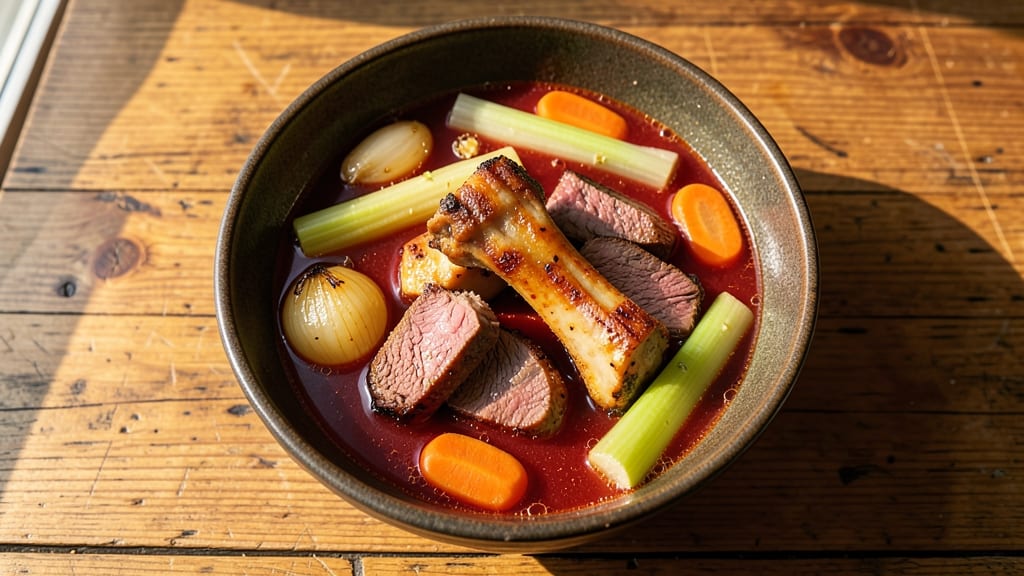
This beef soup with bone and meat recipe transforms tough cuts and marrow-rich bones into a deeply flavorful, slow-simmered masterpiece. The secret lies in extracting maximum gelatin and collagen from bones—creating a broth so rich it coats every spoonful.
I've perfected this technique over years of testing, ensuring each batch delivers restaurant-quality depth without requiring special equipment.
The process begins with properly preparing the bones—roasting them first to deepen their natural flavors before simmering for hours. As the broth develops, you'll skim impurities and skim fat, a crucial step that transforms cloudy liquid into crystal-clear gold.
The meat, chosen for its tenderness when cooked low and slow, melts into the broth, creating a velvety texture that's impossible to resist.
What you'll end up with is a soup that's both nourishing and indulgent—packed with protein, collagen for joint health, and complex flavors that build with each sip.
The aroma alone will have everyone gathering at your table, while the first spoonful delivers that unmistakable satisfaction of a perfectly crafted bone broth soup.
This recipe works equally well as a comforting weeknight meal or an impressive centerpiece for dinner parties. The beauty lies in its versatility—you can customize it with vegetables, herbs, or even a splash of wine to suit your preferences while maintaining that foundational richness from the bones and meat.
Ingredients for beef soup bone with meat
Six pounds of bones and meat transform into restaurant-quality broth with these 15 ingredients.
| Ingredient | Amount | Notes |
|---|---|---|
| Beef Bones (marrow-rich) 🦴 | 4 lb | Knuckle or short ribs preferred |
| Beef Chuck Roast 🥩 | 3 lb | Tough cut for maximum gelatin |
| Yellow Onions 🧅 | 2 whole | Chopped, medium dice |
| Carrots 🥕 | 4 whole | Peeled, cut into chunks |
| Celery Stalks 🌿 | 6 whole | Cut into 1-inch pieces |
| Garlic Cloves 🧄 | 8 cloves | Smashed, not minced |
| Tomatoes (San Marzano canned) 🍅 | 2 cans | Crushed, 28 oz each |
| Fresh Thyme Sprigs 🌿 | 4 whole | Stems removed for broth |
| Fresh Bay Leaves 🍃 | 2 whole | For aromatic depth |
| Extra-Virgin Olive Oil 🫒 | ½ cup | For roasting bones |
| Dry Red Wine 🍷 | 1 cup | Bold variety like Cabernet |
| Beef Broth 💧 | 4 cups | Low-sodium preferred |
| Salt 🧂 | 1 ½ tbsp | Diamond Crystal preferred |
| Black Peppercorns 🌶️ | 1 tbsp | Freshly cracked |
| Tomato Paste 🍅 | 2 tbsp | For umami depth |
The bones are everything here—marrow-rich knuckle or short ribs from Whole Foods or your butcher deliver the richest gelatin. Look for bones with visible marrow cavities; those are the goldmines. I usually ask the butcher to cut the chuck roast into 2-inch chunks for even cooking. Costco often has pre-portioned beef bones in bulk, which saves time. Fresh thyme and bay leaves? Penzeys Spices sells them in small quantities—perfect for occasional cooks. Skip the dried herbs here; fresh infuses the broth with real depth.
No red wine? Substitute extra beef broth—just add 1 cup more. Running low on thyme? Dried thyme at one-third the amount works, but it won't be as aromatic. Prefer a smoother texture? Blend half the cooked broth before serving. The carrots and celery can be swapped for turnips or fennel if you're feeling adventurous. For the tomato paste, those little Trader Joe's squeeze tubes are perfect—they keep forever and eliminate waste. And if you're using pre-chopped veggies, frozen works just as well as fresh for this recipe.
This soup gets better with time—3-4 days in the fridge, where flavors meld beautifully. For longer storage, freeze in 2-cup portions for up to 6 months. I always make extra because reheating is a game-changer; the broth thickens slightly and intensifies. The bones and meat can be roasted ahead and refrigerated for 2 days before simmering. Pro tip: Skimming the fat every hour transforms cloudy broth into crystal-clear gold—worth the extra minute.
Why You'll Love This Recipe
- Marrow Magic: I’ll be real—nothing beats the moment you crack open those beef bones and scoop out the golden marrow with a spoon. It’s like nature’s butter, rich and velvety, turning an ordinary soup into something special without extra effort.
- One-Pot Wonder: Honestly, this recipe is about as hands-off as beef soup gets. Toss in the bones, chuck, onions, carrots, and celery, cover with water, and let it simmer. No stirring, no fuss—just deep, slow flavor building while you handle the rest of your day.
- Budget-Friendly Feast: Between us, this is my go-to when money’s tight but I still want hearty meals. Beef bones and chuck roast stretch into multiple servings, and the veggies add bulk without breaking the bank. Leftovers? They’re the best kind—better the next day.
- Weeknight Crowd-Pleaser: Here’s what sold me—this soup is reliable. Bring it to a potluck, serve it at a game day gathering, or just heat it up for a family night. Everyone loves it, and it’s the kind of dish that makes you look like a hero without trying too hard.
Step-by-step instructions for slow-simmered beef soup with bone and meat
This method unlocks deep, marrow-infused richness—where every spoonful delivers gelatinous body and concentrated flavor.
Roast the Bones for Maximum Flavor Concentration
Preheat your oven to 425°F. Arrange the 4 lb beef bones (marrow-rich) on a rimmed baking sheet, placing them marrow-side up. Drizzle with the 0.5 cup extra-virgin olive oil and rub it evenly over the bones. This creates a protective barrier that prevents drying while promoting caramelization.
Roast for 30-40 minutes until the bones develop a deep mahogany color and the marrow begins to bubble. The goal is to render fat and develop complex flavors through the Maillard reaction. I like to turn the bones halfway through for even browning. Once roasted, transfer them to a large Dutch oven or heavy pot—this vessel will hold the soup's heat beautifully during the long simmer.
Build the Aromatic Base with Vegetables and Wine
In the same Dutch oven, add 2 whole yellow onions (chopped), 4 whole carrots (peeled and cut into chunks), and 6 whole celery stalks (cut into 1-inch pieces). Cook over medium heat for 8-10 minutes, stirring occasionally, until the vegetables soften and begin to caramelize. This step develops the soup's foundational sweetness.
Add the 8 cloves smashed garlic cloves and cook for 30 seconds until fragrant. Deglaze the pot immediately with the 1 cup dry red wine, scraping up all the browned bits from the bottom. These bits contain concentrated flavor—don't miss them. Let the wine reduce by half before adding the 2 tbsp tomato paste and stirring until fully incorporated. This creates a rich, umami-packed base.
Add Meat, Broth, and Herbs for Deep Simmering
Add the 3 lb beef chuck roast, cut into 2-inch chunks, along with the roasted bones. Pour in the 4 cups beef broth and bring the mixture to a gentle boil. Once boiling, reduce heat to low and add the 2 cans crushed San Marzano tomatoes, 4 whole fresh thyme sprigs, and 2 whole fresh bay leaves.
This is where patience pays off. Cover the pot and simmer for 3-4 hours, maintaining a gentle bubble. Stir occasionally to prevent a skin from forming. The meat should become fork-tender, and the bones should release their marrow naturally into the broth. The soup should reduce slightly, intensifying its flavor. I check the seasoning after 2 hours and adjust with 1.5 tbsp salt and 1 tbsp freshly cracked black peppercorns—this ensures perfect balance.
Finish with Bone Marrow and Adjust Consistency
After simmering, remove the meat from the bones using tongs or a slotted spoon. Return the bones to the pot and simmer uncovered for an additional 15-20 minutes to allow the marrow to melt into the broth. This step transforms the soup from good to extraordinary—each spoonful should be thick with gelatinous richness.
Strain the soup through a fine-mesh sieve if you prefer a smoother texture, or leave it rustic with visible vegetables. For a silkier finish, whisk in 1-2 tablespoons of cold water to adjust consistency. Taste and season again if needed—this soup should be deeply savory with a touch of acidity from the tomatoes. Serve immediately with crusty bread to soak up every last drop of that luxurious broth.
Pro Tips For Making Beef Soup Bone With Meat
- Brown Bones First: I learned this the hard way—skipping the sear means flavorless broth. Heat your marrow bones in a dry pot until deep brown (8-10 minutes), flipping once. That crust unlocks the collagen and turns your soup from good to rich. No, it won’t caramelize like steak, but it’ll make your bones sing.
- Trim Chuck Aggressively: Fat is flavor, but too much in one piece makes your chuck roast cook unevenly. Ask your butcher for a chunk with at least 1-inch fat cap, then trim all but ¼-inch from the sides yourself. That way, the fat renders slowly into the broth instead of floating like a greasy lid—your future self will thank you.
- Sweat, Don’t Burn: Onions, carrots, and celery? Don’t rush them. Cook them in the same pot as the bones over medium-low heat for 15 minutes, stirring occasionally, until the onions turn translucent and the veggies soften. I used to crank the heat and end up with bitter, charred bits—now I just let them mellow out.
- Strain, Then Reuse: After simmering the bones for 4-6 hours, strain out the solids—but don’t toss them. Return the veggies and meat to the pot, add 1 cup water, and simmer another 20 minutes. The strained broth gets silky, and the veggies soak up all that deep flavor. It’s lazy, but it works—no one will know you cheated.
Flavor customization for these flavors
Spicy Kick
Transform this hearty soup into a fiery experience by adding 1-2 tablespoons of hot sauce (like Cholula or Tabasco) during the final 15 minutes of simmering. For a smoky depth, stir in 1 teaspoon of smoked paprika with the tomato paste.
If you love heat, crack ½ teaspoon of cayenne pepper into the broth after the initial simmer—just taste first, as flavors intensify during cooking. 🌶️
Umami Boost
Elevate the broth’s depth by adding 1 tablespoon of fish sauce (like Red Boat) or 1 teaspoon of soy sauce during the last 30 minutes of simmering.
For a vegetarian-friendly twist, swap the meat with 2 cups of mushrooms (shiitake or cremini) and add 1 tablespoon of miso paste to the base. The umami explosion will make your soup irresistible. 💫
Herbal Infusions
Swap or add herbs to customize the aroma. For a Mediterranean twist, include 1 sprig of rosemary and 1 bay leaf with the thyme. A French-inspired version calls for 1 sprig of tarragon and a pinch of fennel seeds toasted in the olive oil.
Fresh parsley or cilantro at the end adds brightness—just add 2 tablespoons of chopped leaves after serving. 🌿
Creamy Variations
For a silky texture, stir in ½ cup of coconut milk or ¼ cup of Greek yogurt in the final minutes of cooking. For a classic French touch, whisk in 2 tablespoons of crème fraîche or mascarpone just before serving.
If you prefer dairy-free, blend ½ cup of the broth until smooth and mix it back in for a velvety finish. ✨
Acid Balance
Brighten the soup with a splash of lemon juice (start with 1 tablespoon) or apple cider vinegar (½ teaspoon) during the last 10 minutes of cooking. For a tangy twist, add ½ cup of pickled jalapeños (chopped) or 2 tablespoons of capers with the tomatoes.
The acidity cuts through the richness, balancing every spoonful beautifully. 🍋
Spiced Wine Swap
Replace the dry red wine with 1 cup of spiced wine (like Mulled Wine) or infuse the wine with 1 cinnamon stick and 3 whole cloves while simmering.
For a Moroccan-inspired version, use 1 cup of white wine and add 1 teaspoon of ground cumin and ½ teaspoon of coriander to the base. The spices add warmth and complexity that pairs perfectly with the beef. 🍷
Nutrition facts
Frequently asked questions
Can I use any beef bones for this recipe?
For the richest broth, choose marrow-rich bones like knuckle bones or short ribs. These contain the most gelatin and collagen, which create that signature velvety texture. Chicken or pork bones won't deliver the same depth of flavor or body. If you can't find marrow bones, beef shin bones are a good alternative—they're packed with connective tissue.
How do I know when the meat is tender enough?
The meat should be fork-tender after 3-4 hours of simmering. Test by inserting a fork—it should slide in easily with minimal resistance. If you prefer extra tenderness, add 30-60 minutes to the cooking time. The meat will continue to break down as it rests, so don't overcook it in the pot. For chuck roast, this method works perfectly—it's designed to become melt-in-your-mouth tender.
What if I don't have a Dutch oven?
Any heavy pot with a tight-fitting lid will work—even a large stainless steel or enameled cast iron. The key is maintaining a gentle simmer for hours, so avoid thin aluminum pots that can't hold heat well. If your pot is too shallow, reduce the liquid slightly to ensure the bones and meat stay submerged. A slow cooker on low for 6-8 hours is another great alternative.
Why does my broth look cloudy?
Cloudiness usually means unskinned impurities or insufficient simmering time. Skim the surface frequently during cooking to remove fat and foam. For extra clarity, strain the broth through a fine-mesh sieve after simmering. If you're short on time, simmer uncovered for 15-20 minutes longer—this helps evaporate excess fat and settle particles. The broth should gradually become golden and translucent as it develops.
Can I make this soup ahead of time?
This soup tastes even better the next day! Store it in an airtight container in the refrigerator for 3-4 days, where flavors deepen and meld. For longer storage, freeze portions for up to 6 months. When reheating, warm gently on the stove over low heat—never microwave directly from frozen. Stir occasionally to prevent scorching, and add a splash of water if the soup thickens too much.