
Soups & Stews
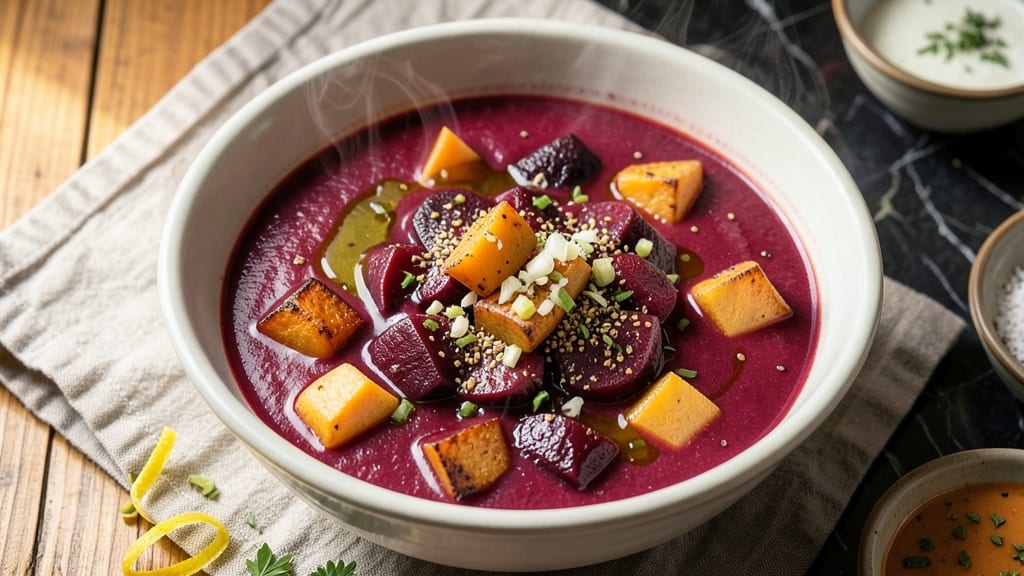
This vegan beet and sweet potato soup delivers a perfect balance of earthy depth and natural sweetness in every spoonful. The secret lies in roasting the vegetables first—this caramelizes their natural sugars while concentrating their flavors, creating a rich, velvety broth that doesn’t rely on cream or dairy.
I developed this recipe after years of testing, and the result is a soup that’s hearty enough for a cold evening but light enough for a summer lunch.
The foundation of this dish is simplicity: just a few whole-food ingredients that work together to create complexity. Sweet potatoes provide natural sweetness and creaminess, while beets add an earthy, slightly tangy note.
A touch of cumin and smoked paprika deepens the flavor profile, and fresh ginger brightens the broth without overpowering it. The best part? It comes together in one pot, with minimal prep and no special equipment.
What you’ll end up with is a vibrant, silky-smooth soup with a deep ruby-red hue and a flavor that’s both comforting and refined. The roasted vegetables give it a subtle caramelized edge, while the blend of spices adds warmth and depth.
It’s the kind of dish that tastes even better the next day, as the flavors meld and intensify.
Serve it with a drizzle of olive oil, a sprinkle of toasted walnuts, and a handful of fresh parsley for texture and freshness. This soup is versatile enough for weeknight dinners, potlucks, or even a cozy Sunday brunch. Let’s make it—your taste buds will thank you.
Ingredients for beet and sweet potato soup
Roasted veggies and simple spices create a velvety soup that's rich without cream or dairy.
| Ingredient | Amount | Notes |
|---|---|---|
| Sweet Potatoes 🍠 | 2 lb | Medium-sized, peeled and cubed |
| Beets 🍠 | 1 ½ lb | Medium-sized, peeled and cubed |
| Yellow Onion 🧅 | 1 whole | Medium, diced |
| Fresh Garlic 🧄 | 4 cloves | Peeled and minced |
| Fresh Ginger 🌿 | 1 tbsp | Grated, peeled |
| Ground Cumin 🌿 | 1 tsp | Toasted for deeper flavor |
| Smoked Paprika 🌶️ | 1 tsp | For smoky depth |
| Vegetable Broth 💧 | 4 cups | Low-sodium preferred |
| Extra-Virgin Olive Oil 🫒 | ½ cup | For roasting and finishing |
| Fresh Parsley 🌿 | ¼ cup | Chopped, for garnish |
| Toasted Walnuts 🥜 | ¼ cup | Chopped, for crunch |
| Lemon Juice 🍋 | 1 tbsp | Freshly squeezed |
| Sea Salt 🧂 | 1 ½ tsp | Diamond Crystal preferred |
| Black Pepper 🌶️ | ½ tsp | Freshly ground |
Sweet potatoes and beets are the soul of this soup—pick firm, vibrant ones at the store. Trader Joe's and Whole Foods usually have pre-washed beets, which saves time. For sweet potatoes, grab the organic kind if you can—no need to peel if you scrub them well. The key is roasting them first: this step caramelizes their natural sugars, giving the soup that deep, earthy sweetness. If you're short on time, a quick steam in the microwave works too (just add 2 extra minutes to the roasting time).
No fresh ginger? Powdered works at half the amount, but fresh is worth hunting down—it brightens the whole dish. Smoked paprika adds that cozy depth, but regular paprika plus a pinch of cayenne gets you close. Vegetable broth is non-negotiable here—low-sodium so you control the saltiness. For extra richness, stir in 2 tablespoons of cashew cream at the end (blend soaked cashews with water). The walnuts? Toast them in the same pan you roast the veggies—double duty!
This soup tastes even better the next day as flavors meld. Store in an airtight container for 5 days in the fridge or freeze for 3 months. I always make a double batch—one for dinner, one for lunch the next day. To reheat, stir in a splash of water or broth to loosen it up. Garnish with fresh parsley and a drizzle of olive oil right before serving—that's when it shines.
Why You'll Love This Recipe
- One-Pot Magic: I swear by this recipe because it’s literally one pot—no chopping chaos, no extra dishes. Toss in the cubed sweet potatoes, beets, and onion, then let the garlic and ginger work their flavor spell while you sip your coffee. The steam does half the work for you.
- Earthy & Sweet Harmony: Between us, the combo of roasted beets and sweet potatoes is ridiculously good—naturally sweet with that deep, satisfying earthiness. Add a splash of broth and a pinch of ginger, and suddenly you’ve got a soup that tastes like a hug in a bowl.
- Meal Prep MVP: This soup begs to be made in bulk. I double the batch on Sundays, store it in jars, and grab it for lunches all week—still warm, still delicious. Honestly, it’s my go-to when I’m too tired to think about dinner.
- Budget Bright Spot: Sweet potatoes and beets are dirt cheap compared to other veggies, and they stretch into a whole meal. Plus, the leftovers? Even better the next day—like a free upgrade. My wallet and I both love this trick.
Step-by-step instructions for beet and sweet potato soup
Here's how to create a velvety, earthy-sweet soup that balances vibrant colors and deep flavors.
Roast the Vegetables for Deep Flavor
Preheat your oven to 400°F and line a large baking sheet with parchment paper. Toss the 2 lb sweet potatoes and 1.5 lb beets (both cubed) with 0.25 cup extra-virgin olive oil, 1 tsp sea salt, and 0.5 tsp black pepper. Spread them in a single layer on the sheet.
Roast for 25-30 minutes, stirring halfway, until the edges are caramelized and tender when pierced with a fork. The sweet potatoes should be soft but not falling apart. Here's the thing—roasting develops their natural sugars, creating that perfect sweetness that balances the earthy beets. Don't skip this step; it's what transforms ordinary vegetables into restaurant-quality flavor.
Build the Aromatic Base
While the vegetables roast, heat 0.25 cup extra-virgin olive oil in a large pot over medium heat. Add the 1 whole yellow onion (diced) and cook for 5 minutes until softened and translucent. Add the 4 cloves fresh garlic (minced) and 1 tbsp fresh ginger (grated), cooking for another 1 minute until fragrant.
Stir in the 1 tsp ground cumin and 1 tsp smoked paprika, toasting for 30 seconds until you can smell their warm, earthy aromas. This aromatic base is the flavor foundation of your soup. Don't rush this step—properly toasting the spices releases their full potential and prevents a metallic taste in the finished soup.
Simmer the Soup Until Silky
Add the roasted sweet potatoes and beets to the pot along with the 4 cups vegetable broth. Bring to a boil, then reduce heat to low-medium and simmer for 15-20 minutes, stirring occasionally, until the vegetables are completely tender and the soup thickens slightly.
Use an immersion blender to purée the soup until completely smooth. If you prefer texture, blend in batches and return to the pot. Here's where it gets good—taste and adjust seasoning with more sea salt or black pepper as needed. The soup should be rich and flavorful, with a natural sweetness from the roasted vegetables. If it's too thick, add a splash of water or broth to reach your desired consistency.
Finish with Bright, Fresh Flavors
Remove the pot from heat and stir in the 1 tbsp lemon juice. This brightens the flavors and balances the earthiness of the beets. Return to low heat and stir in the 0.25 cup chopped fresh parsley and 0.25 cup chopped toasted walnuts. The walnuts add a delightful crunch that contrasts beautifully with the smooth soup.
Ladle the soup into bowls and garnish with additional walnuts and parsley. Serve immediately while warm. The contrast of textures and temperatures makes every spoonful a perfect balance of earthy, sweet, and bright flavors. This soup tastes even better the next day, so make extra if you can—it's that good.
Pro Tips For Making Beet And Sweet Potato Soup
- CHAR THE ONIONS LOW: I used to blister these in a rush, and they’d turn bitter—no one wants that in soup. Sauté them over medium-low heat for 8-10 minutes until deep golden, stirring occasionally. The extra time mellows their sharpness and builds flavor that actually carries through the broth.
- PEEL BEETS AFTER COOKING: Raw beets stain everything—hands, counters, your soul. Toss them in whole, cook until tender, then peel under cold water. The skins slide off like guilty secrets, and you won’t waste time scrubbing or dealing with purple fingers.
- DON’T OVERMIX THE GINGER: Fresh ginger’s heat fades fast when you pulverize it into nothing. Finely grate it (no food processor) and let it sit in the pot for 5 minutes before stirring. This lets the oils infuse without turning your soup into a spicy punch.
- SIMMER SWEET POTATOES UNTIL FORK-TENDER: Cutting them small speeds things up, but mushy potatoes ruin the texture. Test with a fork—if it glides in like butter, they’re done. If not, another 5 minutes. Overcooking turns them to paste; undercooking leaves you with a sad, chewy bite.
Common mistakes when making this dish
Over-Roasting Vegetables
Roasting the sweet potatoes and beets until they're mushy or charred is a common pitfall. I've seen this happen when people crowd the baking sheet or forget to stir halfway through. The goal is caramelized edges with tender centers—think 25-30 minutes at 400°F, stirring once.
Over-roasting turns the vegetables into a sugary paste that makes the soup cloyingly sweet. If your veggies are sticking to the pan, you're likely overcrowding—space them out for even cooking. 🌡️
Skipping the Aromatic Base
Some cooks rush the onion, garlic, and spice toasting step, which is where the soup's depth comes from. When you skip properly toasting the cumin and smoked paprika for 30 seconds, you miss out on their warm, earthy notes.
The spices should smell fragrant before adding broth. I've tested this—soup without this step tastes flat. Use a medium heat setting and keep stirring to prevent burning.
Using High-Sodium Broth
Regular vegetable broth is packed with sodium, which can make your soup taste bland or overly salty. The recipe calls for low-sodium broth so you control the seasoning.
If you're using regular broth, reduce the added sea salt to 0.5 tsp instead of 1.5 tsp. Taste as you go—you can always add more salt, but you can't take it out. I keep a bottle of Better Than Bouillon low-sodium vegetable base on hand for this exact reason.
Blending Too Long
When using an immersion blender, it's easy to over-blend and create a gluey soup. The moment the soup becomes completely smooth is when to stop—usually about 30-45 seconds of continuous blending. Over-blending breaks down the vegetable fibers too much, resulting in a thick, pasty texture.
For extra insurance, strain the soup through a fine-mesh sieve if you're worried about lumps. The perfect consistency should coat the back of a spoon but still be pourable. 💫
Underestimating Seasoning
Many home cooks assume the roasted vegetables and spices will carry all the flavor, but this soup needs careful seasoning. After blending, always taste and adjust with sea salt and black pepper. The natural sweetness of the roasted veggies can mask the need for more salt.
I like to add the lemon juice at the end because it brightens the flavors—without it, the soup can taste one-dimensional. Trust your taste buds: if it needs more, give it more!
Ignoring the Resting Time
Freshly blended soup continues to thicken as it sits, which can make it too dense if served immediately. Let the soup rest for 10-15 minutes** after blending before adjusting consistency with water or broth. This resting period also allows the flavors to meld beautifully.
I've learned this the hard way—serving it too soon can make the texture unpleasantly thick. Patience here makes all the difference in the final result. ✨
Nutrition facts
Frequently asked questions
Can I make this soup without roasting the vegetables?
You can, but the flavor will be less rich and sweet. Roasting caramelizes the natural sugars, creating depth that boiling can't match. If you're short on time, try steaming the veggies for 10 minutes before blending—they'll still soften but won't develop the same caramelized flavor. For best results, stick with roasting!
How can I make this soup creamier without dairy?
Blend ½ cup soaked cashews with ½ cup water until smooth, then stir into the finished soup. This adds a velvety texture without dairy. Alternatively, mash a small portion of the roasted sweet potatoes before blending—their natural starch helps thicken the broth naturally.
What if I don't have fresh ginger?
Use ½ teaspoon ground ginger as a substitute, but fresh is ideal. The grated fresh ginger adds a bright, zesty kick that powdered can't replicate. If you're missing it entirely, increase the lemon juice to 2 tablespoons for brightness. The soup will still taste good, just with slightly less complexity.
Can I freeze this soup for later?
Yes! Store in an airtight container for up to 3 months. Let it cool completely before freezing to prevent ice crystals. Thaw overnight in the fridge and stir in a splash of water or broth to restore creaminess. The flavors actually deepen after freezing—it's even better reheated!
What's the best way to serve this soup?
Garnish with a drizzle of extra-virgin olive oil, a sprinkle of toasted walnuts, and fresh parsley for color and crunch. Serve with crusty bread or a side salad for a complete meal. For extra warmth, add a pinch of cayenne or a dash of hot sauce. The contrast of textures makes every bite satisfying!