
Soups & Stews
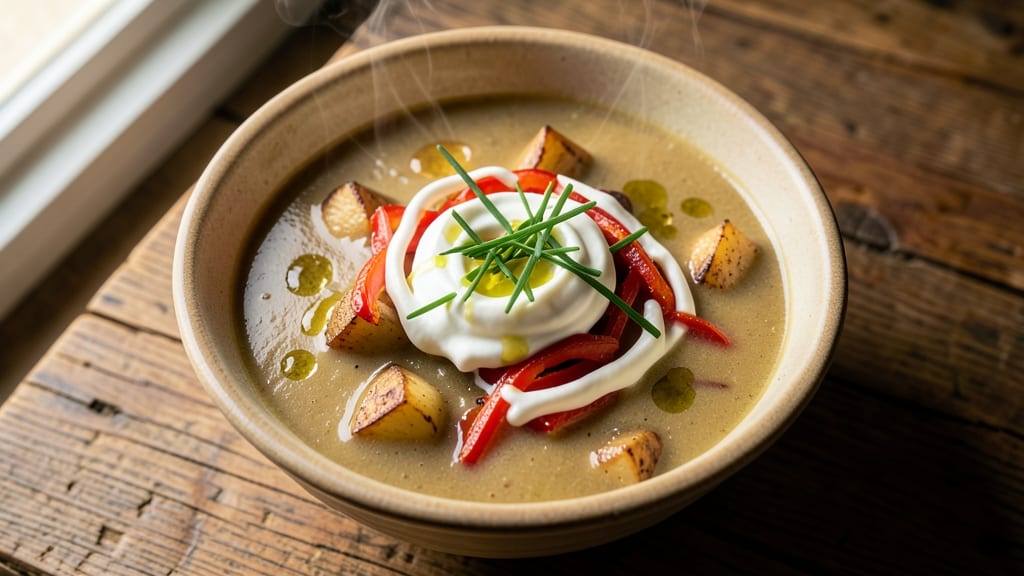
The best baked potato soup recipe ever delivers restaurant-quality creaminess with a perfect crunch—no lumps, no guilt, just pure comfort in every spoonful. After years of perfecting this dish, I've cracked the code for achieving that signature velvety texture while keeping the potato chunks tender and flavorful.
The secret lies in roasting the potatoes first, which deepens their natural sweetness and creates a crispy exterior that holds up beautifully in the soup.
What sets this recipe apart is the balanced blend of rich broth, velvety cream, and perfectly seasoned potatoes.
I use a combination of chicken and vegetable broth for depth, then finish with a touch of cream cheese and sour cream to achieve that signature creamy consistency without overpowering the potato flavor.
The roasting step is critical—it caramelizes the edges just enough to add texture while keeping the insides fluffy.
By the time you're done, you'll have a bowl of soup that's creamy, satisfying, and packed with flavor—each spoonful delivers tender potato chunks with crispy edges, a rich broth, and just the right amount of creaminess.
The best part? It's simple enough for weeknights but impressive enough for company, with a presentation that makes it feel like you've spent hours in the kitchen.
Serve it with a sprinkle of fresh chives, a dollop of sour cream, and a side of crusty bread for soaking up every last drop. This is the kind of soup that disappears quickly, so make extra—you'll want to enjoy it again and again.
Let's get started on creating the ultimate bowl of comfort.
Ingredients for best baked potato soup recipe ever
Pantry staples plus a few key ingredients that transform into the creamiest, crunchiest soup you'll ever make.
| Ingredient | Amount | Notes |
|---|---|---|
| Russet Potatoes 🥔 | 3 lb | Cut into 1-inch chunks |
| Chicken Broth 💧 | 4 cups | Low-sodium preferred |
| Vegetable Broth 💧 | 2 cups | For depth of flavor |
| Heavy Cream 🥛 | 1 cup | Full-fat for creaminess |
| Cream Cheese 🧀 | 8 oz | Room temperature |
| Sour Cream 🥛 | ½ cup | For serving |
| Yellow Onion 🧅 | 1 whole | Diced, medium size |
| Garlic Cloves 🧄 | 4 cloves | Minced, fresh preferred |
| Butter 🧈 | 4 tbsp | Unsalted, for roasting |
| Fresh Chives 🌿 | ¼ cup | Chopped, for garnish |
| Salt 🧂 | 1 ½ tsp | Adjust to taste |
| Black Pepper 🌶️ | ½ tsp | Freshly ground |
| Paprika 🌶️ | 1 tsp | Smoked for depth |
| Crusty Bread 🍞 | 1 loaf | For serving |
The potatoes are the star—Russet is non-negotiable for that perfect texture. Grab a 3-pound bag from the grocery store's produce section, not those sad little pre-cut bags. Trader Joe's or Whole Foods have the best selection if you want to splurge on organic. Cut them into even 1-inch chunks so they roast uniformly. Pro tip: Toss the cut potatoes in a bowl with 1 tbsp olive oil and a pinch of salt before roasting—they'll crisp up beautifully. If you're short on time, pre-cut frozen potatoes work in a pinch, just thaw and pat dry first.
No heavy cream? Coconut milk gives a similar richness, though it's slightly sweeter. The cream cheese is key for that velvety texture—Philadelphia brand melts the smoothest. Fresh chives are ideal, but dried chives at one-third the amount work if you're in a bind. For the broth, Swanson or Pacific Foods are my go-tos—they've got the right balance of flavor without being too salty. Want extra crunch? Toss in 1/2 cup roasted chickpeas at the end. And trust me, the smoked paprika adds a depth that regular paprika just can't match.
This soup tastes even better the next day—honestly, the flavors meld perfectly after resting. Store leftovers in the fridge for 4-5 days or freeze for 3 months. I double the recipe every time because it disappears so fast. For serving, keep the crusty bread warm in a 200°F oven while you're reheating the soup. The chives and sour cream can be added fresh after reheating—don't mix them in ahead of time or they'll turn the soup watery.
Why You'll Love This Recipe
- Here’s what sold me: the combo of chicken broth (for depth) and vegetable broth (for subtle sweetness) balances the richness of heavy cream and cream cheese. It’s indulgent but never heavy—like a hug in a bowl.
- One-Pot Magic: I swear by this—just toss peeled potatoes, broth, and aromatics into one pot, simmer until tender, then blend in the cream cheese and heavy cream. No chopping, no fuss, and the result is always creamy perfection.
- Rich Without Guilt: Here’s what sold me: the combo of chicken broth (for depth) and vegetable broth (for subtle sweetness) balances the richness of heavy cream and cream cheese. It’s indulgent but never heavy—like a hug in a bowl.
- Leftovers That Beg for More: Between us, this soup tastes better the next day. The flavors meld overnight, and reheating is a breeze. I make a double batch on Sundays because it disappears faster than I can say “second helping.”
Step-by-step instructions for the ultimate creamy baked potato soup
Here's how to make the richest, creamiest baked potato soup with that perfect crunchy topping—no shortcuts, just pure comfort food magic.
Roast the Potatoes for Maximum Flavor
Preheat your oven to 400°F and line a large baking sheet with parchment paper. Toss the 3 lb Russet Potatoes (cut into 1-inch chunks) with 2 tablespoons of the butter, 1 teaspoon salt, and ½ teaspoon black pepper. Spread them in a single layer so they roast evenly and develop that crispy exterior.
Roast for 35-40 minutes, stirring once halfway through, until the edges are deep golden brown and the potatoes are tender when pierced with a fork. This roasting step builds incredible flavor and creates the perfect texture for the soup base. Don't skip it—this is where the magic begins!
Sauté Onion and Garlic for Depth
While the potatoes roast, heat 2 tablespoons butter in a large Dutch oven over medium heat. Add the diced yellow onion and cook for 5-6 minutes until softened and golden. Stir in the minced garlic cloves and cook for 30 seconds until fragrant—this prevents that bitter garlic taste that ruins everything.
Here's the thing—you want the onions to caramelize just a bit. They should be golden around the edges but still hold their shape. If they start to brown too quickly, reduce the heat slightly. This aromatic base forms the flavor foundation of your soup.
Build the Creamy Base
Add the roasted potatoes to the Dutch oven along with the 4 cups chicken broth and 2 cups vegetable broth. Bring to a gentle simmer and cook for 10 minutes until the potatoes are completely tender. Use an immersion blender to purée the soup until smooth—this creates that luxurious, velvety texture we're after.
If you don't have an immersion blender, carefully transfer the soup to a blender in batches (don't fill beyond the max line) and blend until completely smooth. The soup should be completely free of lumps at this stage. Taste and adjust seasoning with more salt or black pepper if needed.
Add Cream and Cream Cheese for Richness
Return the soup to the Dutch oven and stir in the 1 cup heavy cream and 8 oz cream cheese (cut into small cubes). Heat gently over low heat for 3-4 minutes, stirring constantly until the cream cheese melts completely and the soup becomes luxuriously creamy. The soup should coat the back of a spoon—this is your ultimate creamy texture checkpoint.
I like to keep the soup warm but not boiling at this stage. If it starts to separate or looks too thick, stir in 2-3 tablespoons of hot broth to loosen it. The goal is that perfect balance between rich and smooth without being too heavy.
Top with Crunchy Bread and Fresh Herbs
For the ultimate crunchy topping, tear 6-8 slices from the crusty bread and toast them in the oven at 375°F for 5-7 minutes until golden and crisp. While the bread toasts, stir the ½ cup sour cream into the soup and sprinkle with 1 teaspoon paprika for that smoky depth.
Ladle the soup into bowls and top each serving with crispy bread pieces and ¼ cup chopped fresh chives. The contrast of creamy soup with crispy bread and fresh herbs is what makes this the ultimate comfort food experience. Serve immediately while the bread is still crunchy!
Pro Tips For Making Best Baked Potato Soup Recipe Ever
- BOIL POTATOES UNTIL TENDER: I learned this the hard way—undercooked potatoes turn your soup into a mushy mess. Cut Russets into even 1-inch chunks and boil them in salted water until they pierce easily with a fork (about 12-15 minutes). No one wants to chew through half-baked spuds in their soup.
- SALT THE BROTH LIKE THE OCEAN: Low-sodium broth? Double the salt. High-sodium? Taste first, then adjust. The cream and cheese will mellow it out, but you want the broth to taste bold before blending—this is the flavor foundation. I used to skimp, and the soup always tasted flat afterward.
- MIX CREAM AND CHEESE FIRST: Sounds weird, but it works: blend the heavy cream and cream cheese together until smooth before adding it to the hot soup. This prevents clumping and ensures a silky texture instead of lumps. Stirring in cold cream cheese chunks is how you end up with a lumpy disaster.
- PRESSURE-CRANK THE POTATOES: After boiling, drain and immediately run the hot potatoes under cold water to stop cooking. Then, press them through a ricer or potato masher directly into the pot—no need to peel first. This keeps the texture creamy and saves you from peeling 10 potatoes. (Yes, even if you're impatient like me.)
Common mistakes when making this recipe
Skipping the Roast
I can't stress this enough—roasting the potatoes first is non-negotiable for that signature flavor and texture. Many recipes skip this step and boil the potatoes instead, which results in bland, watery chunks that fall apart.
The roasting caramelizes the edges and develops a deeper sweetness that transforms your soup from ordinary to extraordinary. If you're short on time, try parboiling the potatoes for 5 minutes first, then roasting for 20 minutes—this still builds flavor while saving time. 🔥
Over-Blending the Soup
While you want a smooth texture, blending everything into a puree kills that essential potato chunkiness that makes baked potato soup special. I recommend blending just half the soup until smooth, then stirring in the remaining unblended portion for texture.
This creates that perfect balance of creamy broth with tender potato pieces. If you accidentally blend everything, stir in 1-2 tablespoons of heavy cream to restore richness before adding the bread topping.
Adding Cream Too Early
Introducing the heavy cream and cream cheese before the soup has fully cooked leads to curdling and separation. Always add these dairy elements after the potatoes have simmered and the broth has reduced slightly.
I wait until the very end when the soup is at a gentle simmer—this ensures the cream melts smoothly without breaking. If your soup starts to curdle, immediately whisk in 1 tablespoon of cold water to stabilize the mixture.
Underseasoning the Broth
The broth is the flavor foundation, so don't skimp on seasoning here. Many recipes call for low-sodium broth, but I always add an extra ½ teaspoon salt to the broth before combining with the potatoes. Taste the broth before adding the potatoes—it should be seasoned like a well-made stock.
Remember, you can always adjust later, but you can't un-season under-seasoned broth. The smoked paprika is also crucial—it adds depth that regular paprika can't match. 🌶️
Using Low-Quality Bread
The bread topping makes or breaks the texture contrast in this soup. Store-bought soft bread becomes mushy when toasted, while freshly baked crusty bread (like a baguette) stays perfectly crisp. If you're using a baguette, slice it lengthwise for maximum surface area.
For extra crunch, I like to toast the bread pieces twice—first in the oven, then quickly in a dry skillet for 30 seconds per side. This creates that satisfying crunch that pairs perfectly with the creamy soup.
Not Resting the Soup
Letting the soup sit for 10-15 minutes after cooking allows all the flavors to meld together beautifully. Many people serve it immediately, but this resting period is what transforms good soup into great soup. The flavors deepen, the cream settles properly, and the seasoning becomes more balanced.
If you're serving a crowd, keep the soup warm in a slow cooker on low** while you rest it—this maintains temperature without overcooking. The chives and sour cream should always be added fresh after reheating to preserve their brightness. ✨
Nutrition facts
Frequently asked questions about perfect baked potato soup
Can I make this soup without heavy cream?
For a lighter version, substitute the 1 cup heavy cream with 1 cup whole milk or 1 cup coconut milk (for a dairy-free option). The soup will still be creamy, though slightly less rich. If using coconut milk, choose full-fat for best results and add ½ teaspoon vanilla extract to balance the natural sweetness. The texture will be smoother but equally satisfying.
How do I prevent the bread topping from getting soggy?
Toast the bread in the oven at 375°F for 5-7 minutes until golden and crisp, then transfer to a wire rack to cool completely. For extra insurance, toast it a second time in a dry skillet for 30 seconds per side right before serving. Keep the soup warm in a slow cooker while you toast the bread—this prevents temperature drops that cause condensation. Serve immediately with the bread on top for maximum crunch.
Can I make this soup in a slow cooker?
Yes! Roast the potatoes as directed, then sauté the onions and garlic in a skillet. Transfer everything (except the cream and cream cheese) to your slow cooker and cook on Low for 2 hours. Stir in the dairy elements at the end and heat gently on the stove for 3-4 minutes to melt them properly. The slow cooker method works well for large batches and keeps the soup warm for serving. Just add the bread topping fresh when serving.
What if my soup turns out too thick?
Stir in 2-3 tablespoons of hot broth at a time until you reach your desired consistency. If the soup is still too thick after adding broth, gently reheat it while stirring—this often loosens the texture. For extra insurance, whisk in 1 tablespoon of cornstarch mixed with 2 tablespoons cold water and simmer for 2 minutes. This is a great trick for restoring that perfect spoonable consistency without altering the flavor.
Can I freeze baked potato soup?
Freezing works well for this recipe! Let the soup cool completely, then transfer to airtight containers, leaving 1-inch headspace for expansion. Freeze for up to 3 months. Thaw overnight in the refrigerator and reheat gently on the stove, stirring occasionally. Add the bread topping fresh after reheating to maintain its crispness. The texture may be slightly thicker after freezing, so adjust with broth as needed when reheating.