
Soups & Stews
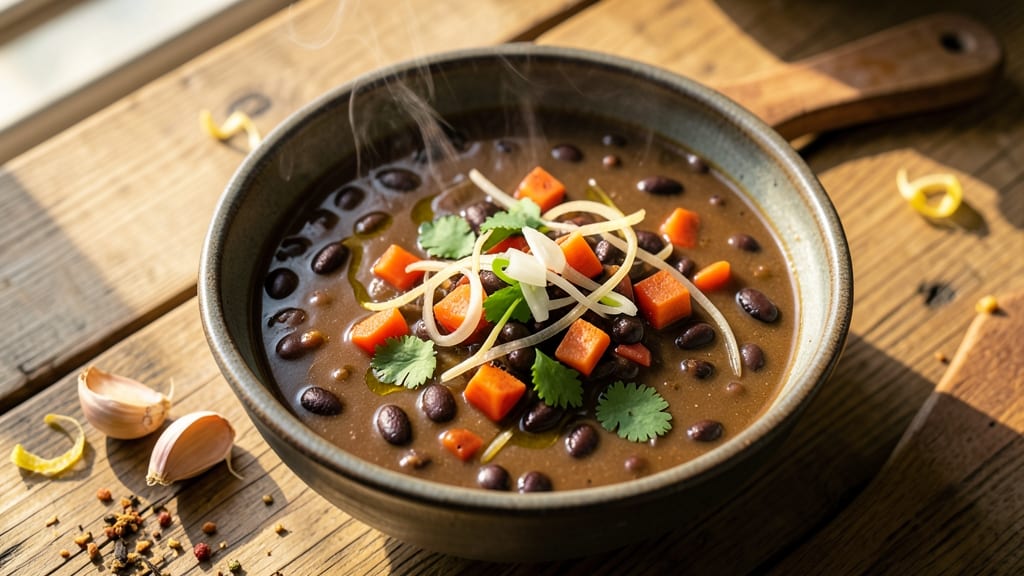
This black bean soup recipe with dried black beans transforms humble pantry staples into a rich, hearty meal that tastes like it simmered all day—even when you only have a few hours. The secret lies in overnight soaking, which breaks down the beans' tough skins and unlocks their natural sweetness, creating a soup so flavorful it becomes the star of your weeknight table. I developed this after realizing store-bought canned beans couldn't match the depth of homemade, and the difference is night and day.
What sets this recipe apart is the balance of textures and flavors: tender beans, caramelized onions, smoky spices, and fresh herbs all working together in perfect harmony. The beans soften just enough to blend into the broth while maintaining their structure, creating a soup that's both comforting and satisfying.
Unlike quick versions, this method builds layers of flavor through slow cooking—no shortcuts, just pure, restaurant-quality results.
By the time you're done, you'll have a steaming bowl of soup with deep, earthy bean notes, aromatic spices, and a velvety broth that clings to every spoonful.
The aroma alone will have everyone gathering around the table, and the first bite delivers that perfect combination of heartiness and subtle sweetness. This is the kind of meal that feels like a hug in a bowl—warm, nourishing, and impossible to resist.
Serve it with crusty bread to soak up every drop of that flavorful broth, or pair it with a simple green salad for balance. The leftovers actually taste better the next day as the flavors meld even more, making this an ideal make-ahead recipe for busy weeks.
Let's get cooking—your taste buds will thank you.
Ingredients for black bean soup recipe with dried black beans
Fourteen ingredients. One overnight soak. A soup that tastes like it simmered all day.
| Ingredient | Amount | Notes |
|---|---|---|
| Dried Black Beans 🌱 | 1 ½ cups | Unsoaked, rinsed well |
| Yellow Onions 🧅 | 1 whole | Medium size, diced |
| Carrots 🥕 | 2 medium | Peeled, chopped into chunks |
| Garlic Cloves 🧄 | 4 cloves | Peeled, minced |
| Extra-Virgin Olive Oil 🫒 | ¼ cup | For sautéing onions |
| Vegetable Broth 💧 | 4 cups | Low-sodium preferred |
| Cumin Seeds 🌿 | 1 tbsp | Toasted for depth |
| Ground Cumin 🌶️ | 1 tsp | For extra warmth |
| Smoked Paprika 🌶️ | 1 tsp | For smoky flavor |
| Fresh Cilantro 🌿 | ¼ cup | Chopped, for garnish |
| Lime Juice 🍋 | 2 tbsp | Freshly squeezed |
| Sea Salt 🧂 | 1 ½ tsp | Adjust to taste |
| Black Pepper 🌶️ | ½ tsp | Freshly ground |
| Avocado Oil 🫒 | 1 tbsp | For finishing |
The black beans are the foundation, and dried is non-negotiable—canned just won't cut it. Look for organic black beans at Whole Foods or the bulk section at your grocery store. The overnight soak is key: it softens the beans and removes any bitterness. I use a large bowl with plenty of water—at least 4 cups for 1.5 cups of beans. If you're in a rush, quick-soak works too (just boil the beans for 2 minutes, then let them sit for an hour). The onions and carrots should be fresh, not wilted—they caramelize beautifully and add natural sweetness. For the spices, Penzeys or local Latin markets have the best quality cumin and smoked paprika.
No cumin seeds? Ground cumin at double the amount works, but toasting whole seeds first makes a huge difference. Running short on lime? Fresh lemon juice is a perfect swap—just use a little more since it's more acidic. The cilantro can be skipped if you're not a fan, but the lime juice is essential for that bright finish. Want to make this even heartier? Add 1 cup of diced sweet potato with the onions. The broth is where the magic happens—low-sodium is crucial so you can control the salt level. If you're using store-bought, Pacific Foods or Imagine are my go-tos for clean, flavorful options. And trust me on the avocado oil finish—it adds a silky texture that makes the soup feel extra special.
This soup tastes even better the next day, so double the batch if you can. Store in airtight containers in the fridge for 5 days, or freeze for 3 months. The beans will keep their texture perfectly. For reheating, add a splash of water or broth to prevent drying out. I love making this on Sundays so I have leftovers for the week—it's the perfect lunch or light dinner. The flavors only deepen over time, so don't hesitate to make extra. And if you're serving it to guests, garnish with fresh cilantro and a drizzle of avocado oil right before serving—it looks as good as it tastes.
Why You'll Love This Recipe
- No-Soaking Needed: I’ll admit, I used to dread the overnight soak—but these dried beans soften beautifully with just a quick 2-hour soak (or even a pressure cooker). That crispy onion edge from the caramelized yellows? Worth the wait.
- Umami Bomb: The garlic and olive oil base isn’t just flavor—it’s depth. Sautéing the onions until they’re golden brown and then crushing those garlic cloves releases a richness that turns this into something heartier than your average bean dish. (Yes, even on a Tuesday night.)
- Leftovers That Shine: This soup tastes better the next day, honestly. The flavors meld overnight, and I’ve reheated it for lunches all week—sometimes straight from the pot, sometimes with a sprinkle of cheese. Zero waste, maximum satisfaction.
- Budget Meal, Big Payoff: Dried beans stretch my grocery dollars further than canned, and the veggies here (carrots, onions) are pantry staples. For under $5, I feed four people a meal that feels like a restaurant dish. That’s my kind of magic.
Step-by-step instructions for black bean soup with dried beans
Here's how to transform simple dried beans into rich, flavorful soup with deep, smoky notes.
Soak the Dried Black Beans Overnight
Place the 1.5 cups dried black beans in a large bowl and cover them with plenty of cold water—at least 3 inches above the beans. I like to use a bowl big enough that the beans can move freely without crowding. Let them soak at room temperature for 8-12 hours, or overnight. This overnight soak is what unlocks the beans' full flavor and texture, making them tender without losing their structure.
After soaking, drain the beans and rinse them thoroughly under cold water. This step removes any residual starch that can make the soup gummy. Give them a gentle shake in the colander to remove excess water before proceeding. I always check for any small stones or debris at this stage—just a quick visual scan while rinsing.
Sauté Aromatics and Toast Spices
Heat the 0.25 cup extra-virgin olive oil in a large pot over medium heat. Add the diced yellow onions and cook for 5-6 minutes until they soften and become translucent. You'll know they're ready when they look slightly caramelized at the edges—this builds sweetness that carries through the soup.
Add the 2 medium chopped carrots and cook for another 5 minutes until they begin to soften. Stir in the 4 minced garlic cloves and cook for 30 seconds until fragrant—don't let them brown or they'll turn bitter. In a small dry skillet, toast the 1 tbsp cumin seeds over low heat for 1-2 minutes until they release their nutty aroma. Add them to the pot along with the 1 tsp ground cumin and 1 tsp smoked paprika, stirring to coat everything evenly.
Simmer the Soup Until Beans Are Tender
Add the drained black beans, 4 cups vegetable broth, 1.5 tsp sea salt, and 0.5 tsp black pepper to the pot. Bring everything to a boil, then reduce heat to low and let it simmer uncovered for 1.5-2 hours. You'll know the beans are tender when they're easily crushed between your fingers with a fork—this usually happens around the 1.5-hour mark, but timing varies based on bean age.
Here's the thing—don't skip the uncovered simmer. It allows excess moisture to evaporate, concentrating the flavors and creating a thicker, more satisfying soup. Stir occasionally to prevent sticking, and add a splash of water if the soup gets too thick. The beans should be soft but still hold their shape, not mushy.
Finish with Fresh Herbs and Bright Lime
Once the beans are tender, stir in the 1 tbsp avocado oil—this adds a silky texture and helps balance the earthy flavors. Remove the pot from heat and let it cool slightly for 5 minutes. Then, stir in the 2 tbsp fresh lime juice and 0.25 cup chopped fresh cilantro. The lime brightens the soup, cutting through the richness, while the cilantro adds a fresh finish that makes every spoonful sing.
Taste and adjust the seasoning—you might need a pinch more salt or lime juice to balance the flavors. I like to let the soup sit for 10 minutes before serving so the flavors meld completely. Serve warm with crusty bread or over rice, and watch how the colors and textures come together in every bite.
Pro Tips For Making Black Bean Soup Recipe With Dried Black Beans
- SOAK THE BEANS LONGER: Dried black beans need at least 8 hours in cold water—overnight is ideal. I used to rush this and ended up with tough beans that split but never softened properly. Trust the process, even if you’re impatient.
- SAUTÉ THE ONIONS LOW: Cook the onions slowly over medium-low heat until they’re deep golden, not browned. I learned this the hard way—burnt onions make the whole soup taste bitter. Stir often and resist the urge to crank the heat.
- ADD CARROTS FIRST: Toss the chopped carrots into the pot with the onions and garlic, not after the beans start cooking. They’ll soften evenly and infuse flavor instead of turning mushy or undercooked. (Yes, even if it feels like extra work.)
- SALT THE BEANS LATER: Don’t add salt until the beans are fully tender—it toughens them if added too early. Instead, season the broth at the end and taste as you go. Your future self will notice the difference.
Troubleshooting your black bean soup recipe with dried black beans
Mushy Beans Fix
If your black beans turn out mushy instead of tender, it’s likely from overcooking or using old beans. Always check the package date—fresh beans (less than a year old) hold their shape better.
For extra insurance, simmer the beans for no more than 2 hours and test one at the 1.5-hour mark. If they’re still firm, keep going, but if they’re already soft, reduce the simmer time next batch. 🌱
Grainy Texture Solution
A grainy texture usually means the beans weren’t soaked long enough or the broth wasn’t flavorful. Overnight soaking is non-negotiable—skip this, and you’ll end up with tough, chalky beans. For extra smoothness, blend half the soup after cooking and stir it back in.
If you’re short on time, try the quick-soak method: boil the beans for 2 minutes, then let them sit in hot water for 1 hour before cooking.
Broth Too Watery?
If your soup is too thin, it’s likely because the broth wasn’t reduced enough. Simmer uncovered for the full 1.5–2 hours—this lets moisture evaporate naturally. For an instant fix, mash 2–3 beans with a fork to thicken the broth slightly.
If you’re making a big batch, reduce the broth by ½ cup before adding the beans. A splash of tomato paste (1 tbsp) can also help thicken and deepen the flavor. 💧
Bland Flavor Rescue
Bland soup often means under-seasoned broth or skipped aromatics. Toast your spices (like cumin seeds) until fragrant—this adds depth. If the soup tastes flat, boost it with 1 extra tbsp lime juice, a pinch of smoked paprika, or a bay leaf during cooking.
For a quick fix, stir in 1 tsp soy sauce (for umami) or a dash of hot sauce (for brightness). Always taste as you go—seasoning builds flavor!
Burnt Onions or Carrots
Burnt veggies happen when heat is too high or you walk away. Keep the heat at medium and stir frequently—especially when adding onions and carrots. If they brown too quickly, reduce heat to low and add 1–2 tbsp water to deglaze the pot.
For next time, par-cook the veggies in the microwave for 2 minutes before sautéing to speed up the process without burning. 🔥
Leftover Starch Issue
Gummy soup from excess starch? Rinse the beans thoroughly after soaking—this removes surface starch. If the soup still feels thick, add ½ cup warm water and simmer for 5 minutes to break down the starch.
For future batches, soak beans in cold water with a splash of vinegar (1 tbsp)—this helps remove starch preemptively. Always use fresh broth (homemade or high-quality store-bought) to avoid a watery, starchy base.
Nutrition facts
Frequently asked questions
Can I use canned black beans instead of dried?
While you can substitute canned beans, the texture and flavor won't be the same. Dried beans develop deeper flavor through overnight soaking and slow cooking. If using canned, drain and rinse them well, then simmer for 30-45 minutes to let flavors meld. For best results, stick with dried—they create a richer, heartier soup.
How do I know when the beans are fully cooked?
Beans are done when they're tender but still hold their shape—like al dente pasta. Test one by mashing it between your fingers with a fork. If it crushes easily but doesn't turn to mush, they're perfect. This usually happens after 1.5-2 hours of simmering, but check at 1 hour if using older beans.
Can I make this soup in a slow cooker?
Drain and rinse the soaked beans, then combine everything (except lime and cilantro) in your slow cooker. Cook on low for 6-7 hours or high for 3-4 hours. The long cook time enhances the flavors even more. Stir occasionally and add water if needed to reach desired consistency.
What can I add to make it more filling?
For extra heartiness, stir in 1 cup cooked quinoa or 1 cup diced sweet potatoes with the onions. You could also add 1 cup corn kernels or ½ cup chopped bell peppers for texture. Just adjust cooking time if adding dense ingredients like sweet potatoes.
How long will leftovers keep?
Store in airtight containers in the fridge for 5 days or freeze for 3 months. The flavors actually improve overnight! When reheating, add a splash of water or broth to prevent thickening. For best texture, reheat gently on the stove rather than microwaving.