
Soups & Stews
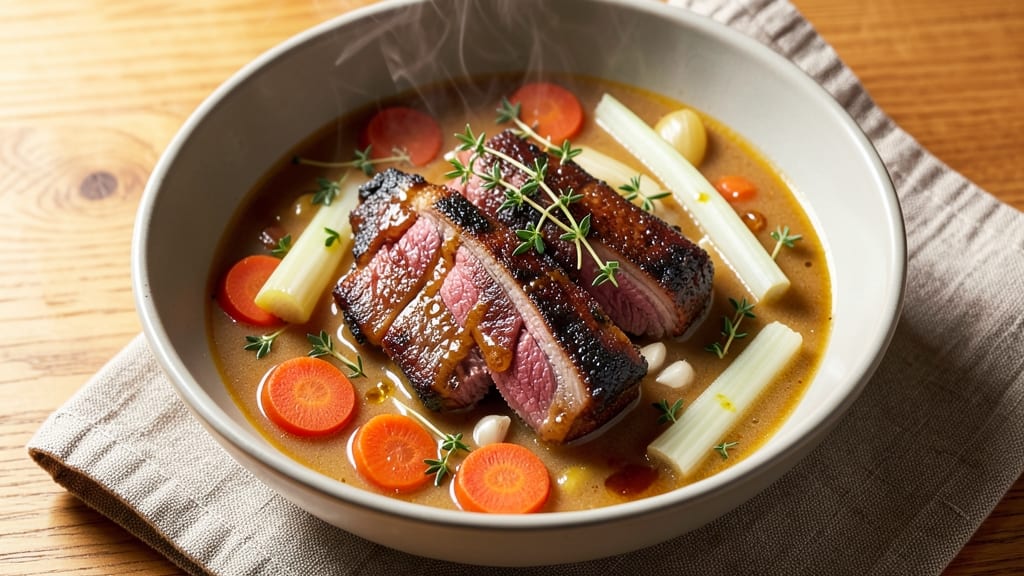
This short rib soup recipe delivers melt-in-your-mouth beef and deep, savory broth that transforms a simple weeknight into a restaurant-worthy meal. The secret lies in slow-simmering short ribs until they practically fall apart, infusing the broth with unmatched richness.
What starts as tough, flavorful beef becomes tender, fork-tender perfection—just like your favorite bistro dish, but made at home.
The process begins with searing the short ribs to lock in juices, then simmering them low and slow in aromatic vegetables and herbs. Carrots, celery, and onions build the foundation, while thyme and bay leaves add earthy depth.
The result? A velvety, deeply flavorful soup where every spoonful delivers tender beef and aromatic broth that feels like a warm hug in a bowl.
This recipe requires patience—about 3 to 4 hours of simmering—but the reward is worth it. The short ribs become so tender they dissolve at the touch of a fork, while the broth reduces to a concentrated, umami-rich elixir.
Garnish with fresh parsley or crispy croutons for texture, and you’ve got a soup that’s equal parts comforting and impressive.
Perfect for chilly evenings or when you crave a meal that feels like a celebration. The technique is straightforward, but the flavors are anything but—this is the kind of soup that lingers long after the last bite. Let’s get started on creating something truly special.
Ingredients for short rib soup
Pantry staples plus a few specialty items for restaurant-quality short rib soup.
| Ingredient | Amount | Notes |
|---|---|---|
| Beef Short Ribs 🥩 | 2 lb | Bone-in, cut into 2-inch pieces |
| Yellow Onion 🧅 | 1 whole | Chopped into 1-inch pieces |
| Carrots 🥕 | 4 medium | Peeled, cut into 1-inch chunks |
| Celery Stalks 🧄 | 4 whole | Chopped into 1-inch pieces |
| Garlic Cloves 🧄 | 6 cloves | Smashed, not minced |
| Fresh Thyme 🌿 | 2 tbsp | Leaves only, stems removed |
| Bay Leaves 🌿 | 2 whole | Dried, standard size |
| Tomato Paste 🍅 | 2 tbsp | Smooth, not chunky |
| Beef Broth 💧 | 6 cups | Low-sodium preferred |
| Dry Red Wine 🍷 | 1 cup | Bold, like Cabernet Sauvignon |
| Olive Oil 🫒 | 2 tbsp | Extra-virgin for searing |
| Salt 🧂 | 1 ½ tsp | Kosher or sea salt |
| Black Pepper 🌶️ | ½ tsp | Freshly ground |
| Fresh Parsley 🌿 | ¼ cup | Chopped, for garnish |
| Crusty Bread 🍞 | 1 loaf | For serving, optional |
The beef short ribs are the star—bone-in, cut into 2-inch pieces for maximum flavor. Costco or local butchers usually have the best selection, but any grocery store with a meat counter will work. Look for good marbling and avoid pre-cut ribs that look dry. Fresh thyme and bay leaves make all the difference—Trader Joe's has great pre-bundled herb mixes if you're short on time. The carrots and celery should be firm with no soft spots, and the onion should feel heavy for its size. If you can't find beef broth, chicken or vegetable broth with a splash of soy sauce works in a pinch.
No red wine? Substitute with extra beef broth—just add 1/4 cup more. Fresh herbs wilt fast, so dried thyme at half the amount works if needed. The tomato paste can be swapped for 1/4 cup crushed tomatoes if you're out. For a deeper flavor, add 1 tsp Worcestershire sauce (check for vegetarian version if needed). The crusty bread is optional but perfect for soaking up that rich broth—garlic bread or sourdough both work beautifully. If you're making this ahead, the ribs actually taste better the next day as the flavors meld even more.
This soup keeps for 5 days in the fridge—the flavors only get better with time. For longer storage, freeze portions for up to 3 months. I like to portion it into containers with a little extra broth on top to prevent a freezer burn. The ribs reheat beautifully—just bring to a simmer and let them warm through. Garnish with fresh parsley right before serving to keep it vibrant. Leftovers make amazing sandwiches the next day with extra bread and a drizzle of broth.
Why You'll Love This Recipe
- One-Pot Magic: I swear by this—just toss the ribs, veggies, and broth in one pot, walk away, and let the slow simmer do all the work. No chopping boards, no mess, just pure hands-off cooking.
- Rich Without Effort: That first bite? The ribs practically melt in your mouth while the carrots and celery turn tender but still hold their shape. Honestly, the flavor builds with every sip—no fancy techniques, just deep, savory goodness.
- Leftovers That Don’t Suck: This soup only gets better the next day. I make a double batch on Sundays, and by Wednesday, it’s still the star of my lunch. Freezer-friendly too—just reheat and enjoy.
- Budget Beef Boost: Short ribs are cheaper than steak but pack just as much flavor. A few pounds go a long way, and I stretch them across meals without sacrificing taste. My wallet and taste buds win.
Step-by-step instructions for short rib soup
Here's how to create a deeply flavorful soup where tender short ribs practically melt in your mouth.
Sear the Short Ribs for Maximum Flavor
Heat a large Dutch oven over medium-high heat and add the 2 tablespoons olive oil. Once shimmering, add the 2 lb beef short ribs in a single layer, working in batches if needed. Sear undisturbed for 4-5 minutes until deeply browned on all sides—this caramelization builds the soup's rich foundation.
Real talk: don't rush this step. You want those ribs to develop a dark, crusty sear. If they stick, that's normal—just gently nudge them with a wooden spoon. Once all sides are browned, transfer the ribs to a plate and set aside. You'll notice the aroma alone makes the kitchen smell like a Parisian bistro.
Build the Aromatic Base
In the same Dutch oven, add the 1 whole yellow onion, 4 medium carrots, and 4 whole celery stalks—all chopped to 1-inch pieces. Cook for 5-6 minutes until softened and slightly golden, stirring occasionally. Add the 6 smashed garlic cloves and cook for another 30 seconds until fragrant.
Here's the thing—those vegetables should release their juices and create a light paste at the bottom of the pot. This forms the flavor base for your soup. If you see any browned bits sticking, don't scrape them yet—we'll deglaze later. The vegetables will continue cooking in the broth, so they don't need to be fully tender yet.
Deglaze and Simmer the Soup
Pour in the 1 cup dry red wine and scrape up all those browned bits from the bottom with a wooden spoon. Let the wine simmer for 2-3 minutes until reduced by half. Stir in the 2 tablespoons tomato paste, 2 tablespoons fresh thyme, 2 whole bay leaves, 1.5 teaspoons salt, and 0.5 teaspoon black pepper.
Now add the 6 cups beef broth and return the seared short ribs to the pot. Bring to a gentle boil, then reduce heat to low and cover partially. This is where patience pays off—simmer for 2.5 to 3 hours until the meat is fork-tender and falls apart easily. You'll know it's ready when the ribs pull away from the bone with minimal resistance.
Finish and Serve with Fresh Herbs
Once the ribs are tender, carefully remove them from the broth and transfer to a cutting board. Using two forks, shred the meat into bite-sized pieces, discarding any large bones. Return the shredded meat to the pot and stir to combine. Taste and adjust seasoning if needed—you might want to add a pinch more salt or a splash of wine for brightness.
Remove the bay leaves and stir in the 0.25 cup chopped fresh parsley just before serving. The parsley adds a fresh contrast to the rich, meaty broth. Ladle the soup into bowls and serve with warm crusty bread on the side. Each spoonful should deliver that perfect balance of tender meat, aromatic vegetables, and deep, wine-infused flavor.
Pro Tips For Making Short Rib Soup
- CRANK THE HEAT FIRST: Don’t start slow with short ribs—sear them hard over medium-high heat for 4-5 minutes per side until deep brown. I used to rush this, and the soup never had that rich, caramelized depth. A cast-iron or heavy pot keeps the heat where it belongs.
- CUT RIBS UNIFORMLY: Trim excess fat but leave a thin layer—it renders flavor. Then slice the bones into 1.5-inch chunks so they cook evenly. My first batch had some ribs too thick, and they turned rubbery while the smaller pieces fell apart.
- SAVE THE VEGETABLE WATER: When rough-chopping carrots and celery, keep the vegetable scraps and reserve the water they release. Add it to the pot later—it’s packed with natural sweetness and prevents the soup from drying out.
- DON’T SKIP THE MISO PASTE: If you’re using it (and you should), whisk it into the broth after the ribs have simmered for 2 hours. The umami blooms properly, but add it too early, and the flavor gets muddy. I learned this after a bland, underwhelming batch.
Pro cooking tips for perfect results
Searing Secrets
Sear your short ribs until they develop a deep mahogany crust—this isn't just for looks, it's where the Maillard reaction creates complex flavors that carry through the entire soup. I like to use a 6-quart Dutch oven because it gives enough space to sear ribs in batches without crowding.
If your ribs stick, don't panic—just let them cook undisturbed for that perfect crust. Medium-high heat is key here: too low and you'll steam them instead of sear. 🔥
Deglaze Like a Pro
The moment you add 1 cup dry red wine to deglaze, scrape every last browned bit from the pot—those bits are pure flavor gold. Let the wine reduce by half before adding tomato paste and herbs.
This step builds the soup's depth. I always use Cabernet Sauvignon because its bold tannins complement the beef beautifully. If you're avoiding alcohol, substitute with extra beef broth plus 1 teaspoon balsamic vinegar for acidity.
Simmering Precision
Your soup needs 2.5 to 3 hours of gentle simmering at low heat—this isn't the time to rush. The ribs should be fork-tender, falling apart when pressed. I use an instant-read thermometer to check doneness: the meat should reach 195-205°F internally.
The broth will reduce naturally, concentrating flavors. Never boil vigorously after adding broth, or you'll cloud the liquid.
Vegetable Timing
The carrots, celery, and onions should soften during simmering but remain intact—not mushy. I add them with the ribs so they absorb the meat's flavors. For extra sweetness, add 1 small parsnip along with the carrots.
If you prefer your vegetables more tender, remove them 20 minutes before the ribs finish cooking. The garlic should infuse but not burn—smash the cloves instead of mincing to prevent them from disappearing.
Finishing Touches
Always add fresh parsley just before serving—it brightens the rich flavors. I like to make a quick parsley garnish by blending 1/4 cup parsley with 1 tablespoon olive oil and a pinch of salt, then drizzling it over the soup.
For texture contrast, serve with toasted baguette croutons (toss bread cubes with olive oil and rosemary, then bake at 375°F for 8-10 minutes). The croutons should be crispy but not burnt.
Make-Ahead Magic
This soup tastes even better the next day as flavors meld. Refrigerate in an airtight container for up to 5 days. For freezing, portion into quart-sized containers with a little extra broth on top to prevent freezer burn.
Thaw overnight in the fridge, then reheat gently on the stove—never microwave, as it can make the broth watery. The ribs reheat beautifully, becoming even more tender. 💫
Nutrition facts
Frequently asked questions
Why do short ribs need such a long cooking time?
Short ribs contain tough connective tissue that breaks down during slow cooking, transforming into gelatin that enriches the broth. The 2.5 to 3 hours of simmering at low heat ensures the meat becomes fork-tender while developing deep, complex flavors. This method creates that luxurious, melt-in-your-mouth texture that defines great short rib dishes.
Can I use beef chuck roast instead of short ribs?
Yes, but expect different results. Chuck roast will be more tender and cook faster (2 hours), but lacks the rich, beefy flavor of short ribs. For a true short rib experience, stick with bone-in beef short ribs—the bones add depth to the broth. If you must substitute, use 2-3 pounds of chuck cut into large chunks.
How do I know when the short ribs are done?
They're ready when they pull away from the bone with minimal resistance and are fork-tender. For precision, use a meat thermometer—the internal temperature should reach 195-205°F. The broth will also reduce significantly, becoming more concentrated and flavorful. Never rush this step—patience is key for perfect texture.
What if my soup tastes too salty?
If your soup is over-salted, add 1/2 cup cold water or beef broth and simmer for 5 minutes to dilute the salt. For a more dramatic fix, blend 1/2 cup soup with 1/4 cup milk or cream and stir it back in—this dilutes the salt while adding richness. Taste before adding more ingredients to avoid over-diluting.
Can I make this soup in an Instant Pot?
Yes! Sear the ribs first, then add all ingredients and cook on high pressure for 60 minutes, followed by a 15-minute natural release. The ribs will be tender, but the broth won't reduce as much. For deeper flavor, finish by simmering on the stove for 10-15 minutes to concentrate the liquid. The Instant Pot cuts cooking time to about 1.5 hours total.