
Soups & Stews
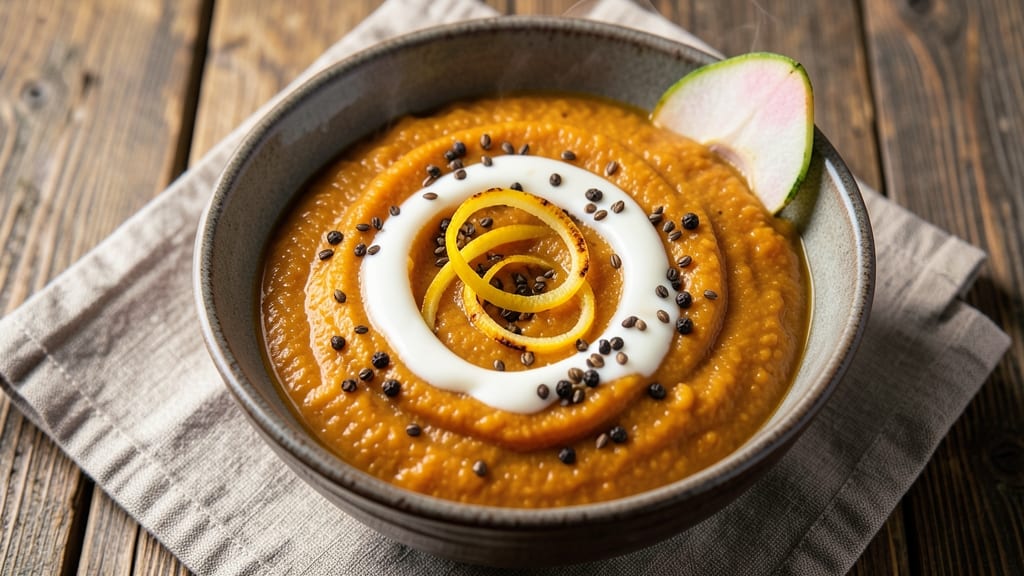
This Ayurvedic pumpkin soup recipe transforms simple ingredients into a deeply nourishing elixir that warms the body and soothes the soul. The golden turmeric and warming spices—cumin, ginger, and black pepper—create a harmony that balances Vata and Kapha doshas, making it perfect for autumn's cooler days.
What sets this apart is the traditional approach: slow-cooked pumpkin infused with fresh herbs and spices, resulting in a velvety texture that's both comforting and health-boosting.
The recipe emphasizes authentic Ayurvedic techniques, like toasting whole spices to unlock their flavors and using coconut milk for a creamy base without dairy. You'll love how the natural sweetness of pumpkin pairs with earthy spices, creating a soup that's as beneficial as it is delicious.
It's naturally vegetarian, gluten-free, and packed with immune-supporting properties—ideal for anyone seeking a wholesome, seasonal dish.
By the time you finish, you'll have a rich, aromatic soup with a vibrant golden hue, thanks to the turmeric. The spices not only enhance flavor but also aid digestion and circulation, making this more than just a meal—it's a wellness ritual.
Serve with a drizzle of coconut yogurt or toasted nuts for added crunch and texture, elevating it to a restaurant-worthy experience.
This soup is designed to be foolproof yet deeply traditional, blending ancient wisdom with modern convenience. Whether you're new to Ayurveda or a seasoned practitioner, the step-by-step method ensures you achieve the perfect balance of warmth, spice, and nourishment. Ready to create a bowl of golden harmony?
Ingredients for ayurvedic pumpkin soup
Golden turmeric, earthy spices, and velvety coconut milk come together for this nourishing Ayurvedic elixir.
| Ingredient | Amount | Notes |
|---|---|---|
| Sugar Pumpkin (or Kabocha) 🎃 | 2 lbs | Peeled, cubed, seeds removed |
| Coconut Milk (full-fat) 🥥 | 1 can (13.5 oz) | For creamy texture without dairy |
| Fresh Turmeric Root 🌿 | 1 tbsp | Freshly grated, vibrant color |
| Fresh Ginger Root 🌿 | 1 tbsp | Freshly grated, organic preferred |
| Ground Cumin Seeds 🌾 | 1 tbsp | Toasted for deeper flavor |
| Black Peppercorns 🌶️ | ½ tsp | Freshly ground, potent heat |
| Ground Coriander Seeds 🌿 | 1 tsp | Toasted lightly for aroma |
| Fresh Cilantro Leaves 🌱 | ¼ cup | Chopped, stems removed |
| Fresh Fenugreek Leaves 🌿 | ⅛ cup | Mild, slightly bitter |
| Ghee (or Vegan Butter) 🧈 | 2 tbsp | For sautéing spices |
| Vegetable Broth 💧 | 4 cups | Low-sodium, homemade preferred |
| Coconut Yogurt 🥛 | ¼ cup | For garnish, unsweetened |
| Toasted Cashews 🥜 | ¼ cup | Chopped, for crunch |
| Sea Salt 🧂 | 1 tsp | Diamond Crystal preferred |
| Maple Syrup 🍁 | 1 tbsp | For subtle sweetness |
The pumpkin is the heart of this soup—sugar pumpkin or kabocha both work beautifully, but kabocha has a sweeter, denser texture that holds up perfectly. Trader Joe's and Whole Foods carry pre-cubed kabocha in the fall, saving you time. If using fresh turmeric and ginger, look for organic roots with bright, unblemished skin—they'll have more punch. Toasting your whole spices (cumin, coriander) in ghee before adding broth unlocks their flavors—don't skip this step. For fenugreek, check the Indian aisle at Whole Foods or order online if your local store doesn't carry it.
No fresh turmeric? Ground turmeric at half the amount works, but fresh has more vibrant color and potency. Short on coconut yogurt? Plain coconut milk blended with lemon juice mimics the tang. The cilantro and fenugreek can be swapped for baby spinach at double the amount if you're not keen on the flavors. For a deeper spice profile, add a pinch of asafoetida (hing), an Ayurvedic staple found in Indian markets. The maple syrup is purely optional—adjust to taste, but remember this soup is meant to be subtly sweet, not cloying.
This soup tastes even better the next day as the flavors meld—portion into containers for easy lunches. Store in the fridge for 4-5 days, or freeze portions for up to 3 months. For reheating, add a splash of water or broth to prevent thickening. The cashews and coconut yogurt should be added fresh when serving—toast the cashews in a dry pan for 2-3 minutes right before garnishing to keep them crisp. Serve with warm whole-grain naan or a sprinkle of hemp seeds for extra protein.
Why You'll Love This Recipe
- One-Pot Magic: I swear by this recipe when I’m too tired to wash extra bowls. Sugar pumpkin, coconut milk, and a quick sauté of fresh turmeric and ginger—just toss everything in one pot, simmer, and blend. The only cleanup is the pot itself, and honestly, that’s a win on a Tuesday night.
- Golden Spice Bomb: Between us, the combo of ground cumin and fresh ginger is chef’s kiss—warm, earthy, and just a little fiery. The turmeric gives it that signature golden glow, but it’s the coconut milk that makes it rich without being heavy. One sip and you’ll forget about takeout.
- Meal Prep MVP: This soup keeps like a dream—three days in the fridge, no weird texture changes. I make a big batch on Sundays, portion it out, and reheat it for lunches or quick dinners. The cumin deepens overnight, so leftovers actually taste better than the first round.
- Budget-Friendly Luxury: Fresh turmeric and ginger might sound fancy, but they’re cheaper than pre-ground spices and last forever in the freezer. Sugar pumpkin is often cheaper than butternut, and coconut milk stretches the flavor without breaking the bank. It’s the kind of dish that feels indulgent but won’t drain your wallet.
Step-by-step instructions for Ayurvedic pumpkin soup
Let's create this velvety, spice-infused soup that balances warmth and harmony in every bowl.
Prepare the Pumpkin and Toast the Spices
Peel and cube the 2 lbs sugar pumpkin (or kabocha) into 1-inch pieces, removing any seeds. Set aside. In a dry skillet over medium heat, toast the 1 tbsp ground cumin seeds and 1 tsp ground coriander seeds for 2-3 minutes until fragrant and lightly golden. This step awakens their earthy aromas—don't walk away, as they burn quickly.
While the spices toast, finely grate the 1 tbsp fresh turmeric root and 1 tbsp fresh ginger root using a microplane. The vibrant yellow of the turmeric and the sharp aroma of ginger will transform your kitchen. Transfer the toasted spices to a small bowl and set aside with the grated roots.
Sauté the Aromatics in Ghee
Melt the 2 tbsp ghee (or vegan butter) in a large pot over medium heat until it shimmers. Add the toasted cumin and coriander seeds, grated turmeric, and ginger, stirring constantly for 1 minute until the spices sizzle and release their oils. This creates the flavor foundation—don't rush this step.
Add the chopped 0.25 cup fresh cilantro leaves and 0.125 cup fresh fenugreek leaves, stirring for 30 seconds until the herbs wilt slightly. The fenugreek adds a subtle bitterness that balances the sweetness of the pumpkin. Keep the heat at medium to prevent burning the delicate leaves.
Simmer the Pumpkin in Vegetable Broth
Add the cubed pumpkin and 4 cups vegetable broth to the pot, stirring to combine. Bring to a gentle boil, then reduce heat to low and let it simmer uncovered for 20-25 minutes, until the pumpkin is fork-tender and easily pierced with a knife. You'll notice the soup thicken slightly as the pumpkin releases its natural sweetness.
Season with the 1 tsp sea salt and 1 tbsp maple syrup, stirring well. Taste and adjust the balance—you want the sweetness of the pumpkin to harmonize with the earthy spices. The maple syrup enhances the natural sweetness without overpowering the Ayurvedic spices.
Blend and Finish with Coconut Milk
Using an immersion blender, blend the soup directly in the pot until completely smooth. For a silky texture, blend in batches if needed. Stir in the 1 can (13.5 oz) full-fat coconut milk, warming it slightly first if it's refrigerated. The coconut milk adds a luxurious creaminess without dairy.
Simmer the soup for an additional 5 minutes to let the flavors meld. Taste again and adjust seasoning if needed—this is your chance to perfect the balance of sweet, spicy, and earthy notes. The golden turmeric should give the soup a beautiful hue and a gentle warmth.
Garnish and Serve with Crunchy Toppings
Ladle the soup into bowls and garnish with dollops of 0.25 cup coconut yogurt and a sprinkle of 0.25 cup toasted cashews. The yogurt adds a cooling contrast to the spiced soup, while the cashews provide a satisfying crunch. Serve immediately while the soup is steaming hot.
Each spoonful should deliver a perfect balance of warmth from the spices, sweetness from the pumpkin and maple syrup, and creaminess from the coconut milk. The contrast of textures and temperatures makes this Ayurvedic pumpkin soup a truly comforting dish.
Pro Tips For Making Ayurvedic Pumpkin Soup
- Peel the Ginger Thin: That thick, fibrous skin on fresh ginger is a pain to scrape—just slice it paper-thin with a sharp knife first. You’ll save minutes and avoid wasting the good stuff, especially since this soup needs that bright, zesty kick.
- Roast the Pumpkin First: Toss peeled, cubed pumpkin in oil with a pinch of salt and roast at 400°F (200°C) for 20 minutes before blending. The caramelized edges deepen the flavor and make the soup taste richer without extra coconut milk.
- Grate, Don’t Mince, Turmeric: Fresh turmeric root holds its earthy punch better when grated on a microplane than chopped—no bitter almond aftertaste. Use about 1 teaspoon (packed) for a golden hue and real warmth, not just color.
- Bloom the Cumin Dry: Toast the ground cumin in a dry pan for 30 seconds until fragrant before adding liquids. Skipping this step leaves the spices tasting flat—like putting perfume on after the shower instead of before.
Regional styles of these flavors
Indian Ayurvedic Style
In traditional Indian Ayurveda, this soup is often called kaddu ka halwa when sweetened, but the savory version mirrors the principles. I add 1 tsp asafoetida (hing) to the ghee for its umami depth and digestive benefits—it's a must in authentic preparations.
The spices are toasted longer (up to 5 minutes) until they turn a deep golden color, which enhances their medicinal properties. Serve with warm basmati rice and a side of pickled mango to balance the richness. 🌶️
Japanese Kabocha Tradition
Japanese chefs use kabocha squash for its dense, sweet flesh and prepare it with mirin and soy sauce for umami. I swap the coconut milk for 1 cup dashi broth and add 1 tbsp mirin with the maple syrup.
Garnish with toasted sesame seeds and a drizzle of yuzu kosho for a bright citrus kick. The result is lighter but equally comforting, perfect for a winter izakaya-style meal. 🍵
Middle Eastern Spiced Twist
For a Middle Eastern adaptation, I replace fenugreek with 1 tsp ground sumac and add ½ tsp ground cardamom to the spice toast. The coconut milk is swapped for 1 cup Greek yogurt (or coconut yogurt for vegan) and a splash of lemon juice for tang.
Top with toasted pine nuts and a sprinkle of za'atar for a fragrant, herby finish. This version pairs beautifully with warm pita bread and olive oil. 🥙
European Herbal Adaptation
European cooks might use butternut squash instead of pumpkin and infuse the broth with 1 sprig fresh thyme and 1 bay leaf. I reduce the black pepper to ¼ tsp and add ½ tsp ground nutmeg for warmth.
Finish with crème fraîche (or coconut yogurt) and toasted hazelnuts for a rustic, autumnal feel. This version feels familiar yet retains the Ayurvedic soul. 🌿
Modern Fusion Approach
For a contemporary twist, I blend in ½ cup roasted red peppers with the pumpkin for smoky depth and add 1 tsp smoked paprika to the spice toast. The coconut milk stays, but I stir in 1 tbsp tahini at the end for a nutty richness.
Garnish with avocado slices and chili oil for a vibrant, restaurant-worthy presentation. This version works as a vegan starter for any seasonal menu. ✨
Nutrition facts
Frequently asked questions
Can I substitute butternut squash for pumpkin in this Ayurvedic recipe?
Butternut squash works beautifully—it has a slightly sweeter, nuttier flavor that pairs wonderfully with the spices. Use the same 2 lbs amount, but peel and cube it into slightly smaller pieces (½-inch) since it's denser. The texture will be slightly creamier when blended, so you might need to add an extra ¼ cup vegetable broth if it's too thick after blending.
Why does Ayurveda recommend toasting the spices?
Toasting spices in ghee (or oil) enhances their flavors by releasing essential oils and reducing moisture, making them more potent. In Ayurveda, this process also activates their medicinal properties—like improving digestion (cumin) and circulation (turmeric). Plus, the aroma becomes more complex, creating that signature warm, spiced harmony in every spoonful.
How do I adjust this recipe for Vata, Pitta, or Kapha doshas?
For Vata: Add ½ tsp fennel seeds to the spice toast and a drizzle of ghee on top for grounding warmth. For Pitta: Reduce black pepper to ¼ tsp and add ½ cup coconut milk extra to cool the heat. For Kapha: Increase ginger to 1.5 tbsp and add ½ tsp cayenne for metabolism-boosting spice.
Can I make this soup ahead of time, and how long does it last?
This soup tastes even better the next day! Store in an airtight container in the fridge for 4-5 days or freeze portions for up to 3 months. When reheating, add 2 tbsp water or broth per serving to prevent thickening. The flavors deepen overnight, making it perfect for meal prep—just reheat gently and garnish fresh toppings before serving.
What if I don't have fresh turmeric or ginger?
No problem! Use ½ tsp ground turmeric (double the amount) and ½ tsp ground ginger instead. For extra potency, add a pinch of black pepper—it enhances turmeric's anti-inflammatory benefits (curcumin absorption!). If you're using dried ginger, toast it lightly in the ghee with the other spices to wake up its flavor.