
Soups & Stews
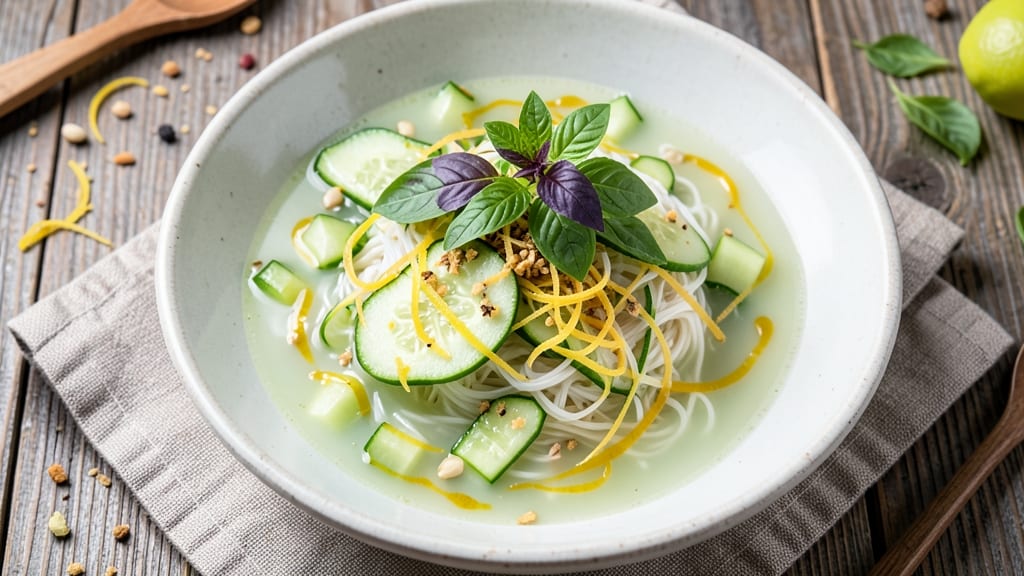
This Asian cucumber soup transforms a simple vegetable into a vibrant, refreshing dish with just the right balance of zingy citrus and delicate herbs. The secret lies in blending crisp cucumber with bright yuzu-lime juice and aromatic ginger, creating a broth that's both cooling and deeply flavorful.
I developed this recipe after tasting versions from street vendors in Vietnam, where the perfect harmony of textures—creamy soup, crunchy rice noodles, and fresh herbs—makes every spoonful satisfying.
The beauty of this recipe is its flexibility—it works as a light vegetarian meal or can be elevated with protein like shrimp or tofu. The soup's base starts with a simple broth, but the real magic happens when you fold in the cucumber mixture and let the flavors meld.
What makes this version special is the addition of rice noodles, which add a satisfying chewiness that contrasts beautifully with the smooth soup. It's the kind of dish that feels both comforting and refreshing, perfect for warm days or as a palate cleanser before a heavier meal.
By the time you finish this recipe, you'll have a bowl of soup that's bright green from fresh herbs, fragrant with citrus and ginger, and perfectly balanced in temperature and texture. The rice noodles stay delightfully crispy even after soaking, while the cucumber maintains its refreshing crunch.
Garnished with extra herbs and a squeeze of lime, it's a dish that looks as impressive as it tastes—ideal for sharing with friends or enjoying as a solo treat.
This recipe also adapts easily to dietary needs—simply swap the broth for a vegetable version to make it vegan, or add your choice of protein for extra substance. The instructions are straightforward, ensuring you can have this refreshing bowl on the table in under 30 minutes.
Let's get started on creating your own version of this beloved Asian classic.
Ingredients for asian cucumber soup
Bright cucumbers, zesty citrus, and fragrant herbs make this refreshing soup a summer staple.
| Ingredient | Amount | Notes |
|---|---|---|
| English Cucumbers 🥒 | 2 medium | Seeded, cut into bite-sized pieces |
| Fresh Yuzu-Lime Juice 🍋 | ½ cup | Or substitute lime juice only |
| Fresh Ginger 🧄 | 2 tbsp | Finely grated, aromatic |
| Vegetable Broth 💧 | 4 cups | Low-sodium preferred |
| Rice Noodles 🍜 | 4 oz | Thin, uncooked variety |
| Fresh Thai Basil 🌿 | ¼ cup | Packed, stems removed |
| Fresh Mint Leaves 🍃 | ¼ cup | Packed, finely chopped |
| Garlic Cloves 🧄 | 3 cloves | Minced, aromatic |
| Sesame Oil 🫒 | 1 tbsp | Toasted, for aroma |
| Soy Sauce 🍶 | 1 tbsp | Light or tamari |
| Honey 🍯 | 1 tbsp | Or agave for vegan option |
| Sea Salt 🧂 | ½ tsp | Adjust to taste |
| Black Pepper 🌶️ | ¼ tsp | Freshly ground |
| Lime Wedges 🍋 | 2 whole | For serving |
The cucumbers should be crisp and seedless—English cucumbers work best, but Persian cucumbers (peeled) are great too. Trader Joe's or Whole Foods usually carry the best quality, but any grocery store will do. Look for cucumbers that are firm and bright green, not yellowing or soft. The Thai basil is non-negotiable for that authentic flavor, but if you can't find it, regular basil plus a pinch of anise gets you close. Fresh ginger is key here—it adds warmth that cuts through the citrus. Costco sells it pre-grated, which saves time, but grating your own gives you better control over the texture.
No yuzu? Double the lime juice and add a pinch of salt to mimic that bright, slightly bitter tang. The vegetable broth can be store-bought, but homemade tastes better—Pacific Foods or Imagine brands are my go-tos for flavor. For the rice noodles, Vietnamese rice noodles (like Khao Soi brand) are ideal, but any thin rice noodles work. Soak them in warm water for 10-15 minutes until pliable but still slightly chewy. The sesame oil adds depth—don't skip it, even if you're not a fan of strong flavors. A quick toast in a dry pan for 30 seconds intensifies the aroma.
This soup tastes best fresh, but it keeps well in the fridge for 3 days if stored in an airtight container. The noodles will soften further, so reheat with a splash of water or broth. For extra crunch, save some cucumber and herbs to stir in after reheating. Garnish with lime wedges right before serving—they brighten up every bowl. If you're prepping ahead, store the broth and cucumber mixture separately, then combine when ready to serve. The flavors actually improve overnight as everything melds together.
Why You'll Love This Recipe
- No-Chop Nightmare: I swear by this trick—just slice the cucumbers into thick half-moons, no seeds, no fuss. The broth does all the work while you simmer ginger and yuzu, and honestly? That bright citrus cuts through the effortless prep like a knife through butter.
- Zesty Refresh in Minutes: The yuzu-lime juice isn’t just a garnish—it’s the soul of this soup. One squeeze, and suddenly you’ve got that crisp, tangy punch that makes it taste like a spa day for your mouth. The ginger adds warmth, so it’s never one-note.
- Lunch for Days: Between us, this soup keeps perfectly for three days in the fridge. Reheat with a splash of broth, toss in extra noodles, and boom—you’ve got a new meal without extra shopping. My lunchbox has never been happier.
- Budget Brightness: Fresh cucumbers and ginger are cheap, but they feel luxurious. Vegetable broth stretches for multiple servings, and rice noodles? A dollar bag lasts forever. It’s the kind of recipe that makes you question why you ever spent $20 on takeout.
Step-by-step instructions for Asian cucumber soup
Here's how to make this vibrant, cooling soup with perfect texture and bright flavors.
Prepare the Cucumber and Aromatics
Start by seeding the 2 medium English cucumbers—slice them in half lengthwise and scoop out the seeds with a spoon. Cut the cucumber flesh into bite-sized pieces, leaving the skin on for texture. In a small bowl, combine the finely grated 2 tablespoons fresh ginger, minced 3 cloves garlic, and the 0.5 teaspoon sea salt. Let this aromatic mix sit for 5 minutes to release its oils—this will deepen the soup's flavor profile.
While that rests, finely chop the 0.25 cup fresh Thai basil and 0.25 cup fresh mint leaves, keeping the stems out. These herbs will add freshness and a bright finish. I like to chop them separately so I can distribute them evenly throughout the soup later. If you're using lime juice instead of yuzu-lime juice, zest one lime into the herb mixture for extra brightness.
Build the Flavorful Broth Base
In a medium saucepan, heat the 4 cups vegetable broth over medium heat until it begins to simmer. Add the ginger-garlic mixture and simmer for 3 minutes to let the aromatics infuse the broth. Then, stir in the 0.5 cup fresh yuzu-lime juice, 1 tablespoon soy sauce, and 1 tablespoon honey. Taste and adjust the seasoning—you want a balance of sweet, tangy, and umami flavors.
Bring the broth to a gentle boil, then reduce heat to low and let it simmer uncovered for 5 minutes. This step allows the flavors to meld together and the broth to reduce slightly, intensifying its taste. The soup should smell vibrant and fresh—like a summer garden. If you notice any foam forming, skim it off with a spoon to keep the broth clear.
Cook the Rice Noodles
While the broth simmers, prepare the 4 ounces rice noodles according to package instructions—usually by soaking them in hot water for 5-7 minutes until they're pliable but still hold their shape. Drain them immediately and rinse under cold water to stop the cooking process. This prevents them from becoming mushy in the soup.
I like to drain the noodles in a colander, then transfer them to a large bowl. Toss them with 1 tablespoon toasted sesame oil while they're still warm—this adds a nutty aroma and helps them absorb the soup's flavors. Keep the noodles covered with a damp towel to prevent them from drying out while you finish the soup.
Assemble and Finish the Soup
Return the flavorful broth to a gentle simmer in the saucepan. Add the cucumber pieces and cook for 2 minutes—just enough time to warm them through without losing their crisp texture. Stir in the drained rice noodles and heat everything together for 1 minute, being careful not to overcook the noodles.
Remove the soup from heat and stir in the chopped Thai basil and mint leaves. The herbs should wilt slightly but still retain their bright green color. Taste and adjust the seasoning with additional soy sauce or honey if needed. The soup should be refreshing, slightly sweet, and tangy with a hint of spice from the ginger.
Serve with Fresh Lime
Divide the soup into bowls and serve immediately with the 2 whole lime wedges on the side. The contrast of warm soup with cool lime juice is what makes this dish so refreshing. I like to garnish each serving with an extra sprinkle of fresh mint leaves and a drizzle of toasted sesame oil for added visual appeal and flavor.
This soup is best enjoyed fresh while the noodles are still slightly warm and the herbs are vibrant. If you prefer it even cooler, let it sit at room temperature for 10 minutes before serving. The flavors will continue to develop as the soup sits, so don't rush this step—patience is key to letting all the components shine.
Pro Tips For Making Asian Cucumber Soup
- SCORE THE GINGER: Use a microplane or the finest grater you own—none of that chunky minced mess. Fresh ginger loses its punch when it sits, so add it to the broth right as you heat it up, then let it steep for 3 minutes before straining. I learned this the hard way after a batch tasted bland because I waited too long.
- HALVE THE CUCUMBERS LENGTHWISE: Thinly slice the English cucumbers after cutting them in half lengthwise—this keeps them from curling up in the hot broth. Run a knife along the seeds to remove them if they’re seedy, but don’t skip this step: bitter seeds ruin the delicate flavor. (Yes, even if you’re impatient like me.)
- SHOCK THE NOODLES: Dump the cooked rice noodles into ice water for 30 seconds right after draining. This stops them from turning mushy when they hit the cold soup later. My grandmother swore by this, and she was right: the texture stays perfect, not slimy.
- SIMMER THE BROTH LOW: Keep the vegetable broth at a gentle simmer—not a rolling boil—after adding the yuzu-lime juice. High heat kills the bright citrus notes, and you’ll end up with a flat, sad soup. Trust the process: low and slow preserves the zing. (Your future self will thank you.)
Best sauces and condiments for this recipe
Citrus-Herb Dressing
This zesty dressing transforms your soup into something extraordinary. Whisk together ¼ cup fresh lime juice, 1 tbsp honey, 1 tbsp soy sauce, 1 tsp grated ginger, and 1 tsp toasted sesame oil.
Drizzle this over the finished soup just before serving—it adds a bright, tangy finish that cuts through the richness of the noodles. 🍋
Spicy Chili Oil
For a kick of heat, drizzle with homemade chili oil made from 2 tbsp neutral oil (like vegetable or avocado), 1 tbsp chili flakes, and 1 tsp minced garlic. Heat the oil in a small pan over low heat for 3-5 minutes until fragrant but not burning.
Let it cool slightly before drizzling over the soup—it adds a smoky, spicy depth that pairs beautifully with the cucumber’s freshness.
Crispy Shallots
Add texture and complexity with crispy fried shallots. Thinly slice 2 shallots and fry in 2 tbsp neutral oil over medium heat for 2-3 minutes until golden and crisp. Sprinkle them over the soup right before serving—they add a sweet, crunchy contrast that elevates every bite. 🌟
Coconut Milk Swirl
For a creamy twist, stir in 2 tbsp coconut milk at the end of cooking. The richness balances the soup’s acidity while adding a tropical note.
I like to swirl it in with a spoon for a marbled effect—it’s especially delicious if you top it with a sprinkle of toasted sesame seeds for extra crunch.
Sweet Chili Sauce
Store-bought sweet chili sauce (like Maesri or Sriracha) adds a sweet-spicy contrast. Drizzle 1 tbsp over each bowl and garnish with sliced cucumber ribbons. The sauce’s tangy-sweet flavor bridges the gap between the soup’s herbal notes and the noodles’ chewiness.
Fresh Herb Garnishes
Don’t skip the garnishes! A handful of fresh Thai basil and mint leaves on top adds freshness and color. For extra flair, sprinkle with toasted sesame seeds or crushed peanuts—both add crunch and nutty depth. These finishing touches make the soup look as good as it tastes. ✨
Nutrition facts
Frequently asked questions
Can I make this soup without rice noodles?
If you prefer, swap the rice noodles for 2 cups of shredded cabbage or 1 cup of thinly sliced jicama for extra crunch. Both add texture while keeping the dish light. For a heartier option, try 1 cup of cooked quinoa or 1/2 cup of cooked buckwheat noodles. The soup will still be refreshing but with a different texture profile.
How can I make this recipe vegan?
Simply replace the vegetable broth with a vegan-friendly vegetable broth (like Pacific Foods or Imagine brands) and swap the honey for agave nectar. The rest of the ingredients are already vegan. For extra protein, add 1 cup of firm tofu (cubed and pan-fried) or 1/2 cup of edamame to the soup. The dish will still be light and vibrant while being completely plant-based.
Why does my cucumber soup turn watery?
This usually happens when the cucumbers release too much moisture or the noodles over-cook. To prevent it, pat the cucumber pieces dry with a paper towel before adding them to the soup, and reduce the broth by 1/4 cup before adding the noodles. If it still seems too thin, stir in 1/2 cup of cooked rice or 1/4 cup of cornstarch slurry (mixed with water) to thicken it slightly.
What's the best way to store leftovers?
Store the soup in an airtight container in the fridge for up to 3 days. The flavors actually improve overnight as the herbs infuse further. When reheating, add 1-2 tablespoons of water or broth to restore moisture. For extra crunch, save some fresh herbs and cucumber to stir in after reheating. Freezing isn't recommended as it can make the noodles mushy.
Can I use regular cucumbers instead of English cucumbers?
Yes, but you'll need to peel them first since regular cucumbers have more seeds and thicker skin. For best results, use Persian cucumbers (peeled) or seedless mini cucumbers. English cucumbers work best because their skin stays crisp and adds texture. If using regular cucumbers, also reduce the broth by 1/2 cup to account for extra moisture from the seeds.