
Soups & Stews
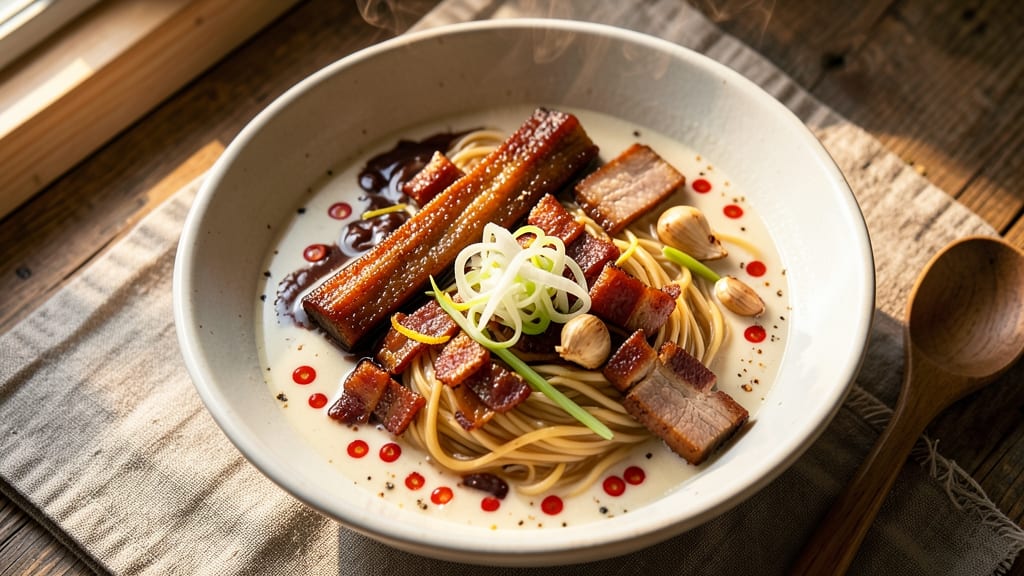
Asian ramen noodle soup transforms a simple pot of boiling water into a symphony of textures and flavors—silky broth, chewy noodles, and an umami bomb that lingers long after the last slurp. This recipe balances traditional techniques with modern twists, delivering restaurant-quality depth at home. The secret lies in layering flavors: a rich, aromatic broth simmered with slow-cooked pork bones, miso paste, and a touch of soy for that signature savory punch.
What sets this apart is the three-stage broth-building process, where we start with a quick sear of aromatics, then slow-cook pork bones for deep flavor, and finish with a miso-boosted reduction.
The noodles—whether classic wheat or chewy ramen—cook just until al dente, so they absorb the broth without losing their satisfying bite. Garnishes like soft-boiled eggs, chashu pork, and scallions add texture and visual appeal, turning a bowl of soup into a complete meal.
The result is a bowl that’s comforting yet sophisticated, with a silky broth that clings to every noodle and a balance of savory, spicy, and umami notes.
Whether you prefer a classic tonkotsu style, a lighter veggie-based broth, or a fusion twist with coconut milk, this recipe adapts while keeping the soul of ramen intact. Ready in about 45 minutes, it’s the perfect weeknight dinner that feels like a celebration.
For those who love customization, we’ll explore variations—spicy miso, truffle oil finishes, or even a lighter shrimp broth—so you can make it your own. Let’s build this bowl of flavor step by step.
Ingredients for asian ramen noodle soup
Pantry staples and fresh aromatics create this restaurant-style ramen symphony.
| Ingredient | Amount | Notes |
|---|---|---|
| Pork Bones 🍖 | 2 lb | Marrow bones preferred for richness |
| Fresh Ginger 🧄 | 2 tbsp | Grated, fresh for zing |
| Garlic Cloves 🧄 | 6 cloves | Peeled, smashed for deeper flavor |
| White Miso Paste 🍶 | 2 tbsp | High-quality, not instant |
| Light Soy Sauce 🥢 | 2 tbsp | For umami balance |
| Ramen Noodles 🍜 | 8 oz | Fresh or dried, al dente preferred |
| Green Onions 🧅 | 4 whole | White and green parts separated |
| Sesame Oil 🫒 | 1 tbsp | Toasted, for aroma |
| Vegetable Oil 🫒 | 2 tbsp | For searing aromatics |
| Dried Shiitake Mushrooms 🍄 | 4 whole | Rehydrated in hot water |
| Chicken Stock 💧 | 4 cups | Homemade preferred, low-sodium |
| Sesame Seeds 🌾 | 1 tbsp | Toasted for garnish |
| Soft-Boiled Eggs 🥚 | 2 whole | 6-minute eggs preferred |
| Chashu Pork 🍖 | 4 oz | Pre-cooked, sliced thin |
| Salt 🧂 | 1 tsp | Kosher or sea salt |
The pork bones are where the magic happens—marrow bones add that luxurious richness, but any pork bones work. Costco or your local butcher shop are great for these. Fresh ginger and garlic? Buy them whole—they last longer and taste better than pre-grated. The miso paste should be white or shiro miso for that clean, umami flavor. If you're using dried ramen noodles, check the package—some brands cook faster than others, so adjust time accordingly. For the shiitake mushrooms, Trader Joe's sells them dried in a bag—just soak them in hot water for 20 minutes before using.
No pork bones? Substitute chicken bones or even a big beef marrow bone for depth. Ran out of miso? Soy sauce plus a dash of sugar gets you close. Fresh ginger too spicy? Use half the amount or swap for 1 tsp ground ginger. The chicken stock can be store-bought, but if you're making it from scratch, save the veggie scraps in a freezer bag for a quick stock base. For the sesame oil, toast the seeds first—they get crispy and add texture. And if you can't find chashu pork, thinly sliced deli ham works in a pinch (though it won't be as tender).
This broth tastes even better the next day—make a double batch and freeze half for lazy nights. Store broth in glass jars for up to 5 days in the fridge, or 3 months in the freezer. The noodles? Cook them just until al dente—they'll finish cooking in the hot broth. Garnishes like sesame seeds and green onions keep for 1 week3 days in the fridge, so plan accordingly. Pro tip: Save your egg whites for a quick scramble or omelet—don't waste them!
Why You'll Love This Recipe
- One-Pot Magic: I swear by this—just toss pork bones, ginger, and garlic into a pot, simmer for hours (or use a slow cooker), and boom. No extra bowls, no extra mess. That rich broth builds itself while you do other things.
- Umami Bomb: The combo of miso and soy sauce on those pork bones? Chef’s kiss. The broth goes from good to "I’ll make this every week" in one bite. The ginger lingers just enough to warm you up without overpowering.
- Leftovers That Beg: This soup tastes better the next day. Honestly, I’ve reheated it three times and still crave it. Freeze half for lazy nights—just thaw and eat. My roommate’s favorite, and he’s not even a soup guy.
- Budget Broth Winner: Pork bones are cheap, and a little goes a long way. You’re not just feeding one meal—you’re stocking up on flavor for the week. Plus, miso and soy sauce stretch that broth into endless bowls for pennies.
Step-by-step instructions for asian ramen noodle soup
Here's how to build a rich, umami-packed broth and assemble this comforting bowl.
Roast the Pork Bones for Deep Flavor
Preheat your oven to 400°F. Pat the 2 lb pork bones completely dry with paper towels—this ensures maximum browning. Place them on a baking sheet and roast for 20-25 minutes until deeply browned and starting to crisp. You'll know they're ready when they smell intensely caramelized and the edges turn a rich mahogany color.
This roasting step is crucial—it develops the Maillard reaction that creates complex, meaty flavors in your broth. Don't skip it. While they roast, prepare a large stockpot by adding 4 cups chicken stock to cover the bottom about halfway. The bones will release their gelatin as they simmer.
Build the Umami-Packed Broth
Transfer the roasted pork bones to the stockpot. Add the 2 tbsp grated fresh ginger, 6 smashed garlic cloves, and 1 tsp salt. Bring to a boil over high heat, then immediately reduce to a gentle simmer. Skim off any foam that rises to the surface during the first 10 minutes—this ensures a clear, clean broth.
Simmer uncovered for 3-4 hours until the broth reduces by about half and becomes deeply golden. The bones should be tender enough to pull apart with a spoon. Here's the thing—patience pays off. The longer you simmer, the more collagen breaks down into gelatin, creating that signature silky texture.
Infuse with Aromatics and Miso
While the broth simmers, prepare the dried shiitake mushrooms by soaking them in hot water for 20 minutes until plump. Heat 2 tbsp vegetable oil in a separate skillet over medium heat. Add the rehydrated mushrooms (sliced) and sauté for 3-4 minutes until their edges turn golden. Remove and set aside.
In the same skillet, add 2 tbsp white miso paste and 2 tbsp light soy sauce. Stir constantly for 1 minute until the miso dissolves completely—don't let it brown. Pour this aromatic mixture into the broth along with the sautéed mushrooms. The broth should now smell rich and complex, with layers of umami and sweetness.
Prepare the Noodles and Toppings
Cook the 8 oz ramen noodles according to package instructions until al dente—they'll finish cooking in the hot broth. While they cook, prepare the remaining toppings: slice the 4 oz chashu pork thinly, separate the 4 whole green onions into white and green parts, and prepare the 2 soft-boiled eggs by peeling them and slicing in half.
Toast the 1 tbsp sesame seeds in a dry skillet over low heat for 1-2 minutes until fragrant. Heat the 1 tbsp sesame oil in the same skillet until shimmering, then remove from heat—this infused oil will add another layer of aroma to your soup.
Assemble and Serve the Perfect Bowl
Ladle the hot broth into bowls, dividing it evenly among 4 servings. Add 2 oz noodles to each bowl, then arrange the chashu pork slices, egg halves, and white parts of green onions on top. The broth should be steaming hot when you serve it—this ensures the noodles finish cooking perfectly.
Drizzle each bowl with the sesame oil, sprinkle with toasted sesame seeds, and add the green parts of green onions for freshness. Here's where it gets fun—each person can customize their bowl by adding extra chashu, egg, or a splash of sesame oil to taste. The contrast of silky broth, chewy noodles, tender pork, and creamy egg makes every bite satisfying.
Pro Tips For Making Asian Ramen Noodle Soup
- Char the Bones First: Blackened edges on pork bones mean deeper flavor—don’t skip this. Sear them in a dry pot over medium-high heat until they crackle and turn dark brown (about 10-15 minutes). I used to rush this, and the broth never tasted as rich. Trust me, the extra time pays off.
- Slice Ginger Thinly: Thin, even slices (about 1/8-inch) infuse faster than chunks or grated ginger. Toss them in the broth early—after the bones char but before adding garlic—to avoid bitterness. Thick slices? They’ll just sit there like a sad garnish.
- Add Miso Last: Stir in white miso paste just before serving—it’s heat-sensitive and burns easily. If you add it too early, the broth turns cloudy and loses that clean, umami punch. A splash of cold water after stirring helps disperse it smoothly.
- Save the Garlic Water: After mincing garlic, rinse the cloves under cold water to remove excess allicin (the stuff that makes broth taste harsh). Drain well, then add to the pot—this keeps the flavor bright and avoids that overpowering bite. Yes, it’s weird, but it works every time.
Creative variations of asian ramen noodle soup
Spicy Miso Fusion
Transform your classic ramen into a fiery, umami-packed bowl by adding 1 tbsp gochujang (Korean chili paste) to the miso-soy mixture. For extra heat, stir in ½ tsp red pepper flakes while simmering the broth.
Top with quick-pickled radishes (thinly slice ½ cup daikon radish, toss with 1 tbsp rice vinegar and ½ tsp sugar) for a tangy crunch. This Korean-inspired twist keeps the silky texture while adding a bold, spicy kick. 🌶️
Coconut Curry Ramen
Swap the pork broth for a creamy coconut curry base by simmering 1 can (13.5 oz) coconut milk with the aromatics. Add 1 tbsp yellow curry paste (like Maesri) and ½ cup chicken stock instead of the pork bones.
Use udon noodles instead of ramen for a heartier texture, and garnish with crushed peanuts and fresh cilantro. The result is a Thai-inspired ramen with rich, tropical depth. 🥥
Veggie-Packed Green Ramen
For a lighter, plant-based version, replace the pork bones with 4 cups kombu seaweed broth (simmer 2 dried kombu strips in 4 cups water for 10 minutes, then remove).
Add 1 block (14 oz) firm tofu, cubed and pan-fried, plus 1 cup baby spinach and ½ cup shiitake mushrooms to the broth. Finish with sesame-ginger dressing (mix 1 tbsp tahini, 1 tbsp rice vinegar, 1 tsp grated ginger, and 1 tsp maple syrup).
This version is vibrant, protein-rich, and packed with umami. 🌱
Truffle Oil Luxe
Elevate your ramen to gourmet status by finishing each bowl with ½ tsp high-quality truffle oil (like Artisanal Truffle Co.) and a sprinkle of crispy fried shallots. The earthy, luxurious aroma of truffle oil pairs beautifully with the umami broth.
For extra decadence, top with crumbled feta cheese and microgreens. This fusion twist feels restaurant-worthy without sacrificing the soul of ramen. ✨
Smoky Chipotle Twist
Infuse your broth with smoky depth by adding 1 chipotle pepper in adobo sauce (minced) and ½ tsp smoked paprika to the miso-soy mixture. For texture, top with crumbled cotija cheese and avocado slices. The smoky, spicy notes create a Mexican-inspired ramen that’s bold and satisfying. 🔥
Seafood Delight
Swap the chashu pork for 6 oz shrimp (peeled and deveined) and 4 oz scallops. Sauté the seafood in a separate pan with 1 tbsp butter and 1 tsp garlic powder until just cooked, then arrange on top of the noodles.
Use dashi stock (instead of chicken stock) for a lighter, cleaner base. Garnish with wasabi and extra sesame seeds for a Japanese-inspired seafood ramen. 🦐
Nutrition facts
Frequently asked questions
Can I make this Asian ramen noodle soup without pork bones?
For a vegetarian version, use 4 cups kombu seaweed broth (simmer 2 dried kombu strips in water for 10 minutes) or a rich vegetable stock. Add shiitake mushrooms and tofu for umami depth. The miso paste will still deliver that signature savory punch even without meat.
How do I prevent my ramen noodles from getting mushy?
Cook the noodles just until al dente—about 1 minute less than package instructions. Finish cooking them in the hot broth for 30 seconds to absorb flavor without over-softening. Also, use fresh or high-quality dried noodles (like Nissin or Maruchan) that hold their shape better.
What's the best way to store leftover ramen broth?
Let the broth cool completely, then transfer to airtight glass jars or containers. It keeps in the fridge for 5 days or freezes for 3 months. For reheating, warm gently on the stove (never microwave) and add a splash of water to restore silkiness. Pro tip: Freeze in ice cube trays for quick single-serving additions!
Can I make this recipe gluten-free?
Yes! Use gluten-free ramen noodles (like Shin Ramyun) and ensure your miso paste is certified gluten-free. For the broth, check that soy sauce is tamari-based. The flavor profile remains rich and umami-packed—just watch for hidden gluten in toppings like chashu (use gluten-free pork).
Why does my broth taste weak compared to restaurant ramen?
Restaurant broths often simmer for 12+ hours with multiple bones and aromatics. For home cooks: double the pork bones, simmer uncovered longer, and reduce the broth by half. Also, add 1 tsp fish sauce or ½ tsp MSG (if you tolerate it) for that extra umami kick. Patience is key—don't rush the process!