
Soups & Stews
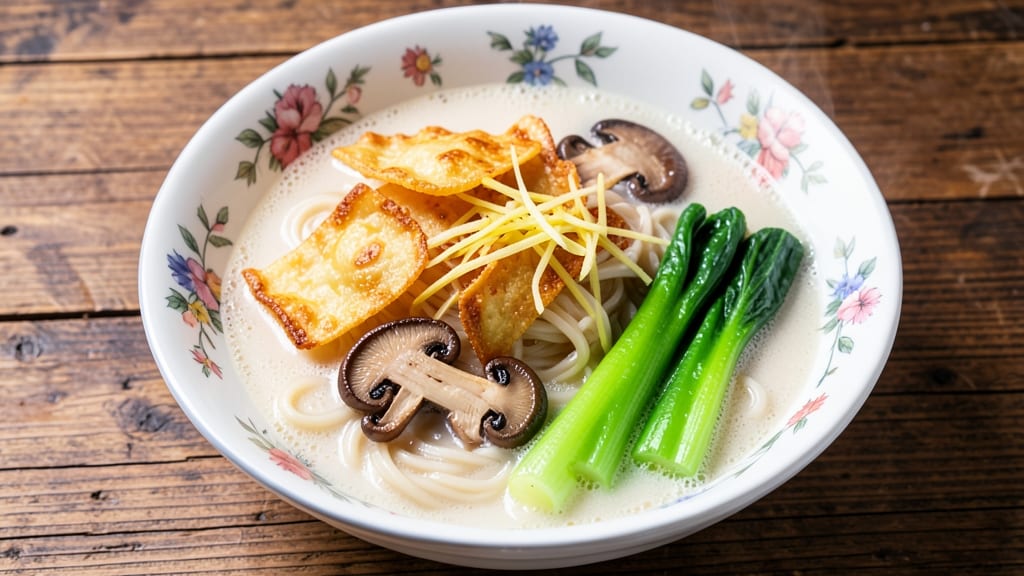
This Asian soup bowl recipe delivers crispy wonton strips that shatter over a deeply aromatic miso-ginger broth—perfect for a weeknight dinner that feels like a restaurant takeout.
The secret lies in the broth's layered flavors: fermented miso for umami depth, fresh ginger for warmth, and a touch of chili to balance everything.
I developed this recipe after years of experimenting with Asian-inspired dishes, and it's become a staple in my rotation for its ability to transform simple ingredients into something extraordinary.
The broth is where the magic happens—simmered low and slow to develop complex flavors while keeping the wonton strips perfectly crispy after baking. Tender vegetables like shiitake mushrooms and bok choy add texture and nutrition, while soft rice noodles soak up every last drop of that savory, slightly spicy broth.
What makes this recipe stand out is how easily it adapts: swap in tofu for protein, add shrimp for extra richness, or keep it vegetarian for a lighter option.
By the time you assemble everything, you'll have a bowl that's visually stunning and packed with flavor—golden crispy wonton strips, vibrant vegetables, and a steaming broth that's rich yet light enough to enjoy without feeling weighed down.
The aroma alone will have everyone gathering around the table, and the first bite delivers that perfect balance of textures and tastes. This is comfort food at its finest, with just the right amount of heat and umami to keep you coming back for more.
Whether you're serving a family dinner or meal prepping for the week, this recipe scales beautifully and tastes even better the next day. The crispy wonton strips hold up well, and the broth continues to deepen in flavor.
Let's get started on creating your own restaurant-quality Asian soup bowl at home.
Ingredients for asian soup bowl
Crispy wonton strips and aromatic broth—here's what you'll need to make this restaurant-style Asian soup bowl.
| Ingredient | Amount | Notes |
|---|---|---|
| Square Wonton Wrappers 🥟 | 12 pieces | Store-bought or homemade |
| Shiitake Mushrooms 🍄 | 8 oz | Fresh or rehydrated slices |
| Bok Choy 🥬 | 2 whole | Baby or regular size |
| Rice Noodles 🍜 | 8 oz | Flat or round, uncooked |
| White Miso Paste 🧈 | 2 tbsp | Fermented for umami depth |
| Fresh Ginger 🧅 | 1 tbsp | Grated, peeled |
| Red Chili Flakes 🌶️ | 1 tsp | Adjust for heat preference |
| Sesame Oil 🫒 | 1 tbsp | Toasted for aroma |
| Soy Sauce 🥢 | 2 tbsp | Light or dark |
| Green Onions 🧅 | 3 whole | Thinly sliced, for garnish |
| Olive Oil 🫒 | 1 tbsp | For baking wonton strips |
| Sesame Seeds 🌾 | 1 tsp | Toasted for crunch |
| Garlic Cloves 🧄 | 2 cloves | Minced for broth |
| Chicken or Vegetable Broth 💧 | 4 cups | Low-sodium preferred |
The miso paste is non-negotiable for that deep umami flavor—Miso Master or Hodo are my go-tos, but any quality white miso works. Fresh ginger is key too; peel and grate it yourself for the best flavor. For the wonton wrappers, King Noodle or Tasty Brand are widely available, but homemade wrappers add a special touch. If you can't find shiitake mushrooms, shiitake powder works in a pinch, but fresh is ideal. Bok choy should be crisp and vibrant—avoid any with wilted leaves.
No miso paste? Substitute 1 tbsp of soy sauce plus 1 tsp of white vinegar for some umami, though it won't be the same. Short on fresh ginger? Ground ginger at half the amount works, but fresh is always better. Want to skip the wonton strips? Crispy tofu or baked wonton cups are great alternatives. For the broth, Kitchen Basics or Pacific Foods are solid choices for low-sodium options. If you're using chicken broth, make sure it's vegetable-based if you're vegetarian.
The wonton strips stay crispy for about 2 days if stored in an airtight container, but they're best fresh. Broth keeps for 5 days in the fridge—it actually tastes better the next day as the flavors meld. For meal prep, bake the wonton strips ahead and store them separately. Assemble bowls just before serving so everything stays crisp. Freeze wonton strips for up to 3 months—reheat in the oven for best results.
Why You'll Love This Recipe
- Pantry Magic: I swear by this one—no fresh herbs, no fancy prep. Just miso paste, shiitakes, and bok choy: ingredients that sit in my fridge for weeks. The wonton wrappers? They’re the secret—crispy edges soak up the broth like a dream, and I can buy them frozen. Honestly, it’s the kind of meal that makes me feel like I’m cooking a five-star dish when really, I’m just assembling.
- Umami Bomb: That white miso paste? It’s the star. One spoonful and the whole bowl sings—deep, savory, with just a hint of funk. The shiitakes add meaty texture without the mess, and the bok choy wilts into tender greens that brighten every bite. I’ll be real: my picky-eating partner actually finishes his bowl now. (Yes, even on a Tuesday night.)
- Lunchbox Hero: Here’s what sold me—this keeps perfectly for days. I’ll make a big batch on Sunday, portion the noodles and veggies separately, and assemble bowls all week. The miso broth stays rich, the rice noodles hold their bite, and my kids pack these for school like they’re gourmet. Not the prettiest, but the taste makes up for it every time.
- Budget Win: Between us, this recipe is my wallet’s best friend. Shiitakes and bok choy are cheaper than chicken, and a box of wonton wrappers lasts forever. I’ll stretch one batch into three lunches, and the leftovers? Even better the next day. It’s the kind of meal that makes me feel fancy without the grocery bill to match. Plus, no takeout delivery fees.
Step-by-step instructions for crispy wonton strips over spicy miso-ginger broth
Here's how to build this comforting bowl with perfect textures and bold flavors.
Prepare the Crispy Wonton Strips
Preheat your oven to 400°F. Cut the 12 pieces square wonton wrappers diagonally into triangles, then slice each triangle into thin strips. Brush each strip lightly with the 1 tablespoon olive oil and arrange them on a parchment-lined baking sheet in a single layer, leaving space between them.
Bake for 8-10 minutes until the edges turn golden brown and crispy. Watch carefully—they cook fast and burn easily. Transfer to a paper towel-lined plate to drain excess oil while you prepare the rest. These crispy strips are the star of your bowl, so don't skip this step!
Cook the Miso-Ginger Broth
In a medium saucepan, combine the 4 cups chicken or vegetable broth, 2 tablespoons white miso paste, 1 tablespoon grated fresh ginger, 1 teaspoon red chili flakes, and 2 minced garlic cloves. Bring to a gentle simmer over medium heat and let cook for 10 minutes to allow the flavors to meld.
You'll notice the broth develop a rich, umami aroma and deep red color from the chili flakes. Taste and adjust seasoning with soy sauce if needed—this is your flavor base, so get it right. Keep the broth warm while you prepare the remaining components.
Sauté the Vegetables
Heat 1 tablespoon sesame oil in a large skillet over medium-high heat. Add the 8 ounces shiitake mushrooms (sliced) and cook for 4-5 minutes until they release their moisture and begin to brown. Remove and set aside.
In the same skillet, add the 2 whole bok choy (separated into leaves) and stir-fry for 2-3 minutes until just wilted but still vibrant green. Return the mushrooms to the skillet and toss everything together. Remove from heat and keep warm with the broth.
Cook the Rice Noodles
Bring a pot of water to a boil and add the 8 ounces rice noodles. Cook according to package instructions (usually 3-5 minutes) until al dente. Drain immediately and rinse under cold water to stop the cooking process and prevent sticking. Toss with 1 tablespoon sesame oil to keep them from drying out.
Here's the thing—rice noodles cook faster than you think. Start checking for doneness 1 minute before the package suggests. They should be tender but still hold their shape when drained. If they're mushy, you've overcooked them.
Assemble the Soup Bowls
Divide the cooked rice noodles among 4 bowls. Ladle the hot miso-ginger broth over the noodles, then arrange the sautéed vegetables on top. Add the crispy wonton strips and sprinkle with 1 teaspoon sesame seeds and thinly sliced green onions.
Garnish with an extra pinch of red chili flakes if you love heat. Serve immediately while everything is hot and crispy. The contrast of textures—crunchy wontons, silky noodles, tender vegetables—makes this bowl truly special. Enjoy with chopsticks for the full experience!
Pro Tips For Making Asian Soup Bowl
- SOAK NOODLES SEPARATELY: I learned this the hard way—tossing rice noodles straight into the hot broth makes them turn to mush. Instead, soak them in warm water (not boiling) for 5-7 minutes until pliable, then drain and add them to the bowl last. This keeps them chewy and not soggy, even when the soup sits.
- SEAR WRAPPERS FIRST: Skip the raw wrappers floating in soup—crispy edges make all the difference. Lightly fry the wonton wrappers in oil for 20 seconds per side until golden, then nestle them into the bowl. They’ll stay sturdy and add texture that no other ingredient can.
- STIR MISO LAST: White miso paste turns bitter if it boils. After adding everything else to the broth, remove it from heat, then whisk in the miso until just combined. Let it sit for 30 seconds—no more—to let the flavors meld without cooking out.
- TRIM BOK CHOY STALKS: Whole bok choy stalks take forever to soften and leave you with a mouthful of chew. Cut them lengthwise into thin strips so they cook in the same time as the leaves. It’s a small step that saves you from gnawing on undercooked stems.
Pro cooking tips for this dish
Broth Perfection
Simmer your miso-ginger broth at medium-low heat—never a rolling boil—to preserve the delicate flavors of the white miso paste and fresh ginger. I use a stainless steel saucepan because it heats evenly and prevents scorching.
Once simmering, taste after 5 minutes and adjust with soy sauce or a pinch of salt—this is your flavor foundation. 🌡️
Wonton Crispiness
For extra-crispy wonton strips, bake them on the middle rack of your oven where heat circulates evenly. If your strips aren’t crispy enough, return them to the oven for 1-2 minutes at 425°F after they’ve cooled slightly.
Pro tip: Cut the wontons into even strips—thinner edges crisp faster than thicker ones.
Vegetable Timing
Cook shiitake mushrooms first—they release moisture and need time to develop flavor. When stir-frying bok choy, keep it moving in the pan to avoid wilting too quickly.
I like to add a splash of water (about 1 tablespoon) to the skillet when cooking bok choy to create a light steam that keeps it vibrant. 🥬
Noodle Mastery
Rice noodles are gluten-free but cook faster than pasta—start checking for doneness 1 minute early. If they stick together, toss them with 1 teaspoon sesame oil while hot to prevent clumping.
For extra flavor, add a pinch of salt to the cooking water (but skip if using low-sodium broth).
Broth Storage
Let your broth cool to room temperature before refrigerating to prevent bacterial growth. Store it in an airtight container for up to 5 days—it actually tastes better the next day as flavors meld.
To reheat, warm gently on the stovetop or microwave until steaming. Never boil leftover broth, as it can break down the miso paste and alter the texture. ❄️
Garnish Like a Pro
Fresh green onions and sesame seeds add color and crunch, but don’t overdo it—just 1 teaspoon sesame seeds and 2 thinly sliced green onions per bowl are perfect.
For a smoky touch, sprinkle with ½ teaspoon toasted sesame oil right before serving. The contrast of textures is what makes this bowl shine!
Nutrition facts
Frequently asked questions
Can I make this recipe vegetarian or vegan?
Swap the chicken broth for vegetable broth and use tofu or mushrooms instead of meat. For vegan, ensure your miso paste is vegan-certified (most are) and check your wonton wrappers—some contain egg. The crispy wonton strips and umami broth will still shine in a plant-based version.
How do I adjust the spice level?
Start with the 1 teaspoon red chili flakes called for, but you can easily reduce to ½ teaspoon for mild or increase to 1½ teaspoons for extra heat. For a different spice profile, try adding ½ teaspoon sriracha or a pinch of cayenne pepper to the broth. Adjust to taste after simmering!
Can I prepare this ahead of time?
Yes! Make the broth up to 3 days ahead and store it in an airtight container—it tastes even better as flavors develop. Cook the wonton strips fresh or bake them 1 day ahead (they crisp up again when reheated). Assemble bowls just before serving to keep everything fresh and crispy.
What if I don't have wonton wrappers?
No problem! Use rice paper wrappers (cut into strips), crispy fried tofu (cubed), or even baked wonton cups (halved). For a different texture, try tempura-flavored crispy noodles or thinly sliced cabbage baked until crispy. The key is that crispy element to contrast the silky broth.
How do I make the broth clearer?
For a clearer broth, strain it through a fine-mesh sieve after simmering. If you prefer more body, skip straining. For extra clarity, chill the broth overnight—the fat will solidify on top and can be removed before reheating. This works especially well if you're using chicken broth.