
Soups & Stews
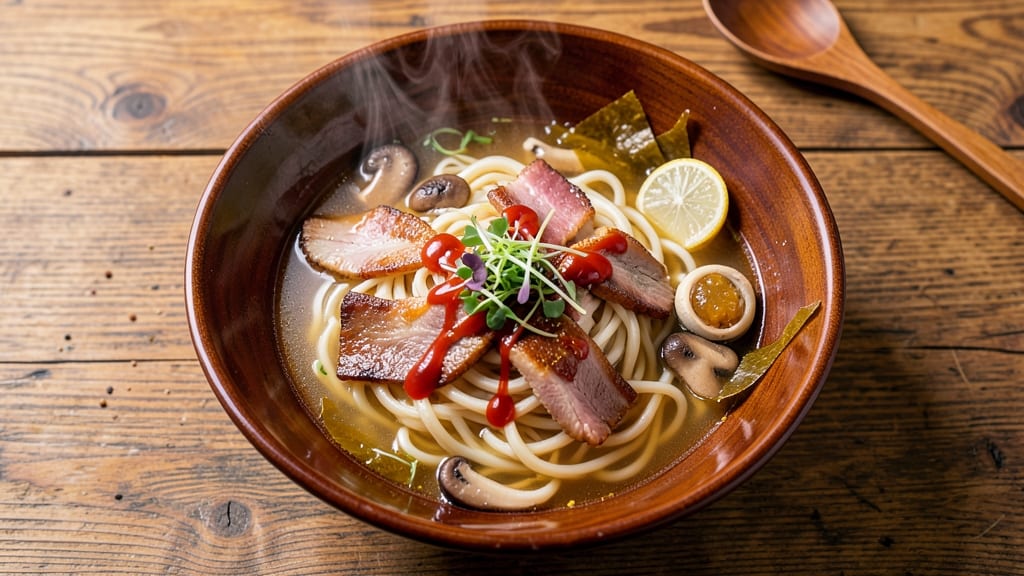
This authentic ramen noodle soup recipe delivers the rich, complex flavors of Japanese ramen right in your home kitchen. The secret lies in a deeply flavorful broth—built from simmered pork bones, kombu, and shiitake mushrooms—that develops layers of umami over hours.
I’ve perfected this method to balance traditional techniques with home-cooking practicality, ensuring your bowl tastes like it came from a Tokyo ramen shop.
The foundation is a silky, slippery noodle—whether fresh or dried—cooked just until tender, never mushy. Toppings like marinated chashu pork, soft-boiled ajitsuke tamago, and crisp menma add texture and depth, while a sprinkle of nori completes the experience.
What sets this apart is the slow-simmered broth, which transforms simple ingredients into something extraordinary through patience and precision.
What you’ll achieve is a bold, aromatic bowl where every spoonful delivers a perfect harmony of savory, salty, and slightly sweet notes. The broth clings to the noodles, while toppings provide contrast in every bite. This isn’t just ramen—it’s a restaurant-quality meal that’s surprisingly approachable for home cooks.
Ready to master the art? We’ll start with the broth—your flavor base—before moving to noodles and toppings. The result? A bowl so satisfying, you’ll forget takeout exists.
Ingredients for authentic ramen noodle soup
These umami-rich ingredients transform simple pantry staples into restaurant-quality ramen.
| Ingredient | Amount | Notes |
|---|---|---|
| Pork Bones 🍖 | 2 lb | Marrow and knuckle bones preferred |
| Kombu Seaweed 🍃 | 1 piece | Dried, 4x6 inch sheet |
| Dried Shiitake Mushrooms 🍄 | 8 whole | Stems removed, rehydrated |
| Onion 🧅 | 1 whole | Yellow, halved horizontally |
| Garlic Cloves 🧄 | 8 cloves | Smash with side of knife |
| Ginger Root 🌿 | 2 tbsp | Freshly grated, peeled |
| Ramen Noodles 🍜 | 2 packages | Fresh or dried, 8oz each |
| Chashu Pork 🥓 | 1 lb | Pre-marinated, sliced thin |
| Ajitsuke Tamago 🥚 | 4 whole | Marinated soft-boiled eggs |
| Menma 🌱 | 1 package | Bamboo shoots, sliced |
| Nori Sheets 🍣 | 4 sheets | Toasted, cut into strips |
| Sesame Oil 🫒 | 1 tbsp | Toasted, for finishing |
| Soy Sauce 🧂 | ½ cup | Kosher salt for seasoning |
| Miso Paste 🍶 | 2 tbsp | Red miso for depth |
| Green Onions 🧅 | 4 whole | Thinly sliced, for garnish |
The pork bones are non-negotiable—they provide the deep, gelatinous richness that defines authentic ramen. Look for marrow and knuckle bones at your local butcher or Asian market, as they yield the most flavor. If you're short on time, Costco or Whole Foods often carry pre-packaged pork bone sets. The kombu sheet should be dried and slightly leathery—it adds a subtle oceanic depth that's hard to replicate. For shiitake mushrooms, dried is best (they're shelf-stable and more flavorful), but if you must use fresh, double the quantity. Penzeys or local Asian grocers usually carry high-quality dried shiitake.
No kombu? Dulse flakes at one-third the amount work in a pinch, though the flavor won't be identical. Fresh ginger loses potency fast, so buy it in small amounts or freeze what you won't use within a week. For the noodles, fresh ramen (like Nissin or Maruchan) cooks in minutes and has that signature slippery texture, but dried works too—just soak them properly. The chashu pork can be store-bought (check the Asian aisle) or homemade using 50/50 pork shoulder and belly. If you're making your own, marinate it for at least 24 hours in a mix of soy sauce, sake, mirin, and sugar.
Broth keeps for 5 days in the fridge, but the flavor actually improves after the first day as the umami develops. Store it in airtight containers with a layer of fat on top to preserve freshness. The noodles and toppings can be prepped ahead—chashu can be refrigerated for 1 week or frozen for 3 months. For the perfect bowl, keep the broth hot but not boiling when serving, and always add a drizzle of toasted sesame oil just before eating. The nori should be toasted over a flame for 10 seconds per side right before serving—this makes all the difference.
Why You'll Love This Recipe
- Simmering in Minutes: The pork bones and kombu do most of the work—just toss them in cold water, bring to a boil, then let them melt into rich broth while you chop onions. No constant stirring, no fancy techniques, just deep flavor that builds itself.
- Umami Bomb: That first sip? Pure satisfaction. The dried shiitakes soak up water and swell with earthy depth, while the garlic and onion caramelize into something sweet and savory. Honestly, I’ve never tasted broth this layered without hours of simmering.
- Weeknight to Party: Same base recipe, endless twists. Keep it simple with soft-boiled eggs and chashu for a lazy night, or add a fried egg and scallions for a weekend brunch winner. My roommates swear this is the only soup they’ll eat—even the picky ones.
- Budget Broth Magic: Pork bones and kombu stretch a few dollars into gallons of flavor. Freeze leftovers in ice cube trays for instant upgrades to rice bowls or stir-fries later. Between us, this is how I feed my college student on a tight budget—no takeout needed.
Step-by-step instructions for authentic ramen noodle soup
Here's how to build a rich, umami-packed ramen broth from scratch—layer by layer.
Prepare the Pork Bones and Kombu Base
Start by rinsing the 2 lb pork bones thoroughly under cold water and patting them completely dry. This removes any surface impurities that could cloud your broth. Place the bones in a large stockpot and add 1 piece kombu seaweed, which will infuse the broth with deep oceanic umami as it simmers.
Cover the bones and kombu with 12 cups cold water (enough to submerge everything by 2 inches) and bring to a boil over high heat. Once boiling vigorously, immediately reduce to a gentle simmer—you should see tiny bubbles breaking the surface, not a rolling boil. Skim off any foam that rises to the top during the first 30 minutes of cooking, as this removes impurities that could make the broth cloudy.
Build the Umami Foundation with Aromatics
After 30 minutes of simmering, add the 8 whole dried shiitake mushrooms (stems removed) and the halved onion (skin on for color). The skin will impart subtle sweetness while the mushrooms contribute their earthy depth. Let everything simmer uncovered for another 30 minutes, allowing the flavors to meld and the broth to develop its initial richness.
Next, add the 8 smashed garlic cloves and 2 tbsp freshly grated ginger root. These aromatics will infuse the broth with their signature warmth and complexity. Stir gently to distribute them evenly, then return to a simmer. You'll notice the broth begins to take on a deeper golden hue—this is your visual cue that the umami foundation is developing beautifully.
Develop the Broth with Soy and Miso
Simmer the broth uncovered for a total of 2 hours, maintaining a gentle simmer the entire time. This long cook time is essential for extracting maximum flavor from the bones and building a rich, collagen-filled base. After 1 hour 30 minutes, stir in the 0.5 cup soy sauce and 2 tbsp miso paste, which will add saltiness and fermented depth.
Here's the thing—don't rush this step. The broth should reduce slightly, becoming more concentrated and aromatic. You'll know it's ready when it smells intensely savory and the pork bones are falling off easily when tested with a spoon. Strain the broth through a fine-mesh sieve into a clean pot, pressing gently on the solids to extract every last drop of flavor.
Assemble the Ramen Bowls
While the broth simmers, prepare your toppings. Cook the 2 packages ramen noodles according to package instructions until al dente, then drain and rinse briefly under cold water to stop the cooking process. Arrange each serving of noodles in a deep bowl, then add 4 slices chashu pork, 1 ajitsuke tamago, and ¼ package menma to each bowl.
Ladle 2 cups hot broth over each serving of noodles and toppings. The contrast between the silky noodles and the robust broth creates the perfect texture. Drizzle each bowl with 1 tsp sesame oil and garnish with 1 nori strip and 1 green onion, sliced on the bias for visual appeal. The sesame oil adds a nutty finish that ties all the flavors together.
Pro Tips For Making Authentic Ramen Noodle Soup
- BLANCH PORK BONES FIRST: I learned this the hard way—skipping the initial 10-minute boil in cold water makes the bones release blood and fat unevenly. Start with cold water, bring to a rolling boil, then simmer to avoid a murky, greasy broth that’ll take forever to clarify.
- SOAK SHIITAKES IN HOT WATER: Dried shiitakes need a quick 20-minute soak in hot (not cold) water to rehydrate fully without turning to mush. Use the soaking liquid—it’s packed with umami—then slice the caps thin for that perfect chewy texture.
- STOP STIRRING THE BROTH: Yes, it looks like nothing’s happening, but constant stirring breaks down the collagen and turns your rich, velvety broth into a thin, flavorless mess. Let the pork bones simmer undisturbed for at least 4 hours—patience here makes all the difference.
- CHAR THE ONIONS LOW AND SLOW: High heat burns onions before they caramelize, leaving your broth bitter. Cook them over medium-low, stirring occasionally, until deep golden brown—about 20 minutes. The longer they cook, the deeper the sweetness, but don’t walk away; they’ll turn to ash faster than you think.
Creative variations of this recipe
Tokyo-Style Shoyu Ramen
For a lighter, soy-forward broth, reduce the pork bone simmer time to 1.5 hours and replace 2 tbsp miso with 3 tbsp white miso. Add 1 tbsp sake and 1 tbsp mirin during the final 30 minutes of cooking.
Use dried ramen noodles (like Nissin Shoyu) and top with thinly sliced nori, menma, and a soft-boiled egg marinated in shoyu and mirin. The result is a clean, balanced bowl with bright acidity. 🍜
Sapporo Miso Ramen
This Hokkaido specialty swaps pork bones for chicken bones and chicken thighs (2 lbs total). Simmer with 3 tbsp red miso and 1 tbsp doubanjiang (spicy fermented bean paste) for 2.5 hours.
Use wheat-based ramen noodles and top with corn, butter, and bean sprouts. The miso gives it a deep, hearty richness with a touch of spice. 🌶️
Spicy Tan Tan Men
Add 1 tbsp chili oil and 1 tbsp doubanjiang to the broth during the final 30 minutes of simmering. Top with pickled ginger, crushed peanuts, and sliced jalapeños.
The chili oil adds a smoky kick, while the peanuts bring crunch. Serve with extra chili oil on the side for heat lovers. 🔥
Vegetarian Ramen
Replace pork bones with shiitake stems and dried kombu (soaked in hot water for 20 minutes). Add 1 cup rehydrated shiitake mushrooms and 1 block firm tofu (pressed and cubed) to the broth.
Use mushroom dashi (available at Asian markets) for depth. Top with marinated tofu, bamboo shoots, and scallions. The umami comes from mushrooms and miso. 🌱
Summer Sesame Ramen
Lighten the broth by reducing simmer time to 1 hour and adding 1 tbsp sesame paste and 1 tbsp grated daikon in the last 20 minutes. Top with cucumber slices, soft-boiled egg, and crushed peanuts.
The sesame adds nutty freshness, perfect for hot weather. Serve with extra sesame oil for drizzling. 🥒
Nutrition facts
Frequently asked questions
Can I make this ramen without pork bones?
Yes! For a vegetarian version, use shiitake stems and dried kombu soaked in hot water for 20 minutes as your base. Add 1 cup rehydrated shiitake mushrooms and 1 block firm tofu (pressed and cubed) to the broth. For extra depth, use mushroom dashi available at Asian markets. The umami will come from mushrooms and miso instead of pork.
How do I know when the broth is ready?
The broth is perfect when it smells intensely savory and the pork bones fall off easily when tested with a spoon after 2 hours of simmering. The color should be deep amber, and it should coat the back of a spoon. If it's too thin, reduce it uncovered for 10-15 minutes. Never let it boil vigorously after adding soy sauce and miso, as this can make the broth bitter.
What's the best way to store leftover ramen?
Store the broth in airtight containers with a layer of fat on top to preserve freshness—it keeps for 5 days in the fridge. For the noodles and toppings, refrigerate chashu for 1 week or freeze for 3 months. Reheat broth gently on the stove (never microwave) and add fresh toppings when serving. The broth actually improves after the first day as the umami develops further.
Can I use fresh ramen noodles if I only have dried?
Dried ramen works perfectly—just soak it according to package instructions (usually 3-4 minutes) until al dente. Rinse briefly under cold water to stop cooking. For extra authenticity, choose wheat-based dried ramen like Nissin Shoyu or Tan Tan Men. Fresh noodles are more delicate and cook faster (1-2 minutes), but dried gives you more control over texture.
Why does my ramen broth look cloudy?
Cloudiness usually means impurities weren't skimmed properly during the first 30 minutes of simmering. Always skim foam vigorously during this time. If it's too late, strain the broth through a cheesecloth-lined sieve for a clearer result. For extra clarity, chill the broth overnight—the fat will solidify on top, and you can skim it off before reheating. Never use a blender, as this will emulsify the fat and make the broth greasy.