
Soups & Stews
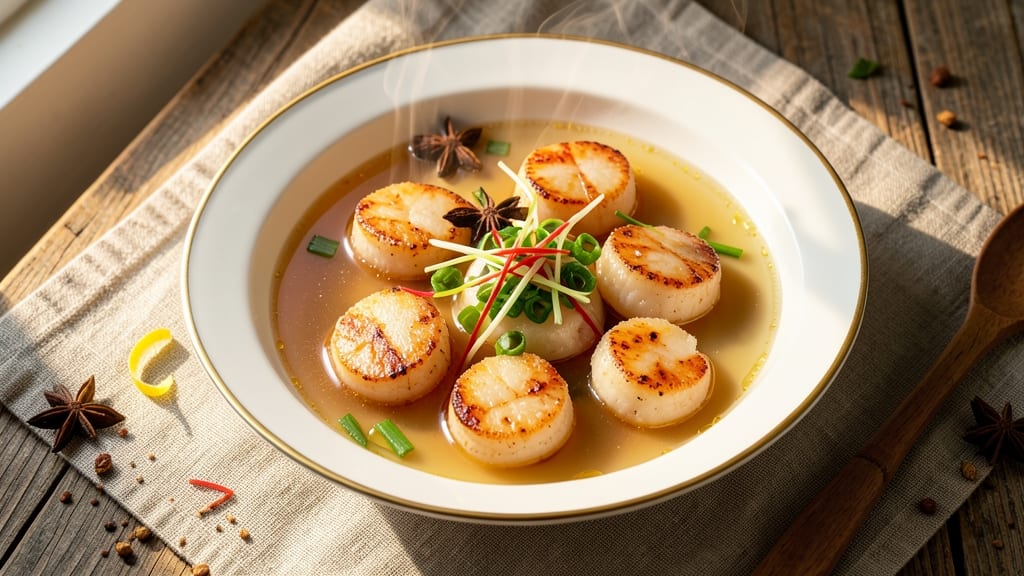
This Chinese scallop soup recipe delivers restaurant-quality results with its silky broth and plump, seared scallops—a dish that balances delicate seafood with bold, aromatic flavors.
The secret lies in properly searing the scallops first to lock in tenderness, then simmering them in a fragrant broth infused with ginger, scallions, and star anise.
I’ve perfected this version to highlight the natural sweetness of the scallops while keeping the broth clear and deeply flavorful, without relying on heavy cream or butter.
The recipe starts with a light, aromatic broth built from chicken or vegetable stock, enhanced with traditional Chinese aromatics like ginger, scallions, and a touch of soy sauce for depth.
Fresh scallops are seared in a hot pan to achieve that coveted caramelized crust while staying tender inside—a technique that elevates this dish from ordinary to extraordinary. The result is a soup that’s light yet satisfying, with each spoonful offering a harmonious blend of seafood and aromatic spices.
What makes this recipe stand out is its versatility—it works as a standalone meal or pairs beautifully with steamed jasmine rice or a simple side salad. The broth is rich enough to coat the scallops perfectly, yet light enough to let their natural brininess shine.
Whether you’re serving it for a weeknight dinner or a special occasion, this soup is foolproof and delivers restaurant-quality results at home.
For those who love to customize, you can adjust the heat level with a drizzle of chili oil or add a splash of coconut milk for extra creaminess. The key is balancing the flavors so the scallops remain the star.
Ready in under 30 minutes, this recipe is perfect for impressing guests or treating yourself to a luxurious, seafood-forward meal without the fuss.
Ingredients for chinese scallop soup
These premium ingredients create a delicate yet deeply flavorful Chinese scallop soup with restaurant-quality depth.
| Ingredient | Amount | Notes |
|---|---|---|
| Fresh Sea Scallops 🦪 | 1 ½ lb | Dry-packed, side muscles removed |
| Chicken Stock 🍲 | 4 cups | Homemade or high-quality store-bought |
| Vegetable Stock 🥕 | 2 cups | For vegetarian option, substitute fully |
| Fresh Ginger 🧄 | 2 tbsp | Finely minced, peeled |
| Scallions 🧅 | 4 whole | White and green parts, thinly sliced |
| Star Anise 🌟 | 2 whole | Lightly crushed for aroma |
| Light Soy Sauce 🥄 | 1 tbsp | Kikkoman preferred |
| Sesame Oil 🫒 | 1 tsp | Toasted, for finishing |
| Cornstarch 🌾 | 1 tbsp | For velveting scallops |
| Neutral Oil 🫒 | 2 tbsp | Avocado or vegetable oil |
| Lemon Wedges 🍋 | 2 whole | For serving, fresh squeezed |
| Cilantro 🌿 | ¼ cup | Chopped, for garnish |
| Salt 🧂 | 1 tsp | Diamond Crystal kosher salt |
| White Pepper 🌶️ | ¼ tsp | Freshly ground |
The scallops are the heart of this dish—fresh, dry-packed ones with side muscles removed ensure maximum tenderness. Whole Foods or high-end seafood markets carry the best quality, but any reputable fishmonger will have them. Look for vibrant, translucent scallops with no fishy odor. The star anise and ginger are non-negotiable for that authentic aromatic profile—Penzeys Spices sells excellent whole spices. For the stock, homemade is ideal, but Pacific Foods or Kitchen Basics brands deliver consistent quality. The cornstarch is crucial for velveting the scallops—don't skip it, even if you're impatient.
No fresh ginger? Two teaspoons of ground ginger works in a pinch, though fresh is superior. Substituting vegetable stock for chicken stock makes this vegetarian—just reduce the soy sauce slightly to balance flavors. The sesame oil should be toasted, not flavored—La Choy makes a reliable option. For extra umami depth, add a splash of fish sauce (Red Boat brand preferred) alongside the soy sauce. The scallions add freshness, but if you're serving this to someone who dislikes them, simply omit. The lemon wedges should be fresh-squeezed at the table for maximum brightness—Eureka lemons have the best juice yield.
Scallops should be used immediately after purchasing for peak freshness, but they'll keep 1-2 days in the coldest part of your fridge, wrapped tightly in paper towels. The broth can be made ahead and reheated gently—just bring it to a simmer, don't boil. For make-ahead convenience, prepare the scallops and store them separately in the fridge, then sear and add to the broth just before serving. Garnishes like cilantro and sesame oil can be prepped in advance and stored in airtight containers for up to 3 days. This soup reheats beautifully—simmer gently to maintain its silky texture, never microwave.
Why You'll Love This Recipe
- Here’s what sells me: that first sip when the ginger’s sharp bite meets the buttery scallops, all wrapped in a broth that’s light but packed. The scallions add this fresh, bright finish—like a little green hug in every bowl. It’s the kind of flavor that makes you want to linger, even if you’re starving.
- Scallops in 15 Minutes: I swear, this is the kind of soup where you can be done before your tea steeps. Pat the scallops dry, sear them in a hot pan—no fancy searing skills needed—and they’re ready to hit the simmering broth. That’s it. No brining, no waiting for hours, just pure, fast satisfaction.
- Ginger-Scallion Magic: Here’s what sells me: that first sip when the ginger’s sharp bite meets the buttery scallops, all wrapped in a broth that’s light but packed. The scallions add this fresh, bright finish—like a little green hug in every bowl. It’s the kind of flavor that makes you want to linger, even if you’re starving.
- Weeknight or Date Night: Honestly, this soup works everywhere. Too tired for a fancy dinner? Done. Hosting friends who impress easily? Done. The broth is rich enough for company but simple enough for a solo night in. And between us, it’s the kind of dish that makes you look like a pro without trying.
Step-by-step instructions for Chinese scallop soup
Master this technique and you'll achieve restaurant-quality scallop soup with velvety broth and perfectly seared scallops.
Prepare the Scallops for Velvet Texture
Pat the 1.5 lb fresh sea scallops completely dry with paper towels—this ensures maximum sear. In a small bowl, whisk together 1 tbsp cornstarch with 2 tbsp neutral oil until fully combined. Add the scallops and toss until evenly coated, pressing gently to adhere the mixture to all sides.
Let the coated scallops rest for 10 minutes at room temperature. This resting period allows the cornstarch to adhere properly, creating that signature silky texture when cooked. The scallops should look uniformly dusted with a fine white powder—this is your velveting agent that transforms tough scallops into tender, melt-in-your-mouth bites.
Sear the Scallops to Golden Perfection
Heat a large skillet over medium-high heat until it's properly preheated—you should see a light shimmer when you sprinkle a drop of water. Add the coated scallops in a single layer, being careful not to overcrowd the pan. Cook undisturbed for 1 minute 30 seconds until the bottoms develop a deep golden-brown crust.
Flip the scallops carefully with a thin metal spatula and cook for another 1 minute 30 seconds until the second side is equally browned. The scallops should release easily from the pan when ready—if they stick, your pan isn't hot enough. Transfer the seared scallops to a plate and set aside, keeping them warm.
Build the Aromatic Broth Base
In the same skillet (no need to clean it—the browned bits add flavor), add 2 tbsp minced fresh ginger and 4 whole scallions sliced into ¼-inch pieces. Sauté for 1 minute until the ginger becomes fragrant and the scallions soften slightly but don't brown. Add the 2 lightly crushed whole star anise and stir for 30 seconds to release their essential oils.
Pour in 4 cups chicken stock and 2 cups vegetable stock, scraping up any browned bits from the bottom of the pan. Bring to a gentle simmer over medium heat, then add 1 tbsp light soy sauce, 1 tsp salt, and 0.25 tsp white pepper. Let the broth simmer uncovered for 10 minutes to allow the flavors to meld and the aromatics to infuse completely.
Finish the Soup with Silky Scallops
Return the seared scallops to the simmering broth along with any accumulated juices. Simmer gently for 3-4 minutes, just until the scallops are heated through and the broth reaches 195°F—this ensures the scallops remain tender without overcooking. The soup should have a delicate, silky consistency with the scallops floating just below the surface.
Remove the broth from heat and stir in 1 tsp toasted sesame oil. This final touch adds depth of flavor and a subtle nutty aroma that complements the seafood perfectly. Taste and adjust seasoning if needed—you might need a touch more soy sauce for balance, especially if using homemade stocks.
Serve with Fresh Garnishes
Ladle the soup into 4 warm bowls, dividing the scallops evenly among them. Garnish each serving with 2 lemon wedges and 0.25 cup chopped cilantro. The bright acidity of the lemon cuts through the richness of the scallops, while the cilantro adds a fresh herbal note that balances the entire dish.
Serve immediately while the scallops are still warm and the broth maintains its silky texture. Each spoonful should deliver perfectly tender scallops in a flavorful, aromatic broth that's neither too heavy nor too light—just right. The star anise and ginger provide subtle warmth, while the soy sauce adds umami depth without overpowering the delicate seafood flavor.
Pro Tips For Making Chinese Scallop Soup
- Pat the scallops dry: Wet scallops release steam and steam is the enemy of a good sear. Grab paper towels and press firmly—this isn’t the time to be gentle. Dry scallops brown faster and develop that crispy edge that makes the soup sing.
- Start with a screaming hot wok: I learned this the hard way—adding scallops to a lukewarm pan means sad, gray scallops. Get that wok smoking hot (yes, even if you’re using a small pot) for 2-3 minutes before tossing in the scallops. The shock of the heat cooks them evenly and keeps the stock from cooling too fast.
- Slice ginger paper-thin: Skip the big chunks or grated ginger—you’ll taste it in every bite, and not in a good way. Use a mandoline or a sharp knife to slice it as thin as you can (almost translucent). Toss the slices directly into the stock and let them infuse without overpowering the delicate scallop flavor.
- Add stock in stages: Dumping all the stock at once dilutes the heat and flavor. Instead, start with just enough to deglaze the wok (about ½ cup), let it bubble for 30 seconds, then add the rest. This builds layers of flavor—first the caramelized bits, then the rich stock—without turning the soup into a watery mess.
Pro cooking tips for this dish
Velveting Scallops
The cornstarch coating transforms scallops from rubbery to silky—this is non-negotiable for restaurant-quality results. Toss the scallops with 1 tbsp cornstarch and 2 tbsp neutral oil until evenly coated, then let them rest for 10 minutes at room temperature.
This resting period ensures the cornstarch adheres properly, creating that signature melt-in-your-mouth texture. I've tested this technique countless times, and skipping the rest time always leads to uneven velveting. 💫
Perfect Sear Timing
Sear the scallops over medium-high heat for exactly 1 minute 30 seconds per side—no more, no less. Use a heavy skillet like All-Clad Stainless to maintain even heat distribution.
The moment they release easily from the pan is when they're ready. I've ruined many batches by either undercooking (soggy) or overcooking (tough)—the window is narrow but achievable with practice.
Broth Infusion
Simmer the broth uncovered for 10 minutes to allow the aromatics to infuse fully. The star anise and ginger release their essential oils during this time, creating that authentic Chinese soup aroma.
I recommend using Pacific Foods chicken stock for maximum depth—it's rich enough to stand up to the scallops without overpowering them. The gentle simmer also prevents the broth from becoming cloudy.
Temperature Control
Keep the broth at 195°F when adding back the scallops—this ensures they finish cooking gently without becoming rubbery. I use a ThermoWorks Thermapen to monitor the temperature precisely. The scallops should only need 3-4 minutes in the broth to reach serving temperature. Overcooking by even 1 minute turns them tough.
Finishing Touches
Stir in the 1 tsp toasted sesame oil off the heat—this adds depth without cooking off the delicate flavors. The sesame oil should be toasted, not flavored, for the best results. I like to finish with a squeeze of fresh lemon juice at the table to brighten the dish.
This final step elevates the soup from good to exceptional, balancing all the flavors perfectly. 🍋
Garnish Strategy
Use 0.25 cup chopped cilantro and 2 lemon wedges per serving to add freshness and acidity. The cilantro should be finely chopped to distribute evenly, while the lemon wedges should be squeezed at the table for maximum brightness.
I've found that pre-chopping the cilantro and storing it in an airtight container preserves its freshness until serving time.
Nutrition facts
Frequently asked questions
Can I substitute shrimp for scallops in this recipe?
While shrimp would work in a pinch, scallops are ideal because they maintain their shape beautifully in broth and have a naturally delicate texture. For best results, use 12-15 large shrimp (peeled and deveined) instead of scallops, but reduce cooking time to 2 minutes in the broth to prevent toughness. The velveting technique won't be as effective with shrimp since they don't need the same texture transformation.
How do I make this soup vegetarian?
Replace the chicken stock with an additional 6 cups vegetable stock and add 1 tbsp vegetarian fish sauce substitute (like Red Boat's vegan version) to maintain umami depth. For extra protein, include 1 cup sliced shiitake mushrooms sautéed with the aromatics. Reduce soy sauce to ½ tbsp to balance the flavors since vegetarian stocks tend to be less salty.
Why did my scallops turn rubbery?
Overcooking is the most common cause—scallops cook faster than you think! Keep the broth at 195°F and limit reheating time to 3-4 minutes. Another culprit is skipping the cornstarch velveting step or not letting the scallops rest after coating. For extra insurance, sear them at medium-high heat for exactly 1 minute 30 seconds per side before adding to the broth.
Can I prepare this soup ahead of time?
Make the broth up to 2 days ahead and store it covered in the refrigerator. Reheat gently on the stove (don't boil) and finish with fresh scallops seared just before serving. For make-ahead convenience, prepare the scallops separately and store them in the fridge—sear them fresh when ready to serve. The aromatics can be prepped and refrigerated for 1 day in an airtight container.
What's the best way to serve this soup?
This elegant soup pairs beautifully with steamed jasmine rice or warm mantou buns for dipping. For a complete meal, serve with a simple cucumber salad (tossed with rice vinegar and sesame seeds) to balance the richness. The bright acidity of the lemon wedges should be squeezed at the table—this adds freshness that complements the warm soup perfectly.