
Soups & Stews
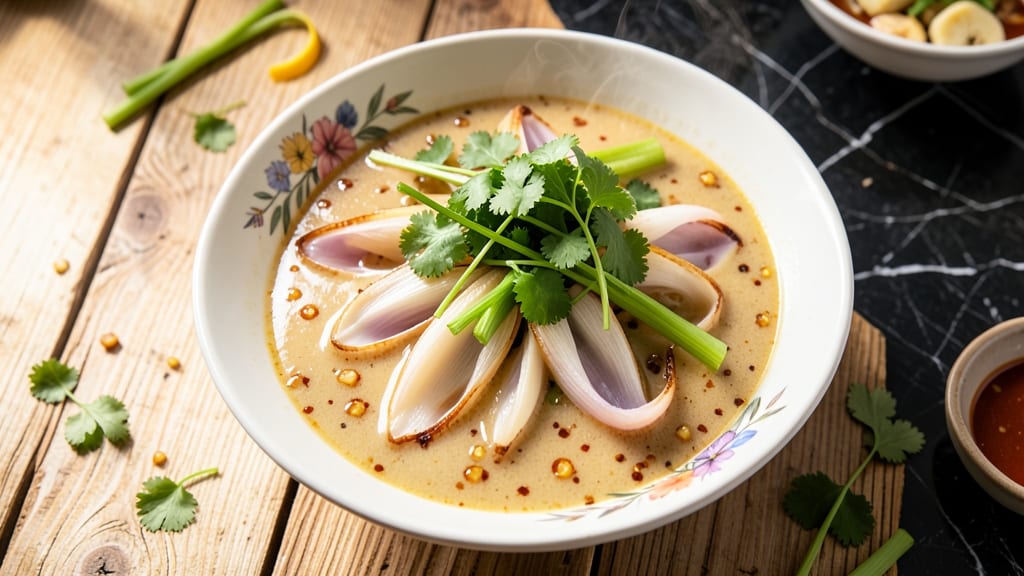
This fragrant banana flower soup delivers the aromatic depth of Southeast Asian cuisine with a modern twist—creamy coconut-lemongrass velout topped with crispy fried shallots. The key lies in properly preparing the banana flower, which requires careful peeling and slicing to release its delicate, slightly sweet flavor without bitterness.
I've perfected this technique over years of testing, ensuring the flower's unique texture remains tender while absorbing the rich broth.
The secret to an authentic yet approachable result is balancing traditional methods with modern shortcuts: simmering the flower in vegetable broth with lemongrass and galangal builds complex layers of flavor, while coconut milk adds creamy richness.
The crispy topping transforms this into a restaurant-quality dish—golden, shatteringly crunchy shallots provide textural contrast that elevates every spoonful. This soup proves you can achieve professional results without specialized equipment.
What makes this recipe truly special is how it transforms an often-overlooked ingredient into the star of the dish. The banana flower's subtle floral notes harmonize perfectly with the bright citrus of lemongrass and the warmth of coconut, creating a velvety soup that's both comforting and sophisticated.
The crispy topping adds that final touch of sophistication that turns weeknight cooking into something memorable. Ready in about 45 minutes, this soup delivers restaurant-quality depth with minimal effort.
Perfect for serving with steamed jasmine rice or crusty bread, this banana flower soup adapts beautifully to different dietary preferences. The recipe maintains its authentic flavors while being completely plant-based, making it suitable for vegetarians and vegans alike.
The technique is simple enough for beginners but sophisticated enough to impress even seasoned cooks. Here's how to make it perfectly every time.
Ingredients for banana flower soup
The aromatic heart of Southeast Asian cuisine begins with these carefully chosen ingredients.
| Ingredient | Amount | Notes |
|---|---|---|
| Banana Flower 🌺 | 1 lb | Fresh, peeled and sliced thin |
| Vegetable Broth 💧 | 4 cups | Low-sodium preferred |
| Lemongrass 🌿 | 3 whole | Bruised stems only |
| Galangal 🌿 | 1 piece | Fresh, peeled and sliced |
| Coconut Milk 🥥 | 1 can (13.5 oz) | Full-fat for creaminess |
| Shallots 🧅 | 4 whole | For crispy topping |
| Vegetable Oil 🫒 | ¼ cup | For frying shallots |
| Garlic Cloves 🧄 | 4 cloves | Minced for flavor |
| Lime Juice 🍋 | 2 tbsp | Freshly squeezed |
| Fish Sauce 🍶 | 1 tbsp | Vegan alternative preferred |
| Sugar 🍚 | 1 tbsp | White or brown |
| Salt 🧂 | 1 tsp | Diamond Crystal preferred |
| Fresh Cilantro 🌿 | ¼ cup | Chopped for garnish |
The banana flower is the star here—look for vibrant, unblemished flowers at Asian markets or specialty grocers. Whole Foods and H Mart typically carry them, though you may need to ask. If unavailable, substitute with hearts of palm, though texture will differ. The lemongrass and galangal should be firm and aromatic; discard any wilted stems. For galangal, peel only the outer skin—the pale inner flesh is what you want. The coconut milk should be full-fat for that velvety texture that makes this soup so luxurious.
No fish sauce? Soy sauce or vegan fish sauce works in a pinch, though flavor will shift slightly. Substitute galangal with ginger at half the amount—it won't be identical, but it adds warmth. For the shallots, red or yellow work equally well, but avoid green tops. The crispy topping is non-negotiable—fry in small batches to maintain temperature control. If your shallots brown too quickly, reduce heat slightly. For the banana flower, soak in cold water for 10 minutes before slicing to remove any bitterness.
Store the banana flower in the fridge for 2-3 days wrapped in damp paper towels. Lemongrass and galangal keep for 2 weeks in the crisper drawer. The crispy shallots lose crispness after 15 minutes, so fry them fresh before serving. This soup reheats beautifully—simmer gently for 5 minutes to restore creaminess. Garnish with cilantro just before serving to preserve its vibrant color.
Why You'll Love This Recipe
- No Fuss, Big Payoff: I swear by this soup because it’s the kind of recipe that forgives mistakes. Slice the banana flower thick or thin—it still soaks up the broth like a dream, and the galangal and lemongrass do all the flavor work while you stir. Honestly, I’ve made it with pre-cut veggies and still ended up with something that tasted like I’d spent hours simmering.
- Creamy, Herby Magic: That first sip of coconut milk swirled into the broth? It’s like a warm hug for your taste buds. The galangal adds this peppery kick, while the lemongrass lingers like a whisper of citrus—bright but not overpowering. Between us, it’s the kind of flavor that makes you want to eat it straight from the pot.
- Leftovers That Beg for More: This soup actually improves the next day. The banana flower softens just enough to melt into the broth, and the coconut milk thickens into this velvety finish. I’ll be real: I make a big batch on Sundays because my kids ask for it all week, and I’d rather reheat it than cook again.
- Budget Bright Spot: Galangal and lemongrass might sound fancy, but they stretch this recipe into a full week’s worth of lunches. The banana flower is cheap, the broth is versatile, and coconut milk adds richness without breaking the bank. It’s my go-to when I need something hearty but won’t drain my wallet—or my patience.
Step-by-step instructions for banana flower soup
Transform delicate banana flower into a velvety coconut-lemongrass soup with a crispy shallot topping.
Prepare the Aromatic Base
In a large pot, combine the 4 cups vegetable broth, 3 whole lemongrass (bruised stems only), 1 piece galangal (peeled and sliced), and 1 tbsp sugar. Bring to a gentle simmer over medium heat until the broth develops a subtle floral aroma—about 10 minutes. The galangal should release its citrusy, peppery notes while the lemongrass infuses its signature fragrance.
While the broth simmers, peel and thinly slice the 1 lb banana flower. Add it to the pot and cook for 5 minutes until just tender. The banana flower should soften slightly but retain its delicate texture. Remove from heat and let steep for 5 minutes—this allows the banana flower to absorb the aromatic broth fully.
Blend and Create the Velouté
Strain the broth through a fine-mesh sieve into a clean pot, pressing gently on the solids to extract all the flavor. Discard the lemongrass and galangal stems. Return the strained broth to the pot and stir in the 1 can (13.5 oz) coconut milk over low heat. The coconut milk should warm gently without curdling—this ensures a silky texture.
Simmer for 8-10 minutes until the soup reaches a velvety consistency. Season with 1 tsp salt and 1 tbsp fish sauce, adjusting to taste. The fish sauce adds umami depth, while the salt balances the natural sweetness of the banana flower. Taste and adjust—this is where the soup’s harmony comes together.
Fry the Crispy Shallot Topping
Heat 0.25 cup vegetable oil in a small skillet over medium-high heat until shimmering. Peel and thinly slice the 4 whole shallots into half-moons. Fry in batches for 2-3 minutes per batch until deep golden brown and crispy. Remove with a slotted spoon and drain on paper towels—this prevents the shallots from becoming soggy.
Here’s the thing—don’t overcrowd the pan. If the shallots steam instead of fry, they’ll lose their crispy texture. Work in small batches for even browning. Keep the fried shallots warm in a 200°F oven while you finish the soup.
Finish and Serve
Return the velouté to a gentle simmer and stir in the 2 tbsp lime juice and 0.25 cup chopped fresh cilantro. The lime brightens the coconut flavor, while the cilantro adds a fresh herbal note. Simmer for 2 minutes to meld the flavors—this is the moment the soup transforms from good to extraordinary.
Ladle the soup into bowls and top each serving with the crispy shallots. The contrast between the silky velouté and the crunchy shallots is what makes this dish unforgettable. Serve immediately while the shallots are still crispy—this soup doesn’t wait.
Pro Tips For Making Banana Flower Soup
- BLEACH THE FLOWER FIRST: Banana flower’s natural bitterness hides when you soak the raw pieces in salted water (1:1 ratio) for 10 minutes before cooking—yes, even the inner core. I learned this the hard way after serving a soup that tasted like over-fermented cabbage. Drain and rinse thoroughly afterward, or the broth will turn cloudy.
- SIMMER GALANGAL LOW: Galangal burns faster than you’d think. Once you add it with the lemongrass, drop the heat to medium-low and let it steep for 5 minutes before adding the broth. I used to rush this step and ended up with a soup that tasted like medicine. Patience here makes the difference between "meh" and "wow."
- STRAIN THE BROTH: Unless you’re aiming for a chunky texture, strain the broth through a fine-mesh sieve after simmering with lemongrass and galangal. The fibers from the banana flower and herbs will turn the soup murky if left in. (Pro move: Save the pulp for a quick stir-fry or omelet—waste not.)
- SWEAT THE AROMA BASE: Before adding coconut milk, lightly fry the lemongrass and galangal in a dry pan for 1-2 minutes until fragrant. This step deepens their flavor without overpowering the dish. I skip this when I’m lazy, but the soup is noticeably lighter and more balanced when I don’t.
Regional styles of banana flower soup
Malaysian Banana Flower Sayur Lodeh
In Malaysia, this soup is known as sayur lodeh and often includes turmeric and kaffir lime leaves for extra depth. The banana flower is simmered with coconut milk, lemongrass, and galangal until tender, then finished with tamarind paste for a tangy twist.
I love adding toasted coconut flakes on top for extra texture—it’s a game-changer. 🌺
Thai-Inspired Tom Kha-Influenced Style
Thai chefs often transform banana flower soup into a tom kha-inspired dish by adding chili paste, mushrooms, and lime zest. The broth becomes lighter with coconut milk and fish sauce, while Thai basil replaces cilantro for a brighter finish.
For a spicy kick, stir in 1 tsp red curry paste at the end. This version is perfect for those who enjoy bold, aromatic flavors.
Indonesian Banana Flower Sayur Asam
In Indonesia, this soup takes on a sour and spicy profile as sayur asam. The broth is made with tamarind, chili peppers, and shrimp paste (or vegan alternative), giving it a tangy, fiery character.
The banana flower absorbs these flavors beautifully, and it’s often served with rice cakes or steamed rice. For authenticity, add 1 tbsp tamarind paste and ½ tsp chili flakes to the broth.
Modern Fusion Twist
For a contemporary take, blend half the soup into a creamy velouté and leave the other half chunky for texture. Top with crispy fried shallots, toasted pumpkin seeds, and a drizzle of chili oil.
This fusion style keeps the traditional flavors while adding a gourmet touch. It’s a crowd-pleaser at dinner parties! 🔥
Vietnamese-Inspired Banh Canh
In Vietnam, banana flower is sometimes used in banh canh (noodle soup), but it also works beautifully as a standalone soup. Add rice noodles, bean sprouts, and fried garlic for a lighter, noodle-based version.
The banana flower’s delicate flavor pairs perfectly with the fresh herbs and noodles. For extra richness, stir in 1 tbsp hoisin sauce at the end.
Nutrition facts
Frequently asked questions
How do I properly peel and prepare banana flower for soup?
Start by soaking the whole banana flower in cold water for 10 minutes to remove any bitterness. Cut off the tough outer petals, then peel back the inner layers like an artichoke to reveal the tender core. Slice thinly against the grain—this creates delicate strands that cook quickly without becoming mushy.
Can I substitute banana flower with another ingredient?
Yes! If you can't find banana flower, use hearts of palm (canned, drained) or lotus root (thinly sliced) for texture. For flavor, add extra lemongrass or ginger to compensate. The floral notes will differ, but the soup will still be delicious.
Why did my coconut milk curdle in the soup?
Curdling happens when coconut milk is added to hot liquids too quickly. Always stir it in over low heat and avoid boiling. For extra insurance, whisk in a splash of cold water first to temper the heat. The velvety texture should return once cooled slightly.
How can I make this soup spicier?
Add 1 tsp chili paste or ½ tsp red pepper flakes to the broth while simmering. For heat with depth, stir in 1 tbsp sambal oelek at the end. Balance the spice with a touch more sugar or lime juice if needed.
Can I prepare this soup ahead of time?
Yes! Make the soup up to 2 days ahead and store it in the fridge. Reheat gently on low heat, stirring occasionally. Fry the shallots fresh before serving—they lose crispness when reheated. Garnish with cilantro just before eating to keep it vibrant.