
Soups & Stews
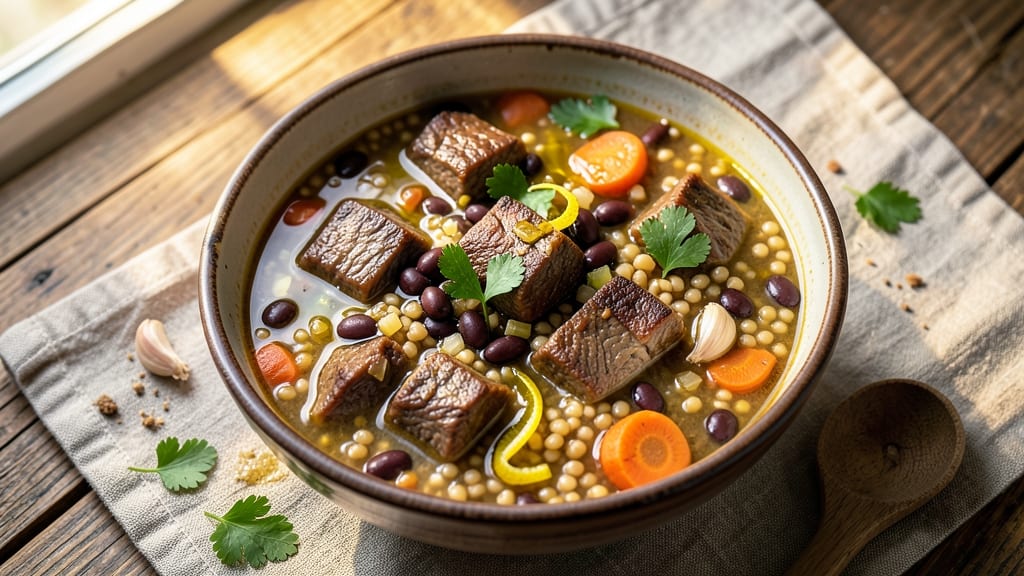
This beef barley bean soup recipe delivers the ultimate comfort in a single pot, where tender beef, hearty barley, and rich beans create a symphony of textures and flavors. The secret lies in a slow simmer that transforms tough cuts into melt-in-your-mouth perfection while developing deep, savory notes.
I've perfected this one-pot method over years of testing, ensuring every spoonful is packed with warmth and substance—ideal for chilly evenings or meal prep.
The beauty of this recipe is its simplicity: just a few quality ingredients combine to create a meal that feels indulgent yet balanced. Barley adds satisfying chewiness, while beans and beef provide protein and heartiness.
The broth reduces to a rich, aromatic base that coats every ingredient, making each bite unforgettable. No fancy techniques required—just patience and a little time to let the flavors meld.
By the time you're done, you'll have a steaming pot of soup with tender beef chunks, al dente barley, and creamy beans swimming in a deeply flavorful broth. The aroma alone will have everyone gathering around the table, and the first spoonful delivers on that promise of pure, comforting satisfaction.
This is the kind of meal that tastes even better the next day, making it perfect for leftovers or batch cooking.
Pair it with crusty bread for dipping or a simple green salad to balance the richness. The one-pot method means minimal cleanup, leaving you more time to enjoy the meal you've created. Let's get started on this hearty, foolproof recipe that's as rewarding to make as it is to eat.
Ingredients for beef barley bean soup
Just 15 simple ingredients for a soup that tastes like a hug in a bowl.
| Ingredient | Amount | Notes |
|---|---|---|
| Chuck Roast 🥩 | 2 lb | Cut into 1-inch cubes |
| Pearl Barley 🌾 | 1 cup | Uncooked, rinsed well |
| Dried Navy Beans 🌱 | 1 ½ cups | Soaked overnight or quick-soaked |
| Yellow Onion 🧅 | 1 whole | Diced, medium size |
| Carrots 🥕 | 4 medium | Peeled, cut into chunks |
| Garlic Cloves 🧄 | 4 cloves | Minced for depth of flavor |
| Celery Stalks 🧄 | 3 whole | Diced, with leaves included |
| Tomato Paste 🍅 | ½ cup | Smooth, not chunky |
| Beef Broth 💧 | 6 cups | Low-sodium preferred |
| Red Wine 🍷 | 1 cup | Dry, like Cabernet |
| Bay Leaves 🍃 | 2 whole | Fresh for best flavor |
| Thyme 🌿 | 1 tbsp | Dried or fresh sprigs |
| Salt 🧂 | 1 ½ tsp | Kosher or sea salt |
| Black Pepper 🌶️ | ½ tsp | Freshly ground |
| Olive Oil 🫒 | 2 tbsp | For sautéing |
The chuck roast is your secret weapon here—it's cheap, flavorful, and melts into tender perfection. Grab the pre-cut cubes from the meat section at Costco or Walmart to save time, or ask your butcher to trim the fat. For the barley, pearl barley is the way to go—it holds its shape better than steel-cut. The navy beans? Soak them overnight for the best texture, but if you're in a rush, the quick-soak method works too. Fresh thyme and bay leaves elevate this soup from good to restaurant-quality, so don't skip them. I always grab mine from the bulk section at Trader Joe's—cheaper and fresher than the little packets.
No red wine? Beef broth with a splash of balsamic vinegar does the trick. Short on carrots? Swap in sweet potatoes or parsnips—they add natural sweetness. The tomato paste can be a squeeze tube from Trader Joe's if you're lazy, but canned is fine too. For the celery, use the leafy tops—they're packed with flavor. If you're prepping ahead, par-cook the barley and beans separately to cut down on simmering time. The olive oil matters here—use something with a little peppery kick to balance the richness of the beef.
This soup gets better with time, so make a double batch if you can. It keeps for 5 days in the fridge and freezes beautifully for 3 months. I portion mine into containers so lunches are sorted for the week. The barley thickens as it cools, so add a splash of broth when reheating. If you're meal prepping, cool the soup quickly in an ice bath to preserve texture. The leftovers taste even better the next day—trust me on that.
Why You'll Love This Recipe
- Deep Umami Magic: That slow-cooked chuck? It melts into the broth like butter, while the navy beans add this earthy punch. Honestly, the onions and carrots caramelize just enough to sweeten the whole thing—no extra sugar needed. It’s the kind of flavor that makes you want to eat it straight from the pot, no fuss.
- Leftovers That Save Me: This soup only gets better the next day. I make a double batch on Sundays, and by Wednesday, it’s still the star of my lunch—just reheated with a splash of water. The barley thickens slightly, the beef stays juicy, and it’s basically a free meal for the week.
- Budget Meal for Crowds: A chuck roast and dried beans stretch farther than you’d think. I feed four people for under $15, and it’s still filling enough that no one complains. Plus, it’s the kind of dish that tastes like you slaved over it, even though you didn’t. Win-win.
Step-by-step instructions for beef barley bean soup
This hearty soup comes together in one pot—just follow the steps and let the flavors meld.
Sear the Chuck Roast and Sauté Vegetables
Heat the 2 tablespoons olive oil in a large Dutch oven over medium-high heat. Pat the 2 lb chuck roast dry with paper towels and cut into 1-inch cubes. Working in batches, sear the beef for 3-4 minutes per side until deeply browned. Remove the beef and set aside—this step builds rich flavor that infuses the entire soup.
In the same pot, add the diced yellow onion, diced celery stalks, and peeled carrot chunks. Cook for 5-6 minutes, stirring occasionally, until the vegetables soften slightly and the onion becomes translucent. Add the minced garlic cloves and cook for 30 seconds until fragrant. Here's where the aromatics set the foundation for everything that follows.
Toast the Barley and Add Beans
Add the 1 cup pearl barley to the pot and stir to coat in the vegetable oil. Toast for 2-3 minutes until lightly golden and nutty—this enhances the barley's flavor. Stir in the 1.5 cups dried navy beans (if quick-soaked, drain any excess water) and the ½ cup tomato paste. Cook for 1 minute, stirring constantly, to blend all the ingredients together.
Pour in the 1 cup red wine and scrape up any browned bits from the bottom of the pot. Let the wine simmer for 2-3 minutes until reduced by half. This step deepens the wine's flavor and prevents it from being overpowering later. The alcohol will cook off completely as the soup simmers.
Simmer the Soup for Rich Flavor
Add the 6 cups beef broth, 2 whole bay leaves, 1 tablespoon thyme, 1½ teaspoons salt, and ½ teaspoon black pepper to the pot. Return the seared beef to the pot and bring everything to a gentle boil. Once boiling, reduce heat to low and cover partially. Let the soup simmer for 1 hour 15 minutes, stirring occasionally.
After 1 hour, check for doneness. The beef should be fork-tender, and the barley and beans should be chewy but not mushy. If the soup is too thin, uncover and simmer for 15-20 minutes longer to thicken. The longer it simmers, the deeper the flavors become—this is where patience pays off.
Adjust Seasoning and Serve
Remove the bay leaves and discard them. Taste the soup and adjust the seasoning if needed—add more salt or pepper as necessary. The soup should be rich, hearty, and perfectly balanced with the chewy barley and tender beef.
Ladle the soup into bowls and serve immediately, garnished with fresh parsley if desired. Each spoonful delivers layers of flavor: the deep, savory beef, the nutty barley, the earthy beans, and the bright acidity from the wine. This is comfort food at its finest, made even better by the one-pot simplicity.
Pro Tips For Making Beef Barley Bean Soup
- Brown the Chuck Roast Hard: I learned this the hard way—skipping the deep brown crust means flavorless broth. Sear the roast in batches over medium-high heat until it’s dark golden, not just pink. The Maillard reaction here is non-negotiable; it’s what turns this from "meat and veggies" to "soup with soul."
- Soak Beans Overnight (Or Not): Pearl barley doesn’t need soaking, but navy beans do—unless you’re in a hurry. If you skip it, add 30 minutes to simmer time. I usually soak them, but if I forget, I just add a pinch of baking soda to the pot with cold water for 2 hours before cooking. Works every time.
- Add Carrots Late: Tossing carrots in at the start turns them mushy. Wait until the beef and beans have 30 minutes left to cook, then add them sliced into even ½-inch pieces. You’ll get tender-crisp texture without the sad, overcooked mush.
- Deglaze with Beer (Or Broth): After browning the beef, don’t just add water—scrape up those browned bits with a splash of dark beer or beef broth. It adds depth that plain water can’t match. I keep a bottle of stout or a cheap red wine in my pantry just for this. (Yes, even if you’re not a drinker.)
Regional styles of these flavors
English Country Style
This version swaps navy beans for 1.5 cups of split peas and adds 1 small parsnip to the veggies. Cook the peas for 30 minutes before adding the barley, then simmer the entire soup for 2 hours to let the peas break down into a creamy texture.
Finish with a splash of apple cider vinegar and fresh thyme sprigs for brightness. 🌟
Italian-Inspired
Transform this into a rustic Italian soup by adding 1 cup of diced pancetta (cook with the onions) and 1 cup of cannellini beans. Stir in 1 teaspoon of dried oregano and ½ cup of whole milk at the end for richness.
Top with grated Parmesan cheese and toasted pine nuts for crunch. 🍷
German-Inspired
For a heartier German twist, use 1 lb of sauerkraut instead of some carrots and add 2 smoked sausage links (like bratwurst) to the pot.
Simmer the soup for 2 hours to let the flavors meld, then finish with 1 tablespoon of caraway seeds and a dash of hot sauce. Serve with crusty rye bread.
Mexican-Inspired
Spice things up by adding 1 diced chipotle pepper in adobo sauce and 1 teaspoon of ground cumin with the onions. Swap the red wine for 1 cup of beef broth and add 1 cup of corn kernels at the end.
Garnish with cilantro, lime wedges, and avocado slices for a zesty kick. 🌶️
French-Inspired
Elevate this soup with 1 cup of mushrooms (sautéed with the onions) and 1 cup of pearl onions. Deglaze with ½ cup of dry white wine instead of red, and finish with a bouquet garni (tie together 1 bay leaf, 2 thyme sprigs, and 1 parsley sprig).
Serve with crusty baguette and a sprinkle of fresh parsley.
Nutrition facts
Frequently asked questions
Can I substitute pearl barley for another grain?
Yes, but texture will change. For a chewier bite, use wild rice blend or farro (simmer 25-30 minutes less). For a creamier soup, swap in 1 cup of diced potatoes or ½ cup of mashed cauliflower at the end. Pearl barley's nutty flavor is key to this recipe, so avoid instant rice or couscous—they'll make the soup too light.
How do I make this soup in a pressure cooker?
Follow the same steps until adding the broth. Seal the pressure cooker and cook on high pressure for 25 minutes, then quick-release. The barley and beans will soften faster—check for doneness at 20 minutes. For extra richness, add ½ cup of beef broth after cooking to adjust consistency. The pressure cooker cuts time by half while keeping all the deep flavors.
Why did my barley turn mushy?
Overcooking is the most common cause. Barley should simmer for 45-55 minutes total—check at 40 minutes and taste. If too soft, reduce simmer time next batch. For extra insurance, use 1 cup barley to 4 cups broth ratio. Pro tip: Stir occasionally to prevent sticking at the bottom. The ideal texture is firm yet tender, not falling apart.
Can I make this soup vegetarian?
Replace the beef with 1.5 cups of mushrooms (sautéed with onions) plus 1 cup of lentils (cook with beans). Use vegetable broth and add 1 teaspoon smoked paprika for depth. The barley and beans will still provide hearty texture. For umami, add 1 tablespoon soy sauce when seasoning.
How do I reheat leftovers without drying it out?
Reheat gently on the stove over low heat with ¼ cup of beef broth or water per serving. Stir frequently to prevent sticking. Microwave-safe: Cover with a damp paper towel and heat for 2-3 minutes, stirring halfway. Never reheat to boiling—just until steaming. The soup thickens when cooled, so add broth as needed to restore consistency.