
Soups & Stews
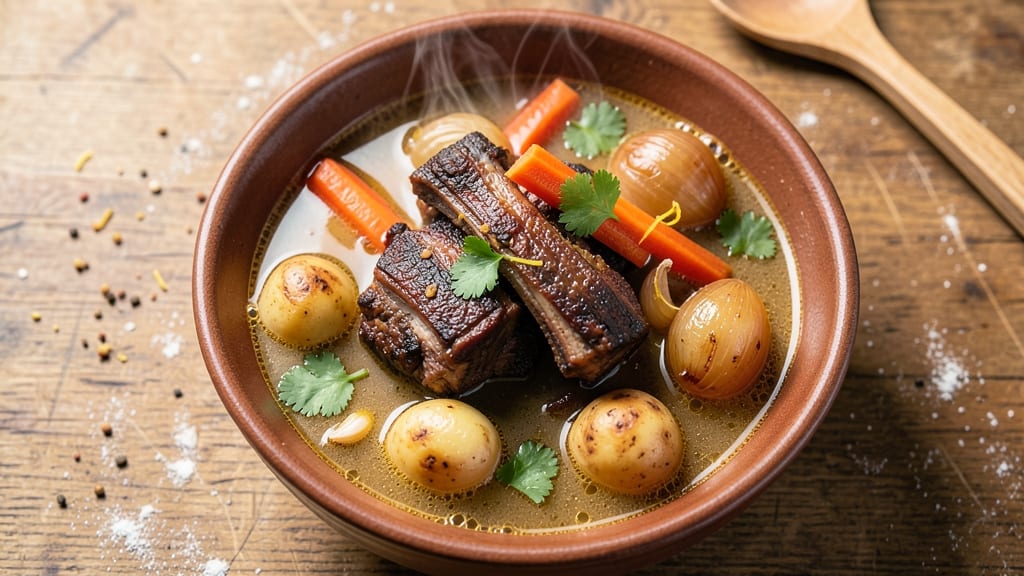
This beef knuckle soup recipe delivers restaurant-quality depth with tender meat that falls apart at the touch of a spoon. The secret lies in slow braising—transforming tough knuckles into melt-in-your-mouth richness through hours of gentle simmering.
I’ve perfected this technique to balance collagen-rich broth with aromatic vegetables, creating a soup that’s both comforting and impressive.
The process begins with a flavor base of onions, garlic, and ginger, caramelized until golden to build depth before adding the knuckles. As they simmer, the connective tissue breaks down into a velvety broth, while root vegetables like carrots and potatoes absorb the savory essence.
This method ensures every spoonful delivers both texture and flavor, with meat so tender it practically dissolves.
What makes this recipe stand out is its versatility—serve it as a hearty main course with crusty bread or as a warming starter for dinner parties. The slow-cooked broth reduces naturally, intensifying its umami richness, while optional garnishes like fresh cilantro or a drizzle of sesame oil add brightness.
Each bowl is a celebration of patience and technique, proving that the best meals are worth the wait.
For those short on time, a pressure cooker adaptation cuts preparation to under an hour without sacrificing quality. The key remains the same: low-and-slow cooking to unlock the knuckles’ full potential.
Whether you’re feeding a crowd or treating yourself to a cozy night in, this soup delivers satisfaction in every bite.
Ingredients for beef knuckle soup
Six hearty ingredients transform tough knuckles into melt-in-your-mouth richness through slow braising.
| Ingredient | Amount | Notes |
|---|---|---|
| Beef Knuckles 🥩 | 3 lb | Bone-in, skin-on preferred |
| Yellow Onions 🧅 | 2 whole | Yellow or red, peeled |
| Garlic Cloves 🧄 | 6 cloves | Peeled, smashed for depth |
| Fresh Ginger 🌿 | 2 tbsp | Grated, aromatic |
| Carrots 🥕 | 4 whole | Medium, peeled, chopped |
| Russet Potatoes 🥔 | 3 whole | Medium, peeled, cubed |
| Celery Stalks 🥬 | 3 whole | Cut into 1-inch pieces |
| Roma Tomatoes 🍅 | 4 whole | Crushed for texture |
| Bay Leaves 🌿 | 2 whole | Dried, aromatic |
| Black Peppercorns 🌶️ | 1 tsp | Whole, cracked |
| Sea Salt 🧂 | 1 ½ tbsp | Kosher or coarse |
| Beef Broth 💧 | 8 cups | Homemade or high-quality |
| Sesame Oil 🫒 | 1 tbsp | For finishing, optional |
| Fresh Cilantro 🌿 | ¼ cup | Chopped, for garnish |
The beef knuckles are the star—look for bone-in, skin-on cuts at your butcher, as they yield the most collagen for that velvety broth. Costco or specialty meat markets often carry them prepped, but if you're cutting them yourself, ask for the joints with the most meat—the knuckles should be plump, not dried out. For the aromatics, yellow onions with a deep purple hue and garlic cloves with tight skins indicate freshness. Fresh ginger should smell sharp and citrusy, not musty. If your market doesn’t carry whole knuckles, substitute beef shank—it’s the next best thing for collagen-rich depth, though the texture will differ slightly. The carrots, potatoes, and celery should be firm and free of soft spots; organic produce often has thicker skins, which adds subtle earthiness to the broth.
No beef knuckles? Beef shank is the closest substitute, though it won’t yield the same fall-apart texture. For the onions, red or white will work, but yellow adds a touch of sweetness that complements the richness. Garlic powder can replace fresh at half the amount, but nothing beats the aroma of smashed cloves caramelizing in the pot. Fresh ginger is non-negotiable here—dried lacks the bright punch, though you can use 1 tsp ground ginger in a pinch. Roma tomatoes are ideal for their meaty texture, but crushed San Marzano canned tomatoes work beautifully if you’re short on time. The bay leaves should be sweet, not bitter—discard them after cooking. For the beef broth, homemade is best, but store-bought like Kettle & Fire or Pacific Foods delivers reliable depth. If you’re using a pressure cooker, reduce the broth by half before serving to intensify the flavor.
This soup tastes even better the next day as the flavors meld, so make a double batch if you’re feeding a crowd. Store in an airtight container in the fridge for up to 5 days—the broth will continue to develop richness. For longer storage, freeze portions in glass jars or silicone molds for up to 3 months. Reheat gently on the stove, skimming any congealed fat. The sesame oil and cilantro should be added fresh at the end—never cook with them, as they’ll turn bitter. To serve, ladle into bowls and garnish with a drizzle of sesame oil and a sprinkle of cilantro. The crusty bread you’ll want on the side? Store it in a paper bag at room temperature for up to 3 days or freeze for 1 month.
Why You'll Love This Recipe
- One-Pot Wonder: I swear by this recipe because it’s literally hands-off after the initial sear. Toss everything—beef knuckles, onions, garlic, ginger—into a pot, cover with water, and let it slow-simmer. No chopping boards to clean, no extra pans, just pure, lazy satisfaction.
- Umami Bomb: The beef knuckles melt into rich, fall-apart tenderness, while the ginger and garlic seep into every bite like a warm hug. Honestly, the first time I tasted it, I nearly burned my tongue rushing back for more—it’s that good.
- Weeknight to Party: Between us, this soup is my go-to for both "I’m too tired to cook" nights and "we’re hosting my in-laws" weekends. Serve it with crusty bread for a casual dinner, or garnish with cilantro and lime for a restaurant-worthy bowl.
- Budget Magic: I buy beef knuckles in bulk—they’re cheaper than steak, and this recipe stretches them into three hearty meals. Freeze leftovers, reheat them, and watch your grocery bill shrink while your fridge stays stocked with something actually filling.
Step-by-step instructions for beef knuckle soup
Transform tough cuts into melt-in-your-mouth perfection through slow braising and aromatic layering.
Parboil and Season the Beef Knuckles
Place the 3 lb beef knuckles in a large stockpot and cover with cold water by 2 inches. Bring to a boil over high heat, then immediately reduce to a gentle simmer. Skim off any foam that rises to the surface during the first 10 minutes—this ensures a clear, clean broth.
Add the 1.5 tbsp sea salt, 1 tsp cracked black peppercorns, and 2 whole bay leaves. Simmer the knuckles for 45 minutes, turning occasionally, until the surface fat begins to render and the meat loses its raw appearance. This pre-cooking step tenderizes the connective tissue and removes impurities that would otherwise cloud your soup.
Build the Aromatic Base
While the knuckles simmer, peel and chop the 2 whole yellow onions into ½-inch dice. Peel and crush the 6 cloves garlic. Grate the 2 tbsp fresh ginger. In a separate large Dutch oven (large enough to hold all ingredients comfortably), heat 1 tablespoon sesame oil over medium heat until shimmering.
Add the onions and cook for 8-10 minutes until softened and beginning to caramelize at the edges. Add the garlic and ginger, stirring constantly for 1 minute until fragrant—don't let the garlic burn. This aromatic foundation will infuse the entire soup with depth. Remove from heat and set aside temporarily.
Prepare the Vegetable Medley
Peel and chop the 4 whole carrots into 1-inch chunks. Peel and cube the 3 whole russet potatoes into 1-inch pieces. Cut the 3 whole celery stalks into 1-inch segments. Crush the 4 whole roma tomatoes by hand (no need to peel or seed).
In the same Dutch oven, add the prepared vegetables and stir to coat with the aromatic oil. Cook over medium heat for 5 minutes, stirring occasionally, until the vegetables begin to soften slightly. This step develops their natural sweetness before the long braise. Transfer the vegetables to a plate and set aside.
Combine and Braise the Soup
Drain the parboiled beef knuckles and return them to the clean stockpot. Add the 8 cups beef broth, scraping up any browned bits from the bottom. Bring to a gentle boil over high heat, then reduce to a low simmer. Add the aromatic vegetable mixture and the prepared vegetables back to the pot.
Cover the pot and maintain a gentle simmer for 3-4 hours, stirring occasionally and adding hot water as needed to maintain liquid level. The knuckles are done when they're fork-tender and the meat pulls away from the bone with minimal resistance. This slow cooking transforms tough collagen into rich, gelatinous goodness that makes every spoonful luxurious.
Finish and Serve
Once the knuckles are tender, carefully remove them from the broth and place on a cutting board. Using a sharp knife, remove the meat from the bones, discarding any cartilage or gristle. Shred the meat into bite-sized pieces and return it to the pot.
Strain the broth through a fine-mesh sieve to remove any remaining vegetables or impurities. Return the strained broth to the pot and simmer for an additional 10 minutes to concentrate the flavors. Taste and adjust seasoning with additional salt if needed. Ladle the soup into bowls, garnishing each serving with 0.25 cup chopped fresh cilantro. Serve immediately with crusty bread to soak up every last drop of that rich, velvety broth.
Pro Tips For Making Beef Knuckle Soup
- BLANCH THE KNUCKLES FIRST: I learned this the hard way—skipping the 10-minute blanch in boiling water makes the collagen render painfully slow. The knuckles will still be tough after hours if you skip this step, and no amount of simmering later will fix it.
- SLICE GINGER THINLY (NOT GRATED): I was skeptical until I tried it: thin slivers (1/8-inch) infuse flavor without turning the broth into a ginger mud. Grated ginger dissolves too fast and can make the soup taste bitter if overcooked.
- DON’T CROWD THE POT: After burning three batches, I finally figured out: give the knuckles space. Pack them in too tight, and the outer edges cook unevenly while the center stays raw. Start with a single layer, even if it means two batches.
- ADD CARROTS LATE: Sounds weird, but it works: toss the carrots in during the last 20 minutes of simmering. This keeps them crisp-tender instead of falling apart into mush—no one wants soup with carrot paste.
Troubleshooting this recipe
Broth Too Cloudy?
If your broth looks murky after simmering, you likely didn’t skim foam during the parboiling step. Fix it by straining through a fine-mesh sieve or cheesecloth after removing the knuckles. For next time, skim aggressively for the first 15 minutes of parboiling—this removes impurities that cause cloudiness.
A splash of apple cider vinegar (1 tbsp) added during simmering can also clarify the broth naturally. 💧
Meat Not Tender Enough
Undercooked knuckles happen when the simmer isn’t low enough or the time is insufficient. Aim for a gentle simmer (180-190°F)—if bubbles break the surface too vigorously, reduce heat. Add 30-60 minutes to your cook time if using smaller knuckles.
For extra insurance, parboil for 60 minutes instead of 45, then proceed with braising. A meat thermometer should read 205°F at the thickest part when done. ⏰
Vegetables Mush Too Fast
Root vegetables like carrots and potatoes can turn to mush if added too early. Solution: Parboil them separately for 8-10 minutes before adding to the main pot, or blanch in boiling water for 3 minutes, then shock in ice water.
For celery, add it 1 hour before the knuckles are done to preserve texture. If using potatoes, Yukon Gold holds up better than russets in long braises. 🥕
Broth Too Watery
If your soup is thin, reduce the broth by simmering uncovered for 20-30 minutes after removing the knuckles. Alternatively, add 1 cup mashed potatoes or 2 tbsp cornstarch slurry to thicken without altering flavor.
For future batches, reduce broth by half before serving—simmer uncovered for 15 minutes at the end. A pressure cooker cuts this time to 5 minutes at high pressure. 💡
Fat Separating Too Much
Excess fat floating on top? Skim it off with a fat separator spoon or paper towels before serving. To minimize separation, chill the soup overnight—fat solidifies and can be easily removed.
For a cleaner look, add 1 egg white per quart of broth before straining (it binds fat during cooking). Some chefs swear by a splash of ice water at the end to help fat congeal. 🧂
Knuckles Still Attached to Bone
If meat clings stubbornly to bones, your knuckles may have been under-parboiled or not simmered long enough. Next time, parboil for 60 minutes and braise for 4+ hours. For stubborn bits, soak bones in warm water for 10 minutes before scraping—this loosens connective tissue.
A sharp boning knife and tongs make removal easier. If a few pieces remain, blend the broth for a velvety texture. 🥩
Nutrition facts
Frequently asked questions
Can I substitute beef knuckles with another cut of beef?
Yes, but with adjustments. For similar texture, use beef shank—it’s the closest substitute. For quicker results, try chuck roast (cut into chunks) or brisket, though these won’t yield the same gelatinous richness. If using shank, reduce braising time by 30-45 minutes since it’s already more tender. Avoid lean cuts like sirloin—they lack collagen for that signature velvety broth.
How do I know when the beef knuckles are fully cooked?
They’re done when the meat pulls away from the bone with minimal resistance and a meat thermometer reads 205°F at the thickest part. Visually, the knuckles should look fork-tender and the broth will thicken noticeably from released collagen. For extra assurance, press a knuckle—if it crumbles easily, it’s ready. Never rush this step; patience ensures melt-in-your-mouth texture.
Can I make this soup in a slow cooker or Instant Pot?
For a slow cooker, parboil the knuckles as directed, then transfer everything (including broth) to the slow cooker and cook on low for 8-10 hours. For an Instant Pot, parboil the knuckles, then pressure cook on high for 60 minutes followed by a 10-minute natural release. Both methods work, but the stovetop version offers more control over browning and reduction.
Why does my broth turn cloudy, and how can I fix it?
Cloudiness usually means impurities weren’t skimmed during parboiling. Fix it by straining the broth through a fine-mesh sieve or cheesecloth after removing the knuckles. For next time, skim aggressively for the first 15 minutes of parboiling. A splash of apple cider vinegar (1 tbsp) during simmering can also clarify the broth naturally.
Can I prepare this soup ahead of time?
This soup tastes even better the next day! Store it in an airtight container in the fridge for up to 5 days, or freeze portions for 3 months. Reheat gently on the stove, skimming any congealed fat. The flavors deepen as the broth reduces, making it perfect for meal prep. Just add fresh cilantro and sesame oil before serving.